Understanding Spirulina
Spirulina is a nutrient-dense blue-green algae, technically classified as a cyanobacterium, that has been consumed by humans for centuries. Historical records show that the Aztecs harvested spirulina from Lake Texcoco in Mexico, while people around Lake Chad in Africa have long incorporated it into their diets. Today, spirulina is cultivated worldwide in controlled freshwater environments to ensure purity and consistency, making it a popular dietary supplement.
Spirulina stands out for its rich nutrient composition. It contains approximately 60–70% protein by dry weight, making it one of the highest natural sources of plant-based protein. Unlike many plant proteins, spirulina is a complete protein, providing all essential amino acids in a highly digestible form. It also contains bioactive compounds such as phycocyanin, a blue pigment with strong antioxidant and anti-inflammatory properties, as well as chlorophyll, carotenoids, and small amounts of gamma-linolenic acid (GLA), an omega-6 fatty acid.
In addition to macronutrients, spirulina is a source of iron, B vitamins (including B1, B2, and B12 analogs), magnesium, and trace minerals. Humans cannot synthesize essential amino acids, iron, or many vitamins in sufficient amounts, which makes spirulina a compact and concentrated nutrient source. Its composition has led to its use by NASA and the European Space Agency as a potential food source for astronauts on long-term missions.
Key Benefits
- Nutrient density – Spirulina delivers highly digestible complete protein, iron, and B vitamins in a concentrated form.
- Immune support – Phycocyanin and other antioxidants enhance immune cell activity and reduce oxidative stress.
- Energy metabolism – Iron and B vitamins in spirulina support oxygen transport, red blood cell production, and cellular energy generation.
Research Findings
The human evidence base for spirulina spans nutrition, metabolic health, immune function, and exercise performance. While study sizes are often modest, findings are consistent across multiple trials.
In a 12-week RCT (n=40 older adults), daily spirulina supplementation improved hemoglobin levels and increased immune cell activity compared with placebo, indicating benefits for combating mild anemia and supporting immune resilience.
In a 16-week RCT (n=52 patients with type 2 diabetes), spirulina reduced fasting blood glucose and improved lipid profiles compared with baseline, suggesting positive metabolic effects. However, the magnitude of benefit varied by individual, and spirulina was used alongside conventional treatment rather than as a replacement.
In a 12-week RCT (n=30 athletes), spirulina supplementation increased time to exhaustion during endurance exercise and enhanced antioxidant status compared with placebo. This suggests that spirulina supports exercise performance under oxidative stress by improving oxygen utilization and reducing muscle damage markers.
Other studies have explored spirulina in allergy and inflammation. A 6-month RCT (n=129 adults with allergic rhinitis) reported significant reductions in nasal discharge, sneezing, and congestion in participants taking spirulina compared with placebo. This outcome is attributed to phycocyanin’s ability to modulate inflammatory signaling pathways.
Taken together, spirulina has demonstrated measurable effects across immunity, metabolism, endurance, and inflammation, though larger, multi-center studies are needed for stronger clinical consensus.
Best Sources & Dosage
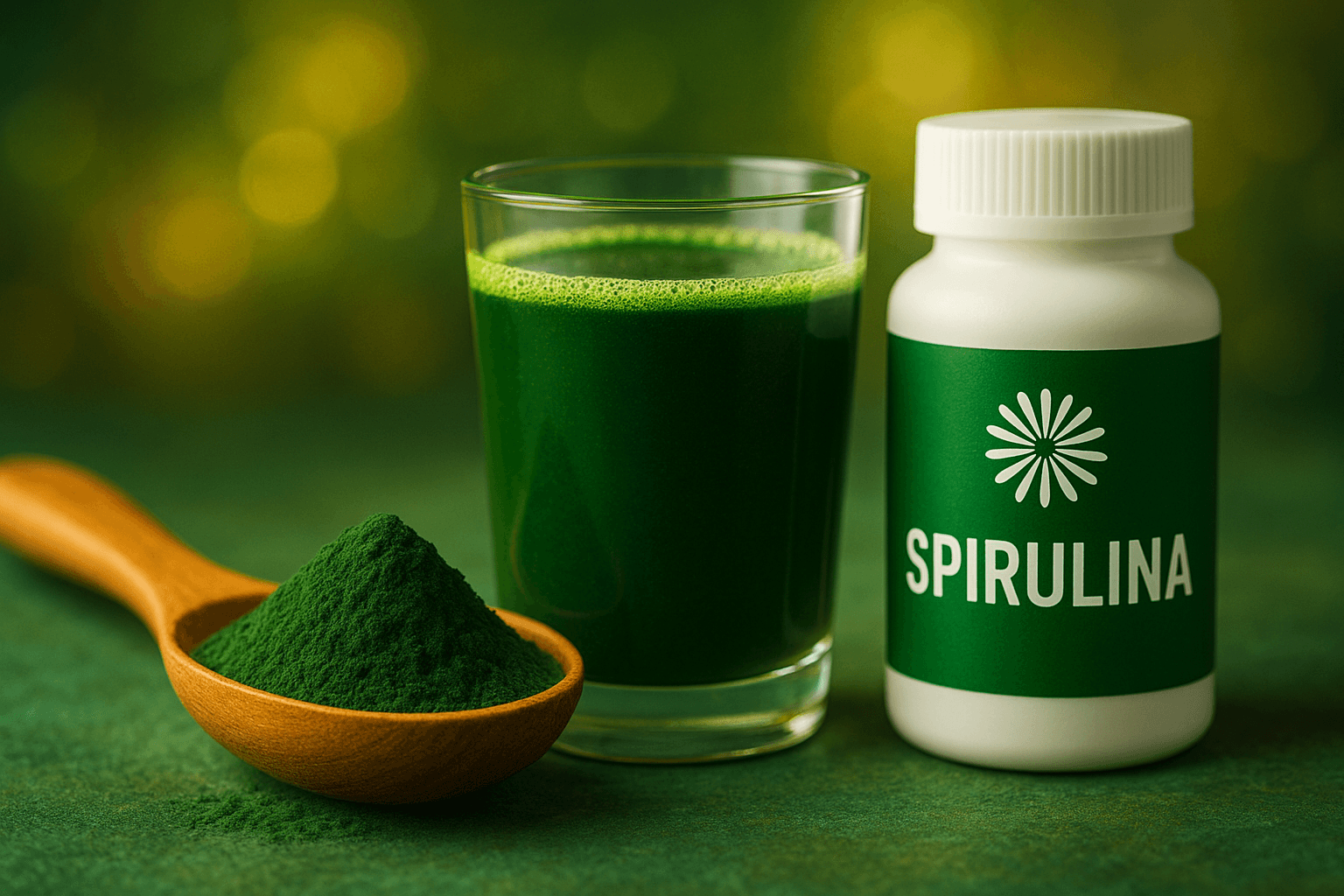
Spirulina is available in powder, tablet, and capsule form. Reputable supplements are produced under controlled cultivation to prevent contamination with microcystins, heavy metals, or bacteria, which are risks in poorly regulated sources. Consumers should seek third-party tested brands for quality assurance.
Typical studied dosages range from 1–8 grams per day. Lower intakes of 1–3 g per day support general nutrition and antioxidant defense, while higher intakes of 4–8 g have been studied for outcomes such as lipid regulation, blood glucose management, and endurance performance.
Spirulina can be consumed with or without food. Powders are often blended into smoothies, juices, or energy bars, while tablets and capsules offer convenience for precise dosing.
Spirulina is considered safe for most adults, but certain populations should exercise caution. Individuals with phenylketonuria (PKU) should avoid spirulina due to its protein content.
Those with autoimmune diseases should consult a clinician before use, as spirulina enhances immune activity, which could exacerbate conditions such as lupus or multiple sclerosis.
Pregnant and breastfeeding women are advised to avoid spirulina unless cleared by a healthcare provider, since human safety data in these groups is limited.
Putting It All Together
Spirulina is one of the most nutrient-dense natural supplements studied, offering a rare combination of complete protein, iron, and antioxidant compounds in a compact form. Human research demonstrates benefits for immune function, antioxidant defenses, and energy metabolism, along with improvements in endurance performance and metabolic markers in specific populations.
The consistency of trial findings across diverse health outcomes makes spirulina a strong candidate for individuals seeking nutrient support in plant-based diets, energy optimization, or immune balance. At the same time, spirulina is not a substitute for balanced nutrition or conventional medical care. Instead, it functions as a concentrated source of key nutrients and bioactives that complement broader dietary strategies.
For healthy adults, daily doses of 1–8 grams are supported by clinical research, with the most reliable results seen in standardized, third-party tested products. By providing essential nutrients alongside bioactive compounds like phycocyanin, spirulina bridges the gap between food and functional supplementation.