1. Understanding Reishi – What It Is and How It Works
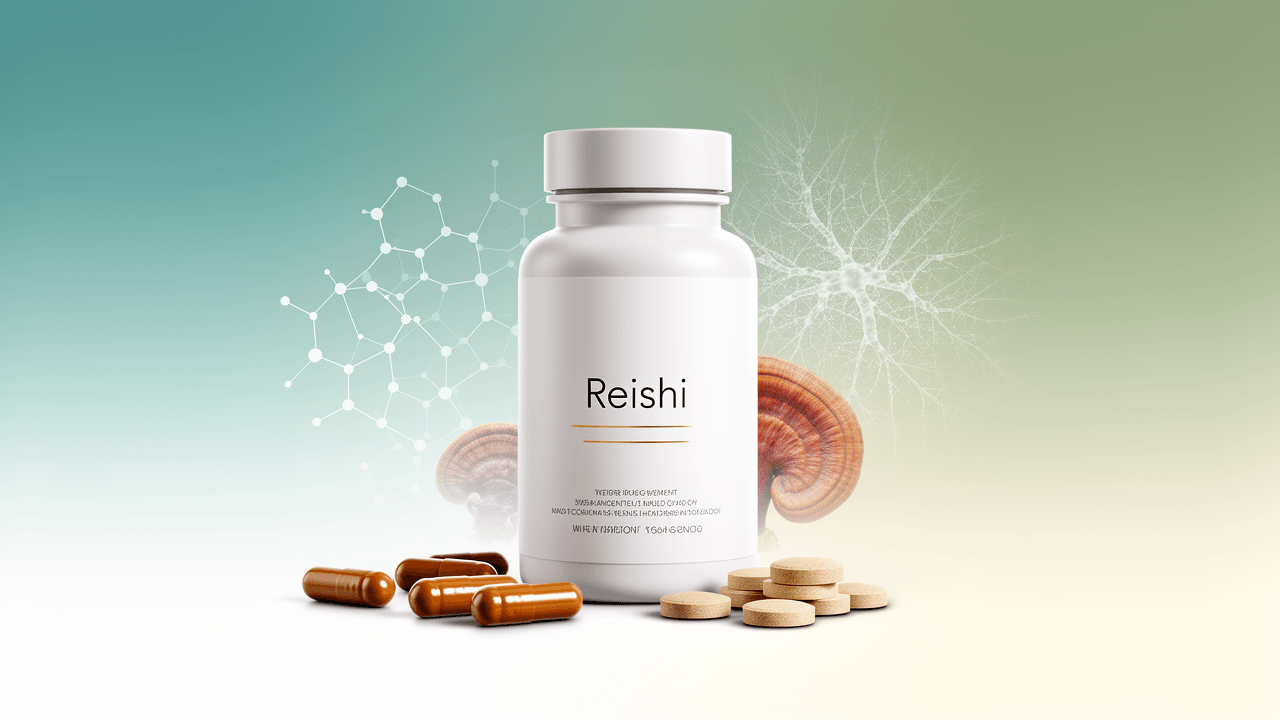
Reishi (Ganoderma lucidum) is a medicinal mushroom long used in traditional Chinese and Japanese medicine as a "tonic" for longevity, immunity, and resilience to stress. It is sometimes called the "mushroom of immortality."
Modern supplements typically use:
- Fruit body (the visible mushroom)
- Mycelium (the root-like network)
- Spores (reproductive cells)
- Extracts standardized for specific compounds (e.g., polysaccharides, triterpenes)
Key Active Compounds
Reishi contains multiple bioactive constituents:
Polysaccharides (especially β-glucans)
- Modulate immune activity (both stimulating and balancing)
- May influence gut microbiota and inflammatory pathways
Triterpenes (ganoderic acids, lucidenic acids)
- Show anti-inflammatory, antioxidant, and potential anti-allergic effects in preclinical studies
- Some have mild ACE-inhibitory and cholesterol-lowering activity in lab models
Peptidoglycans & proteins
- Contribute to immunomodulatory effects
Sterols and phenolic compounds
- Add to antioxidant and membrane-stabilizing properties
How Reishi Works in the Body (Proposed Mechanisms)
Most mechanisms are derived from cell and animal research, with human data still emerging:
Immune modulation
- β-glucans interact with receptors on immune cells (e.g., dectin-1, CR3)
- Can enhance activity of macrophages, natural killer (NK) cells, and T-cells
- Appears to be modulating rather than simply stimulating—may help balance over- and under-active immune responses
Anti-inflammatory and antioxidant effects
- Triterpenes and polysaccharides downregulate NF-κB and pro-inflammatory cytokines (e.g., TNF-α, IL-6) in lab models
- Increase antioxidant enzymes (SOD, catalase, glutathione peroxidase) in animal and some human studies
Stress and sleep pathways
- Animal studies suggest effects on GABAergic and serotonergic systems, which may underlie anxiolytic and sleep-promoting effects
- Traditional use as a "shen" tonic (calming, mood-stabilizing) aligns with modern reports of improved sleep quality and reduced fatigue
Metabolic and cardiovascular effects
- May modestly improve insulin sensitivity and lipid profiles in some human trials
- Possible ACE-inhibitory and vasodilatory effects in preclinical studies
Reishi is not a classic nootropic like caffeine or racetams. Its nootropic relevance is indirect: by potentially improving sleep, reducing perceived stress, and supporting immune and metabolic health, it may support overall cognitive function and resilience.
2. Key Benefits of Reishi
1. Immune Support and Modulation
- May enhance immune surveillance (NK cell activity, T-cell function)
- Used as an adjunct in some oncology settings (mainly in Asia) to support quality of life and immune parameters
2. Stress Resilience and Sleep Quality
- Traditional use as a calming adaptogen-like herb
- Some human data suggest improved sleep and reduced fatigue, especially in people with chronic conditions or high stress
3. Metabolic and Cardiovascular Support
- May modestly improve blood sugar control and lipid profiles in type 2 diabetes and metabolic syndrome
- Possible small reductions in blood pressure and inflammatory markers
4. Anti-Fatigue and Quality of Life in Chronic Conditions
- Used in studies on chronic fatigue, neurasthenia, and cancer-related fatigue
- Some evidence for reduced fatigue, improved well-being, and physical functioning
Limitations:
Many studies are small, short-term, and sometimes use multi-herb formulas, making it hard to isolate reishi’s effects. Evidence is promising but not definitive.
3. Research Findings
Below are representative human studies; this is not exhaustive.
3.1 Immune Function and Cancer-Related Outcomes
Cancer patients (mixed solid tumors)
- Design: Randomized, double-blind, placebo-controlled trial
- Sample: 68 patients with advanced solid tumors
- Intervention: 1.8 g/day reishi (Ganopoly® polysaccharide extract) vs placebo for 12 weeks
- Findings:
- Increased T-lymphocyte subsets (CD3, CD4) and CD4/CD8 ratio
- Increased NK cell activity compared with baseline and placebo
- Some patients reported improved well-being; no tumor shrinkage attributable to reishi alone
- Reference: Gao et al., Immunological Investigations, 2003
Colorectal adenomas (precancerous polyps)
- Design: Randomized, double-blind, placebo-controlled trial
- Sample: 96 patients with colorectal adenomas
- Intervention: 1.5 g/day reishi extract vs placebo for 12 months
- Findings:
- Significant reduction in number and size of adenomas in reishi group vs placebo
- Reduced serum IL-6 and C-reactive protein (CRP)
- Reference: Ji et al., Cancer Prevention Research, 2010
Note: These results are encouraging but do not justify self-treating cancer with reishi. It is studied as an adjunct, not a replacement for conventional therapy.
3.2 Sleep, Fatigue, and Quality of Life
Neurasthenia (chronic fatigue-like condition)
- Design: Randomized, double-blind, placebo-controlled
- Sample: 132 patients with neurasthenia
- Intervention: 1,800 mg/day reishi polysaccharide extract vs placebo for 8 weeks
- Findings:
- Significant improvements in fatigue, irritability, and well-being scores vs placebo
- Some improvement in sleep quality reported
- Reference: Tang et al., Journal of Medicinal Food, 2005
Breast cancer survivors with cancer-related fatigue
- Design: Randomized, double-blind, placebo-controlled pilot trial
- Sample: 48 breast cancer survivors
- Intervention: 1,000 mg/day spore powder vs placebo for 4 weeks
- Findings:
- Improvement in fatigue and quality-of-life domains in the reishi group
- Reduced anxiety and depression scores in some measures
- Reference: Zhao et al., Evidence-Based Complementary and Alternative Medicine, 2012
3.3 Metabolic and Cardiovascular Parameters
Type 2 diabetes (glycemic control)
- Design: Randomized, double-blind, placebo-controlled
- Sample: 71 adults with type 2 diabetes
- Intervention: 3 g/day reishi extract (polysaccharide-rich) vs placebo for 12 weeks
- Findings:
- Modest, non-significant trends toward improved fasting glucose and HbA1c
- Some reduction in insulin resistance indices
- No major adverse events
- Reference: Klupp et al., Journal of Alternative and Complementary Medicine, 2016
Metabolic syndrome and dyslipidemia
- Design: Randomized, double-blind, placebo-controlled pilot
- Sample: 84 adults with borderline metabolic syndrome
- Intervention: 1.44 g/day reishi extract vs placebo for 16 weeks
- Findings:
- Small, non-significant reductions in total cholesterol and LDL
- No major changes in weight or blood pressure
- Reference: Wachtel-Galor et al., Journal of Ethnopharmacology, 2012
Overall, metabolic effects appear modest and may be more supportive than transformative.
3.4 Allergy and Respiratory Health
Allergic rhinitis (hay fever)
- Design: Open-label pilot study
- Sample: 65 adults with allergic rhinitis
- Intervention: Reishi extract combined with other herbs for 2 weeks
- Findings:
- Improvements in nasal symptoms and quality of life
- Study design and multi-herb formula make it impossible to attribute effects solely to reishi
- Reference: Hirai et al., Phytotherapy Research, 2004
Human data for allergy/asthma are still limited and confounded by mixed formulas.
3.5 Cognitive and Nootropic Effects
Direct cognitive trials in healthy adults are scarce. Relevant findings are mostly indirect:
- Improved sleep and reduced fatigue in chronic conditions may secondarily improve cognitive performance and daytime alertness.
- Animal models show neuroprotective and anti-inflammatory effects in the brain (e.g., reduced microglial activation, protection against induced neurotoxicity), but human confirmation is lacking.
At present, reishi should be considered a systemic tonic rather than a direct cognitive enhancer.
4. Best Sources & Dosage
4.1 Supplement Forms
Hot-water extract (polysaccharide-rich)
- Typically standardized to 10–40% polysaccharides or β-glucans
- Best supported for immune and general health effects
Ethanol or dual extract (polysaccharides + triterpenes)
- Captures both water-soluble polysaccharides and alcohol-soluble triterpenes
- Often marketed for stress, sleep, and cardiovascular support
Whole fruiting body powder
- Ground dried mushroom; lower concentration of actives
- Doses are higher (grams rather than hundreds of milligrams)
Spore powder / cracked spores
- Higher in certain triterpenes; used in some fatigue and cancer-support studies
- Quality and standardization vary widely
Liquid tinctures
- Convenient, but active compound content can be highly variable
- Look for products with quantified β-glucan or triterpene content
4.2 Evidence-Informed Dosage Ranges
These are general ranges for adults and not individualized medical advice.
General Immune Support / Wellness
Extract (standardized, fruiting body):
- 500–1,500 mg/day of a 10–30% polysaccharide extract
- Often divided into 1–2 doses with food
Whole mushroom powder:
- 2–5 g/day, typically in capsules or mixed into beverages
Duration: 4–12 weeks for initial assessment; some traditional protocols use longer-term, intermittent use (e.g., 5 days on, 2 days off, or cycles of 3 months on, 1 month off).
Stress, Sleep, and Recovery
Dual extract or triterpene-rich extract:
- 500–1,000 mg in the evening, 30–90 minutes before bed
- Some users split dosing: 500 mg afternoon + 500 mg evening
Whole powder:
- 2–3 g/day, with at least 1 g in the evening
Effects on sleep may take 1–3 weeks to become noticeable.
Adjunctive Use in Chronic Conditions (Under Medical Supervision)
- Clinical studies often used 1.5–3 g/day of standardized polysaccharide extract for 8–12 weeks.
- Cancer-related trials used 1.8 g/day (Ganopoly®) or 1–3 g/day of similar extracts.
Important: Doses at the higher end (≥3 g/day extract or ≥5 g/day powder) should be supervised by a healthcare professional, especially in people with chronic disease or on multiple medications.
4.3 Timing and Stacking Considerations
With or without food:
- Often better tolerated with food, especially at higher doses
- Some prefer evening dosing for perceived calming effects
Common stacks:
- With other mushrooms (e.g., lion’s mane, cordyceps) for broader immune and energy support
- With magnesium, glycine, L-theanine for sleep and relaxation
- With vitamin D and zinc for immune support
Always introduce one new supplement at a time so you can identify any adverse effects.
4.4 Safety, Side Effects, and Drug Interactions
Common Side Effects (Usually Mild)
- Digestive upset: nausea, loose stools, abdominal discomfort
- Dry mouth or throat
- Skin rash or itching (possible allergic reaction)
- Dizziness or lightheadedness in some users
These are more likely at higher doses or when starting abruptly at a high dose. Starting low and titrating up can improve tolerance.
Less Common / Serious Concerns
Bleeding risk:
- Some case reports and preclinical data suggest mild antiplatelet or anticoagulant effects.
- Caution in people with bleeding disorders or those on blood thinners.
Liver function:
- Rare case reports of liver injury associated with reishi products exist, though causality is unclear and may relate to product quality or adulterants.
- People with liver disease should use reishi only under medical supervision and consider periodic liver function tests.
Blood pressure and blood sugar:
- Mild lowering effects are possible; could interact with antihypertensive or antidiabetic medications.
Drug Interactions (Potential)
Evidence is limited but caution is prudent with:
Anticoagulants / Antiplatelets
- Warfarin, apixaban, rivaroxaban, heparin
- Aspirin, clopidogrel, NSAIDs (ibuprofen, naproxen)
- Risk: additive bleeding tendency
Antihypertensives
- ACE inhibitors, ARBs, beta-blockers, calcium-channel blockers, diuretics
- Risk: additive blood pressure lowering, dizziness, fainting
Antidiabetic medications and insulin
- Metformin, sulfonylureas, GLP-1 agonists, insulin
- Risk: hypoglycemia if blood sugar drops too low
Immunosuppressants
- Corticosteroids, calcineurin inhibitors (cyclosporine, tacrolimus), biologic agents
- Risk: reishi’s immune-modulating effects could theoretically counteract or alter immunosuppressive therapy
Discuss reishi with your prescribing clinician before use if you are on any of these medications.
4.5 Quality and Product Selection
- Choose products that:
- Specify fruiting body rather than only mycelium on grain (which can be higher in starch and lower in actives)
- List standardized amounts of β-glucans and/or triterpenes
- Provide third-party testing (heavy metals, pesticides, microbial contamination)
- Avoid products making disease-cure claims (e.g., "cures cancer"), which are not evidence-based and often a red flag.
5. Who Should and Shouldn’t Use Reishi
5.1 Who May Consider Reishi (With Appropriate Guidance)
Adults seeking general immune and wellness support
- Especially during periods of high stress or frequent minor infections
Individuals with high stress or mild sleep issues
- Looking for a calming, non-sedative adjunct (alongside good sleep hygiene)
People with metabolic risk factors (prediabetes, mild dyslipidemia)
- As a supportive measure alongside diet, exercise, and medical care
Cancer patients in consultation with their oncology team
- As an adjunct to conventional treatment, mainly for quality of life and immune support, never as a replacement
5.2 Who Should Avoid or Use With Extra Caution
Pregnant or breastfeeding individuals
- Human safety data are insufficient. Avoid unless specifically recommended and monitored by a clinician.
Children and adolescents
- Limited safety data. Use only under pediatric specialist supervision.
People with bleeding disorders or on blood thinners
- Hemophilia, thrombocytopenia, or those taking warfarin, DOACs, or high-dose aspirin/NSAIDs
- Reishi may increase bleeding risk; generally best avoided unless closely supervised.
Individuals on immunosuppressive therapy
- Post-transplant, autoimmune disease on biologics or strong immunosuppressants
- Reishi may alter immune activity; use only with specialist approval.
People with uncontrolled low blood pressure or frequent dizziness
- Reishi may slightly lower blood pressure; could worsen symptoms.
Those with liver disease or prior supplement-induced liver injury
- Use only under medical supervision with careful product selection and monitoring.
Known mushroom allergy
- Avoid reishi; cross-reactivity with other mushrooms is possible.
6. Practical Takeaways
- Reishi is best viewed as a long-term tonic for immune balance, stress resilience, and overall health rather than a quick-acting nootropic.
- Evidence supports modest benefits for immune parameters, fatigue, sleep quality, and possibly metabolic markers, but study quality and size are variable.
- Typical supplemental doses range from 500–1,500 mg/day of standardized extract or 2–5 g/day of whole powder, adjusted for goal and tolerance.
- Safety is generally good at standard doses, but there are important cautions for those on blood thinners, immunosuppressants, or with liver, bleeding, or metabolic issues.
- Always coordinate reishi use with a qualified healthcare professional, especially if you have chronic conditions or take prescription medications.