Understanding PQQ
Pyrroloquinoline quinone (PQQ) is a small quinone molecule with powerful redox activity, sometimes referred to as methoxatin. It was first identified in bacteria as an enzyme cofactor and later found to occur naturally in small amounts in the human diet, including in fruits, vegetables, and human breast milk. Despite its ubiquity in foods, the body does not appear to synthesize PQQ on its own, which has prompted interest in supplementation.
At the cellular level, PQQ plays multiple roles. It has been shown to act as a redox mediator, helping enzymes transfer electrons during biochemical reactions. It also appears to stimulate mitochondrial biogenesis—the process by which new mitochondria are formed inside cells. Since mitochondria are often described as the “powerhouses” of the cell, their abundance and efficiency directly influence energy production, metabolic resilience, and even signaling pathways that affect growth and survival.
Another important feature of PQQ is its antioxidant potential. Unlike some antioxidants that are consumed and depleted in the process of neutralizing free radicals, PQQ can undergo multiple redox cycles, making it highly efficient in sustaining antioxidant defense. In this way, it may protect proteins, lipids, and DNA from oxidative stress, a process linked to aging and cellular decline.
Although researchers have called PQQ a “vitamin-like” compound, it is not classified as an essential nutrient. There is no established deficiency syndrome in humans, nor an official dietary requirement. Still, its presence in breast milk and plant foods, coupled with experimental data on mitochondrial and neuroprotective effects, suggests that PQQ may contribute to long-term cellular health and energy balance.
Key Benefits
Mitochondrial support – may help stimulate the growth of new mitochondria and support cellular energy production.
Cognitive function – may modestly improve memory, verbal recall, and mental processing speed in adults.
Sleep and mood – may be associated with improved sleep quality, reduced fatigue, and improved mood in healthy adults.
Research Findings
Human research on PQQ is still relatively limited compared with more established supplements, but several studies have explored its effects on cognition, sleep, and stress physiology. These studies generally involve small to moderate sample sizes and short durations, so findings should be interpreted with appropriate caution.
In an 8-week open trial (n=17), PQQ supplementation led to reported improvements in sleep quality, sleep duration, and mood. Participants also experienced less fatigue. Interestingly, these subjective benefits were supported by physiological measures: morning cortisol awakening responses, often disrupted under stress, appeared to normalize during supplementation. This suggests that PQQ may influence stress hormone regulation in addition to perceived well-being.
A 12-week double-blind, placebo-controlled trial examined adults between 20 and 65 years old. Participants took 20 mg/day of PQQ. In older adults (41–65 years), composite memory and verbal recall improved compared to placebo. In younger adults (20–40 years), benefits were observed in cognitive flexibility and processing speed. This age-specific effect suggests that PQQ may enhance cognition in different ways depending on the baseline neural challenges of each life stage.
Earlier research from 2009 tested PQQ supplementation, both alone and in combination with Coenzyme Q10 (CoQ₁₀), in middle-aged and older participants over 12 weeks. This double-blind, placebo-controlled study indicated that PQQ contributed to improved measures of attention and memory, while also supporting overall mental processing. The combination with CoQ₁₀, another mitochondria-supporting nutrient, showed potential for synergistic benefits, though the study was not large enough to confirm this definitively.
Overall, while these findings are promising, they remain preliminary. Most trials have been modest in size (under 100 participants) and relatively short-term (8–12 weeks). To draw firm conclusions, larger randomized controlled trials are needed to confirm both the magnitude and consistency of PQQ’s effects across diverse populations.
Best Sources & Dosage
Food Sources
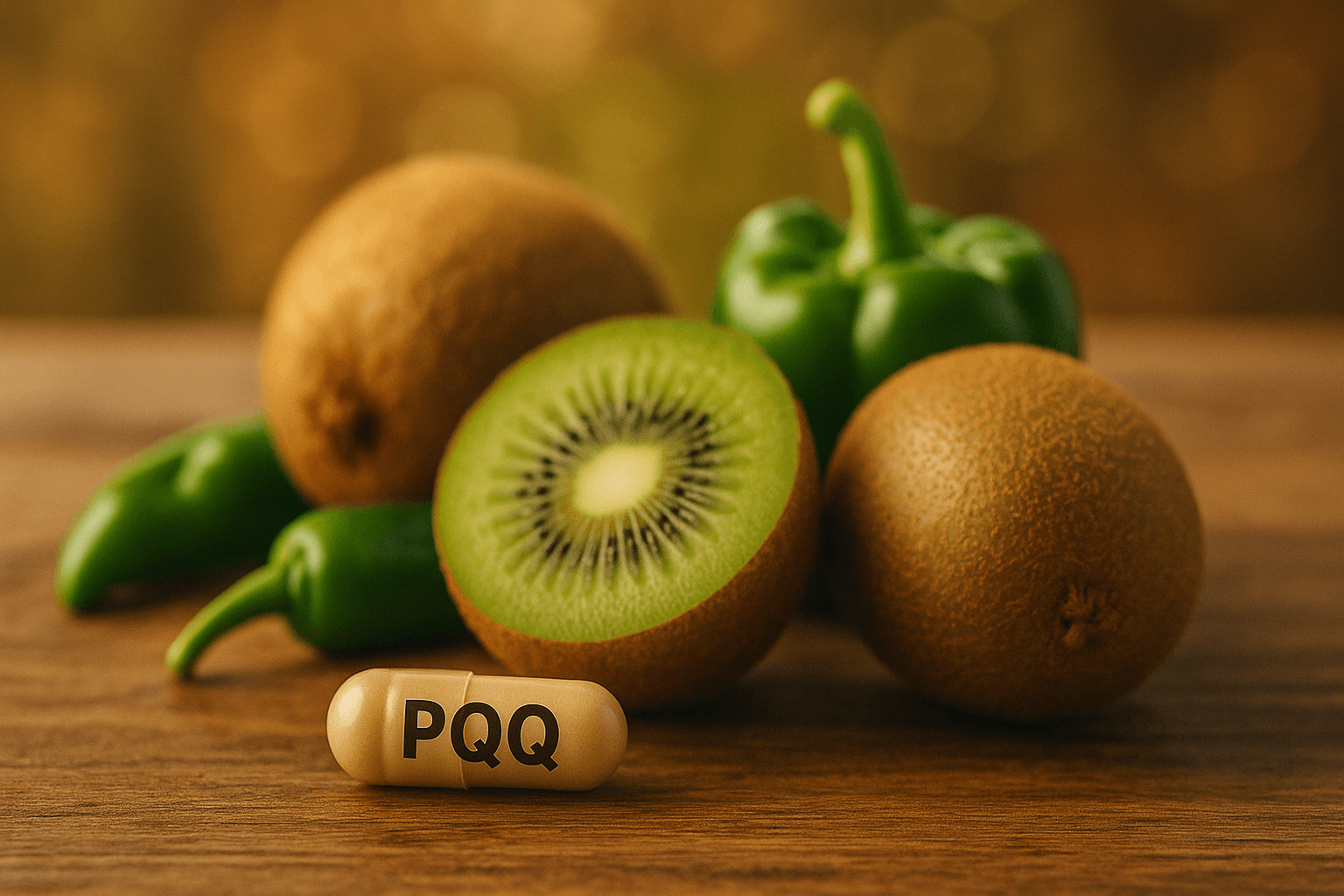
PQQ is present in trace amounts in many plant-based foods. Some of the richest natural sources include:
Fermented soy products such as natto
Kiwi fruit
Green peppers
Parsley and spinach
Green tea
Papaya
Celery
Although these foods can contribute small amounts of PQQ to the diet, typical dietary intake is only a few hundred micrograms per day—well below the doses used in supplementation studies, which usually range from 10 to 20 milligrams.
Supplement Forms
Most supplements on the market use PQQ disodium salt, often branded as BioPQQ®. This form has been the focus of most human clinical trials and appears to be both bioavailable and safe. It is typically sold in capsule form, sometimes combined with CoQ₁₀ to target mitochondrial health.
Dosage
General use: 10–20 mg per day is the most common dosage in research trials.
Older adults: Doses of 15–20 mg/day are often recommended in studies targeting memory or age-related cognitive support.
Athletic or high-demand use: Some anecdotal reports mention doses up to 30 mg/day, though evidence for benefits beyond 20 mg is limited.
Most benefits have been observed after at least 8–12 weeks of consistent daily supplementation. Taking PQQ with meals, especially those containing fat, may improve absorption. Some individuals split the dose between morning and early afternoon to support stable energy and avoid potential interference with sleep, though clinical evidence on timing is limited.
Safety Considerations
PQQ appears to have a good safety profile in human studies, with daily doses up to 20 mg generally well tolerated. Reported side effects are minimal and rare, though higher doses may increase the risk of mild gastrointestinal discomfort in some individuals.
No major drug interactions have been documented. However, because research is still limited, individuals on multiple medications should consult a healthcare professional before beginning supplementation.
PQQ has not been thoroughly studied in pregnant or breastfeeding women, so supplementation in these populations should be avoided unless directed by a clinician. People with chronic health conditions, particularly those involving liver or kidney function, should also seek medical guidance before use.
Putting It All Together
Pyrroloquinoline quinone is an intriguing compound that bridges the gap between food-derived micronutrients and emerging “mitochondrial nutrients.” While not essential in the strict sense, its ability to promote mitochondrial growth, buffer oxidative stress, and support cognitive performance makes it a promising candidate for those interested in maintaining energy and mental clarity with age.
The strongest evidence to date suggests modest benefits for memory and executive function in older adults, as well as potential improvements in processing speed and flexibility in younger adults. Early findings on sleep quality and stress resilience add another dimension, though these need replication in larger trials.
Importantly, PQQ should not be viewed as a magic bullet. Its effects appear supportive rather than transformative, best thought of as a gentle enhancer of mitochondrial and cognitive health. When combined with a balanced diet, regular exercise, and restorative sleep, PQQ supplementation may help support the cellular foundation of energy and resilience across adulthood.