1. Understanding Acetyl-L-Carnitine (ALCAR)
What Is Acetyl-L-Carnitine?
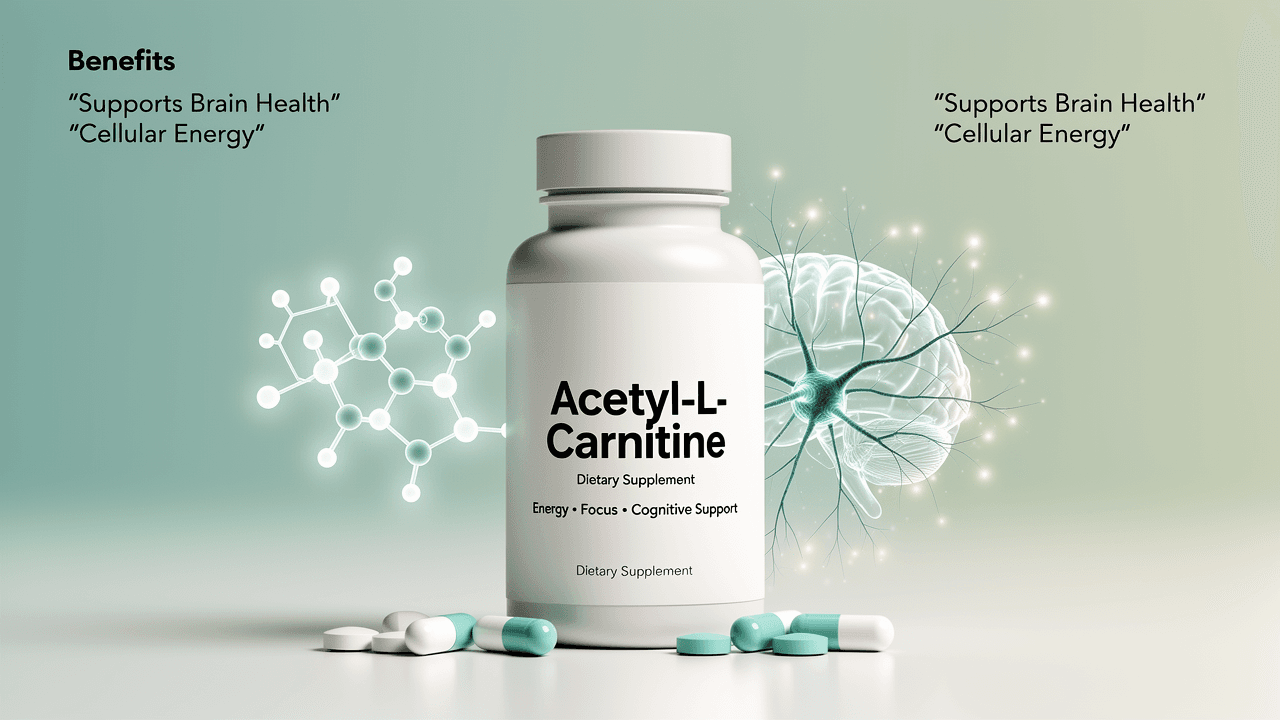
Acetyl-L-Carnitine (often shortened to ALCAR) is an acetylated form of L-carnitine, a compound derived from the amino acids lysine and methionine. Carnitine is naturally produced in the liver and kidneys and is concentrated in tissues with high energy demands, such as the brain, heart, and skeletal muscle.
ALCAR differs from regular L-carnitine by having an acetyl group attached. This modification:
- Increases its ability to cross the blood–brain barrier
- Enhances its role in brain energy metabolism
- Allows it to serve as a source of acetyl groups for acetylcholine synthesis (a key neurotransmitter for memory and learning)
Because of these properties, ALCAR is widely used both as a metabolic and neuroprotective supplement and as a nootropic.
How ALCAR Works in the Body and Brain
ALCAR’s main mechanisms include:
Mitochondrial Energy Metabolism
- Carnitine shuttles long-chain fatty acids into mitochondria for β-oxidation, enabling ATP production.
- ALCAR participates in the “carnitine shuttle,” helping maintain efficient energy production, especially in high-demand tissues (brain, heart, muscle).
Acetylcholine Support
- The acetyl group from ALCAR can be used to synthesize acetylcholine.
- Acetylcholine is crucial for memory, attention, learning, and neuromuscular function.
Neuroprotection and Antioxidant Effects
- ALCAR may reduce oxidative stress by:
- Enhancing mitochondrial function
- Modulating antioxidant enzyme activity
- It has been shown in preclinical and clinical studies to protect neurons from metabolic and excitotoxic damage.
- ALCAR may reduce oxidative stress by:
Membrane Stabilization and Nerve Regeneration
- ALCAR can influence membrane phospholipid metabolism and support nerve growth factor (NGF) signaling in experimental models.
- Clinically, it has been studied for peripheral neuropathy and nerve recovery.
Modulation of Neurotransmitters
- Evidence suggests ALCAR may modulate dopaminergic and glutamatergic systems and influence brain-derived neurotrophic factor (BDNF), though human data are still emerging.
2. Key Benefits of Acetyl-L-Carnitine
1. Cognitive Support and Age-Related Cognitive Decline
ALCAR is one of the better-studied supplements for mild cognitive impairment (MCI) and age-related decline. It may:
- Support memory and attention
- Improve mental energy and processing speed in some individuals
- Slow progression of cognitive symptoms in mild dementia in certain trials
Effects are generally modest and more pronounced in older adults or those with cognitive impairment rather than healthy young people.
2. Mood and Depression (Especially in Older Adults)
Several trials suggest ALCAR has antidepressant effects, particularly:
- In older adults with dysthymia or mild to moderate depression
- In individuals with comorbid cognitive impairment
Benefits may include improved mood, energy, and psychomotor function, with a generally favorable side-effect profile compared to conventional antidepressants.
3. Peripheral Neuropathy and Nerve Pain
ALCAR has been studied for:
- Diabetic peripheral neuropathy
- Chemotherapy-induced peripheral neuropathy
- Other forms of nerve injury
Some trials report improvements in nerve pain, nerve conduction, and sensory function, particularly with higher doses (1,500–3,000 mg/day) over several months.
4. Fatigue and Physical Performance (Limited/Context-Dependent)
Because of its role in mitochondrial energy metabolism, ALCAR may:
- Reduce fatigue in certain clinical populations (e.g., chronic fatigue, age-related fatigue, some neurological conditions)
- Provide mild benefits for exercise capacity in some studies, though results are mixed
As a pure performance enhancer in healthy, trained athletes, evidence is limited and inconsistent.
3. Research Findings
Cognitive Function and Dementia
Mild Cognitive Impairment & Early Dementia
A meta-analysis of randomized controlled trials (RCTs) (over 1,000 participants total) found that ALCAR at 1,500–3,000 mg/day for 3–12 months produced small to moderate improvements in cognitive performance in patients with mild cognitive impairment and mild Alzheimer’s disease compared to placebo. Improvements were seen in:
- Memory scores
- Attention and mental performance
- Activities of daily living in some studies
In a double-blind RCT in patients with mild Alzheimer’s disease (n ≈ 130, duration 1 year), ALCAR at 3,000 mg/day slowed the rate of cognitive decline on standardized scales compared with placebo, though it did not stop progression.
Healthy Adults
- Trials in healthy younger adults are fewer and show mixed results. Some small studies (sample sizes ~20–40, durations 1–3 months, doses 1,000–2,000 mg/day) report subjective increases in mental energy and attention, but objective cognitive test improvements are modest or absent.
Depression and Mood
- A systematic review and meta-analysis (covering ~12 clinical trials, total n > 800) found that ALCAR had significant antidepressant effects compared with placebo and was comparable in efficacy to some conventional antidepressants in older adults, with fewer side effects.
- Typical doses in these studies ranged from 1,000–3,000 mg/day for 8–24 weeks.
- Benefits were more consistently observed in:
- Older adults with dysthymia or mild–moderate depression
- Patients with comorbid cognitive impairment or chronic medical conditions
Peripheral Neuropathy
Diabetic Neuropathy
- A pooled analysis of RCTs in diabetic neuropathy (combined n ≈ 1,200) using ALCAR 1,500–3,000 mg/day for 6–12 months showed:
- Significant reduction in pain scores versus placebo
- Improvements in nerve conduction velocity in some nerves
- Better vibration perception thresholds in certain studies
Chemotherapy-Induced Neuropathy
- Small RCTs and open-label trials (sample sizes ~20–250, doses 1,500–3,000 mg/day, durations 8–24 weeks) have reported:
- Reduced neuropathic pain
- Improvement in sensory symptoms
However, data are not fully consistent, and some oncologists remain cautious due to theoretical concerns about supporting tumor cell metabolism (more on this in safety/contraindications).
Fatigue and Energy
In chronic fatigue or age-related fatigue, several small RCTs (sample sizes ~30–120, doses 1,000–2,000 mg/day for 2–6 months) reported:
- Reduced fatigue severity
- Improved physical and mental energy
In multiple sclerosis and other neurological conditions, some studies suggest modest reductions in fatigue, though results vary.
Other Areas (Emerging or Limited Evidence)
- Male fertility: Some studies with L-carnitine + ALCAR combinations show improved sperm motility and count, but isolating ALCAR’s specific contribution is difficult.
- Metabolic health: ALCAR may improve insulin sensitivity and lipid profile in certain metabolic disorders, but evidence is not strong enough to recommend it as primary therapy.
- Neurodegenerative diseases: ALCAR has been studied in Alzheimer’s, Parkinson’s, and other neurodegenerative conditions with some positive signals, but it is adjunctive at best, not disease-modifying.
Overall, evidence is strongest for:
- Cognitive support in older adults with MCI or early dementia
- Depressive symptoms in older adults
- Diabetic and some other neuropathies
4. Best Sources & Dosage
Forms of Carnitine
Acetyl-L-Carnitine (ALCAR):
- Best for brain-related goals (cognition, mood, neuropathy).
- Crosses the blood–brain barrier more readily than L-carnitine.
L-Carnitine (base or L-carnitine tartrate):
- More commonly used for exercise performance and general metabolism.
Propionyl-L-Carnitine:
- More targeted toward peripheral circulation and cardiovascular issues.
For nootropic and neuroprotective purposes, ALCAR is typically preferred.
Typical Supplemental Forms
- Capsules or tablets (most common)
- Powder (can have a slightly sour taste)
- Sometimes combined with other nootropics (e.g., alpha-lipoic acid, choline donors)
Evidence-Based Dosage Ranges
1. General Cognitive Support / Nootropic Use
- Range: 500–2,000 mg/day
- Common regimen: 500–1,000 mg once or twice daily
- Timing: Morning and/or early afternoon (may be mildly stimulating for some)
2. Age-Related Cognitive Decline / Mild Cognitive Impairment
- Research doses: 1,500–3,000 mg/day (often divided into 2–3 doses)
- Typical clinical use: 1,500–2,000 mg/day to start, under medical supervision
- Duration in studies: 3–12 months
3. Depression (Especially in Older Adults)
- Range in studies: 1,000–3,000 mg/day
- Common: 1,000–2,000 mg/day, divided
- Always as an adjunct to, not a replacement for, professional mental health care.
4. Peripheral Neuropathy (Diabetic or Chemotherapy-Induced)
- Research doses: 1,500–3,000 mg/day
- Usually divided into 2–3 doses with meals
- Duration: often 3–12 months in diabetic neuropathy trials.
5. Fatigue and Energy Support
- Range: 1,000–2,000 mg/day
- Split doses (e.g., 500–1,000 mg morning, 500–1,000 mg early afternoon)
Practical Dosing Tips
Start low and titrate:
Begin with 500 mg once daily to assess tolerance, then increase by 500 mg every few days as needed and tolerated.With or without food:
Can be taken with or without meals. Taking with food may reduce any mild GI discomfort.Cycling:
Not strictly necessary, but some users prefer cycles (e.g., 5 days on / 2 days off, or 8–12 weeks on / 2–4 weeks off) to periodically reassess need and effect.Combinations:
- Often paired with alpha-lipoic acid (ALA) in mitochondrial support protocols.
- May be combined with choline donors (e.g., CDP-choline) for acetylcholine support, though this is more based on theory and anecdote than strong clinical data.
Always consider medical supervision for doses above 1,500 mg/day, long-term use, or if you have chronic health conditions.
5. Safety, Side Effects, and Drug Interactions
General Safety Profile
ALCAR is generally well-tolerated in clinical trials, including long-term studies up to 1–2 years at doses of 1,500–3,000 mg/day.
Common Side Effects (Usually Mild)
- Gastrointestinal symptoms:
- Nausea
- Abdominal discomfort
- Diarrhea
- Restlessness or mild insomnia (especially if taken late in the day)
- Headache
These effects are typically dose-related and often improve by:
- Reducing the dose
- Splitting the dose across the day
- Taking with food
Less Common / Theoretical Concerns
Fishy Body Odor
- Carnitine metabolism by gut bacteria can produce trimethylamine (TMA), leading to a fishy odor in susceptible individuals.
- Reducing dose or improving gut health may help; if persistent, discontinuation may be necessary.
TMAO and Cardiovascular Risk (Theoretical)
- Carnitine can be converted by gut bacteria to trimethylamine N-oxide (TMAO), a compound associated in observational studies with cardiovascular risk.
- Most TMAO data involve high red meat intake or high-dose L-carnitine; specific long-term data for ALCAR are limited.
- In people with existing cardiovascular disease or high risk, discuss ALCAR use with a healthcare professional.
Seizure Risk
- There are case reports of carnitine supplementation potentially lowering seizure threshold in individuals with a history of seizures.
- Anyone with epilepsy or a seizure disorder should use ALCAR only under neurologist supervision.
Cancer and Chemotherapy (Theoretical)
- Because ALCAR supports mitochondrial function and fatty acid metabolism, there is a theoretical concern it could support tumor cell energy metabolism.
- Human data are limited and mixed. Some oncologists are cautious about high-dose carnitines during active cancer treatment.
- If you have cancer or are receiving chemotherapy, do not start ALCAR without explicit approval from your oncology team.
Drug Interactions
Evidence for clinically significant interactions is limited, but the following considerations are prudent:
Thyroid Hormone (Levothyroxine and Others)
- Some evidence suggests carnitine may act as a peripheral antagonist of thyroid hormone in certain contexts, potentially blunting hyperthyroid symptoms.
- Individuals on thyroid medication (especially for hypothyroidism) should use ALCAR cautiously and monitor thyroid function and symptoms.
- Do not adjust thyroid medication without medical guidance.
Anticoagulants / Antiplatelet Drugs
- Limited data; no strong evidence of interaction, but caution is reasonable with warfarin, DOACs, or dual antiplatelet therapy.
- Monitor for unusual bruising or bleeding and inform your prescriber.
Anticonvulsants
- As noted, theoretical effects on seizure threshold.
- Use only under supervision if you are taking antiepileptic medications.
Other Nootropics and Stimulants
- Combining ALCAR with stimulants (caffeine, ADHD medications, modafinil) may increase feelings of mental stimulation or jitteriness in some people.
- Start with lower doses and monitor how you feel.
Because ALCAR is often used alongside multiple supplements, always provide your full supplement list to your healthcare provider.
Special Populations
Pregnancy and Breastfeeding:
Safety data are insufficient. ALCAR should generally be avoided unless specifically recommended by a physician.Children and Adolescents:
Used in some metabolic or neurological disorders under specialist care, but not recommended as a general nootropic for healthy minors.Kidney Disease:
Carnitine metabolism and clearance can be altered in kidney disease. Use only under nephrologist supervision.
6. Who Should and Shouldn’t Use ALCAR
Who Might Consider ALCAR (With Medical Guidance)
Older Adults with Mild Cognitive Complaints or MCI
- Those experiencing age-related memory or attention issues, particularly when other causes (e.g., B12 deficiency, sleep apnea, depression) have been evaluated.
Individuals with Peripheral Neuropathy
- Especially diabetic neuropathy or certain chemotherapy-induced neuropathies, as an adjunct to standard care.
Older Adults with Depressive Symptoms
- Particularly dysthymia or mild–moderate depression, as an adjunct to psychotherapy and/or pharmacotherapy.
People with Chronic Fatigue or Low Energy (After Medical Workup)
- When other causes (anemia, thyroid disease, sleep disorders, infection, etc.) have been evaluated and treated.
Those Seeking Mild Cognitive or Energy Support
- Healthy adults interested in a mitochondrial-supporting, generally well-tolerated nootropic, understanding that effects may be modest.
Who Should Avoid or Use ALCAR Only Under Close Supervision
People with Seizure Disorders (Epilepsy)
- Use only under neurologist supervision due to potential effects on seizure threshold.
Individuals with Active Cancer or Undergoing Chemotherapy/Radiation
- Do not start ALCAR without explicit approval from your oncology team.
Those with Significant Cardiovascular Disease or Very High Cardiometabolic Risk
- Discuss potential TMAO-related concerns with a cardiologist or primary care physician, particularly for long-term high-dose use.
People with Thyroid Disorders on Medication
- Especially hypothyroidism treated with levothyroxine; use cautiously and monitor symptoms and labs.
Pregnant or Breastfeeding Women
- Avoid unless specifically instructed by a physician due to limited safety data.
Moderate to Severe Kidney Disease
- Carnitine metabolism can be altered; use only under nephrologist guidance.
General Guidance Before Starting ALCAR
- Get a baseline health evaluation if you have persistent fatigue, mood issues, or cognitive concerns.
- Review all medications and supplements with a healthcare professional.
- Start with lower doses and monitor:
- Sleep quality
- Mood and anxiety
- GI tolerance
- Any unusual symptoms (palpitations, headaches, worsening of existing conditions)
Key Takeaways
- Acetyl-L-carnitine (ALCAR) is a brain-penetrant form of carnitine that supports mitochondrial energy production, acetylcholine synthesis, and neuroprotection.
- Evidence is strongest for benefits in age-related cognitive decline, depressive symptoms in older adults, and peripheral neuropathy, with more modest and variable effects in healthy individuals.
- Typical doses range from 500–2,000 mg/day for general nootropic use, and 1,500–3,000 mg/day in clinical contexts such as neuropathy or MCI, usually under medical supervision.
- ALCAR is generally well-tolerated, but considerations include GI upset, possible effects on seizure threshold, theoretical cardiovascular and cancer-related concerns, and potential interactions with thyroid medications.
- It may be most appropriate as an adjunct—not a replacement—for standard medical care, particularly in older adults with cognitive or mood symptoms and those with neuropathic pain.