Understanding MSM
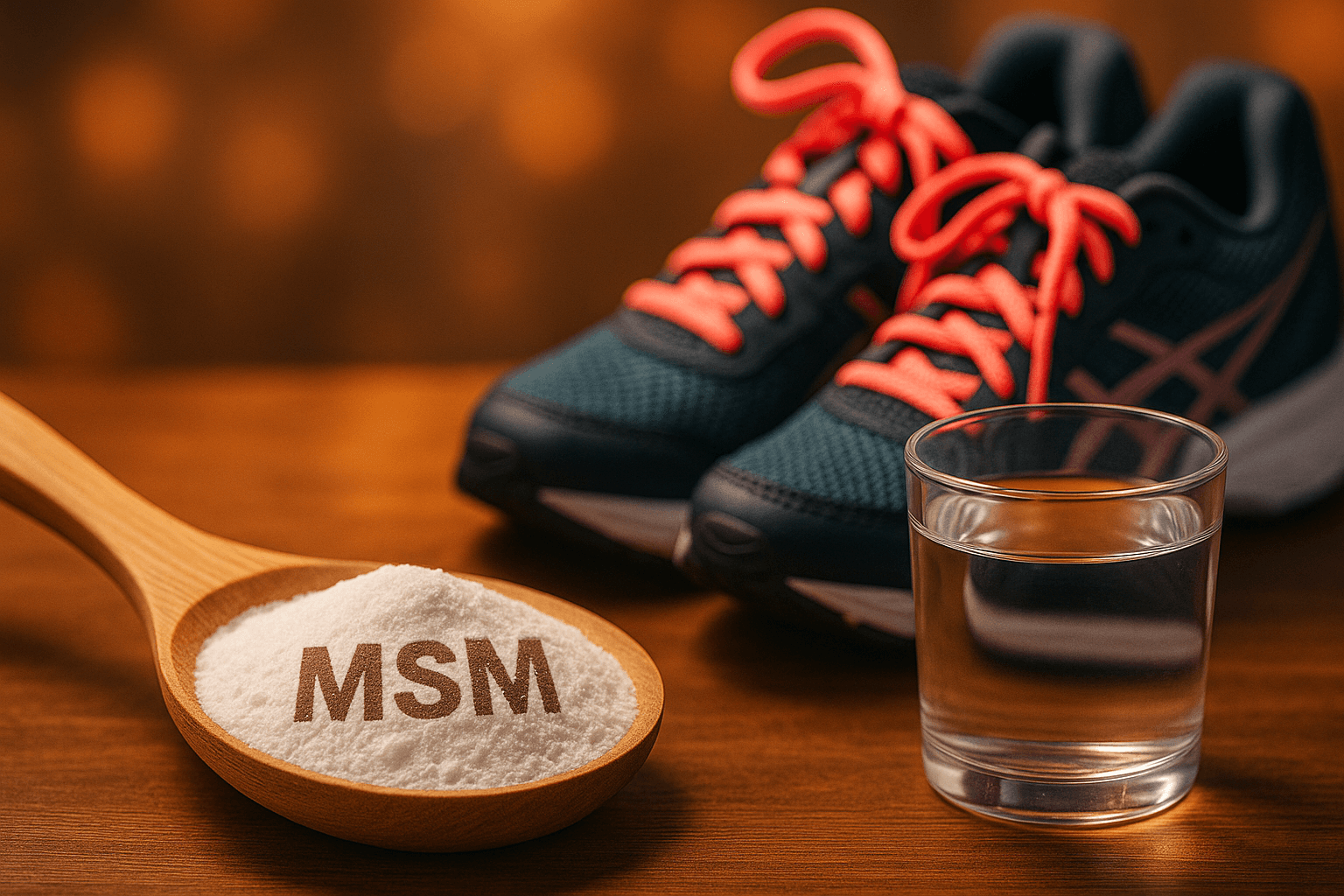
Methylsulfonylmethane (MSM) is an organosulfur compound found naturally in small amounts in fruits, vegetables, grains, and animal products. It is also produced in the human body as a metabolite of sulfur-containing amino acids such as methionine and cysteine. Sulfur is a fundamental element required for collagen synthesis, antioxidant defenses, and enzymatic activity that sustains healthy connective tissue, joints, skin, and metabolic processes.
Dietary intake of sulfur from food is modest, and levels decline with cooking and food processing. For this reason, supplemental MSM has been developed as a concentrated, bioavailable source. In supplement form, MSM is a white crystalline powder that dissolves easily in water and has high intestinal absorption. Unlike some sulfur compounds, MSM has low odor and is well tolerated.
MSM’s physiological roles involve contributing sulfur groups for collagen cross-linking, keratin stabilization, and glutathione production. It also influences inflammatory signaling and oxidative stress, two processes strongly linked with joint comfort and exercise recovery.
Key Benefits
Joint comfort – MSM reduces stiffness, swelling, and discomfort in people with osteoarthritis and other joint conditions.
Exercise recovery – Supplementation lessens muscle soreness and oxidative stress after strenuous activity.
Skin and connective tissue health – MSM contributes sulfur for collagen and keratin synthesis, strengthening skin, hair, and nails.
Research Findings
Clinical research on MSM spans osteoarthritis management, exercise performance, and dermatology.
In a 12-week randomized controlled trial (n=118 adults with knee osteoarthritis), participants taking 3 g of MSM twice daily experienced significant reductions in pain and stiffness scores along with improvements in physical function compared with placebo.
In a 10-day RCT (n=22 healthy young adults), 3 g of MSM daily reduced post-exercise muscle soreness and oxidative stress markers following intense eccentric exercise compared with placebo. These findings highlight MSM’s role in recovery and redox balance.
In a 16-week double-blind RCT (n=20 adults with rosacea), topical MSM cream improved redness, hydration, and skin elasticity compared with placebo, confirming a dermatological application through local sulfur delivery.
Across trials, MSM consistently improves outcomes related to joint comfort, exercise recovery, and skin quality, with benefits attributed to its sulfur-donating and anti-inflammatory mechanisms.
Mechanisms of Action
MSM’s effects are explained by its dual role as a sulfur donor and an anti-inflammatory modulator:
Sulfur metabolism: MSM contributes bioavailable sulfur for the formation of collagen, keratin, and glucosamine, which stabilize cartilage, ligaments, skin, and hair.
Antioxidant pathways: MSM enhances glutathione synthesis, the body’s master antioxidant, which reduces cellular oxidative damage.
Inflammatory balance: MSM has been shown to lower levels of pro-inflammatory cytokines such as IL-6 and TNF-α, mechanisms relevant in arthritis and exercise-induced inflammation.
Cellular permeability: Preliminary data suggest MSM improves membrane flexibility, which may support nutrient transport and waste removal in tissues.
Best Sources & Dosage
MSM is commercially available in capsules, powders, and topical creams. Oral supplementation is the most studied route, while topical MSM is useful for local skin and joint support.
Evidence-based oral dosages for adults range from 1.5–6 g per day. Osteoarthritis trials often use 3 g twice daily. Short-term exercise recovery studies use 3 g daily. Gradual titration is advised for sensitive individuals to minimize mild gastrointestinal effects.
Topical formulations typically contain 5–10% MSM, applied once or twice daily for skin hydration, elasticity, and redness reduction.
MSM is considered safe and well tolerated. Mild side effects include bloating, headache, or loose stools at high intakes. Long-term studies up to 6 months report no serious adverse events. MSM is chemically distinct from sulfa drugs and sulfites, making cross-allergy reactions unlikely. However, pregnant and breastfeeding women should avoid supplementation due to limited safety data.
Putting It All Together
MSM provides a concentrated, bioavailable source of sulfur, an element essential for joint structure, connective tissue, and antioxidant defense. Clinical research demonstrates consistent improvements in osteoarthritis-related pain, exercise recovery, and skin quality. Its benefits are underpinned by clear mechanisms involving collagen synthesis, glutathione support, and inflammatory modulation.
MSM does not reverse degenerative joint conditions but offers a safe, evidence-backed strategy for supporting mobility, structural resilience, and recovery. For adults seeking joint comfort or exercise recovery support, daily doses of 1.5–6 g are well studied and safe. High-quality, third-party tested MSM supplements deliver reliable purity and absorption, ensuring practical benefits for long-term health and performance.