1. Understanding Krill Oil – What It Is and How It Works
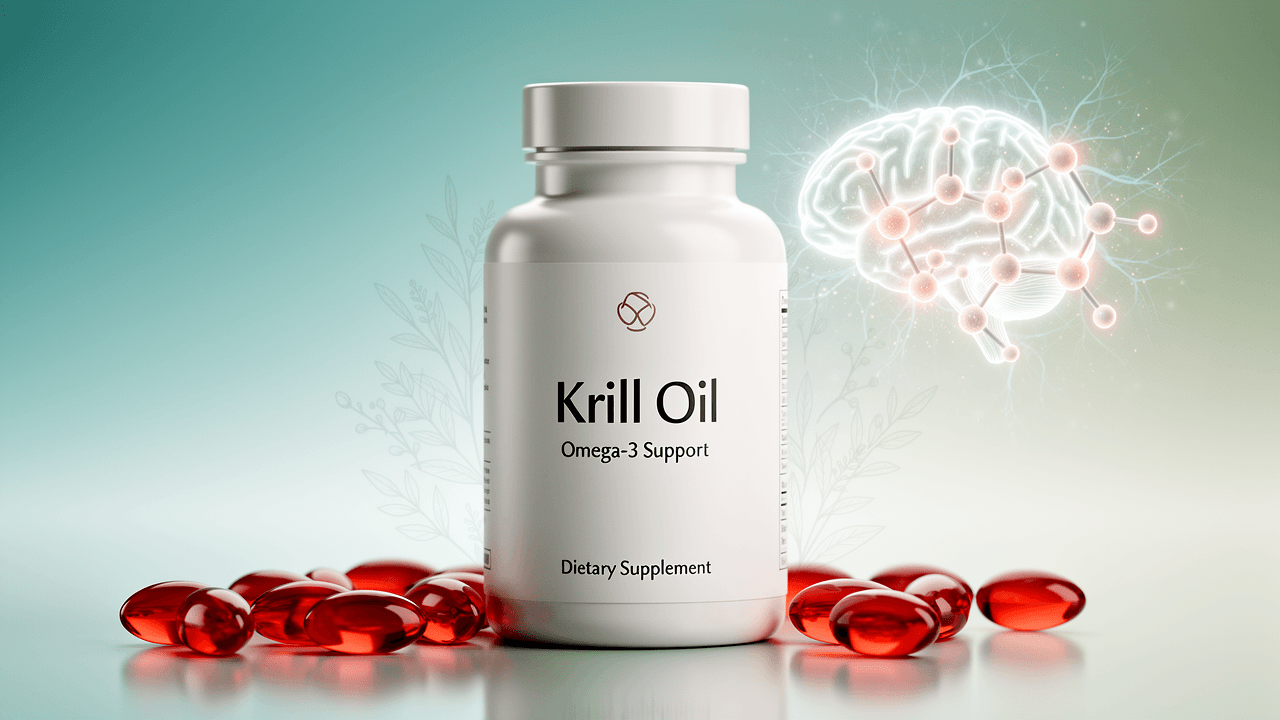
Krill oil is a marine oil extracted from Antarctic krill (Euphausia superba), tiny shrimp-like crustaceans that are a major part of the marine food chain. Like fish oil, krill oil is rich in omega‑3 fatty acids, particularly EPA (eicosapentaenoic acid) and DHA (docosahexaenoic acid). However, it differs from standard fish oil in several important ways:
- Phospholipid-bound omega‑3s: In krill oil, much of the EPA and DHA is bound to phospholipids (especially phosphatidylcholine), rather than triglycerides (the main form in most fish oils).
- Astaxanthin content: Krill oil naturally contains astaxanthin, a red carotenoid antioxidant that helps protect the oil from oxidation.
- Smaller doses for similar effects: Some studies suggest krill oil may raise blood omega‑3 levels as effectively as fish oil at lower doses, likely due to phospholipid-based absorption.
How Krill Oil Works in the Body
Membrane incorporation
EPA and DHA from krill oil are incorporated into cell membranes throughout the body, especially in the brain, retina, heart, and immune cells. Phospholipid-bound omega‑3s integrate directly into membrane phospholipid bilayers, potentially improving:- Membrane fluidity
- Cell signaling
- Neurotransmission and synaptic function
Modulation of inflammation
EPA and DHA serve as precursors to anti-inflammatory lipid mediators (resolvins, protectins, maresins). They can:- Decrease production of pro-inflammatory eicosanoids derived from arachidonic acid
- Reduce inflammatory cytokines such as TNF‑α and IL‑6 This underlies many of krill oil’s potential benefits for joint, cardiovascular, and metabolic health.
Effects on lipids and cardiometabolic health
Omega‑3s can:- Lower triglycerides
- Modestly raise HDL (“good”) cholesterol
- Potentially improve particle size of LDL
- Support endothelial function and reduce platelet aggregation
Brain and cognitive effects
DHA is a critical structural component of neuronal membranes and synapses. EPA and DHA may:- Support neurotransmitter function (e.g., serotonin, dopamine)
- Improve membrane signaling and neuroplasticity
- Reduce neuroinflammation and oxidative stress The phosphatidylcholine component may further support acetylcholine-related cognitive processes.
Antioxidant support (via astaxanthin)
Astaxanthin is a potent antioxidant that:- Protects krill oil from oxidation (rancidity)
- May help reduce oxidative damage in lipids and cell membranes
2. Key Benefits of Krill Oil
1. Cardiovascular and Lipid Health
- Helps reduce elevated triglycerides in some individuals
- May modestly improve cholesterol profile
- Supports endothelial function and reduces low-grade inflammation, both relevant to cardiovascular risk
2. Brain Health and Cognitive Support
- Provides DHA and EPA in a phospholipid form that is readily incorporated into brain cell membranes
- May support memory, attention, and mental processing speed, especially in people with low baseline omega‑3 intake
- Potential adjunct for mood support (e.g., mild depressive symptoms), though evidence is still emerging
3. Joint and Inflammation Support
- Krill oil has been studied for knee pain and arthritis-related symptoms
- May reduce joint pain, stiffness, and functional impairment by lowering inflammatory markers
4. Metabolic and PMS Symptom Support
- May aid in managing metabolic syndrome markers (triglycerides, waist circumference, insulin resistance)
- Some evidence suggests benefits for premenstrual syndrome (PMS) symptoms and menstrual-related mood changes
3. Research Findings on Krill Oil
Below are selected human studies illustrating krill oil’s effects. Note that many studies are small to moderate in size and often industry-funded, which warrants cautious interpretation.
3.1 Lipid and Cardiovascular Markers
Triglycerides and cholesterol
Bunea et al., 2004 (Randomized trial)
- Participants: 120 adults with hyperlipidemia
- Design: 90 days; krill oil (1–3 g/day) vs fish oil (3 g/day) vs placebo
- Findings:
- Krill oil at 1–1.5 g/day reduced total cholesterol by ~13–18% and LDL by ~32–39%, and increased HDL by ~43–60%.
- Fish oil group had more modest lipid changes.
- Limitations: Very large effect sizes relative to typical omega‑3 trials; replication has been limited; industry funding.
Maki et al., 2009 (Randomized, double-blind)
- Participants: 76 adults with high triglycerides (200–499 mg/dL)
- Intervention: 1–3 g/day krill oil vs placebo for 12 weeks
- Results:
- Triglycerides decreased by ~10% in the 2–3 g/day krill oil groups vs minimal change in placebo.
- No major changes in LDL or HDL.
- Takeaway: Krill oil can modestly lower triglycerides at doses ≥2 g/day.
3.2 Inflammation and Joint Health
Deutsch, 2007 (Randomized, double-blind, placebo-controlled)
- Participants: 90 patients with cardiovascular disease and/or osteoarthritis or rheumatoid arthritis
- Intervention: 300 mg/day krill oil vs placebo for 30 days
- Outcomes: C‑reactive protein (CRP) and clinical arthritis symptoms
- Findings:
- CRP decreased by 19.3% at day 7 and 30.9% at day 30 in the krill oil group, while CRP increased in the placebo group.
- Pain scores, stiffness, and functional impairment improved significantly in the krill oil group vs placebo.
- Limitations: Short duration; mixed patient population; relatively small sample.
Hagen et al., 2010 (Pilot trial)
- Participants: 50 adults with mild knee pain
- Intervention: 2 g/day krill oil vs placebo for 6 months
- Results:
- Trends toward reduced knee pain and stiffness in the krill oil group, with improvements in some functional measures.
- Limitations: Modest effect sizes; not all outcomes reached statistical significance.
3.3 Brain, Cognition, and Mood
Evidence for krill oil as a nootropic is emerging and still limited compared with traditional fish oil or isolated phospholipids.
Konagai et al., 2013 (Randomized, double-blind)
- Participants: 45 healthy elderly Japanese subjects (61–72 years)
- Intervention: 2 g/day krill oil vs sardine oil vs control oil for 12 weeks
- Outcomes: Cognitive tests, blood omega‑3 levels
- Findings:
- Krill oil group showed increased plasma EPA and DHA and some improvement in working memory and processing speed compared with control.
- Differences vs sardine oil were modest; phospholipid-bound omega‑3s may have supported brain uptake more efficiently.
- Limitations: Small sample size; short duration.
Yurko-Mauro et al., 2010 (Fish oil, not krill, but relevant)
- Participants: 485 older adults with age-related cognitive decline
- Intervention: 900 mg/day DHA (from algal oil) vs placebo for 24 weeks
- Results:
- DHA improved learning and memory performance vs placebo.
- Relevance: Shows DHA’s cognitive potential; krill oil is an alternative omega‑3 source that may offer similar or better brain delivery due to phospholipid form, but direct head-to-head trials are sparse.
Mood and PMS
- Sampalis et al., 2003 (Randomized, double-blind)
- Participants: 70 women with PMS, dysmenorrhea, or both
- Intervention: Krill oil (2 g/day providing ~400 mg EPA+DHA) vs fish oil (2 g/day) for 90 days
- Findings:
- Krill oil group showed greater reductions in PMS symptoms (including mood-related symptoms, breast tenderness, and bloating) and reduced need for analgesics compared with fish oil.
- Limitations: Small sample; some methodological concerns; industry funding.
3.4 Metabolic Health
- Ulven et al., 2011 (Randomized, double-blind)
- Participants: 113 overweight or obese adults with borderline or high triglycerides
- Intervention: 4 g/day krill oil vs 4 g/day fish oil vs control for 7 weeks
- Outcomes: Triglycerides, HDL, LDL, glucose, insulin
- Findings:
- Both krill oil and fish oil increased plasma EPA and DHA.
- Triglyceride changes were modest and not significantly different between krill and fish oil in this short trial.
- Takeaway: Krill oil is at least comparable to fish oil in raising blood omega‑3 levels; metabolic benefits likely similar at equivalent EPA+DHA doses.
4. Best Sources & Dosage – Forms, Dosing, Timing, Safety
4.1 Forms of Krill Oil
- Softgel capsules: The most common form; standardized doses (typically 500–1000 mg per capsule).
- Liquid krill oil: Less common; can be harder to dose precisely but useful for those who dislike capsules.
When choosing a product, look for:
- Clearly labeled EPA and DHA content per serving (not just “krill oil mg”).
- Third-party testing for heavy metals and contaminants.
- Country/region of origin (Antarctic krill is standard).
- Sustainability certifications (e.g., MSC – Marine Stewardship Council), as krill are a key species in the marine ecosystem.
4.2 Typical EPA + DHA Content
Krill oil is less concentrated in EPA+DHA per gram than many fish oils, but its phospholipid form may enhance absorption:
- 1,000 mg krill oil often provides ~150–250 mg EPA and ~90–150 mg DHA (varies by brand).
4.3 Dosage Recommendations by Use Case
General health / maintenance
- Common range: 500–1,000 mg krill oil per day
- Provides roughly 250–400 mg combined EPA+DHA, depending on the product.
- Goal: Support baseline omega‑3 status, cardiovascular and brain health in otherwise healthy adults.
Cardiovascular and triglyceride support
- Typical studied range: 1–3 g/day krill oil
- Aim for at least 500–1,000 mg combined EPA+DHA daily.
- Use: For individuals with elevated triglycerides or multiple cardiometabolic risk factors (under medical supervision).
- Note: For very high triglycerides, prescription-strength omega‑3s (often 2–4 g/day EPA/DHA) have stronger evidence than krill oil specifically.
Joint health and inflammation
- Common studied doses: 300 mg–2 g/day
- 300 mg/day showed benefit on CRP and arthritis symptoms in some trials.
- 1–2 g/day may be more appropriate for persistent joint pain or inflammatory conditions (with physician oversight).
Cognitive and mood support (nootropic use)
- Suggested range: 1–2 g/day krill oil
- Aim for ~400–800 mg combined EPA+DHA, especially if dietary fish intake is low.
- Rationale: Aligns with doses used in cognitive and mood-related omega‑3 studies, though direct krill-specific nootropic data are limited.
PMS and menstrual symptom support
- Studied dose: ~2 g/day krill oil
- In the Sampalis trial, 2 g/day reduced PMS symptoms more than fish oil.
Important: These ranges are general guidelines, not medical prescriptions. Individuals with medical conditions, those on medications, or pregnant/breastfeeding should consult a healthcare professional for personalized dosing.
4.4 Timing and Administration
- With meals: Take krill oil with food, preferably a meal containing some fat, to improve absorption and reduce gastrointestinal discomfort.
- Once vs divided doses:
- For 500–1,000 mg/day, once daily with a main meal is usually sufficient.
- For higher doses (2–3 g/day), splitting into 2 doses (e.g., breakfast and dinner) may improve tolerance.
5. Safety, Side Effects, and Drug Interactions
5.1 General Safety Profile
Krill oil is generally well tolerated in healthy adults at typical supplemental doses (up to ~3 g/day). Most reported side effects are mild and gastrointestinal in nature.
5.2 Common Side Effects
- Mild gastrointestinal upset (nausea, loose stools, stomach discomfort)
- Fishy aftertaste or burps (often less than with fish oil, but still possible)
- Heartburn or reflux in some individuals
These can often be minimized by:
- Taking with meals
- Starting with a lower dose and gradually increasing
- Choosing enteric-coated or high-quality, fresh products
5.3 Less Common or Theoretical Risks
- Bleeding risk: Omega‑3s can modestly reduce platelet aggregation. At typical doses (≤3 g/day EPA+DHA), major bleeding risk is low for most people, but caution is warranted in those on anticoagulant or antiplatelet therapy.
- Allergic reactions:
- Individuals with shellfish allergy may react to krill oil, as krill are crustaceans.
- Reactions could include hives, itching, swelling, or, rarely, anaphylaxis.
- Glucose regulation: Most data suggest neutral or slightly beneficial effects on insulin sensitivity, but people with diabetes should monitor glucose when starting any new supplement.
- Liver function: High doses of any lipid supplement may stress the liver in susceptible individuals; those with liver disease should use under medical supervision.
5.4 Drug and Supplement Interactions
Anticoagulants and antiplatelet drugs
- Examples: Warfarin, apixaban, rivaroxaban, dabigatran, heparin, aspirin, clopidogrel.
- Concern: Potential additive antiplatelet/anticoagulant effect, which may increase bleeding risk, especially at higher doses (>1–2 g/day EPA+DHA).
- Recommendation:
- Consult your healthcare provider before using krill oil if you take these medications.
- Monitor for signs of bleeding (easy bruising, nosebleeds, bleeding gums, black stools).
NSAIDs
- Examples: Ibuprofen, naproxen, diclofenac.
- Concern: Combined with omega‑3s, may slightly increase bleeding risk.
- Practical note: Occasional NSAID use plus moderate krill oil dosing is usually tolerated, but long-term high-dose NSAID + high-dose omega‑3 should be supervised.
Other supplements affecting coagulation
- Examples: High-dose vitamin E, ginkgo biloba, garlic, ginseng, curcumin.
- Concern: Additive effects on bleeding time.
- Advice: If combining multiple such agents, keep doses moderate and discuss with a clinician.
Lipid-lowering drugs
- Examples: Statins, fibrates, PCSK9 inhibitors.
- Interaction: Generally considered safe; krill oil may complement lipid-lowering therapy by targeting triglycerides and inflammation.
- Monitoring: Lipid panels can guide whether krill oil adds meaningful benefit.
5.5 Special Populations
Pregnant and breastfeeding women
- DHA is critical for fetal and infant brain development.
- Krill oil is a potential source, but safety data in pregnancy are more limited than for standard fish oil and prenatal DHA.
- Recommendation: Prefer pregnancy-specific omega‑3 formulations (often purified fish or algal oils). If considering krill oil, do so only under obstetric guidance.
Children and adolescents
- Limited research on krill oil specifically; most pediatric data involve fish oil or algal DHA.
- Omega‑3s can benefit learning and behavior, but dosing must be weight-appropriate.
- Recommendation: Use child-formulated omega‑3 supplements; krill oil should be used cautiously and under pediatric supervision.
Older adults
- May particularly benefit from omega‑3s for heart and brain health.
- Monitor for interactions with anticoagulants and antiplatelet drugs, which are more commonly used in this group.
People with seafood/shellfish allergy
- Should generally avoid krill oil, as cross-reactivity is likely.
- Consider algae-derived DHA/EPA as an alternative.
People with bleeding disorders or upcoming surgery
- Those with hemophilia, von Willebrand disease, or low platelets should only use krill oil under specialist guidance.
- Many surgeons advise stopping omega‑3 supplements 7–10 days before major surgery to minimize bleeding risk (follow your surgeon’s instructions).
6. Who Should and Shouldn’t Use Krill Oil
6.1 Who May Benefit from Krill Oil
Adults with low fish intake
- Anyone who rarely eats fatty fish (salmon, sardines, mackerel) and wants to improve omega‑3 status.
Individuals seeking cardiovascular support
- Those with borderline-high triglycerides or multiple cardiovascular risk factors, as an adjunct to diet, exercise, and medical therapy.
People with mild joint discomfort or inflammation
- Especially those with early osteoarthritis, who may benefit from modest anti-inflammatory effects.
Adults focusing on brain health and cognitive aging
- Middle-aged and older adults wanting to support memory, processing speed, and overall brain function, particularly if diet is low in omega‑3s.
Women with PMS
- Those experiencing significant PMS symptoms may consider krill oil as part of a broader management strategy, with medical guidance.
6.2 Who Should Avoid or Use Krill Oil with Caution
People with known shellfish or crustacean allergy
- High risk of allergic reaction; krill oil is generally contraindicated.
- Use algae-based omega‑3s instead.
Individuals on anticoagulant or antiplatelet therapy
- Warfarin, DOACs, aspirin, clopidogrel, etc.
- Should consult their prescriber before starting; may need closer monitoring of INR or bleeding symptoms.
People with bleeding disorders
- Use only under specialist supervision.
Pregnant or breastfeeding women
- Prefer well-studied prenatal omega‑3 formulations unless your obstetric provider specifically approves krill oil.
Individuals with severe liver or kidney disease
- Use cautiously and under medical supervision, as metabolism and excretion of lipids may be impaired.
Those scheduled for major surgery
- Typically advised to discontinue krill (and other omega‑3) supplements 1–2 weeks pre-operatively, per surgeon’s guidance.
Key Takeaways
- Krill oil is a marine omega‑3 supplement providing EPA and DHA primarily in phospholipid form, plus the antioxidant astaxanthin.
- Evidence supports benefits for triglyceride reduction, low-grade inflammation, joint symptoms, and potentially PMS; brain and cognitive benefits are plausible but less well-studied than with fish oil.
- Typical doses range from 500–1,000 mg/day for general health to 1–3 g/day for targeted cardiometabolic, joint, or cognitive support.
- Safety is generally good, but people with shellfish allergy, bleeding risk, or on anticoagulants require extra caution.
- Krill oil can be a useful alternative or complement to fish oil, especially for those who tolerate it better or prefer its smaller capsule size and reduced fishy aftertaste, but it should be integrated thoughtfully into an overall health plan.