Understanding Lion's Mane
Lion's Mane (Hericium erinaceus) is a large, white, shaggy mushroom that resembles a lion's mane as it grows. Used for centuries in traditional Eastern medicine, it has recently gained significant traction in the West as a potent nootropic—a substance that enhances cognitive function.
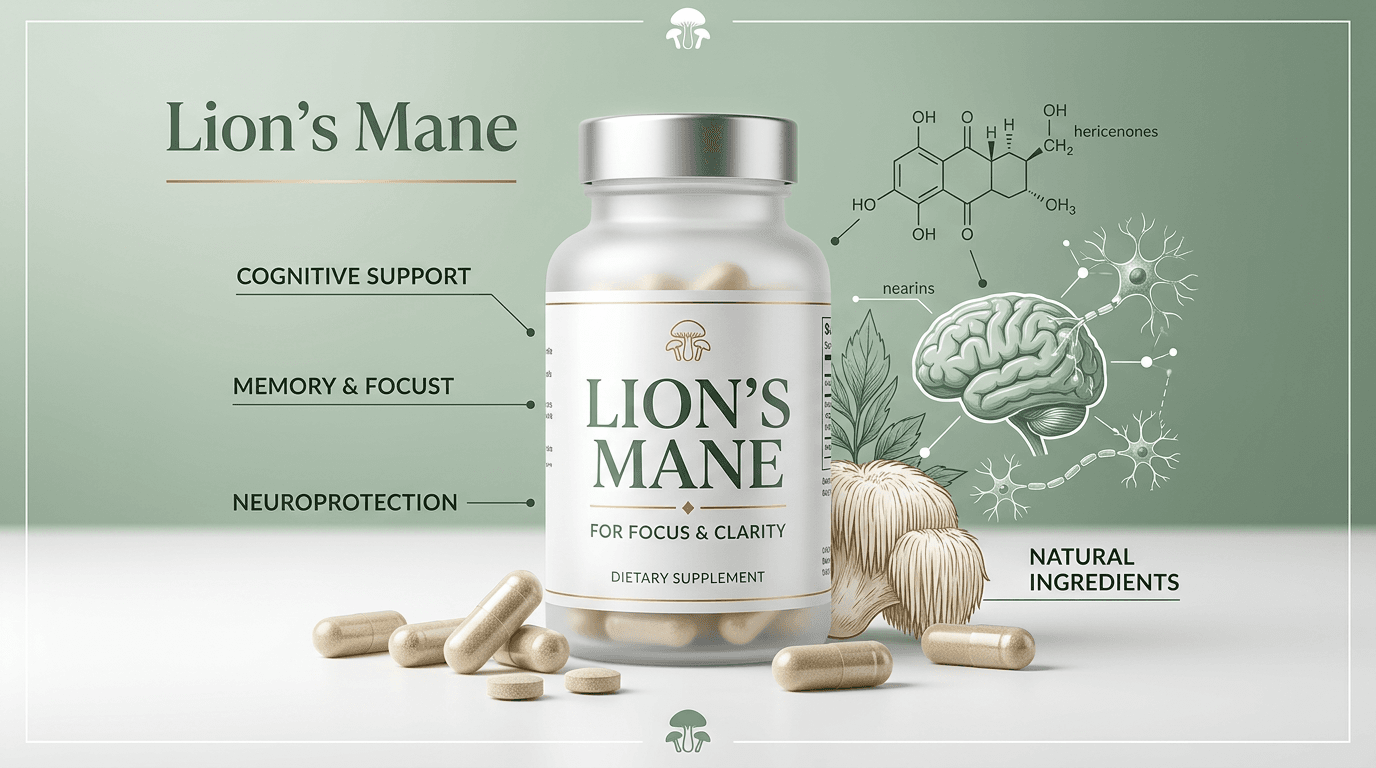
The neuroprotective magic of Lion's Mane lies primarily in two distinct classes of bioactive compounds: hericenones (found in the fruiting body) and erinacines (found in the mushroom's mycelium). These compounds are unique because they can easily cross the blood-brain barrier. Once in the brain, they stimulate the synthesis of Nerve Growth Factor (NGF) and Brain-Derived Neurotrophic Factor (BDNF). These essential proteins are responsible for the maintenance, survival, and regeneration of neurons, playing a critical role in neuroplasticity and overall brain health.
Key Benefits
While research is ongoing, current literature highlights several primary benefits of Lion's Mane supplementation:
- Cognitive Enhancement: By upregulating NGF and BDNF, Lion's Mane helps form new neural pathways, which may improve memory recall, focus, and overall mental clarity.
- Mood Support: Preliminary evidence suggests it can alleviate symptoms of mild anxiety and depression. This is believed to be linked to its ability to reduce systemic inflammation and support hippocampal neurogenesis.
- Nerve Health and Recovery: The NGF-stimulating properties promote the repair of peripheral nerves, showing promise in recovering from neurological injuries.
- Gut and Immune Health: Rich in beta-glucans (complex polysaccharides), Lion's Mane acts as a prebiotic, supporting a healthy gut microbiome and modulating the immune system.
Research Findings
While animal studies are abundant, clinical trials on humans provide the most compelling evidence for Lion's Mane's efficacy. However, it is important to note that large-scale human trials are still needed to solidify these findings.
- Cognitive Impairment: A landmark 2009 double-blind, parallel-group, placebo-controlled trial examined 30 older Japanese adults (aged 50-80) with mild cognitive impairment. Participants consumed 3 grams of Lion's Mane powder daily (in 250mg tablets) for 16 weeks. The Lion's Mane group showed significantly increased scores on the cognitive function scale compared to the placebo group. Notably, four weeks after stopping the supplementation, their cognitive scores decreased significantly, suggesting that continuous use is necessary to maintain benefits.
- Anxiety and Depression: A 2010 clinical trial investigated the effects of Lion's Mane on mood in 30 human females over 4 weeks. The participants were given Lion's Mane cookies or placebo cookies. The results indicated that the Lion's Mane group had significantly lower scores for depression and anxiety, alongside improved sleep quality, compared to the placebo group.
- Nerve Regeneration: While primarily observed in animal models, studies have shown that rats with gluteal nerve damage experienced 23–41% faster recovery times when given an aqueous extract of Lion's Mane compared to control groups.
Best Sources & Dosage
Choosing the right Lion's Mane supplement is crucial for efficacy, as the extraction method determines which active compounds are present.
Forms and Extraction
- Dual-Extracts: Because beta-glucans are water-soluble and hericenones/erinacines are alcohol-soluble, look for a "dual-extract" (water and ethanol) product to ensure you receive the full spectrum of benefits.
- Fruiting Body vs. Mycelium: Erincaines (potent NGF stimulators) are concentrated in the mycelium, while hericenones are in the fruiting body. A supplement utilizing both parts is generally optimal.
Practical Dosing
- General Cognitive Support: 500mg to 1,000mg per day of a high-quality extract.
- Therapeutic/Clinical Dosing: 2,000mg to 3,000mg per day, typically divided into two or three doses (as used in the 2009 cognitive trial).
- Timing: Best taken in the morning or early afternoon. Taking it too late in the evening may cause mild stimulation or vivid dreams in some individuals.
Safety, Side Effects, and Interactions
Lion's Mane is generally considered highly safe and well-tolerated.
- Side Effects: The most common side effect is mild gastrointestinal distress (nausea or stomach discomfort), which can often be mitigated by taking the supplement with food. It may also cause skin rashes in rare instances.
- Allergies: Individuals with known mushroom allergies should strictly avoid Lion's Mane.
- Drug Interactions: Lion's Mane may have mild anti-platelet (blood-thinning) properties and can lower blood sugar. Therefore, it may interact with anticoagulant medications (like Warfarin, Heparin, or Aspirin) and antidiabetic drugs.
- Who Shouldn't Use It: Pregnant or nursing women should avoid it due to a lack of safety data. Those with bleeding disorders or who are scheduled for surgery within two weeks should discontinue use to prevent excessive bleeding.