Resilient cells & steadier energy: Understanding L-Ergothioneine (ERGO)
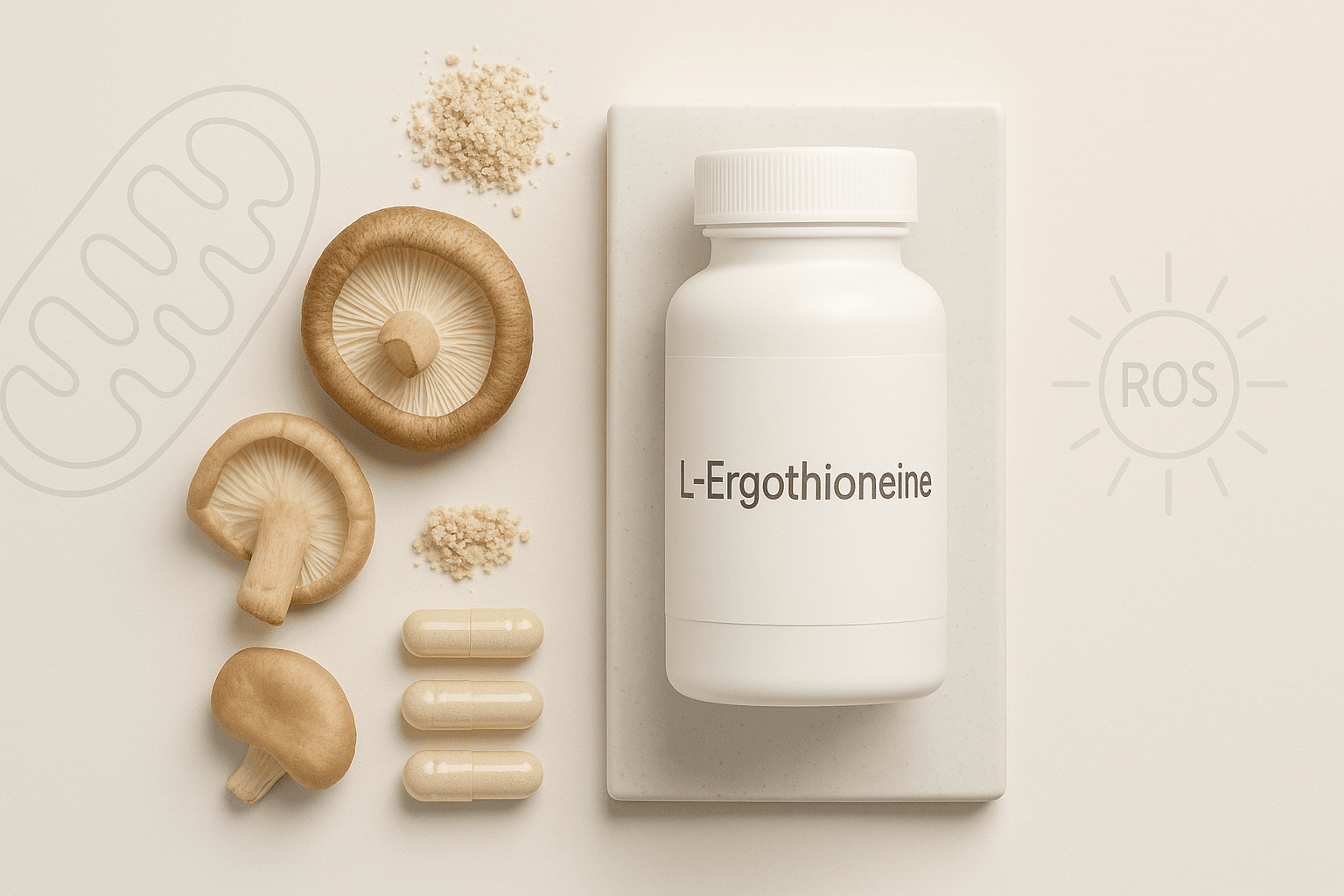
L-Ergothioneine is a rare dietary thiol made by certain fungi and bacteria and concentrated in mushrooms (shiitake, oyster, king trumpet), black beans, and oat bran. Humans don’t synthesize it—we import it via a dedicated transporter (OCTN1/SLC22A4), which preferentially shuttles ERGO into high-stress tissues (mitochondria-dense organs, red blood cells, lens/retina, liver). Unlike typical antioxidants, ERGO is exceptionally stable (thione tautomer), resists auto-oxidation, quenches reactive species, chelates transition metals, and helps maintain mitochondrial proteins and membranes under stress.
Why this matters: by buffering oxidative and carbonyl stress and supporting mitochondrial housekeeping, ERGO may translate into steadier daytime energy, exercise recovery support, vascular/endothelial comfort, and healthy aging signals (skin/eye/brain). It complements—rather than replaces—core basics like sleep, protein, movement, and plants.
Wellness takeaway: If you want a gentle, non-stimulating antioxidant that the body actively conserves, L-ergothioneine is a smart daily add-on. Use a verified L-isomer product for 8–12 weeks, then reassess energy, recovery, and wellness markers.
Key Benefits
Cellular protection: Accumulates via OCTN1 in stress-prone tissues to buffer oxidative and carbonyl damage and support mitochondrial proteins.
Endurance & recovery signals: Early human data show reduced fatigue ratings and favorable oxidative-stress markers with daily ERGO.
Eye/skin & vascular support (exploratory): Concentration in lens/retina and endothelium aligns with small trials showing photoprotection and endothelial comfort.
Reality check: Evidence in humans is promising but still growing; expect subtle, cumulative benefits over weeks—best alongside training, nutrition, and sleep.
Research Findings
Time to benefit: Biomarker shifts in 2–8 weeks; perceptible energy/recovery changes by 4–12 weeks.
Fatigue & oxidative stress: Randomized trials using 5–25 mg/day for 4–8 weeks report improvements in subjective fatigue and reductions in lipid peroxidation/pro-oxidant markers versus placebo, with good tolerance.
Endothelial function: Small studies show improved flow-mediated dilation and decreased oxidative stress markers after 12 weeks of ERGO (25 mg/day), consistent with healthier vascular reactivity.
Photoprotection/skin: Pilot work suggests oral ERGO may lessen UV-induced erythema and reduce protein oxidation in skin following 4–8 weeks of intake; effects are supportive, not a substitute for sunscreen.
Tolerability: Generally excellent in adults at 5–30 mg/day; side effects are rare and mild (occasional GI upset or headache). ERGO is transported and retained by RBCs with a long tissue half-life, so consistency matters more than large spikes in dose.
Best Sources & Dosage
What to buy:
Form: L-Ergothioneine (L-isomer) as a stand-alone capsule or softgel; typical strengths 5–10 mg or 10–25 mg per serving.
Source: Fermentation-derived (yeast/bacterial) or mushroom-derived ERGO with documented chirality (L-, not D-) and ≥98–100% purity.
Quality: Third-party tested (COA) for identity, potency, heavy metals, microbes, and residual solvents; oxygen-protected packaging (blister or desiccant bottle).
Avoid: Undisclosed “mushroom complex” without ERGO milligrams, or blends that underdose (<5 mg/serving).
Evidence-aligned ranges (by use case):
Daily cellular/mitochondrial support: 5–10 mg once daily with food for 8–12 weeks; continue if benefits persist.
Exercise recovery & fatigue support: 10–25 mg/day with your main meal for 8–12 weeks; pair with protein and programmed training.
Eye/skin & vascular wellness (exploratory): 10–25 mg/day for 8–12+ weeks; track light exposure habits (for skin/eye) and lifestyle factors that influence endothelial health.
Timing & tips:
Take with a meal (better GI comfort and habit formation).
Stack sanely: ERGO plays well with omega-3s, magnesium, vitamin D, and creatine for performance aging; add one change at a time for clean readouts.
Food first: Increase ERGO-rich foods (mushrooms cooked in olive oil); supplementation helps standardize intake when diet varies.
Self-tracking: Weekly energy (0–10), training recovery, and—if measured—simple oxidative stress proxies or endothelial metrics ordered by your clinician.
Safety, interactions & exclusions:
Overall safety: Well tolerated at customary doses; no stimulant or dependence profile.
Medications: No robust drug–drug interactions known; because ERGO uses the OCTN1 transporter, theoretical competition with other cationic substrates is possible but not documented at supplemental doses.
Chronic conditions: If you have advanced liver/kidney disease, coordinate with your clinician before adding new supplements.
Pregnancy/lactation: Human safety data are limited—avoid unless specifically recommended by your clinician.
Allergy/intolerance: Rare; if you’re sensitive to mushroom products, verify excipients (the ERGO itself is purified/fermentation-derived).
Safety flag: ERGO supports cellular defenses but does not replace medical care for fatigue, eye disease, or vascular disorders—seek evaluation for red-flag symptoms (vision change, chest pain, severe fatigue).
Dosage Quick-Reference
Cellular/mitochondrial support: 5–10 mg/day, 8–12 wks → ↓oxidative stress / steadier energy (→/↑).
Recovery & fatigue: 10–25 mg/day, 8–12 wks → ↑perceived recovery / ↓fatigue (↑).
Skin/eye & vascular wellness (exploratory): 10–25 mg/day, 12+ wks → supportive comfort/photoprotection signals (→/↑).
Safety note: Choose COA-verified L-ergothioneine, take with meals, and reassess after 8–12 weeks; avoid during pregnancy/lactation unless clinician-approved.