1. Understanding Nicotinamide Riboside (NR)
What is NR?
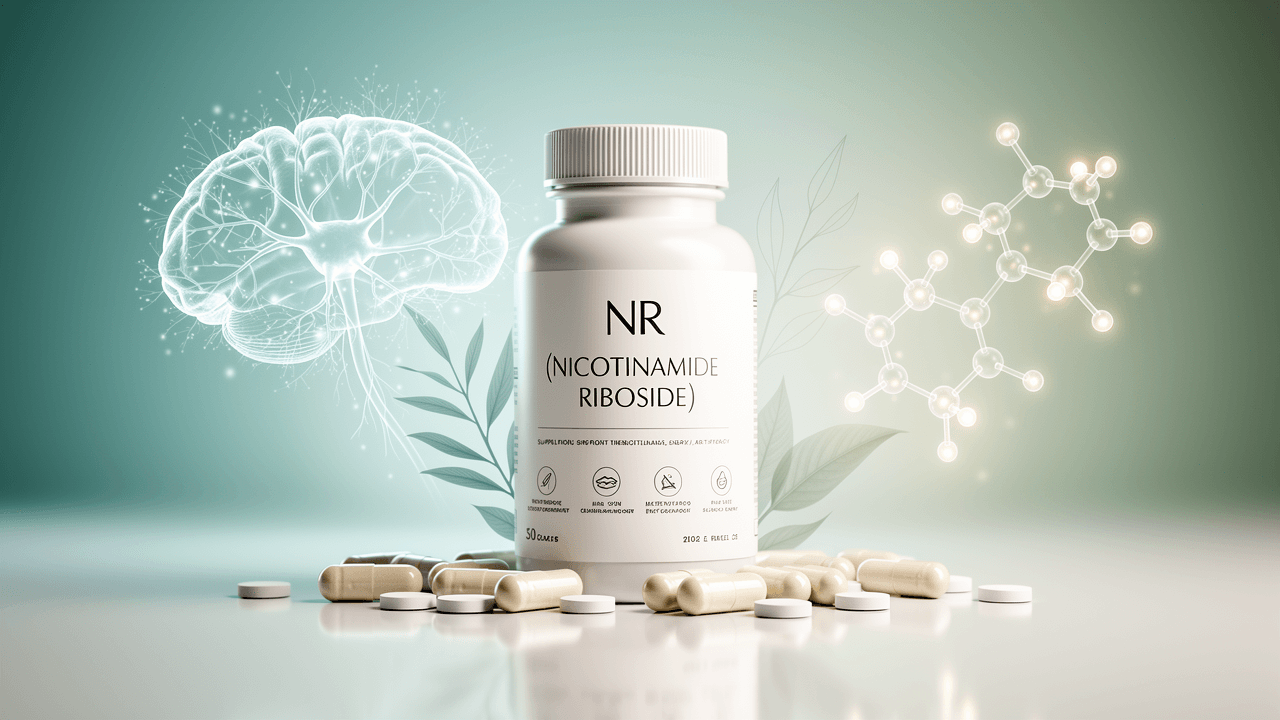
Nicotinamide riboside (NR) is a form of vitamin B3 (niacin) and a direct precursor to NAD⁺ (nicotinamide adenine dinucleotide), a central molecule involved in cellular energy production, DNA repair, and metabolic regulation.
NR is naturally present in small amounts in foods like milk and yeast, but supplemental NR (often as nicotinamide riboside chloride) is used to significantly raise NAD⁺ levels. It is marketed under several brand names, including Niagen® and Tru Niagen®.
How NR Works in the Body
NR is part of the NAD⁺ salvage pathway, one of the main ways cells recycle vitamin B3 forms back into NAD⁺.
Absorption and Conversion
- After oral intake, NR is absorbed in the gut and taken up by cells.
- Inside cells, NR is phosphorylated by NR kinases (NRK1/NRK2) to nicotinamide mononucleotide (NMN).
- NMN is then converted to NAD⁺ by NMN adenylyltransferases.
Raising NAD⁺ Levels
NAD⁺ is required for:- Mitochondrial energy production (electron transport chain)
- Sirtuin activity (SIRT1–SIRT7), which influences metabolism, inflammation, and cellular stress resistance
- PARP enzymes, involved in DNA repair
- CD38 and other NADases, which consume NAD⁺ during immune and signaling processes
Why NAD⁺ Matters
NAD⁺ levels tend to decline with age, chronic inflammation, metabolic disease, and high-fat diets. Reduced NAD⁺ is associated (mostly in animal and cell studies) with:- Impaired mitochondrial function
- Increased oxidative stress
- Reduced DNA repair capacity
- Metabolic dysregulation
By boosting NAD⁺, NR is hypothesized to support healthy aging, metabolic health, and cellular resilience. However, human evidence is still emerging and more robust trials are needed.
2. Key Benefits of NR as a Supplement
2.1 NAD⁺ Repletion and Cellular Energy Support
- Multiple human trials show that NR reliably increases blood NAD⁺ levels, often by 40–100% within weeks at typical doses (100–1000 mg/day).
- Higher NAD⁺ may support mitochondrial function and ATP production, especially in tissues with high energy demand (muscle, brain, heart).
- Benefits on subjective energy are reported anecdotally, but clinical evidence for “feeling more energetic” remains limited.
2.2 Metabolic and Cardiometabolic Health
- NR may support metabolic flexibility, insulin sensitivity, and lipid metabolism, particularly in people with metabolic risk factors.
- Some trials show improvements in blood pressure, arterial stiffness, and inflammatory markers, though results are mixed and often modest.
2.3 Neuroprotection and Brain Health (Preclinical Evidence Stronger Than Human)
- In animals, NR supplementation increases brain NAD⁺, enhances neuronal resilience, and improves cognitive performance in models of neurodegeneration and aging.
- Human data are still preliminary, with small studies suggesting potential benefits on brain NAD⁺ levels and possibly neuroprotection, but not yet strong evidence for cognitive enhancement in healthy people.
2.4 Potential Healthy Aging and Longevity Support
- In animal models, NAD⁺ precursors (including NR) support mitochondrial function, DNA repair, and stress resistance, which are central to aging biology.
- NR has shown benefits in muscle function, endurance, and stem cell health in aged animals.
- Direct lifespan extension in humans has not been demonstrated; current evidence supports NR more as a cellular health and resilience support rather than a proven longevity drug.
3. Research Findings on NR
3.1 Effects on NAD⁺ Levels in Humans
Study: Trammell et al., 2016 (Open-label, multi-dose)
- Participants: 12 healthy adults
- Doses: Single doses of 100, 300, or 1000 mg NR; then 8 days of repeated dosing
- Findings:
- Oral NR increased blood NAD⁺ in a dose-dependent manner.
- Repeated dosing with 1000 mg/day increased NAD⁺ by ~2-fold from baseline.
- NR was well tolerated with no serious adverse events.
- Implication: NR is an effective oral NAD⁺ precursor in humans.
Study: Martens et al., 2018 (Randomized, double-blind, placebo-controlled)
- Participants: 24 middle-aged and older adults (55–79 years) with BMI 20–30 kg/m²
- Dose: 500 mg NR twice daily (1000 mg/day) vs placebo for 6 weeks
- Findings:
- Blood NAD⁺ increased by ~60% in the NR group vs placebo.
- NR reduced systolic blood pressure (~10 mmHg) and aortic stiffness in individuals with elevated baseline blood pressure.
- No major changes in glucose, insulin, or lipid profiles.
- Implication: NR reliably boosts NAD⁺ and may improve some cardiovascular parameters in older adults with elevated blood pressure.
3.2 Metabolic Health and Insulin Sensitivity
Study: Dollerup et al., 2018 (Randomized, double-blind, placebo-controlled)
- Participants: 40 men with obesity (BMI >30 kg/m²)
- Dose: 1000 mg/day NR vs placebo for 12 weeks
- Findings:
- NR significantly increased whole blood NAD⁺ and related metabolites.
- No significant improvement in insulin sensitivity (measured by hyperinsulinemic-euglycemic clamp), hepatic fat content, or energy expenditure.
- Some modest changes in body composition were observed, but not robust.
- Implication: NAD⁺ repletion does not automatically translate into short-term improvements in insulin sensitivity in obese men.
Study: Yoshino et al., 2021 (Randomized, double-blind, placebo-controlled)
- Participants: 24 postmenopausal women with prediabetes and obesity
- Dose: 1000 mg/day NR vs placebo for 10 weeks
- Findings:
- NAD⁺ levels increased significantly in muscle tissue.
- No significant changes in insulin sensitivity, glucose tolerance, or muscle mitochondrial function.
- Implication: NR raises tissue NAD⁺ in metabolically impaired individuals, but metabolic benefits may require longer duration, higher doses, combination therapies, or specific subgroups.
3.3 Cardiovascular and Inflammatory Markers
Study: Martens et al., 2018 (same as above)
- In addition to NAD⁺ increase:
- Reduction in systolic blood pressure and aortic stiffness in those with elevated baseline BP.
- The effect was not universal; benefits were most pronounced in individuals with higher cardiovascular risk.
Study: Elhassan et al., 2019 (Randomized, double-blind, crossover)
- Participants: 8 healthy middle-aged men (40–60 years)
- Dose: 1000 mg/day NR vs placebo for 3 weeks, with washout and crossover
- Findings:
- Increased NAD⁺ metabolites in blood and skeletal muscle.
- Some changes in inflammatory gene expression and mitochondrial gene expression in muscle, but functional changes were modest.
- Implication: NR affects molecular pathways related to inflammation and mitochondrial function, though clinical relevance remains to be defined.
3.4 Brain and Neuroprotection (Mostly Preclinical)
Preclinical Evidence:
- In mouse models of Alzheimer’s disease, NR improved cognitive performance, reduced neuroinflammation, and enhanced synaptic plasticity.
- In models of traumatic brain injury and neurodegeneration, NR increased neuronal NAD⁺ and reduced cell death.
Human Data:
- Small imaging studies suggest NR can raise brain NAD⁺ levels (measured by 31P-MRS), but robust cognitive outcome data are lacking.
- No large randomized trials yet demonstrate clear cognitive benefits in healthy adults.
3.5 Exercise Performance and Muscle Function
Study: Dollerup et al., 2018 (secondary outcomes)
- In obese men, NR did not significantly improve VO₂ max or exercise capacity over 12 weeks.
Preclinical:
- In aged mice, NR improved muscle stem cell function, increased endurance, and reduced age-related muscle decline.
Overall, the strongest human evidence for NR is:
- Reliable increase in NAD⁺ in blood and some tissues
- Possible cardiovascular benefit (blood pressure, arterial stiffness) in older adults with elevated risk
- Modest or no short-term effects on insulin sensitivity, body weight, or exercise performance in most trials
4. Best Sources & Dosage
4.1 Forms of NR
Nicotinamide riboside chloride (NR chloride)
- The most common supplemental form; used in many clinical trials.
- Often branded (e.g., Niagen®) to indicate a specific manufacturing process and purity.
Nicotinamide riboside hydrogen tartrate
- Another salt form; similar function, but most published human data are with NR chloride.
NR is typically available in capsules or tablets, sometimes combined with other ingredients (e.g., resveratrol, pterostilbene, TMG, B vitamins).
4.2 Evidence-Based Dosage Ranges
Human trials most commonly use 100–1000 mg/day. Below are practical ranges based on current data:
General Cellular Support / Healthy Aging
- Typical dose: 250–500 mg/day
- Rationale: Lower end of the range that still significantly raises NAD⁺ in blood; may be sufficient for general NAD⁺ support in otherwise healthy adults.
Cardiometabolic Support (Older Adults, Elevated BP)
- Typical dose: 500–1000 mg/day
- Evidence: Martens et al. (2018) used 1000 mg/day for 6 weeks and observed improved blood pressure and arterial stiffness in at-risk individuals.
- Consider starting at 500 mg/day and titrating up depending on tolerance and in consultation with a clinician.
Experimental/Research-Level Dosing
- Up to 2000 mg/day has been used in some short-term safety studies.
- This is above typical consumer doses and should be considered experimental, ideally under medical supervision.
4.3 Timing and Administration
- With or without food: NR can generally be taken with or without food; some people prefer with food to minimize any potential GI discomfort.
- Once vs divided doses:
- 250–500 mg: once daily is common.
- 1000 mg: often split into 2 × 500 mg (morning and afternoon) to maintain steadier NAD⁺ precursor availability and improve tolerance.
- Duration: Most clinical trials run 4–12 weeks. For long-term use, periodic breaks (e.g., 1–2 weeks off every few months) are sometimes used in practice, though there is limited data to guide cycling.
4.4 Stacking with Other Supplements
Common combinations (evidence mostly mechanistic or preclinical):
- NR + Resveratrol or Pterostilbene: Aimed at synergistically activating sirtuins (NR via NAD⁺, polyphenols via SIRT1 modulation). Human data on the combination are limited.
- NR + TMG (trimethylglycine) or Choline: Theoretical support for methylation balance, as niacin forms can use methyl groups for metabolism. Evidence is limited but may be reasonable for high-dose, long-term NR.
5. Safety, Side Effects, and Drug Interactions
5.1 Overall Safety Profile
NR appears well tolerated in human trials up to 1000–2000 mg/day for several weeks to months.
Commonly reported side effects are generally mild:
- Gastrointestinal: nausea, indigestion, diarrhea, abdominal discomfort
- Headache or fatigue: occasionally reported
- Flushing: much less common and milder than with niacin (nicotinic acid)
In clinical trials:
- No significant changes in liver enzymes or kidney function at doses up to 1000 mg/day in healthy and metabolically impaired adults.
- No clear signal for serious adverse events directly attributable to NR.
However, long-term (multi-year) safety data are still limited.
5.2 Potential Risks and Theoretical Concerns
Cancer and High NAD⁺ (Theoretical)
- NAD⁺ is essential for cell growth and DNA repair. In theory, excessive NAD⁺ might support the growth of existing cancer cells or precancerous lesions.
- Some animal and cell studies suggest that boosting NAD⁺ can, in specific contexts, promote tumor growth, while others show protective effects via improved DNA repair and reduced inflammation.
- There is no strong human evidence that NR increases cancer risk, but long-term data are lacking. Caution is advised in individuals with active cancer or strong cancer predisposition, and medical supervision is essential.
Methylation Burden
- High doses of niacin forms (including nicotinamide) can increase demand for methyl groups during metabolism (conversion to N-methylnicotinamide).
- NR might contribute to this, though the impact at typical doses is unclear.
- Some practitioners recommend ensuring adequate intake of methyl donors (e.g., folate, B12, choline, TMG) during long-term, high-dose NR use.
Immune Modulation via CD38 and PARPs
- NAD⁺ fuels enzymes like CD38 and PARPs involved in immune responses and inflammation.
- The net effect of chronic NAD⁺ elevation on immune function in humans is still uncertain.
5.3 Drug Interactions
Direct, well-documented drug–NR interactions are limited, but several caution areas exist:
Chemotherapy and Cancer Therapies
- Many anti-cancer agents induce DNA damage or metabolic stress in tumor cells. Enhancing NAD⁺ could, in theory, interfere with treatment efficacy or support tumor cell survival.
- Anyone undergoing chemotherapy, radiotherapy, or targeted cancer therapy should avoid NR unless explicitly cleared by their oncologist.
Immunosuppressants and Autoimmune Therapies
- Because NAD⁺ impacts immune cell function, theoretical interactions with immunosuppressive drugs exist, though not well characterized.
- Use cautiously and only under medical supervision in people on immunosuppressants (e.g., for transplant, autoimmune disease).
Hepatotoxic Drugs
- NR has not shown major liver toxicity in trials, but high doses of some niacin forms can stress the liver.
- In those on potentially hepatotoxic medications (e.g., high-dose acetaminophen, certain antifungals, methotrexate, some antiepileptics), it is prudent to monitor liver enzymes if using NR long term.
Other NAD⁺ Precursors (Niacin, Nicotinamide, NMN)
- Combining multiple NAD⁺ boosters may lead to higher-than-necessary NAD⁺ and potentially increase side effects (GI upset, headache, liver strain at high total doses).
- If stacking, keep total combined dose within conservative ranges and monitor for adverse effects.
5.4 Special Populations
Pregnancy and Breastfeeding:
- No robust safety data on NR in pregnant or lactating women.
- Standard recommendation: avoid supplemental NR beyond normal dietary niacin intake unless prescribed by a physician.
Children and Adolescents:
- Very limited data; NR is generally not recommended for routine use in minors except in research or under specialist care.
Liver or Kidney Disease:
- Trials in people with significant hepatic or renal impairment are lacking.
- These individuals should avoid NR or use it only under close medical supervision with regular lab monitoring.
6. Who Should and Shouldn’t Use NR
6.1 Who Might Benefit from NR
Based on current evidence, NR may be most appropriate for:
Middle-aged and older adults (40+) seeking cellular health support
- Goal: support age-related NAD⁺ decline and mitochondrial function.
- Typical dose: 250–500 mg/day, with potential titration to 1000 mg/day under supervision.
Older adults with elevated blood pressure or arterial stiffness
- Some evidence for improved systolic blood pressure and arterial compliance at 1000 mg/day (Martens et al., 2018).
- Should be used as an adjunct to, not a replacement for, standard cardiovascular care.
Individuals with high metabolic or oxidative stress (e.g., high training load, shift work, chronic psychological stress)
- Rationale is mostly mechanistic and preclinical (supporting mitochondrial and redox balance).
- Evidence for performance enhancement is weak, but some may use NR as part of a broader recovery and resilience strategy.
Research and Clinical Investigations
- NR is a useful tool for studying NAD⁺ biology in humans due to its good oral bioavailability and safety profile in the short to medium term.
6.2 Who Should Use NR with Caution or Avoid It
People with Active Cancer or History of Certain Cancers
- Due to theoretical concerns that high NAD⁺ could support tumor growth or resistance to therapy, individuals with active cancer, recent cancer history, or strong familial predisposition should avoid NR unless managed by an oncologist.
Individuals Undergoing Chemotherapy or Radiotherapy
- NAD⁺ modulation may affect treatment responses.
- Do not use NR during cancer treatment unless explicitly approved by the oncology team.
Pregnant or Breastfeeding Women
- Insufficient safety data; stick to standard prenatal nutrition and avoid high-dose NR.
Children and Adolescents
- Lack of safety and efficacy data; avoid routine use.
People with Significant Liver or Kidney Disease
- Use only under specialist supervision with regular monitoring.
Individuals on Multiple NAD⁺-Boosting Agents
- Those already taking high-dose niacin, nicotinamide, or NMN should be cautious about adding NR due to overlapping metabolic pathways and potential cumulative side effects.
7. Practical Takeaways
- NR is a vitamin B3 derivative that effectively and reliably raises NAD⁺ levels in humans.
- The clearest human benefits so far are:
- Increased NAD⁺ in blood and some tissues
- Possible improvements in blood pressure and arterial stiffness in older adults with elevated cardiovascular risk
- Evidence for metabolic, cognitive, and performance benefits is mixed and often modest in the short term; more and larger trials are needed.
- Typical supplemental doses range from 250–1000 mg/day, with good short- to medium-term tolerability.
- Long-term safety and effects on cancer risk and progression remain open questions, so higher-risk individuals should be cautious and work with a clinician.
- NR should be viewed as a supportive tool for cellular health, not a stand-alone solution for aging, metabolic disease, or cognitive decline.
As with any supplement, NR is best used as part of a comprehensive approach that includes diet, exercise, sleep, stress management, and appropriate medical care. Consultation with a healthcare professional is strongly recommended before starting NR, especially for those with medical conditions or on prescription medications.