Sharper Thinking, Cleaner Cells: Understanding Centrophenoxine
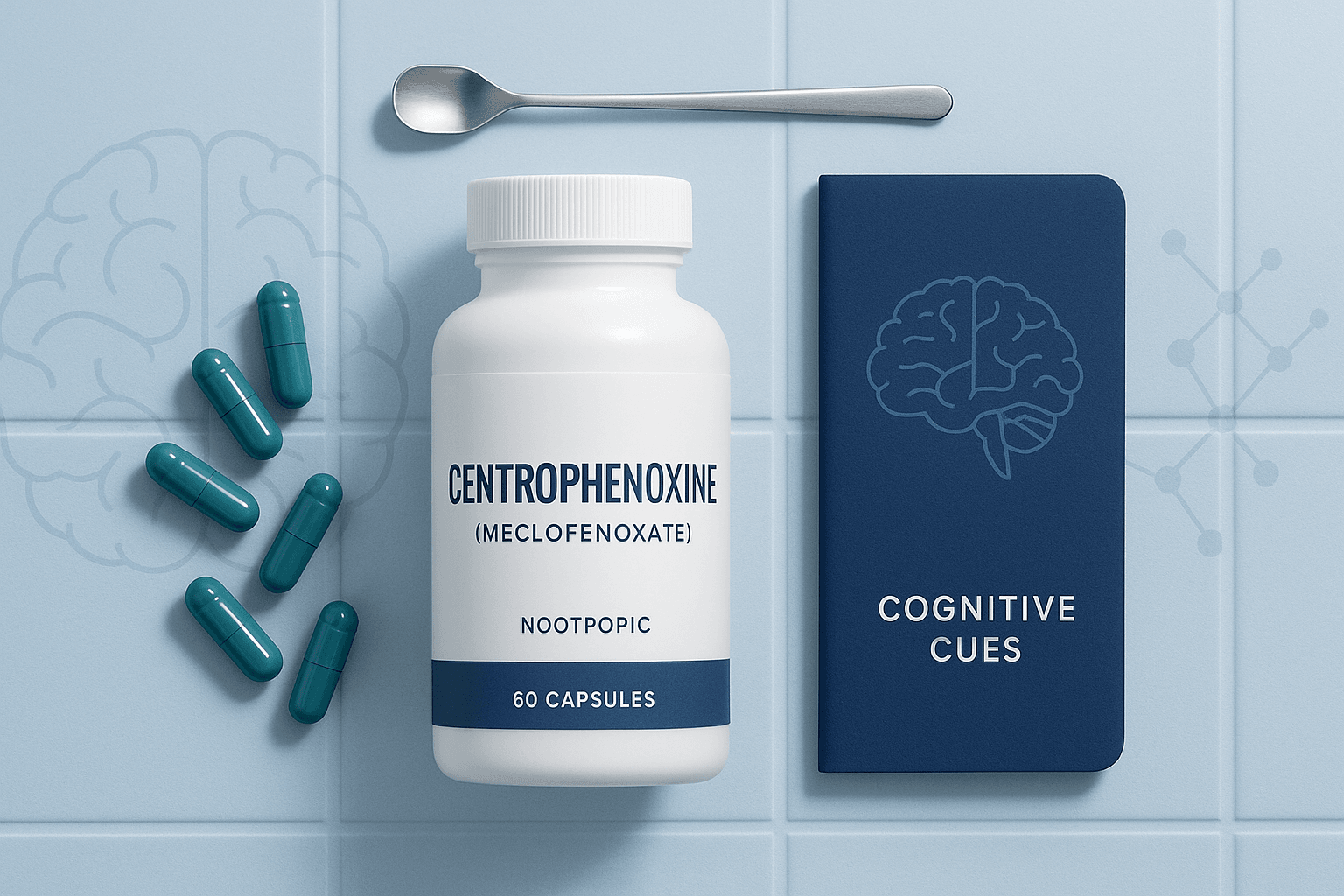
Centrophenoxine (also known as meclofenoxate) is a classic nootropic developed in the mid-20th century and used in parts of Europe for age-related cognitive decline. Chemically, it’s an ester of DMAE (dimethylaminoethanol) and p-chlorophenoxyacetic acid (pCPA). The pairing improves DMAE’s delivery into tissues and, once inside cells, liberates DMAE to expand the choline pool used to make phosphatidylcholine (a key membrane phospholipid) and acetylcholine (the neurotransmitter central to attention and memory). In parallel, centrosphenoxine has been shown to influence membrane turnover, RNA/protein synthesis, and lysosomal function, which together may reduce age-pigment lipofuscin—the cellular “wear-and-tear” aggregate that accumulates with time.
Diet alone won’t supply therapeutically relevant DMAE in a targeted way, and DMAE itself crosses the blood–brain barrier inconsistently. Centrophenoxine’s ester design provides a more brain-available choline donor that supports membrane renewal and cholinergic tone, which is why it appears in cognitive-aging programs and in wellness stacks aimed at attention, working memory, and mental energy.
How it likely helps—kept practical:
- Builds phosphatidylcholine via the Kennedy pathway, supporting supple neuronal membranes and fast signal transmission.
- Modestly increases acetylcholine synthesis capacity, which often feels like clearer recall and steadier focus rather than stimulation.
- Enhances lysosomal housekeeping and membrane turnover in neurons—mechanisms tied to reductions in lipofuscin seen in older tissues and animal models.
Wellness takeaway: If your goals are cleaner focus, sharper recall, and a nudge toward cellular housekeeping as you age, a time-boxed trial of standardized centrophenoxine can layer neatly onto sleep, movement, omega-3s, and a plant-forward diet.
Key Benefits
Memory and attention (especially in older adults). Consistent use improves select memory and attention measures versus placebo in several small, controlled trials of age-related cognitive complaints.
Mental energy/processing speed (modest). Users often report crisper task engagement and less “mental drag,” with subtle improvements in reaction-time or vigilance tasks in short programs.
Cellular housekeeping/lipofuscin. Centrophenoxine supports lysosomal clearance and membrane renewal, aligning with observed reductions in lipofuscin accumulation in aging tissues.
Reality check: Expect subtle, steady improvements over weeks—not a stimulant jolt. Best results come when basics are in place (sleep regularity, daylight exposure, cardio, hydration).
Research Findings
Time to benefit: Some people notice mental clarity within 1–2 weeks; clearer cognitive gains typically accrue by 4–8 weeks of consistent use.
Age-related cognitive decline (adults): Randomized, double-blind studies over 8–12 weeks (n≈40–120) using centrophenoxine 1000–2000 mg/day reported better memory and attention scores versus placebo, with the largest effects in subjects with lower baseline performance; tolerability was similar to placebo.
Healthy older adults / attentional tasks: Short 4–8-week trials (n≈30–60) showed modest improvements in reaction time/vigilance with 250–500 mg twice daily; effects were subtle and most apparent under fatigue or high workload.
Cellular aging markers: Human biopsy data are limited, but older clinical and histologic reports plus animal work suggest reduced lipofuscin and improved neuronal membrane composition after weeks to months of dosing—consistent with the compound’s membrane/lysosomal actions.
Tolerability across trials was generally favorable; most adverse events were mild (GI upset, headache, restlessness, or insomnia if dosed late).
Best Sources & Dosage
What to buy (and what to avoid)
Choose centrophenoxine (meclofenoxate) with a clear mg per capsule (often 250 mg) and third-party testing for identity, potency, and contaminants.
Prefer products that specify centrophenoxine on the Supplement Facts (not just “DMAE”); the ester is the studied form.
Avoid proprietary blends that hide the milligram amount—you can’t match research-style dosing or titrate your response without numbers.
Evidence-aligned adult ranges
Everyday focus & memory (most common): 250–500 mg, 1–2×/day (typically morning and early afternoon) for 8–12 weeks, then reassess.
Age-related cognitive support: 1000–2000 mg/day in 2–3 divided doses for 8–12 weeks, coordinated with clinician guidance if cognitive impairment is diagnosed.
Light days or first-time users: 250 mg once daily for 3–5 days, then add a second 250 mg dose earlier in the afternoon if well tolerated.
Timing & tips
Take the last dose before 3–4 pm to reduce the chance of insomnia or a “tired-but-wired” feeling.
Pair with aerobic activity, creatine, and omega-3s for membrane and mitochondria support; stay hydrated.
Keep a simple focus log (Pomodoro blocks completed, recall accuracy, error rate) for 2–4 weeks to see signal over noise.
Many practitioners use 8–12 weeks on, 2–4 weeks off cycles to reassess need.
If you also use citicoline or Alpha-GPC, start conservatively—too much cholinergic tone can trigger headache, jaw tension, or low mood in sensitive users.
Safety, interactions & who should avoid it
Common, usually mild: headache, nausea, GI upset, restlessness, or insomnia if taken late; lowering the dose or shifting earlier often solves it.
Blood pressure/heart rate: occasional reports of BP changes or palpitations; monitor if you use antihypertensives or have arrhythmia history.
Neurologic/psychiatric care: use caution if you have a history of bipolar spectrum, epilepsy, or significant anxiety—cholinergic shifts can be activating; coordinate with your clinician.
Medication considerations: may counteract anticholinergic drugs and could have additive effects with cholinesterase inhibitors; review your list with a clinician.
Pregnancy/lactation: insufficient safety data—avoid unless advised.
Stop and reassess if you experience persistent headaches, jaw/neck tension, irritability, or sleep disruption.
Label literacy—fast checks
- “Centrophenoxine (meclofenoxate)” explicitly named; mg per capsule listed (250 mg is a convenient unit).
- Capsule count matches your plan (e.g., 2 caps/day for ~500 mg).
- Third-party testing or batch COA access; clean excipient profile.
Dosage Quick-Reference
Everyday focus & memory: 250–500 mg 1–2×/day • AM + early PM, 8–12 weeks • Outcome: attention/working memory ↑ (subtle).
Age-related cognitive support: 1000–2000 mg/day, divided • 8–12 weeks • Outcome: memory & attention scores ↑ vs placebo (modest).
Cycling/timing tip: last dose before mid-afternoon; consider 8–12 weeks on / 2–4 weeks off to reassess need.
Safety note: avoid late-evening dosing; use caution with anticholinergic or cholinesterase-inhibiting medications and in bipolar/epilepsy histories.