Understanding Astaxanthin
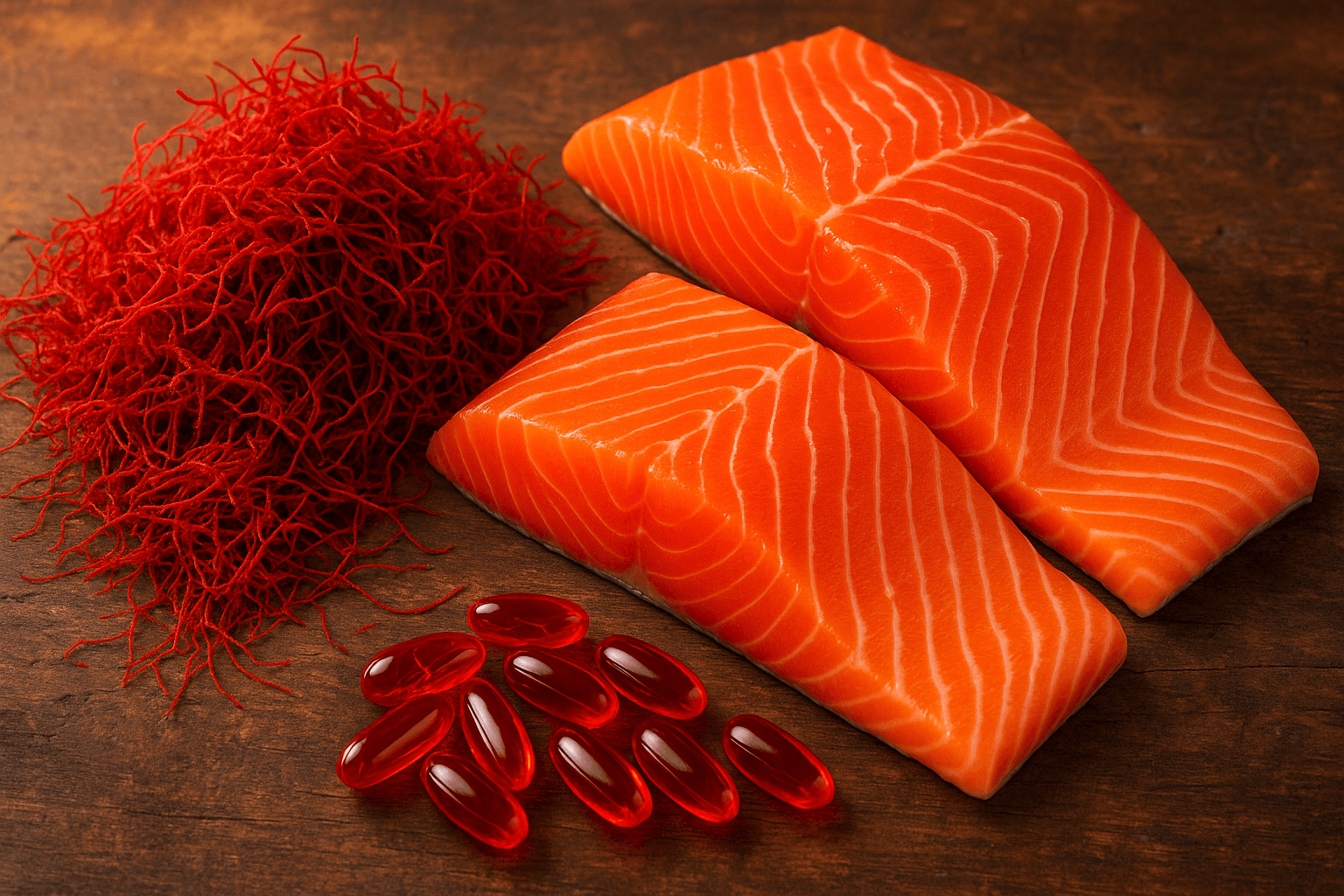
Astaxanthin is a naturally occurring carotenoid pigment belonging to the xanthophyll family. It is responsible for the reddish-pink coloration of salmon, shrimp, lobster, and flamingos, which acquire it through their diets. Unlike beta-carotene and other carotenoids that can convert into vitamin A, astaxanthin functions primarily as a potent antioxidant, with unique structural features that allow it to span cell membranes and protect against oxidative stress.
Astaxanthin is primarily derived from the microalga Haematococcus pluvialis, which produces it in high concentrations when exposed to sunlight or stress. Supplemental forms are usually extracted from this algae, though some synthetic versions exist. Natural astaxanthin from algae is considered more bioactive and is the source used in most clinical studies.
Its antioxidant strength is notable: laboratory comparisons suggest astaxanthin is significantly more potent than vitamin E, vitamin C, and beta-carotene in neutralizing free radicals. This has led to growing interest in its role in skin health, eye function, cardiovascular support, and cognitive performance.
Key Benefits
Supports skin health – Clinical trials show improvements in skin hydration, elasticity, and reduced UV damage.
Promotes cardiovascular balance – Human studies demonstrate improvements in blood lipids and oxidative stress markers.
Protects brain and eye function – Research highlights benefits for cognitive performance and retinal health.
Research Findings
Astaxanthin has been tested in multiple randomized controlled trials and human observational studies, with consistent findings in areas of oxidative balance, skin health, and cardiovascular support.
Skin Health – In an 8-week RCT (n=65), astaxanthin supplementation improved skin elasticity, reduced fine wrinkles, and increased moisture content compared with placebo.
Cardiovascular Health – A 12-week study (n=61) of overweight adults found astaxanthin supplementation reduced LDL oxidation and improved HDL cholesterol levels compared with control.
Eye and Brain Health – In a 12-week RCT (n=49), astaxanthin supplementation improved visual accommodation (eye focus ability) in middle-aged adults, and participants reported less eye fatigue. A separate 12-week trial (n=96) showed improvements in cognitive performance scores among older adults.
Collectively, these findings support astaxanthin’s role as a powerful antioxidant that benefits skin, cardiovascular, and neurological health.
Best Sources & Dosage
Astaxanthin is obtained from both food and supplements, though dietary intake is relatively low outside of frequent seafood consumption.
Food sources: Salmon (especially wild-caught), krill, shrimp, lobster, crab, and trout naturally contain astaxanthin.
Supplemental forms:
Natural astaxanthin from Haematococcus pluvialis – the form used in most research.
Krill oil – contains astaxanthin along with omega-3 fatty acids.
Synthetic astaxanthin – less common, with differences in bioactivity compared to natural sources.
Dosage:
Clinical studies generally use 4–12 mg/day of astaxanthin extract. Lower doses (4–6 mg/day) are effective for skin and eye health, while higher doses (up to 12 mg/day) are often used for metabolic and cardiovascular outcomes.Timing:
Best absorbed when taken with meals containing fat, as it is fat-soluble.Safety:
Astaxanthin is well-tolerated in human studies, with few reported side effects. Mild gastrointestinal upset is the most common. No adverse effects have been documented in trials lasting up to 12 weeks.
Dosage Quick-Reference (Human Studies)
Skin health: 4–6 mg/day for 6–8 weeks — improved elasticity and reduced wrinkles.
Eye function: 4–6 mg/day for 8–12 weeks — better visual focus and reduced eye fatigue.
Cardiovascular health: 8–12 mg/day for 8–12 weeks — improved lipid profile and reduced LDL oxidation.
Cognitive support: 8–12 mg/day for 12 weeks — enhanced memory and mental performance.
Traditional and Cultural Context
Unlike herbal remedies with centuries of traditional use, astaxanthin’s significance has emerged from modern nutritional science. Its discovery as a bioactive compound came from research on microalgae and seafood coloration. In Japan, astaxanthin supplements have been widely adopted over the past two decades, particularly for skin health and eye fatigue related to screen use.