Understanding Alpha-Lipoic Acid
Alpha-lipoic acid (ALA) is a naturally occurring, sulfur-containing compound found in every cell of the human body. It plays a crucial role in mitochondrial energy metabolism, acting as a cofactor for key enzyme complexes—such as pyruvate dehydrogenase and α-ketoglutarate dehydrogenase—that convert carbohydrates into adenosine triphosphate (ATP), the body’s main energy currency.
What makes ALA distinct from many other antioxidants is its solubility profile: it is both water- and fat-soluble, enabling it to move freely throughout the body, crossing cell membranes and even the blood–brain barrier. This dual solubility allows it to act in virtually all tissues, including nerve cells, liver tissue, and skeletal muscle.
In its reduced form, dihydrolipoic acid (DHLA), ALA is capable of regenerating other antioxidants such as vitamin C, vitamin E, and glutathione, enhancing the overall antioxidant network. This recycling effect has led researchers to examine ALA as a potential supportive nutrient in oxidative stress–related conditions.
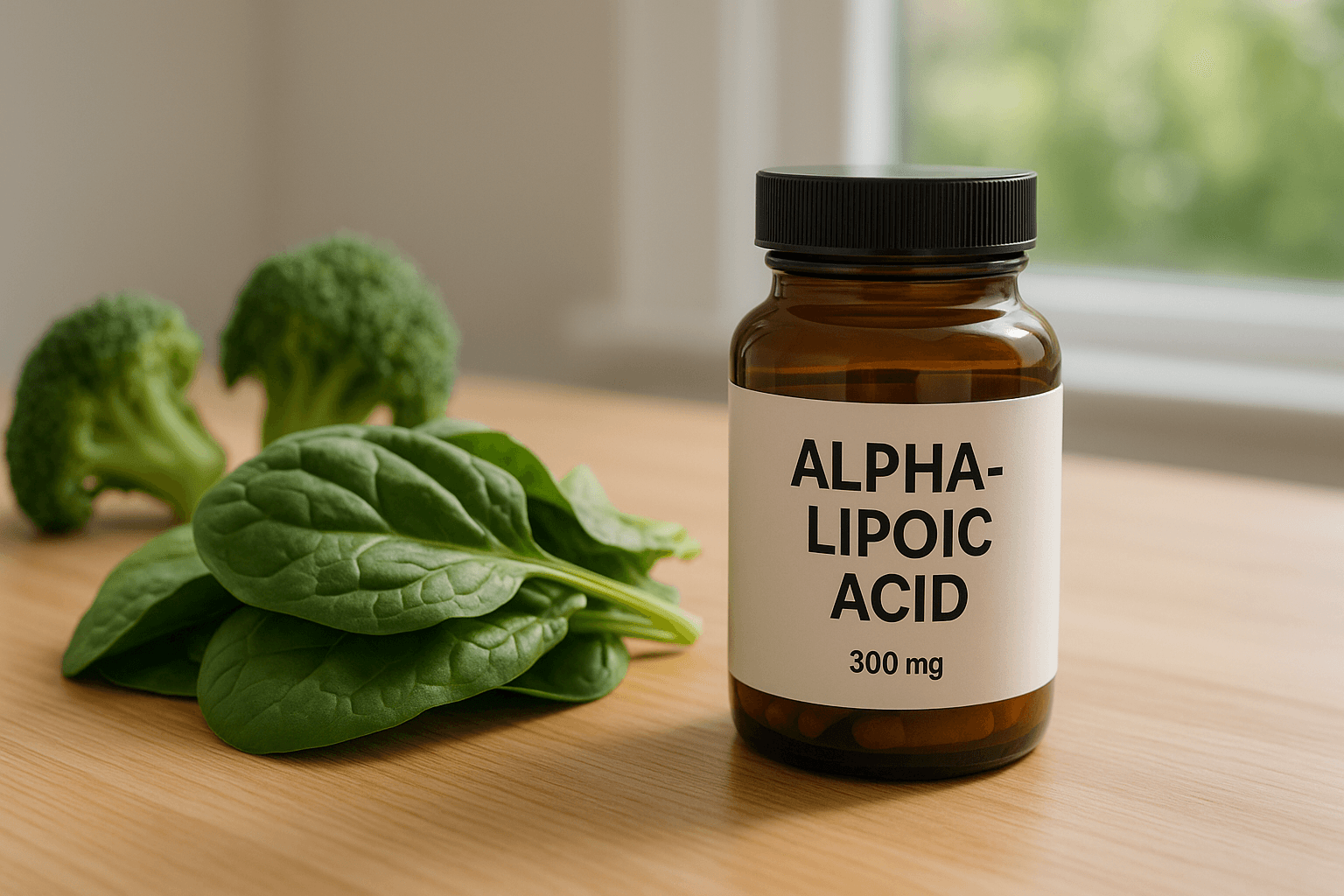
Although humans can synthesize small amounts of ALA in the liver and other tissues, production is limited and tightly linked to metabolic enzyme needs—not to antioxidant defense. The quantities obtained from dietary sources like organ meats, spinach, broccoli, and tomatoes are minimal (typically 1–2 mg/day), far below the amounts tested in supplemental research. This is why ALA is often studied in higher, concentrated doses from supplements.
Key Benefits
Supports glucose metabolism – In some human studies, ALA supplementation has improved cellular glucose uptake and insulin sensitivity, particularly in insulin-resistant individuals.
Promotes antioxidant defense – ALA may neutralize reactive oxygen species directly and help regenerate other antioxidants, contributing to systemic oxidative balance.
May support nerve health – In certain clinical trials, ALA has reduced symptoms of neuropathic discomfort, especially in people with diabetic neuropathy.
Research Findings
In a 4-month randomized controlled trial (n=181) of adults with type 2 diabetes, 600 mg/day of oral ALA led to modest improvements in insulin sensitivity compared with placebo, though fasting blood glucose changes were small (2022 RCT).
A 3-week RCT (n=460) involving individuals with diabetic neuropathy found that 600 mg/day of ALA significantly reduced neuropathic pain scores versus placebo, with benefits appearing within two weeks (2006 RCT). Participants reported improvements in burning and tingling sensations, suggesting an effect on nerve function or oxidative stress in peripheral tissues.
In a 24-week pilot RCT (n=38) in people with multiple sclerosis, 1,200 mg/day of ALA reduced markers of oxidative stress in blood and showed a trend toward reduced brain atrophy rate compared with placebo, although the study was underpowered for firm conclusions (2017 pilot RCT).
A 16-week RCT (n=74) of older adults with mild cognitive impairment found that a combination of ALA and omega-3 fatty acids led to a slower decline in cognitive scores compared with omega-3s alone, indicating a possible neuroprotective synergy (2018 RCT).
Finally, in a small crossover study (n=13) of healthy but overweight adults, a single 600 mg dose of ALA enhanced muscle glucose uptake after a carbohydrate load, suggesting potential short-term effects on insulin-mediated glucose disposal (2019 crossover trial).
Overall, while findings are encouraging, results are not universally positive, and benefits may depend on population, dose, and study duration. More large-scale, long-term trials are needed to confirm effects across broader groups.
Best Sources & Dosage
Food sources rich in ALA include organ meats (especially heart, liver, and kidney), spinach, broccoli, Brussels sprouts, and tomatoes. However, food-based intake is extremely small—typically 1–2 mg/day—compared with supplemental amounts used in research.
Supplement forms include:
R-ALA – The naturally occurring enantiomer with higher bioactivity; often more expensive and less stable unless formulated with stabilizers.
R/S-ALA (racemic mix) – Contains both the R- and S-forms; widely available and more cost-effective, though some studies suggest slightly lower potency per milligram.
Evidence-based dosage ranges:
General antioxidant support: 300–600 mg/day.
Glucose metabolism support: 600–800 mg/day in divided doses.
Neuropathy support (studied in clinical trials): 600 mg/day, often as a single daily dose.
Higher doses (up to 1,200 mg/day) have been studied for neurological conditions, but require professional supervision.
Timing: ALA is best absorbed on an empty stomach, ideally 30 minutes before meals, as food especially protein—may reduce bioavailability.
Safety considerations:
Generally well tolerated; occasional side effects include mild nausea, skin rash, or dizziness.
May lower blood glucose; those on antidiabetic medications should monitor blood sugar and consult a healthcare provider before use.
Safety data in pregnancy and lactation are insufficient; avoid routine use unless advised by a qualified professional.
Limited research exists on long-term use beyond one year.
Because ALA can influence oxidative stress pathways and glucose handling, it should be approached with a balance of scientific curiosity and caution—especially in those with existing medical conditions.