1. Understanding Sulforaphane – What It Is and How It Works
What is Sulforaphane?
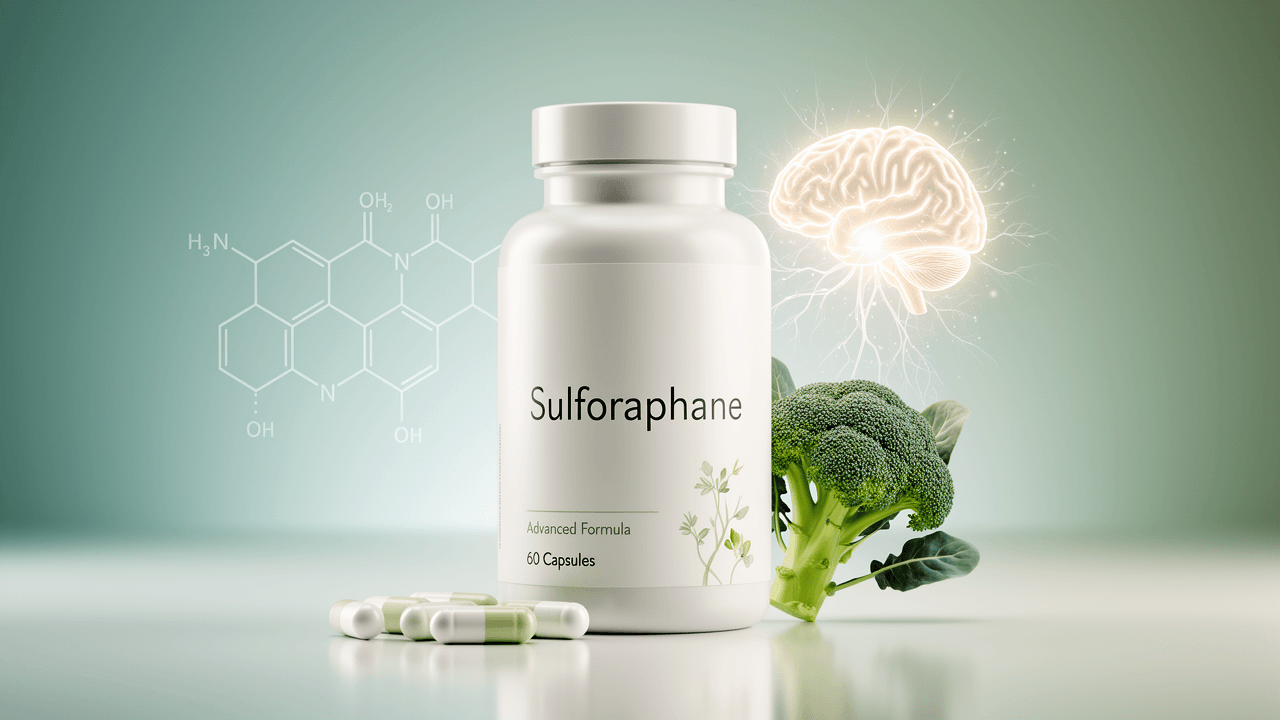
Sulforaphane is a sulfur-containing compound (an isothiocyanate) formed when we chew or process cruciferous vegetables such as broccoli, broccoli sprouts, kale, cabbage, and Brussels sprouts.
It does not exist in high amounts as sulforaphane in the plant itself. Instead, plants store:
- Glucoraphanin (a stable precursor, a glucosinolate)
- Myrosinase (an enzyme that converts glucoraphanin to sulforaphane when the plant is chopped, chewed, or otherwise damaged)
In supplements, you may see:
- Broccoli sprout extract standardized to sulforaphane
- Glucoraphanin with added myrosinase (to generate sulforaphane in the gut)
How Sulforaphane Works in the Body
Sulforaphane is best known as a potent activator of the Nrf2 (nuclear factor erythroid 2–related factor 2) pathway, a master regulator of cellular defense.
Key mechanisms:
Nrf2 Activation and Antioxidant Defense
Sulforaphane binds to Keap1, a protein that normally keeps Nrf2 inactive. This allows Nrf2 to move into the nucleus and switch on over 200 genes involved in:- Glutathione synthesis (e.g., GCLC, GCLM)
- Phase II detoxification enzymes (e.g., NQO1, GSTs, HO-1)
- Antioxidant enzymes (e.g., SOD, catalase)
Support of Detoxification & Xenobiotic Clearance
By upregulating phase II enzymes, sulforaphane helps:- Conjugate and eliminate reactive metabolites and toxins
- Enhance clearance of environmental pollutants (e.g., benzene, acrolein)
Modulation of Inflammation (NF-κB and Others)
Sulforaphane indirectly downregulates NF-κB, a central inflammatory transcription factor. This can reduce expression of inflammatory cytokines (e.g., TNF-α, IL-6) and adhesion molecules.Epigenetic Effects
Sulforaphane can inhibit histone deacetylases (HDACs), enzymes that regulate gene expression. This epigenetic modulation is one proposed mechanism for its:- Anti-cancer effects in cell and animal models
- Possible benefits for brain plasticity and neuroprotection
Neuroprotective & Mitochondrial Effects
In preclinical studies, sulforaphane:- Protects neurons from oxidative and excitotoxic stress
- Improves mitochondrial function and biogenesis
- Enhances clearance of misfolded proteins via autophagy
These mechanisms make sulforaphane interesting not only as a general health compound but also as a nootropic adjunct for brain resilience, especially under oxidative or inflammatory stress.
2. Key Benefits of Sulforaphane
1. Detoxification and Protection from Environmental Pollutants
By upregulating phase II detox enzymes and glutathione-related pathways, sulforaphane can increase the excretion of certain air pollutants and reactive chemicals. Human trials show higher urinary excretion of benzene and acrolein metabolites after broccoli sprout beverage intake.
2. Anti-Inflammatory and Antioxidant Support
Sulforaphane enhances endogenous antioxidant defenses rather than acting as a direct antioxidant. This can reduce markers of oxidative stress and inflammation, which are implicated in cardiovascular disease, metabolic syndrome, and neurodegenerative conditions.
3. Brain Health and Potential Nootropic Effects
While human data are still limited, sulforaphane may support brain health by:
- Reducing neuroinflammation and oxidative damage
- Modulating glutathione levels in the brain
- Potentially improving aspects of social responsiveness in autism spectrum disorder (ASD) in small trials
Most cognitive/nootropic claims are extrapolated from animal and mechanistic studies, so expectations should be conservative.
4. Metabolic and Cardiometabolic Support
Sulforaphane may modestly improve:
- Fasting blood glucose and insulin resistance in type 2 diabetes
- Some cardiovascular risk markers, such as LDL oxidation and vascular inflammation
Effects are generally modest and should be viewed as adjunctive to diet, exercise, and medical therapy.
3. Research Findings: What the Studies Show
Below are selected human trials with details on dose, duration, and outcomes.
3.1 Detoxification and Environmental Pollutants
Study: Broccoli sprout beverage & air pollutants (China)
- Design: Randomized, placebo-controlled trial
- Participants: 291 adults (51% female), aged 21–65, from a heavily polluted region of China
- Intervention: Daily beverage containing freeze‑dried broccoli sprout extract (providing ~600 µmol glucoraphanin and ~40 µmol sulforaphane) vs placebo
- Duration: 12 weeks
- Findings:
- Increased urinary excretion of benzene metabolite by ~61% and acrolein metabolite by ~23% compared with baseline/placebo.
- Nrf2-target enzyme activity increased in peripheral blood cells.
- Implication: Regular sulforaphane intake can enhance detoxification of certain airborne pollutants.
3.2 Autism Spectrum Disorder (ASD) and Behavior
Study: Sulforaphane in young men with ASD
- Design: Randomized, double-blind, placebo-controlled
- Participants: 44 males, aged 13–27, with moderate to severe ASD
- Intervention: Oral sulforaphane-rich broccoli sprout extract vs placebo
- Doses: 50–150 µmol/day (approx. 8.5–25 mg sulforaphane) based on body weight
- Duration: 18 weeks treatment + 4 weeks follow-up off treatment
- Findings:
- At week 18, improvements vs placebo on:
- Aberrant Behavior Checklist (ABC) scores (irritability, lethargy, stereotypy, hyperactivity)
- Social Responsiveness Scale (SRS) scores (social communication, awareness)
- Some regression of benefits after discontinuation.
- At week 18, improvements vs placebo on:
- Limitations: Small sample size, all male, short duration, replication needed.
- Implication: Suggests potential for sulforaphane to modulate behavior and social responsiveness in ASD, possibly via redox and heat-shock pathways.
3.3 Metabolic Health and Type 2 Diabetes
Study: Broccoli sprout extract in type 2 diabetes
- Design: Randomized, double-blind, placebo-controlled
- Participants: 97 adults with type 2 diabetes (poorly controlled, many on metformin)
- Intervention: Broccoli sprout extract providing ~150 µmol/day sulforaphane vs placebo
- Duration: 12 weeks
- Findings:
- Significant reduction in fasting blood glucose (~7–10 mg/dL vs placebo) in obese participants with higher baseline fasting glucose.
- Modest improvement in HbA1c in a subgroup with high baseline levels.
- No major adverse events reported.
- Implication: Sulforaphane may modestly improve glycemic control in certain individuals with type 2 diabetes, especially those with poor baseline control.
3.4 Helicobacter pylori and Gastric Health
Study: Broccoli sprouts & H. pylori infection
- Design: Randomized, placebo-controlled
- Participants: 48 H. pylori–infected adults
- Intervention: 70 g/day fresh broccoli sprouts vs alfalfa sprouts (control)
- Duration: 8 weeks
- Findings:
- Significant reduction in urea breath test values and serum pepsinogen I/II ratio, suggesting reduced gastric inflammation and H. pylori activity.
- H. pylori was not eradicated but bacterial load and gastric inflammation markers were reduced.
- Implication: Sulforaphane-rich foods may help reduce gastric inflammation and bacterial burden as an adjunct to standard treatment.
3.5 Cancer-Related Biomarkers (Prevention Context)
Human data in cancer are mostly on biomarkers, not clinical outcomes.
- Colon and rectal tissue studies have shown increased expression of detoxification enzymes and changes in HDAC activity after broccoli sprout or cruciferous vegetable intake.
- Some trials in smokers demonstrate reduced DNA damage markers and improved detoxification of carcinogens.
Overall, the evidence suggests chemopreventive potential, but no large, long-term trials show reduced cancer incidence yet.
3.6 Brain and Cognitive Function
Human data on direct cognitive enhancement are sparse:
- Small pilot studies in schizophrenia and ASD show changes in glutathione levels and some symptom improvements, but sample sizes are small and results mixed.
- No robust RCTs in healthy adults specifically assessing memory, focus, or executive function.
Thus, sulforaphane should be viewed as a neuroprotective support compound rather than a classic acute "focus booster."
4. Best Sources & Dosage
4.1 Food Sources of Sulforaphane
Sulforaphane is generated from glucoraphanin + myrosinase.
Top food sources:
- Broccoli sprouts (3–5-day-old sprouts): highest glucoraphanin content
- Mature broccoli (especially florets and young shoots)
- Kale, Brussels sprouts, cabbage, cauliflower (lower but still useful)
Approximate ranges (highly variable by variety and preparation):
- Broccoli sprouts: 20–100+ mg glucoraphanin per 100 g fresh weight
- Mature broccoli: ~2–10 mg glucoraphanin per 100 g
Preparation tips to maximize sulforaphane:
- Lightly steam broccoli (3–4 minutes) rather than boiling to preserve myrosinase.
- Add a raw cruciferous source (e.g., a bit of raw broccoli, mustard seeds, daikon radish) to cooked broccoli to reintroduce myrosinase.
- Chew thoroughly to mix glucoraphanin and myrosinase.
4.2 Supplement Forms
Common supplement formats:
Standardized Sulforaphane Extracts
- Provide sulforaphane directly (e.g., 5–20 mg per capsule).
- Often derived from broccoli sprouts.
- More predictable dosing but sulforaphane is chemically less stable; reputable brands use stabilization techniques.
Glucoraphanin + Myrosinase Combinations
- Provide the precursor plus the enzyme in separate or combined capsules.
- Sulforaphane is generated in the gut; conversion can be more consistent than relying on gut bacteria alone.
Glucoraphanin-Only Extracts
- Rely on gut microbiota myrosinase-like activity for conversion.
- Conversion rates can vary widely between individuals.
When choosing a supplement, look for:
- Third-party testing (purity, potency, heavy metals)
- Clear labeling of actual sulforaphane yield or at least glucoraphanin + myrosinase content
- Clinical-style dosing (e.g., 10–30 mg sulforaphane equivalents per day)
4.3 Dosage Recommendations by Use Case
Note: Doses are given in sulforaphane equivalents when possible. 1 µmol sulforaphane ≈ 0.177 mg.
General Health & Antioxidant Support
- Typical range: 10–20 mg sulforaphane/day (≈ 55–110 µmol)
- Often achievable with:
- 1–2 capsules of a standardized extract, or
- ~30–60 g fresh broccoli sprouts (if high-glucoraphanin variety)
This range is consistent with doses used in several human trials examining detoxification and Nrf2 activation.
Detoxification / Environmental Pollutant Support
- Human trials used:
- ~40 µmol sulforaphane + 600 µmol glucoraphanin/day (≈ 7 mg sulforaphane + precursor) in a beverage
- In practice:
- 10–30 mg/day sulforaphane is a reasonable supplemental target for short to medium-term detox-focused protocols (e.g., 4–12 weeks), alongside adequate hydration, fiber, and medical supervision if needed.
Metabolic Support (e.g., Type 2 Diabetes, Insulin Resistance)
- Clinical trial: ~150 µmol/day sulforaphane (≈ 26–27 mg) for 12 weeks in type 2 diabetes.
- Practical range:
- 20–30 mg/day sulforaphane as an adjunct to standard care, diet, and exercise.
- Always coordinate with a healthcare provider, especially if on glucose-lowering medications.
Brain Health / Nootropic Adjunct
Evidence is limited, but based on ASD and schizophrenia pilot data:
- 10–25 mg/day sulforaphane may be a reasonable experimental range used in research settings.
- For ASD, weight-based dosing in the RCT was ~50–150 µmol/day (≈ 9–27 mg) in adolescent and young adult males.
For general brain resilience (not treatment of disease), staying at the lower end (10–20 mg/day) is prudent until more data are available.
4.4 Timing and Administration
- Can be taken with or without food; some people tolerate it better with meals.
- If using glucoraphanin + myrosinase, follow manufacturer guidance (some suggest taking with a small amount of raw cruciferous food for synergy).
- For daily use, once-daily dosing is common; split dosing is not usually necessary.
5. Safety, Side Effects, and Interactions
5.1 General Safety Profile
Across multiple human trials (often 4–12 weeks, some longer), sulforaphane-rich broccoli sprout preparations have been generally well tolerated.
Common, usually mild side effects:
- Gastrointestinal discomfort (bloating, gas, loose stools)
- Mild nausea or abdominal cramps
- Transient changes in stool odor (sulfur-containing compounds)
These effects are often dose-dependent and may be reduced by:
- Starting with a lower dose and titrating up
- Taking with food
- Ensuring adequate hydration
5.2 Potential Risks and Theoretical Concerns
Thyroid Function
- Cruciferous vegetables contain goitrogenic compounds that can interfere with iodine uptake.
- Normal dietary intake is generally safe, and most human data do not show clinically significant thyroid dysfunction from typical cruciferous consumption.
- High-dose, long-term supplementation in individuals with marginal iodine status or existing hypothyroidism is a theoretical concern.
- Ensure adequate iodine intake (via diet or supplementation if needed) and monitor thyroid labs if using high doses chronically.
Oxidative Stress Balance
- Nrf2 activation is generally protective, but chronic, very high activation might theoretically have downsides (e.g., in certain cancers or in already highly upregulated Nrf2 states).
- Most human doses used (10–30 mg/day) are within a physiologic range and unlikely to cause harm in otherwise healthy individuals.
Gastrointestinal Sensitivity
- People with IBS or sensitive digestion may experience more GI side effects from sulfur-rich compounds.
5.3 Drug and Nutrient Interactions
Evidence on specific drug interactions is limited, but several theoretical and observed interactions should be considered:
Chemotherapy & Cancer Treatments
- Sulforaphane can affect detoxification enzymes (e.g., GST, NQO1) and may alter metabolism of some chemotherapeutic agents.
- It may be beneficial with some regimens and problematic with others; data are mixed and regimen-specific.
- Do not self-supplement at high doses during chemotherapy or radiation without explicit oncologist approval.
Drugs Metabolized by Phase II Enzymes
- By inducing GSTs and related enzymes, sulforaphane could theoretically change clearance of drugs that rely heavily on these pathways.
- Clinical significance is largely unknown; caution is advised with narrow therapeutic index drugs.
Antidiabetic Medications (e.g., Metformin, Insulin)
- Sulforaphane may modestly lower blood glucose.
- Combined with antidiabetic drugs, there is a theoretical risk of hypoglycemia, especially if diet/exercise are also changed.
- Monitor blood glucose more closely when starting; coordinate with a clinician.
Thyroid Medications (Levothyroxine)
- High intake of goitrogenic foods/supplements might theoretically influence thyroid hormone requirements in susceptible individuals.
- If hypothyroid and on levothyroxine, monitor TSH and free T4 after introducing high-dose cruciferous supplements.
Nutrient Interactions
- Adequate selenium and iodine support optimal thyroid and antioxidant enzyme function (e.g., glutathione peroxidase) when using Nrf2 activators like sulforaphane.
5.4 Long-Term Use
Long-term human data are more limited than short-term trials. However:
- Populations with high cruciferous vegetable intake generally show lower rates of several chronic diseases in observational studies.
- Broccoli sprout interventions up to several months have not reported serious safety signals.
A cautious approach:
- Use moderate doses (10–20 mg/day) for long-term health support.
- Consider cycling (e.g., 5 days on, 2 days off; or 8–12 weeks on, a few weeks off) if using higher doses, though evidence for specific cycling strategies is lacking.
6. Who Should and Shouldn’t Use Sulforaphane
6.1 Who May Benefit
Individuals with Low Cruciferous Vegetable Intake
- Those who rarely eat broccoli, kale, or related vegetables may use sulforaphane supplements as a partial substitute (though whole foods offer fiber and other phytonutrients).
People Exposed to High Levels of Environmental Pollutants
- Urban residents in areas with high air pollution, or those with occupational exposures (in consultation with an occupational health professional), may benefit from enhanced detoxification support.
Individuals with Metabolic Syndrome or Type 2 Diabetes
- As an adjunct to lifestyle changes and standard medical care, sulforaphane may modestly improve glycemic control and oxidative stress markers.
Those Interested in Healthy Aging and Cellular Defense
- Sulforaphane’s Nrf2 activation and epigenetic effects make it attractive for people aiming to support long-term cellular resilience.
Neuroprotection-Focused Users
- Individuals concerned about brain health (family history of neurodegenerative disease, high oxidative stress) may consider sulforaphane as part of a broader strategy, though direct evidence for prevention is not yet available.
6.2 Who Should Use Caution or Avoid It
Pregnant or Breastfeeding Women
- Human safety data on concentrated sulforaphane supplements in pregnancy and lactation are insufficient.
- Normal dietary intake of cruciferous vegetables is generally considered safe and beneficial.
- Avoid high-dose supplements unless under medical supervision.
People on Chemotherapy or Targeted Cancer Therapies
- Sulforaphane can modulate drug-metabolizing enzymes and cell survival pathways.
- Effects may be regimen-dependent (potentially helpful or harmful).
- Only use under guidance of an oncologist familiar with your specific treatment.
Individuals with Uncontrolled Hypothyroidism or Iodine Deficiency
- High intake of cruciferous concentrates may theoretically worsen thyroid function.
- Correct iodine deficiency first and monitor thyroid labs if using sulforaphane supplements.
People with Significant Gastrointestinal Sensitivity
- Those with active IBD flares, severe IBS, or recent GI surgery may experience more discomfort.
- Start very low (or use food forms) and monitor symptoms.
Children and Adolescents
- Limited data (e.g., ASD trial) suggest potential benefits, but routine use in healthy children is not well studied.
- Any pediatric use should be supervised by a clinician, especially at doses >10 mg/day.
Practical Takeaways
- Sulforaphane is a powerful Nrf2 activator from cruciferous vegetables, especially broccoli sprouts, with evidence for enhanced detoxification, antioxidant defense, and modest metabolic benefits.
- Human data support roles in pollutant detox, glycemic control, and possibly behavioral improvements in ASD, but robust evidence for cognitive enhancement in healthy adults is still lacking.
- Effective supplemental doses typically range from 10–30 mg/day of sulforaphane, depending on the goal and individual context.
- It is generally safe at studied doses, but caution is warranted in pregnancy, cancer therapy, thyroid disease, and with certain medications.
- For most people, the foundation should remain a diet rich in cruciferous vegetables, with supplements used as a targeted adjunct rather than a replacement for whole foods.