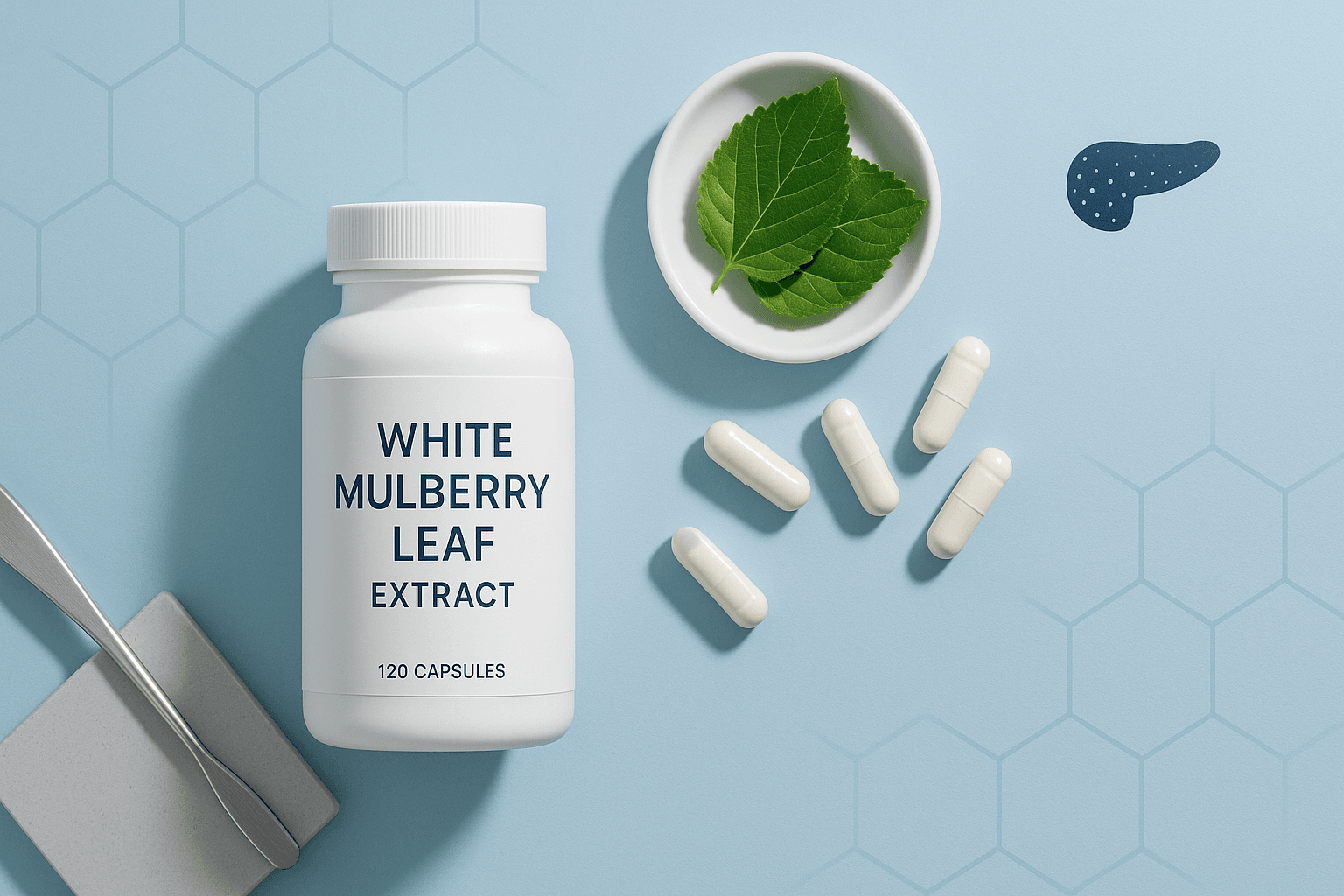
Understanding White Mulberry Leaf Extract
White mulberry leaf extract (from Morus alba leaves) is best known for its naturally occurring 1-deoxynojirimycin (DNJ) and related iminosugars that slow carbohydrate digestion in the small intestine. DNJ acts as a competitive inhibitor of α-glucosidase—the enzyme family that cleaves complex carbs into glucose—thereby flattening post-meal glucose spikes and, secondarily, insulin excursions. Extracts also contain flavonoids (e.g., quercetin, kaempferol glycosides), chlorogenic acid, and alkaloids that may contribute antioxidant and lipid-modulating effects.
You’ll see a few common forms on labels:
Standardized leaf extracts specifying DNJ content (e.g., 0.5–3% DNJ) or a quantified DNJ-per-capsule amount.
Generic “mulberry leaf” powders (variable potency; often lack DNJ standardization).
Blends pairing mulberry with cinnamon, berberine, or chromium (convenient, but dosing clarity for each active can be poor).
Most people can’t rely on diet to obtain effective DNJ amounts—tea infusions and culinary uses deliver far lower and inconsistent doses compared with standardized capsules. For targeted support with post-prandial (after-meal) glucose, supplements provide predictable DNJ per dose and are the form used in clinical trials.
Mechanistically, three pathways matter for real-world use:
- Carb-splitting brake: DNJ inhibits α-glucosidase at the brush border, delaying glucose appearance in the bloodstream and reducing the meal’s glycemic “peak.”
- Insulin demand: Lower peaks often mean less insulin required for disposal, which may support metabolic flexibility over time.
- Cardiometabolic spillover: Modest improvements in triglycerides and LDL-C are reported in some trials, likely via lower glycemic variability and ancillary polyphenol effects, though results are mixed.
Key Benefits
Post-meal glucose control. Taken with carbohydrate-rich meals, standardized mulberry leaf extracts blunt glucose and insulin spikes, improving 1–2-hour post-prandial readings versus placebo in multiple small RCTs.
Complementary lipid support. Several studies note modest reductions in triglycerides and LDL-C over 8–12 weeks, especially in individuals with elevated baseline values.
Weight management assist. By flattening glucose peaks and lowering insulin demand, mulberry can reduce cravings and caloric over-shoot for some people, producing small but meaningful weight or waist improvements when paired with diet changes.
Reality check: Effects center on post-meal control; fasting glucose and HbA1c shifts are often modest unless combined with diet, exercise, and (when indicated) medication.
Research Findings
Acute glycemic response (healthy to dysglycemic adults): Randomized, crossover meals tests (single-day to 2-week protocols; n≈12–40) using mulberry leaf extract providing ~6–24 mg DNJ per meal reduced post-prandial glucose iAUC and peak glucose versus placebo after standardized sucrose/starch loads; insulin iAUC typically fell in parallel. Adverse effects were mild GI symptoms when very high carb loads were paired with higher DNJ.
Prediabetes / impaired glucose tolerance: 8–12-week, randomized, double-blind trials (n≈50–100) administering 500–1,000 mg/day standardized extract (or DNJ-matched equivalents) with meals showed greater reductions in 2-hour OGTT glucose and post-meal capillary readings vs placebo; HbA1c changes were small but directionally favorable in higher-risk subgroups.
Mixed dyslipidemia / overweight adults: 12-week RCTs (n≈60–150) reported triglyceride decreases (~10–15%), small LDL-C reductions, and inches-level changes in waist circumference compared with placebo when mulberry was taken alongside balanced-diet advice; effects were most pronounced in those with higher starting triglycerides.
Type 2 diabetes (adjunct use): In add-on designs over 8–12 weeks (n≈40–100), mulberry extract taken with main meals improved post-meal glucose targets and sometimes fructosamine, with HbA1c changes modest and variable. Benefits were additive to metformin or diet therapy, with rare symptomatic hypoglycemia.
Best Sources & Dosage
Forms & what to look for
Choose standardized extracts that declare DNJ content (e.g., “3 mg DNJ per capsule”) or %DNJ, and specify leaf (not fruit).
If using a blend, verify the actual DNJ mg per serving; otherwise it’s hard to match trial-like dosing.
Teas can be pleasant but are unreliable for measurable post-meal effects unless extremely concentrated.
Evidence-aligned adult ranges
With high-carb meals (primary use): 250–500 mg extract per meal providing ~3–12 mg DNJ, taken 5–10 minutes before or with the first bites. Use with the day’s largest carb meals.
Daily structured dosing (metabolic programs): 500–1,000 mg/day extract (split with two meals) for 8–12 weeks, then reassess based on meter readings or CGM trends.
Sensitivity note: Start low (e.g., 250 mg with one carb-dense meal) to gauge GI tolerance.
Timing & stacking
Works when you eat carbs; it’s not a fasting aid.
Combine with protein and fiber at meals and a steady walking routine after eating to amplify post-prandial control.
If you already take α-glucosidase inhibitors (e.g., acarbose), do not layer mulberry without clinician guidance—mechanisms overlap.
Safety, interactions & who should avoid it
Generally well tolerated; most common effects are bloating, gas, or looser stools (from undigested carbs reaching the colon). Reducing dose or carbohydrate load usually helps.
May enhance glucose-lowering with diabetes medications (metformin, sulfonylureas, insulin). Monitor closely to avoid lows; coordinate with your prescriber.
Hypotension has been anecdotally reported with concentrated extracts; monitor if you use antihypertensives.
Allergy to mulberry family plants is rare but possible; discontinue if rash or itching develops.
Pregnancy/lactation: human safety data are limited—prefer food-based strategies and clinician-directed care.
Surgery: consider pausing 1–2 weeks prior because of perioperative glucose management.
Label literacy
- Prioritize products that quantify DNJ and give a per-meal DNJ target.
- Look for third-party testing (identity, potency, contaminants).
- Avoid proprietary blends that obscure DNJ dose; transparency makes meal-timing experiments far more effective.
Dosage Quick-Reference
Post-meal glucose control: 250–500 mg extract per carb-rich meal (≈3–12 mg DNJ) • With first bites • Outcome: post-prandial glucose/insulin peaks ↓.
Prediabetes program: 500–1,000 mg/day in 2 doses • 8–12 weeks • Outcome: OGTT 2-hr glucose ↓; HbA1c →/↓ (modest).
Lipid support (mixed dyslipidemia): 500–1,000 mg/day • 12 weeks • Outcome: triglycerides ↓, LDL-C ↓ (small).
Adjunct in T2D (with meals): 250–500 mg with largest carb meals • 8–12 weeks • Outcome: post-meal targets ↑ (better met); HbA1c change modest.
Safety note: Do not substitute for prescribed diabetes therapy; coordinate use if on glucose-lowering meds.