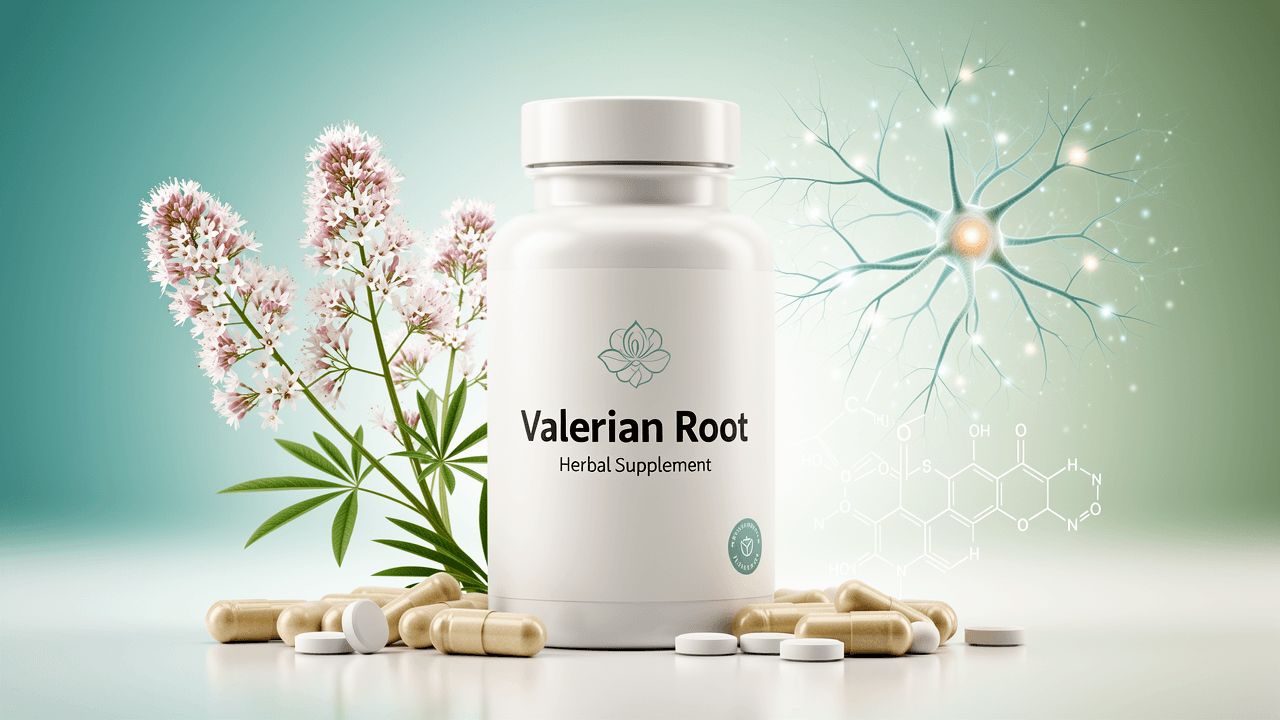
Understanding Valerian Root – What It Is and How It Works
Valerian (Valeriana officinalis) is a perennial herb native to Europe and parts of Asia, now also cultivated in North America. The root and rhizome are used medicinally, usually as capsules, tablets, liquid extracts, or teas.
Valerian is most widely used as a mild sedative and sleep aid, and sometimes as an anxiolytic (anxiety-reducing) agent. It is not a classic “cognitive enhancer” like many nootropics, but it may indirectly support cognition by improving sleep quality and reducing stress.
Key Active Constituents
Valerian root contains multiple bioactive compounds, including:
- Valerenic acids (e.g., valerenic acid, acetoxyvalerenic acid)
- Valepotriates (iridoid esters; unstable, more common in fresh extracts)
- Lignans (e.g., hydroxypinoresinol)
- Flavonoids and essential oils
No single compound explains all of its effects; instead, synergistic actions of several constituents are likely responsible.
How Valerian Root Works in the Body
The exact mechanisms are not fully understood, but several pathways have been identified:
GABAergic modulation
- GABA (gamma-aminobutyric acid) is the main inhibitory neurotransmitter in the brain, promoting relaxation and reducing neuronal excitability.
- In vitro and animal studies suggest:
- Valerenic acid and related compounds can bind to GABA-A receptors, enhancing GABAergic signaling.
- Valerian may inhibit GABA breakdown and/or inhibit GABA reuptake, increasing GABA availability.
- This may underlie its sedative and anxiolytic effects.
Interaction with adenosine and serotonin systems
- Some animal and cell studies indicate interactions with adenosine receptors (involved in sleep regulation) and 5-HT (serotonin) receptors, which may contribute to calming and sleep-promoting effects.
Modulation of the autonomic nervous system
- Valerian appears to reduce sympathetic (fight-or-flight) activity and support parasympathetic tone, which can help with relaxation and sleep onset.
Possible antioxidant and neuroprotective actions
- Preclinical studies show antioxidant and neuroprotective properties, but these have not been robustly confirmed in human trials.
Overall, valerian acts as a mild central nervous system depressant, but typically far weaker than prescription sedatives.
Key Benefits of Valerian Root
1. Sleep Support and Insomnia Relief
The primary use of valerian root is to improve sleep quality and reduce sleep latency (time to fall asleep). Many people use it as a natural alternative to over-the-counter or prescription sleep medications.
- May reduce time to fall asleep by ~5–20 minutes in some individuals.
- May improve subjective sleep quality, especially in people with mild insomnia or poor sleep.
- Effects are usually modest and may require several days to weeks of continuous use.
2. Anxiety and Stress Reduction
Valerian has mild anxiolytic properties, likely via GABAergic mechanisms. It may:
- Reduce situational anxiety (e.g., test anxiety, pre-surgical anxiety) in some settings.
- Provide a calming effect without strong sedation at lower doses.
Evidence is less robust than for sleep, but some controlled trials suggest benefit.
3. Menopausal Symptoms and Sleep Disturbances
Valerian is sometimes used to support menopausal women experiencing hot flashes and sleep disruption. Some studies suggest it may:
- Improve sleep quality in menopausal women.
- Modestly reduce frequency and severity of hot flashes when taken regularly.
4. Indirect Cognitive Support via Better Sleep
Valerian is not a direct cognitive enhancer, but by improving sleep and reducing anxiety, it may indirectly support:
- Daytime alertness
- Attention and working memory (via better-rested brain function)
- Overall mood and stress resilience
However, at higher doses or in sensitive individuals, sedation or grogginess could impair performance, especially if taken during the day.
Research Findings on Valerian Root
Sleep and Insomnia Studies
1. Meta-analyses and systematic reviews
- A 2010 systematic review and meta-analysis (Bent et al., Sleep Medicine Reviews) evaluated 18 randomized controlled trials (RCTs) on valerian and sleep. Key points:
- Sample sizes ranged from 9 to 202 participants.
- Doses typically 300–900 mg of valerian extract, taken 30–120 minutes before bedtime.
- Results were mixed: some trials showed improved subjective sleep quality and reduced sleep latency; others showed no significant difference vs. placebo.
- Methodological quality was often low (small samples, variable preparations, subjective outcomes).
- Conclusion: valerian may improve sleep quality without serious side effects, but evidence was inconsistent and not definitive.
2. Insomnia in adults
A double-blind RCT (Donath et al., 2000, Pharmacopsychiatry)
- 128 adults with non-organic insomnia
- Intervention: 600 mg standardized valerian extract nightly for 28 days vs. placebo
- Outcomes:
- Self-rated sleep quality improved more in the valerian group (44% rated sleep as “very good” vs. 18% on placebo).
- No significant difference in sleep latency on objective measures, but subjective improvement was notable.
- Adverse events were mild and similar to placebo.
A crossover RCT (Leathwood & Chauffard, 1985, Pharmacology Biochemistry and Behavior)
- 128 subjects with mild sleep difficulties
- Intervention: 400 mg aqueous valerian extract vs. placebo
- Results:
- Valerian significantly reduced sleep latency and improved self-rated sleep quality in a subset with worst baseline sleep.
- Effects were more pronounced in those with poorer initial sleep.
3. Objective measures and limitations
- Several trials using polysomnography (sleep lab recordings) did not find robust changes in sleep architecture (e.g., REM, deep sleep) vs. placebo.
- Overall, valerian tends to show better results on subjective measures (how people feel their sleep was) than on objective lab measures.
Anxiety and Stress Studies
1. Test anxiety and situational stress
- An RCT in students with exam anxiety (e.g., Taavoni et al., small RCTs; various) typically used 400–600 mg valerian extract, often in combination with other herbs (e.g., lemon balm), making it difficult to isolate valerian’s effects.
- Some of these studies reported reduced anxiety scores vs. placebo, but:
- Sample sizes were usually <100 participants.
- Many used combination products, limiting conclusions about valerian alone.
2. Generalized anxiety
- Evidence for valerian as a treatment for generalized anxiety disorder (GAD) is limited and not strong enough to recommend it as a primary therapy.
- Some small trials and open-label studies suggest mild anxiolytic effects, but larger, high-quality RCTs are lacking.
Menopausal Symptoms and Sleep
A double-blind RCT (Taavoni et al., 2011, Menopause)
- 68 postmenopausal women with hot flashes
- Intervention: 255 mg valerian extract, 3 times daily (total ~765 mg/day) for 8 weeks vs. placebo
- Results:
- Significant reduction in frequency and severity of hot flashes in the valerian group vs. placebo.
- No serious side effects reported.
Another RCT (Asghari et al., 2012, Complementary Therapies in Clinical Practice)
- 100 postmenopausal women with sleep disorders
- Intervention: 530 mg valerian root twice daily for 4 weeks vs. placebo
- Results:
- Improved Pittsburgh Sleep Quality Index (PSQI) scores in the valerian group.
- Benefits were modest but statistically significant.
Cognitive and Daytime Performance
- Few high-quality trials assess valerian’s direct impact on cognition.
- Some studies note no significant impairment of reaction time or alertness the next day at moderate doses (e.g., 400–600 mg at night), but higher doses or individual sensitivity may cause morning grogginess.
- There is no strong evidence that valerian enhances memory, focus, or executive function directly.
Overall Evidence Quality
- Many studies are small, short-term (2–8 weeks), and use different extracts and dosages, making comparisons difficult.
- Evidence supports modest benefit for subjective sleep quality and possibly mild anxiolytic effects, with a good safety profile in the short term.
- It is not as potent as prescription hypnotics or anxiolytics and should be viewed as a gentle, complementary option.
Best Sources & Dosage – Forms, Dosing, Timing, Safety
Common Forms of Valerian Root
Standardized Extracts (Capsules/Tablets)
- Typically standardized to 0.3–0.8% valerenic acids.
- Most clinical trials use dry extracts in this form.
Tinctures/Liquid Extracts
- Alcohol or glycerin-based extracts.
- Often labeled as 1:5 or 1:3 (herb-to-solvent ratio) or given in drops or mL.
Dried Root (Tea or Powder)
- 2–3 g of dried root steeped in hot water for 10–15 minutes.
- Less standardized; potency can vary.
Combination Formulas
- Frequently combined with lemon balm, hops, passionflower, chamomile, etc.
- Some evidence suggests combinations may be more effective than valerian alone, but it is harder to attribute effects.
Dosage Recommendations by Use Case
Important: These are general ranges from clinical studies and traditional use. Always start at the lower end, especially if you are sensitive to sedatives.
1. For Sleep Onset and Sleep Quality
Standardized extract (capsules/tablets)
- Typical dose: 300–600 mg, taken 30–120 minutes before bedtime.
- Some studies used up to 900 mg at night.
- Many users find 400–600 mg effective.
Dried root (tea)
- 2–3 g dried root steeped in hot water; drink 30–60 minutes before bed.
Liquid extract/tincture
- Often 2–6 mL (or ~30–60 drops), 30–60 minutes before bed, depending on product strength.
- Follow manufacturer instructions and start low.
Onset of effect
- Some people notice benefit the first night; others require 2–4 weeks of nightly use for full effect.
2. For Anxiety and Daytime Calm
Daytime use is more controversial because of potential sedation.
Standardized extract
- 120–300 mg, up to 3 times daily, is sometimes used in studies.
- To minimize daytime drowsiness, many people use smaller doses (e.g., 100–200 mg once or twice daily).
Practical approach
- If used during the day, start with low doses (e.g., 100–150 mg) and assess for sedation.
- Avoid activities requiring full alertness (driving, operating machinery) until you know how you respond.
3. For Menopausal Symptoms and Sleep in Menopause
- Studies have used:
- 255–530 mg valerian extract 2–3 times daily (total ~500–1,000 mg/day) for 4–8 weeks.
- Often divided doses: morning, afternoon, and bedtime.
Duration of Use
- Most clinical trials last 2–8 weeks.
- Short-term use (up to 2–3 months) is generally considered likely safe for most healthy adults.
- Long-term continuous use beyond this period has less safety data; consider periodic breaks and medical supervision.
Safety, Side Effects, and Drug Interactions
Common Side Effects
Valerian is usually well tolerated, but side effects can occur, especially at higher doses or in sensitive individuals:
- Drowsiness or next-day grogginess
- Headache
- Dizziness or lightheadedness
- Gastrointestinal upset (nausea, abdominal discomfort)
- Dry mouth
These are typically mild and reversible upon dose reduction or discontinuation.
Less Common or Rare Side Effects
- Paradoxical reactions: agitation, restlessness, or insomnia in some individuals.
- Allergic reactions (rash, itching) – rare but possible.
- Very rare case reports of liver injury have been associated with multi-herb products containing valerian; causality is uncertain.
Drug Interactions – Use Caution
Valerian’s sedative and GABAergic effects mean it can interact with other CNS-active substances.
CNS depressants (additive sedation)
- Benzodiazepines (e.g., diazepam, lorazepam)
- Z-drugs (e.g., zolpidem, zopiclone)
- Barbiturates
- Opioids
- Sedating antihistamines (diphenhydramine, doxylamine)
- Some antipsychotics and antidepressants with sedative properties
- Alcohol
Risk: Excessive sedation, impaired coordination, respiratory depression (in extreme cases when combined with strong sedatives).
Recommendation: Avoid or use only under medical supervision. Do not combine valerian with alcohol.
Other herbs/supplements with sedative effects
- Kava, passionflower, hops, skullcap, chamomile, melatonin at high doses
Recommendation: Combining may increase drowsiness; use cautiously and avoid activities requiring alertness.
Hepatic metabolism
- Some in vitro data suggest valerian may affect CYP450 enzymes (e.g., CYP3A4), but clinical relevance is unclear.
- If you take medications with a narrow therapeutic window (e.g., warfarin, certain anti-epileptics, immunosuppressants), consult your physician before using valerian.
Anticonvulsants
- Theoretical interaction due to GABAergic effects; limited clinical data.
- Use caution and medical supervision in people with epilepsy or on anti-seizure drugs.
Dependence, Tolerance, and Withdrawal
- Unlike benzodiazepines, valerian is not strongly associated with dependence.
- Some anecdotal reports describe mild withdrawal symptoms (e.g., anxiety, insomnia) after abrupt discontinuation following long-term high-dose use, but evidence is limited.
- As a precaution, if used regularly for many weeks or months, consider gradual tapering rather than abrupt stopping.
Overdose
- Large doses (multiple grams of extract) may cause:
- Marked drowsiness
- Confusion
- Stomach upset
- Tremors or mild cardiac symptoms (rare, usually with very high intakes)
If overdose is suspected, seek medical attention.
Who Should and Shouldn’t Use Valerian Root
Who May Consider Using Valerian Root
Valerian may be appropriate for:
- Adults with mild to moderate insomnia or difficulty falling asleep who prefer a herbal option.
- Individuals with occasional anxiety or stress who are not on sedative medications and want a gentle, non-prescription aid.
- Perimenopausal or postmenopausal women with sleep disturbances or hot flashes, under healthcare guidance.
- People looking to support sleep hygiene and stress management as part of a broader lifestyle approach (sleep schedule, light exposure, caffeine reduction, etc.).
Valerian should not be considered a replacement for evaluation of serious sleep disorders (e.g., sleep apnea, restless legs syndrome, major depression).
Who Should Avoid or Use Only Under Medical Supervision
Pregnant or breastfeeding individuals
- Limited safety data; most guidelines recommend avoiding valerian during pregnancy and lactation.
Children and adolescents
- Evidence in children is limited and mixed.
- Safety in young children is not well established; typically not recommended without pediatric supervision.
People on sedative or psychoactive medications
- Benzodiazepines, Z-drugs, barbiturates, opioids, sedating antidepressants/antipsychotics, strong antihistamines.
- Risk of additive CNS depression; use only with physician oversight, if at all.
People with liver disease or significant hepatic impairment
- Due to rare reports of liver issues with multi-herb products, many experts advise caution.
- Avoid or use only under specialist supervision, with monitoring.
People with a history of substance use disorder
- While valerian is not strongly addictive, any CNS depressant should be used carefully.
Individuals with epilepsy or seizure disorders
- Theoretical interactions with anti-epileptic drugs and seizure threshold.
- Use only under neurologist/physician guidance.
People who must maintain high levels of alertness
- Pilots, drivers, machine operators, or anyone in safety-critical roles.
- If valerian is used at night, ensure no residual sedation before such activities.
Practical Use and Monitoring
- Start low, go slow: Begin at the lowest effective dose, especially if you are small-bodied, sensitive to medications, or already somewhat sedated.
- Evaluate after 2–4 weeks: If there is no noticeable improvement in sleep or anxiety after this period, it may not be effective for you.
- Combine with lifestyle changes: Sleep hygiene (consistent bedtime, dark room, limited screens), stress management, and exercise are often more impactful than any single supplement.
- Consult a healthcare professional if:
- You have chronic insomnia, loud snoring, or stop breathing at night.
- You have underlying psychiatric or neurological conditions.
- You take prescription medications, especially CNS-active or liver-metabolized drugs.
Summary
Valerian root is a traditional herbal remedy with mild sedative and anxiolytic properties, primarily mediated through GABAergic modulation and related pathways. Evidence from clinical trials suggests it can modestly improve subjective sleep quality and reduce sleep latency in some people, with a generally favorable short-term safety profile.
However, results across studies are inconsistent, and valerian is not a powerful hypnotic. It is best viewed as a gentle adjunct to good sleep hygiene and stress management, not a cure-all. Appropriate dosing for sleep typically ranges from 300–600 mg of standardized extract before bedtime, with lower, divided doses sometimes used for daytime anxiety.
As with any CNS-active supplement, careful attention to drug interactions, medical conditions, and safety is essential. Certain groups—pregnant or breastfeeding individuals, children, people on sedatives, and those with liver disease or seizure disorders—should avoid valerian or use it only under medical supervision.
Used thoughtfully and in the right context, valerian root can be a useful tool for supporting sleep and relaxation, but it should be integrated into a comprehensive approach that includes medical evaluation when needed and evidence-based lifestyle strategies.