
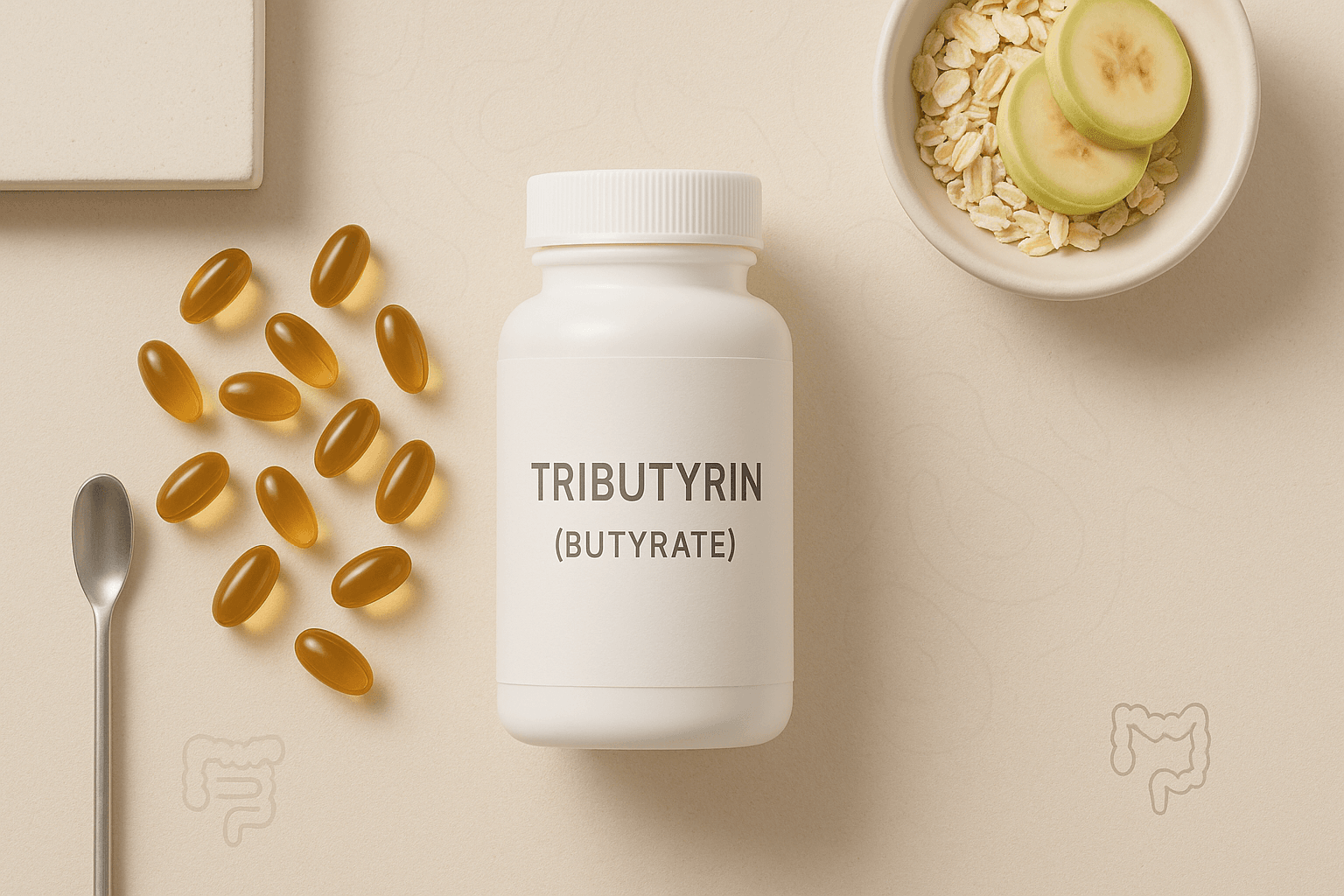
Understanding Tributyrin
Tributyrin (glycerol tri-butyrate) is a triglyceride form of the short-chain fatty acid butyrate—the same fuel your gut bacteria generate when they ferment dietary fibers and resistant starches. Each molecule of tributyrin carries three butyrate units esterified to glycerol; after ingestion, lipases gradually release butyrate along the gastrointestinal tract. This slow, fat-soluble delivery helps butyrate reach the small intestine and colon more efficiently than many “free butyrate” salts, which can smell unpleasant and release too early in digestion.
Why does butyrate matter? In the colon, butyrate is the primary energy source for colonocytes, supporting tight-junction integrity, mucus production, and oxygen balance at the mucosal surface. It also acts as a signaling metabolite: (1) histone-deacetylase (HDAC) inhibition that promotes anti-inflammatory gene programs; (2) activation of receptors like GPR41/43 (FFAR3/2) and HCAR2 (GPR109A) that modulate immune tone, motility, and hormone release; and (3) cross-talk with enteroendocrine pathways (GLP-1, PYY) involved in appetite and glycemic control.
Diet can boost butyrate indirectly through fermentable fibers (e.g., inulin, pectin, resistant starch) and polyphenol-rich plant foods. But real life gets in the way: low-fiber diets, antibiotic exposure, GI infections, and travel can reduce butyrate production; some people also react poorly to rapid fiber increases. Supplementation with tributyrin offers direct butyrate without relying on microbial fermentation, often with better tolerability and less odor than sodium or magnesium butyrate.
You’ll encounter several supplemental approaches:
- Tributyrin softgels/powders (sometimes branded or encapsulated for targeted release).
- Microencapsulated butyrate salts (odor-controlled sodium or calcium butyrate).
- Prebiotic fibers (indirect strategy to raise endogenous butyrate via the microbiome).
Tributyrin’s niche: targeted mucosal and barrier support, symptom relief for functional bowel disorders (e.g., IBS), and adjunct help during gut stress (travel, intense exercise, antibiotics) when endogenous SCFA production may be low.
Key Benefits
Gut barrier integrity. Tributyrin-derived butyrate supports tight junctions and mucus, helping reduce “leaky gut” markers during digestive or exertional stress.
IBS symptom relief. In small trials, butyrate supplementation has been associated with improvements in abdominal pain, urgency, and stool form—especially in diarrhea-predominant patterns.
Microbiome balance under stress. By fueling colonocytes and lowering luminal oxygen, butyrate fosters an environment friendlier to anaerobic commensals and less hospitable to opportunists after antibiotics or GI upsets.
Reality check: Evidence is stronger for symptom and barrier markers than for sweeping disease modification. Use tributyrin as part of a broader plan—dietary fiber, stress management, and clinician-directed care for diagnosed conditions.
Research Findings
Barrier support in healthy/at-risk settings: Human challenge models (e.g., heat/exercise stress, NSAID exposure) indicate that oral butyrate can reduce intestinal permeability markers (like zonulin or lactulose:mannitol ratios) versus placebo. Tributyrin’s fat-soluble delivery appears to improve tolerability and distal gut availability compared with free salts.
IBS and functional bowel symptoms: Small randomized and open-label studies of oral butyrate (including odor-controlled salts and tributyrin) report reductions in abdominal pain and urgency over 4–8 weeks, with the greatest benefits in diarrhea-leaning phenotypes. Effects are typically modest to moderate, but clinically useful when combined with a low-FODMAP reintroduction plan, soluble fiber, and stress strategies.
Inflammatory tone and recovery: In adjunctive settings (e.g., after antibiotics or GI infections), butyrate has shown improvements in stool consistency and frequency and decreases in fecal calprotectin in small cohorts, consistent with its HDAC-mediated anti-inflammatory signal. While promising, sample sizes are limited and protocols vary.
Metabolic signaling: Early human data suggest SCFAs can influence GLP-1/PYY and post-prandial responses, but clinical outcomes (weight, HbA1c) with tributyrin alone are inconsistent. Think of tributyrin as GI-centric first; any metabolic effects are supportive, not primary.
Best Sources & Dosage
Choosing a product
Look for tributyrin (glycerol tri-butyrate) stated clearly on the label, preferably with the butyrate yield per dose (e.g., “500 mg tributyrin delivering 300 mg butyrate”).
Encapsulation that limits odor and targets release (softgels or enteric technologies) improves user experience and compliance.
If using butyrate salts instead, choose microencapsulated versions to minimize odor and early release.
Evidence-aligned adult ranges
Everyday gut maintenance / barrier support: 300–1,000 mg tributyrin per day, with food, often split once or twice daily.
IBS-D or urgency-leaning patterns: 500–1,500 mg/day, in 2–3 divided doses for 4–8 weeks, then reassess based on symptom diaries and Bristol stool scores.
During gut stress (travel, antibiotics, heavy training): 500–1,000 mg/day for the stressor window and 1–2 weeks after, alongside hydration, sleep, and gentle soluble fiber (e.g., partially hydrolyzed guar gum).
Pediatric use: data are limited; use only under clinician guidance.
Timing & pairing
Take with meals to improve tolerability.
Combine with soluble fiber (oats, psyllium, green bananas/resistant starch) and colorful plants to feed butyrate-producing microbes for a one-two punch (direct + endogenous).
For sensitive guts, start low (e.g., 300–500 mg/day) and increase every 3–5 days as tolerated.
Safety, interactions & who should avoid it
Generally well tolerated; the most common effects are mild bloating, gas, or fullness, often transient as the gut adapts.
Because tributyrin is a fat-based delivery, rare users note reflux if taken on an empty stomach—food typically resolves this.
No well-documented drug interactions at typical doses; however, people on active IBD flares, GI infections, or complex regimens should consult their clinician to ensure timing and dosing fit the care plan.
Pregnancy/lactation: human safety data are insufficient—prefer a food-first fiber strategy unless your clinician advises otherwise.
Allergies/intolerances: check excipients (e.g., softgel materials); discontinue if rash, wheeze, or unusual symptoms occur.
Label literacy
Prioritize brands that disclose mg of tributyrin and butyrate equivalent, use odor-controlled tech, and provide lot-specific quality testing.
Avoid vague “butyrate complex” blends without clear mg amounts—you can’t titrate effectively without numbers.
Dosage Quick-Reference
Gut barrier support (adult): 300–1,000 mg/day tributyrin • With meals • Outcome: permeability markers ↓, comfort ↑.
IBS-D / urgency relief: 500–1,500 mg/day in 2–3 doses • 4–8 weeks • Outcome: abdominal pain & urgency ↓; stool form normalizes.
Travel/antibiotics/training stress: 500–1,000 mg/day • Through stressor + 1–2 weeks • Outcome: regularity & resilience ↑.
Titration tip: start at 300–500 mg/day, increase every 3–5 days as tolerated; take with food for comfort.