1. Understanding Taurine – What It Is and How It Works
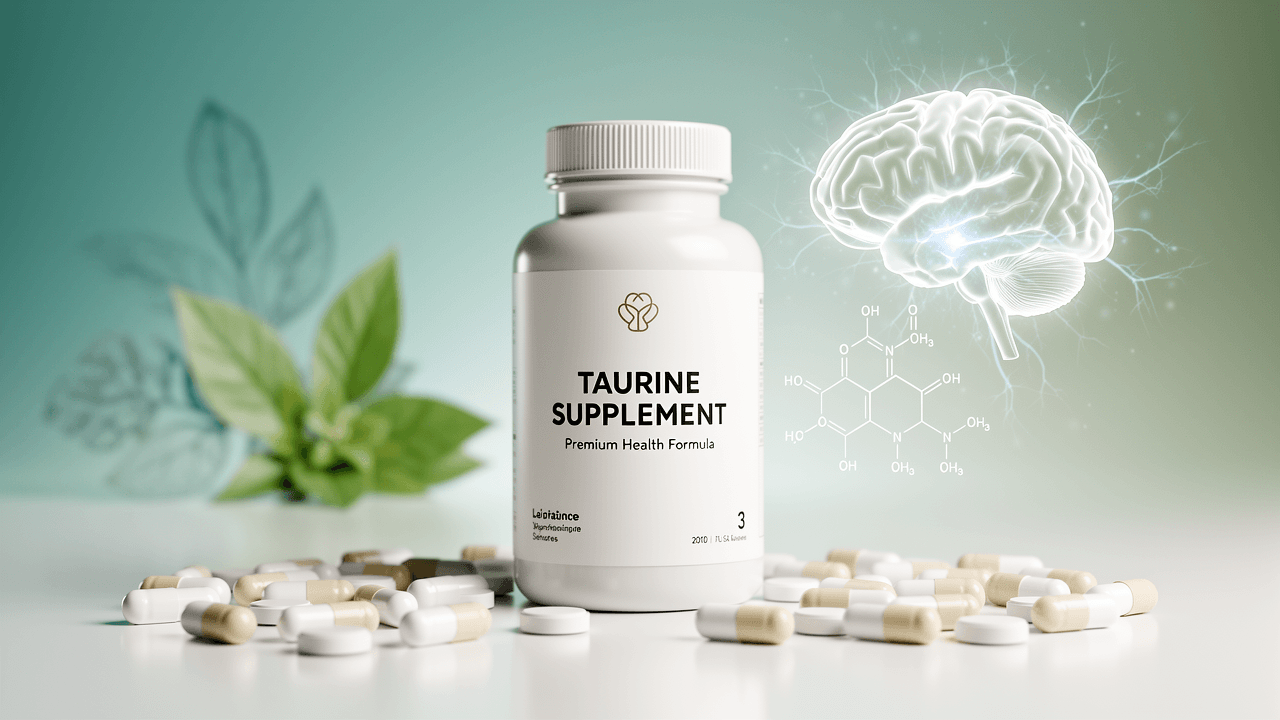
Taurine (2-aminoethanesulfonic acid) is a sulfur‑containing compound often called an "amino acid," though technically it is not used to build proteins. It is found in high concentrations in the brain, heart, retina, skeletal muscle, and immune cells.
The body can synthesize taurine from cysteine and methionine (with vitamin B6 as a cofactor), but dietary intake from meat, fish, and dairy is a major source. Strict vegans often have lower taurine intake and, in some cases, lower blood taurine levels.
1.1 Key Roles of Taurine in the Body
Taurine is involved in multiple physiological processes:
- Cell membrane stabilization: Helps maintain the integrity and fluidity of cell membranes, particularly in excitable tissues like the heart and brain.
- Calcium signaling modulation: Regulates how calcium moves in and out of cells, affecting muscle contraction (including the heart), neurotransmission, and cell survival.
- Osmoregulation: Acts as an organic osmolyte, helping cells maintain proper fluid balance and volume, especially in the brain and kidneys.
- Bile salt conjugation: Combines with bile acids (e.g., cholic acid) to form taurocholic acid, essential for fat digestion and absorption.
- Antioxidant and anti‑inflammatory actions: Scavenges certain reactive oxygen species and forms taurine chloramine, a compound that can modulate inflammation.
- Mitochondrial function: Taurine is involved in mitochondrial tRNA modification, which supports efficient mitochondrial protein synthesis and energy production.
1.2 How Taurine May Work as a Nootropic
Taurine’s potential cognitive and neuroprotective effects appear to stem from:
- GABAergic modulation: Taurine can interact with GABA_A and glycine receptors, producing inhibitory (calming) effects in the central nervous system, which may reduce anxiety and excitotoxicity.
- Glutamate regulation: May help limit glutamate‑induced excitotoxicity, protecting neurons from over‑stimulation.
- Neurogenesis and synaptic plasticity (preclinical): Animal and cell studies suggest taurine may promote neurogenesis and support synaptic function, though human data are limited.
- Cerebral blood flow and metabolic support: Through its effects on mitochondria and vascular function, taurine may support brain energy metabolism.
Overall, taurine appears more like a neuroprotective and calming support compound than a classic stimulant nootropic.
2. Key Benefits of Taurine
2.1 Cardiovascular Health and Blood Pressure Support
Taurine is highly concentrated in heart tissue and appears to support cardiovascular function by:
- Modulating calcium handling in cardiac cells
- Improving endothelial (blood vessel) function
- Supporting healthy blood pressure and lipid profiles
Human trials have found that supplementation can modestly reduce blood pressure and improve certain markers of cardiovascular risk, especially in individuals with hypertension or metabolic syndrome.
2.2 Metabolic Health and Blood Sugar Regulation
Taurine may support:
- Improved insulin sensitivity
- Better glucose tolerance
- Reduced oxidative stress associated with high blood sugar
This makes it of interest for people with metabolic syndrome, prediabetes, or type 2 diabetes (as an adjunct to standard care).
2.3 Neuroprotection, Calmness, and Anti‑Anxiety Effects
Because taurine modulates GABAergic and glycinergic neurotransmission and protects against excitotoxicity, it may:
- Promote a sense of calm and reduce subjective anxiety in some individuals
- Protect neurons from oxidative and metabolic stress
- Support cognitive function under stress or sleep deprivation (evidence mostly preclinical)
Human data on cognition and mood are still limited, but taurine is widely used in energy drinks and as a stand‑alone supplement for its calming and stabilizing effects.
2.4 Exercise Performance and Recovery
Taurine is abundant in skeletal muscle and appears to:
- Assist in calcium handling for muscle contraction
- Reduce markers of muscle damage and oxidative stress after intense exercise
- Improve endurance and time to exhaustion in some studies
Effects are generally modest but may be meaningful for endurance athletes or those performing high‑intensity exercise.
3. Research Findings on Taurine
Below are selected human and notable animal studies illustrating taurine’s effects. This is not exhaustive, but highlights key areas with relatively stronger evidence.
3.1 Blood Pressure and Cardiovascular Health
Hypertension trial – Japan (Human)
- Design: Double‑blind, placebo‑controlled trial
- Participants: 120 adults with prehypertension or mild hypertension
- Dose: 1.6 g/day taurine
- Duration: 12 weeks
- Findings: Systolic blood pressure decreased by ~7 mmHg and diastolic by ~5 mmHg vs placebo. Researchers also observed improved endothelial function and reduced arterial stiffness.
- Implication: Taurine at moderate doses may support blood pressure control in individuals with elevated but not severely high blood pressure.
Coronary heart disease markers (Human)
- Design: Observational and small intervention studies
- Higher urinary taurine excretion (a marker of intake) has been associated with lower rates of coronary heart disease in population studies. Interventional trials using 1.5–3 g/day have reported improvements in serum lipids (e.g., reduced triglycerides) and platelet aggregation, though data are mixed and often from small samples.
3.2 Metabolic Syndrome and Diabetes
Type 2 diabetes adjunct therapy (Human)
- Design: Randomized, double‑blind, placebo‑controlled
- Participants: ~40–60 adults with type 2 diabetes (numbers vary by study)
- Dose: Typically 1.5–3 g/day taurine
- Duration: 8–12 weeks
- Findings (across studies):
- Modest reductions in fasting glucose and HbA1c in some, but not all, trials
- Improved markers of oxidative stress (e.g., reduced malondialdehyde) and inflammation
- Slight improvements in lipid profiles in certain cohorts
- Implication: Taurine may provide supportive metabolic benefits, especially via antioxidant and endothelial effects, but it is not a replacement for standard diabetes medications or lifestyle interventions.
Metabolic syndrome (Human)
- Design: Small trials (n ≈ 30–60)
- Dose: 3 g/day
- Duration: 8 weeks
- Findings: Reductions in body weight, waist circumference, and triglycerides, with improved insulin sensitivity in some participants.
- Limitations: Small sample sizes, short duration, and often combined with other lifestyle interventions.
3.3 Brain, Mood, and Neuroprotection
Anxiety and stress (Human – limited data)
- Direct, high‑quality RCTs of taurine alone on anxiety are scarce. Some small studies and open‑label trials suggest:
- Reduced subjective anxiety and improved sleep quality at doses of 1–3 g/day in stressed individuals
- However, many of these studies use multi‑ingredient formulas (e.g., taurine plus magnesium, B vitamins, or L‑theanine), making it difficult to isolate taurine’s effect.
Cognitive performance (Preclinical)
- In rodent models, taurine supplementation has been shown to:
- Improve learning and memory in models of aging, diabetes, and neurotoxicity
- Reduce neuronal damage after ischemic injury
- Enhance neurogenesis and synaptic plasticity markers in the hippocampus
- Caution: These findings are preclinical; robust human cognition trials are lacking.
3.4 Exercise Performance and Recovery
Endurance performance (Human)
- Design: Double‑blind, placebo‑controlled crossover
- Participants: 8–20 trained or recreational athletes (study sizes are small)
- Dose: 1–6 g taurine, often taken 1–2 hours before exercise
- Duration: Single‑dose or short‑term (up to 2 weeks)
- Findings:
- Some studies show improved time to exhaustion and reduced perceived exertion
- Others show reduced markers of muscle damage (e.g., creatine kinase) and oxidative stress post‑exercise
- Not all studies find performance improvements; effects appear modest and may depend on training status and protocol.
Strength and muscle damage (Human)
- Design: Small RCTs (n ≈ 15–30)
- Dose: 2–3 g/day
- Duration: 2 weeks to 1 month
- Findings: Reduced delayed onset muscle soreness and lower markers of muscle damage after eccentric exercise, with inconsistent effects on strength gains.
3.5 Longevity and Aging (Emerging Evidence)
Large observational and animal data suggest that higher taurine status is associated with healthier aging:
- Animal studies: Taurine supplementation in mice, worms, and monkeys has been reported to extend lifespan and improve markers of healthspan (e.g., bone density, glucose metabolism, immune function). Doses are not directly translatable to humans but are often equivalent to several grams per day.
- Human observational data: Higher taurine levels correlate with lower prevalence of obesity, hypertension, and inflammation, but these are associations, not proof of causation.
Human RCTs directly testing taurine for longevity outcomes are not yet available; this area is promising but speculative.
4. Best Sources & Dosage
4.1 Dietary Sources of Taurine
Taurine is found almost exclusively in animal products:
- High sources: Shellfish (e.g., scallops, mussels, clams), dark meat poultry, turkey, beef, lamb
- Moderate sources: Fish (tuna, salmon, cod), dairy products, eggs (lower amounts)
- Plant foods: Essentially no taurine; vegans rely on endogenous synthesis unless supplementing.
Typical omnivorous diets provide ~40–400 mg/day, though intake can be higher in seafood‑rich diets.
4.2 Supplement Forms
- Taurine powder: Pure taurine, usually 500–1,000 mg per scoop; flexible dosing; inexpensive.
- Taurine capsules/tablets: Common doses are 500 mg, 1,000 mg, or 1,500 mg per capsule.
- Energy drinks: Often contain 500–2,000 mg per can, but combined with caffeine and sugar, which may counteract some health benefits.
Look for products that are:
- Third‑party tested (e.g., NSF, Informed‑Choice, USP where available)
- Free from unnecessary fillers or proprietary blends that obscure exact dosing
4.3 Evidence‑Based Dosage Ranges
Below are general ranges based on human studies. Individual needs vary; always consider medical context.
4.3.1 General Health and Dietary Support
- Typical dose: 500–1,500 mg/day, divided into 1–2 doses
- Use case: Low dietary intake (e.g., vegan/vegetarian), general antioxidant and cardiovascular support.
4.3.2 Blood Pressure and Cardiovascular Support
- Dose used in studies: 1.5–3 g/day, divided into 2–3 doses
- Timing: With meals to improve tolerance
- Notes: Monitor blood pressure regularly, especially if on antihypertensive medications.
4.3.3 Metabolic Health (Prediabetes, Metabolic Syndrome)
- Dose used in trials: 1.5–3 g/day
- Duration: 8–12 weeks in most studies
- Notes: Adjunct to diet, exercise, and prescribed medications; not a standalone therapy.
4.3.4 Nootropic / Calm Focus Support
- Common supplemental range: 500–2,000 mg/day
- Timing:
- For calming/sleep support: 500–1,500 mg in the evening or before bed
- For daytime calm focus: 500–1,000 mg once or twice daily
- Caution: High doses may cause sedation in some; start low and titrate.
4.3.5 Exercise Performance and Recovery
- Acute dosing: 1–2 g 60–120 minutes before exercise
- Chronic dosing: 1.5–3 g/day for 1–2 weeks around intense training blocks
- Goal: Support endurance, reduce muscle damage and soreness.
4.4 Upper Limits and Long‑Term Use
- Human studies commonly use up to 3 g/day safely for several months.
- Some short‑term studies and clinical experiences use up to 6 g/day, but with less long‑term safety data.
- Regulatory authorities (e.g., EFSA) have generally considered up to 3 g/day as a safe supplemental intake for adults, based on available data.
For long‑term use, many practitioners stay in the 500–2,000 mg/day range unless there is a specific clinical indication and medical supervision.
5. Safety, Side Effects, and Drug Interactions
5.1 Overall Safety Profile
Taurine is generally well‑tolerated in healthy adults at doses up to 3 g/day, with a strong safety record from both clinical use and its widespread presence in energy drinks (though those contain other active ingredients).
5.2 Common Side Effects
Most side effects are mild and dose‑dependent:
- Gastrointestinal discomfort (nausea, loose stools, stomach cramps)
- Headache
- Mild sedation or drowsiness in some individuals
- Rarely, paradoxical stimulation or restlessness
Starting with lower doses (e.g., 500 mg/day) and gradually increasing can reduce GI issues.
5.3 Potential Drug Interactions
While taurine is relatively low risk, some theoretical and observed interactions should be considered:
Antihypertensive medications (blood pressure drugs)
- Taurine can modestly lower blood pressure.
- Risk: Additive effect may cause blood pressure to drop too low (dizziness, fainting) in susceptible individuals.
- Recommendation: Monitor blood pressure more closely when starting taurine; consult a clinician.
Diabetes medications (insulin, metformin, sulfonylureas, etc.)
- Taurine may improve insulin sensitivity and glucose control.
- Risk: Potential (though modest) additive reduction in blood glucose, increasing risk of hypoglycemia when combined with strong glucose‑lowering drugs.
- Recommendation: Monitor blood glucose; adjust medications only under medical supervision.
CNS depressants (benzodiazepines, certain sleep medications, alcohol)
- Taurine has GABAergic, calming properties.
- Risk: Theoretical additive sedative effects, especially at higher doses.
- Recommendation: Use caution with high taurine doses if taking sedatives; avoid combining with heavy alcohol use.
Lithium and mood stabilizers (theoretical)
- Because taurine can modulate neurotransmission, theoretical concerns exist about interactions with mood stabilizers, though hard data are sparse.
- Recommendation: Individuals with bipolar disorder or on lithium/antipsychotics should consult their psychiatrist before using taurine.
Energy drink combinations (caffeine, other stimulants)
- Taurine is often combined with caffeine and other stimulants.
- Risk: Cardiovascular strain from high caffeine/sugar intake, particularly in people with heart disease or arrhythmias.
- Recommendation: Prefer pure taurine supplements over energy drinks for health purposes.
5.4 Special Populations and Precautions
Pregnancy and breastfeeding
- Taurine is important for fetal and infant development, but high‑dose supplementation in pregnancy or lactation lacks robust safety data.
- Recommendation: Limit to dietary intake unless supervised by a healthcare professional.
Children and adolescents
- Taurine is present in infant formulas and is generally considered safe in age‑appropriate amounts.
- High‑dose supplementation (grams per day) in children is not well studied.
- Recommendation: Avoid high‑dose taurine supplements in minors unless prescribed.
Kidney or liver disease
- Taurine is processed and excreted via the kidneys and liver.
- Some research suggests taurine may be beneficial in liver disease, but impaired clearance could also lead to accumulation.
- Recommendation: Individuals with significant kidney or liver impairment should use taurine only under medical supervision.
Bipolar disorder and major psychiatric conditions
- Theoretical risk of mood destabilization when modulating neurotransmitters.
- Some small studies have explored taurine as adjunctive therapy, but results are mixed.
- Recommendation: Discuss with a psychiatrist before use; monitor mood changes closely.
Surgery
- Because taurine may influence blood pressure and blood sugar, it is generally prudent to stop non‑essential supplements 1–2 weeks before major surgery, in consultation with the surgical team.
6. Who Should and Shouldn’t Use Taurine
6.1 Who May Benefit from Taurine Supplementation
Taurine may be particularly useful for:
Individuals with low dietary intake
- Vegans and some vegetarians, especially those with symptoms of fatigue, poor exercise tolerance, or metabolic issues.
People with mild hypertension or metabolic syndrome (under medical care)
- As an adjunct to lifestyle interventions and medications, taurine (1.5–3 g/day) may support blood pressure, endothelial function, and metabolic markers.
Those seeking a calming, non‑stimulant nootropic
- People who experience anxiety, jitteriness, or overstimulation from caffeine or other stimulants may find low‑to‑moderate doses of taurine (500–1,500 mg/day) supportive.
Endurance and high‑intensity athletes
- Athletes who want to potentially reduce muscle damage and improve endurance may experiment with 1–3 g/day around training, monitoring their response.
Older adults (with clinician guidance)
- Given taurine’s roles in mitochondrial function, cardiovascular health, and metabolic regulation, older adults may benefit from moderate doses, though long‑term RCTs are still limited.
6.2 Who Should Use Taurine with Caution or Avoid It
Taurine supplementation may be inappropriate or require close supervision in:
People with uncontrolled severe hypertension or serious heart disease
- While taurine may help, any changes in blood pressure‑modulating supplements should be coordinated with a cardiologist.
Individuals on multiple blood pressure or diabetes medications
- Risk of excessive BP or glucose lowering; require monitoring and professional oversight.
Those with significant kidney or liver impairment
- Reduced clearance may increase risk of accumulation; dosing should be individualized by a physician.
Pregnant or breastfeeding women
- Due to limited high‑dose safety data, stick to dietary sources unless otherwise directed by an obstetric provider.
People with bipolar disorder or unstable major psychiatric conditions
- Because taurine can influence neurotransmission, it should be used cautiously and only with psychiatric oversight.
Children and adolescents (for high doses)
- Routine high‑dose taurine supplementation is not well studied; avoid unless medically indicated.
7. Practical Takeaways
- Taurine is a conditionally essential, sulfur‑containing compound with key roles in cardiovascular, metabolic, and nervous system health.
- As a supplement, taurine is best viewed as a calming, neuroprotective, and cardiometabolic support agent, rather than a stimulating nootropic.
- Evidence‑supported doses typically range from 500–3,000 mg/day, depending on goals:
- 500–1,500 mg/day for general health and calm focus
- 1.5–3 g/day for blood pressure or metabolic support (with medical oversight)
- 1–3 g/day around intense exercise for performance and recovery
- Taurine is generally safe for healthy adults, but individuals with cardiovascular disease, diabetes, kidney/liver issues, pregnancy, or psychiatric conditions should consult a healthcare professional before use.
Used thoughtfully, taurine can be a valuable addition to a supplement regimen focused on heart health, metabolic resilience, and calm mental performance, especially when combined with a balanced diet, regular exercise, and appropriate medical care.