
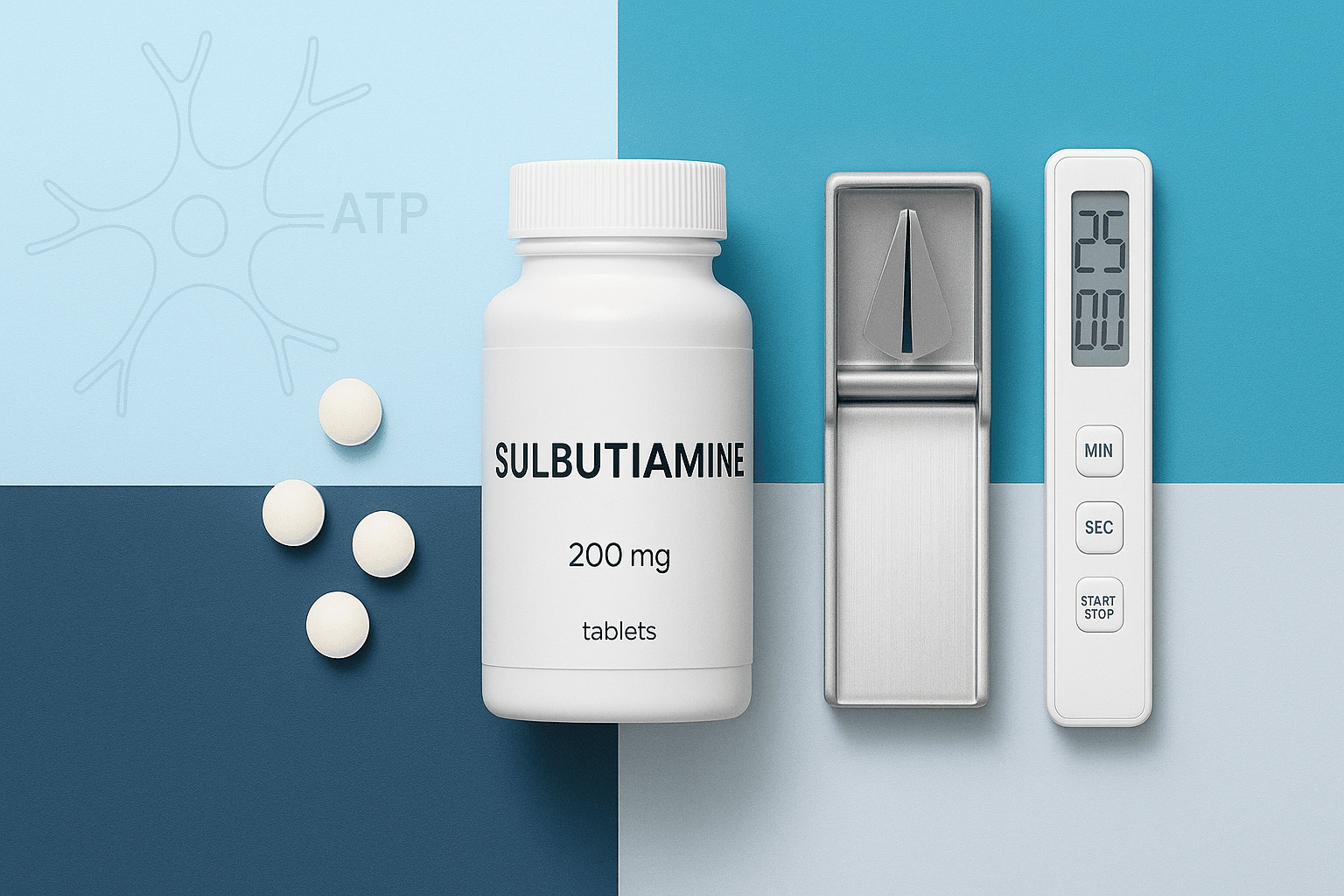
Clearer mornings & steadier drive: Understanding Sulbutiamine
Sulbutiamine is a synthetic, fat-soluble thiamine (vitamin B1) derivative created by linking two thiamine molecules and adding sulfur groups. This design markedly increases lipid solubility, which helps it cross cell membranes and the blood–brain barrier more readily than plain thiamine. In the brain, sulbutiamine is metabolized back to thiamine and thiamine phosphate esters (e.g., TPP), supporting energy metabolism (glycolysis and the TCA cycle) in neurons. Human and translational data also suggest downstream effects on cholinergic and glutamatergic signaling, with indirect modulation of dopaminergic tone—a pattern that aligns with reports of improved mental energy, motivation, and resistance to fatigue.
Clinically, sulbutiamine has been used for functional asthenia (persistent fatigue without clear structural disease), post-illness convalescence, and as an adjunct in low-drive mood states. It is not a classic stimulant; rather, users describe a “switching on” of mental energy and goal-directed behavior—when the dose and timing are well matched.
Wellness takeaway: For daytime energy and task follow-through, choose a reputable sulbutiamine, start low, and trial for 4–8 weeks (with 5-day-on/2-day-off or similar cycling if you’re stimulation-sensitive), then reassess.
Key Benefits
Fatigue & convalescence: Reduces subjective fatigue and improves initiative in functional asthenia and post-illness recovery.
Cognitive drive & focus: Supports goal-directed behavior and mental stamina, especially during demanding work blocks.
Mood adjunct (low drive): As an add-on to lifestyle measures—and, when applicable, clinician-directed therapy—may improve anergia/amotivation signals.
Reality check: Effects are usually subtle to moderate, not “euphoric.” Benefits depend on sleep, nutrition, and workload pacing; overdosing can produce jitteriness or insomnia.
Research Findings
Time to benefit: Some notice same-day mental energy and initiative; more stable, reproducible benefits typically consolidate over 1–3 weeks of consistent dosing.
Functional asthenia: Controlled studies and large open programs using 400–600 mg/day for 2–4 weeks reported improvements in fatigue ratings, activity, and global assessments vs baseline or placebo. Effects were most evident in individuals with post-infectious fatigue or high cognitive load.
Convalescence & daily function: In ambulatory adults recovering from illness, 200–400 mg/day for 2–4 weeks improved morning alertness and reduced daytime naps, with good tolerability.
Mood/amotivation (adjunct): Small clinical series suggest that 200–600 mg/day added to existing care can improve psychomotor slowing and initiative; not a replacement for evidence-based treatment when a mood disorder is present.
Cognition under load: Pilot studies and field reports note better sustained attention and task initiation during prolonged mental work; effects are modest and hinge on appropriate dose and timing.
Tolerability: Generally well tolerated at 200–600 mg/day. The most common adverse events are insomnia (if taken late), agitation/jitteriness, headache, nausea, or GI upset. Rare skin eruptions have been reported. Effects tend to be dose- and timing-dependent.
Best Sources & Dosage
What to buy:
Form: Sulbutiamine (often labeled “isobutyryl thiamine disulfide”), typically in 200 mg capsules or tablets.
Quality: Choose brands with a recent certificate of analysis (COA) confirming identity, potency (±5–10%), and low contaminants (heavy metals, solvents, microbes).
Delivery: Standard capsules are fine; fat-soluble nature means take with food (some prefer a little dietary fat for comfort).
Avoid: Proprietary blends that underdose sulbutiamine or combine it with high caffeine/stimulants (harder to self-track and more side effects).
Evidence-aligned ranges (by use case):
Functional fatigue / daytime energy:
- Start 200 mg in the morning with food for 3–5 days.
- If needed, increase to 400 mg/day (200 mg AM + 200 mg midday).
- For short, demanding periods, some tolerate 600 mg/day split AM/midday.
- Trial length 4–8 weeks, then reassess (consider cycling).
Focus during deep-work blocks:
- 200–400 mg about 30–60 minutes before a cognitively demanding session; avoid dosing after 2–3 pm if sleep is sensitive.
Convalescence/low drive (adjunct):
- 200–400 mg/day for 2–4 weeks, paired with graded activity, protein-forward meals, and sleep regularity.
Timing & tips:
Morning-first: Prioritize an AM dose; if splitting, keep the second dose before early afternoon to protect sleep.
Cycle if needed: A common pattern is 5 days on / 2 days off, or 3 weeks on / 1 week off, to evaluate continued need and limit tolerance.
Nutrition synergy: Ensure thiamine-rich foods (legumes, pork, whole grains) or a balanced B-complex if diet is inconsistent; sulbutiamine ultimately feeds into thiamine pathways.
Stack thoughtfully:
- For focus: L-theanine (100–200 mg) or magnesium glycinate (200–300 mg in the evening) can smooth edges if you’re stimulation-sensitive.
- For fatigue: address iron status, vitamin D, sleep (7–9 h), and aerobic movement; supplements can’t compensate for deficits here.
Self-tracking:
- Daily energy (0–10), focus (0–10), and sleep onset latency.
- Weekly task completion count or productive hours logged to anchor subjective effects to behavior.
Safety, interactions & exclusions:
Insomnia/jitteriness: Most often from late or too-high dosing; move all doses earlier and/or reduce to 200 mg/day.
Mood disorders: In people with bipolar spectrum or prominent anxiety, stimulating agents can precipitate hypomania or agitation—use only with clinician guidance.
Medications: No robust interaction set, but take care if combining with other stimulatory agents (high-dose caffeine, modafinil, bupropion); monitor sleep, heart rate, and anxiety.
Pregnancy/lactation: Insufficient safety data—avoid unless specifically recommended by your clinician.
Thyroid/neurologic conditions: If you have uncontrolled hyperthyroidism, severe migraine, or seizure disorders, avoid self-experimentation; discuss with your prescriber.
Allergy/intolerance: Rare cutaneous reactions have been described; discontinue with rash, swelling, or persistent headache.
Driving & safety-critical work: Evaluate your individual response before using on days that require high-stakes performance.
Safety flag: If you experience racing thoughts, palpitations, or significant insomnia, stop and reassess dose/timing; seek care for severe or persistent symptoms.
Dosage Quick-Reference
Daytime energy / asthenia: 200–400 mg/day AM±midday, 4–8 wks → ↑initiative / ↓fatigue (↑).
Deep-work focus: 200–400 mg pre-task, avoid late dosing → ↑sustained attention (→/↑).
Convalescence adjunct: 200–400 mg/day, 2–4 wks → ↑morning alertness (→/↑).
Safety note: Start low, take with food in the morning, avoid late doses, and be cautious if you have anxiety/bipolar tendencies or combine with other stimulants. Review with your clinician if you’re on psychiatric or wakefulness-promoting medications.