1. Understanding Schisandra – What It Is and How It Works
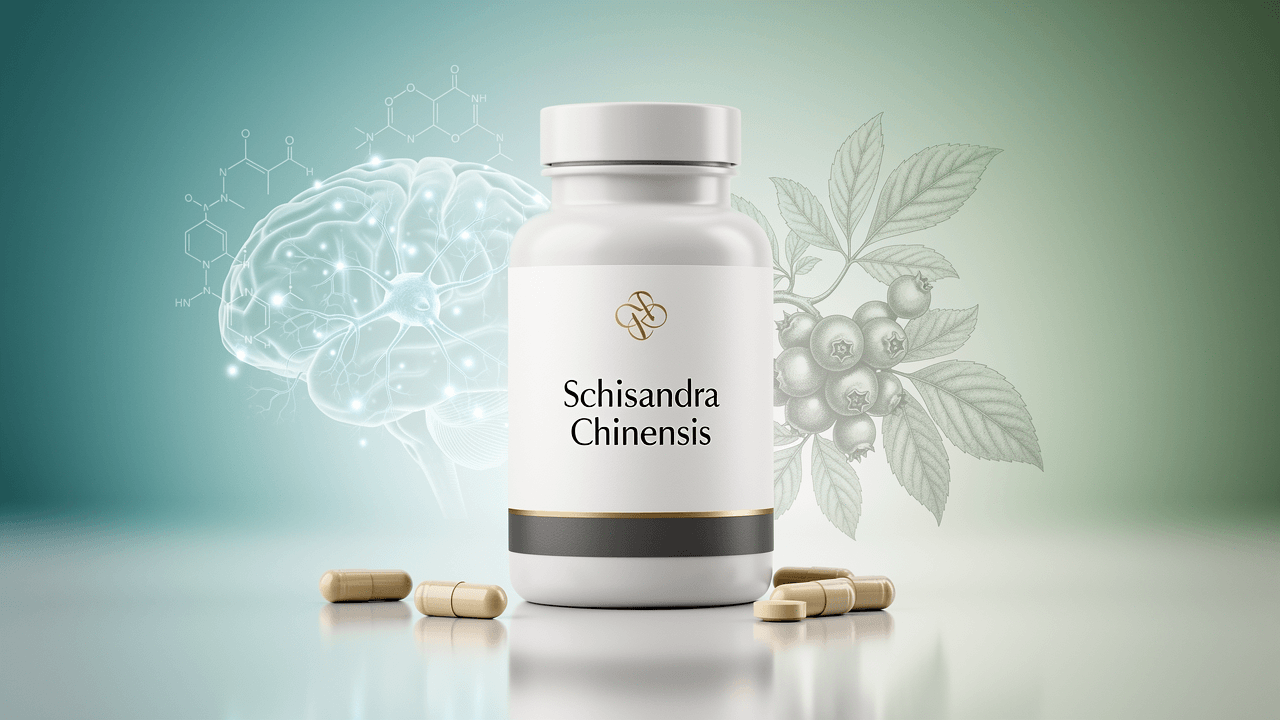
Schisandra (Schisandra chinensis), also called wu wei zi or "five-flavor berry," is a woody vine native to China, Korea, and Russia. Its red berries have been used for centuries in Traditional Chinese Medicine (TCM) and Russian herbalism as a tonic for stress, fatigue, and liver health.
Modern research classifies Schisandra as an adaptogen—a substance that may help the body adapt to physical and psychological stress and support homeostasis.
1.1 Key Active Compounds
Schisandra berries contain:
- Lignans (schisandrins, gomisins, deoxyschisandrin) – considered the primary bioactive compounds; many are lipophilic and cross the blood–brain barrier.
- Essential oils and volatile compounds – may contribute to antioxidant and anti-inflammatory effects.
- Polyphenols and flavonoids – support antioxidant activity.
The most studied lignans include schisandrin, schisandrin A, schisandrin B, and schisandrin C, and gomisin A and N.
1.2 How Schisandra Works in the Body
Based on preclinical and limited human data, Schisandra appears to act via several mechanisms:
HPA axis modulation (stress response)
- Animal studies suggest Schisandra may help regulate the hypothalamic–pituitary–adrenal (HPA) axis, influencing cortisol and other stress hormones.
- This may underlie its traditional use for stress resilience and fatigue.
Neuroprotective and nootropic effects
- Lignans can cross the blood–brain barrier and show antioxidant, anti-inflammatory, and mitochondrial-supporting actions in brain tissue.
- Some studies show enhanced cholinergic transmission and BDNF (brain-derived neurotrophic factor) expression in animal models, mechanisms associated with learning and memory.
Hepatoprotective (liver-protective) actions
- Schisandra lignans induce phase I and phase II liver enzymes, including CYP450 isoenzymes and glutathione-related pathways, improving detoxification capacity in animal and in vitro models.
- They also help preserve glutathione and reduce lipid peroxidation in the liver.
Antioxidant and anti-inflammatory activity
- In cell and animal models, Schisandra increases endogenous antioxidant enzymes (superoxide dismutase, catalase, glutathione peroxidase) and decreases pro‑inflammatory cytokines (e.g., TNF‑α, IL‑1β, IL‑6).
Mitochondrial support and energy metabolism
- Some animal data show improved mitochondrial function, ATP production, and reduced reactive oxygen species, which may explain reported benefits for fatigue and endurance.
While these mechanisms are promising, it is important to note that most mechanistic evidence comes from animal and in vitro studies, with relatively few high-quality human trials.
2. Key Benefits of Schisandra
2.1 Stress Resilience and Fatigue Reduction
As an adaptogen, Schisandra is used to support mental and physical resilience under stress.
- Human data (mainly from older Russian and Eastern European research) suggest Schisandra extracts can reduce subjective fatigue and improve mental performance in stressful or monotonous tasks.
- Animal studies show Schisandra can modulate stress hormones and improve endurance in forced-swim and other stress models.
2.2 Cognitive Function and Mental Performance
Schisandra is sometimes used as a nootropic for focus and cognitive performance.
- Limited human data suggest improvements in attention, accuracy, and speed during mentally demanding tasks, particularly when combined with other adaptogens.
- Animal models show improved learning and memory, likely via antioxidant, anti-inflammatory, and cholinergic mechanisms.
2.3 Liver Protection and Detox Support
One of the most established traditional uses of Schisandra is for liver health.
- Preclinical studies show that Schisandra lignans can protect the liver from toxic injury, reduce fat accumulation, and support detoxification enzymes.
- Early human studies in liver disease (e.g., viral hepatitis) suggest possible benefits for liver enzymes and symptoms, though evidence is not yet robust by modern clinical-trial standards.
2.4 Physical Endurance and Work Capacity
Schisandra has been studied in the former Soviet Union as a performance and endurance aid.
- Some human data indicate improved physical working capacity, reduced perceived exertion, and better recovery in athletes and workers under demanding conditions.
Overall, the strongest evidence is for stress/fatigue and liver-supportive effects, with promising but preliminary evidence for cognitive and endurance benefits.
3. Research Findings
3.1 Stress, Fatigue, and Mental Performance
Combination adaptogen trials (Schisandra + Rhodiola + Eleuthero)
- Study type: Randomized, double-blind, placebo-controlled
- Participants: 161 adults with stress-related fatigue
- Intervention: Combination product containing Schisandra chinensis, Rhodiola rosea, and Eleutherococcus senticosus, taken for 28 days
- Findings: The treatment group showed significant reductions in fatigue scores and improvements in attention and cognitive performance compared with placebo. Benefits appeared within the first week and increased over time.
- Limitations: Multi-herb formula; the specific contribution of Schisandra cannot be isolated. Individual doses of Schisandra were modest.
Acute cognitive performance under stress
- Study type: Randomized, double-blind, placebo-controlled crossover (multi-herb including Schisandra)
- Participants: 40–60 healthy adults (varied across related trials)
- Intervention: Single dose of an adaptogenic combination including Schisandra vs placebo
- Duration: Single test days with cognitive assessments over several hours
- Findings: Improved speed and accuracy in cognitive tests (e.g., arithmetic, attention tasks), and reduced perceived mental fatigue.
- Limitations: Again, Schisandra was part of a blend; no isolated Schisandra arm.
3.2 Liver Health
Schisandra in chronic viral hepatitis (older Chinese trials)
- Study type: Open-label and controlled clinical studies (methodological quality moderate to low by modern standards)
- Participants: Typically 30–70 patients with chronic viral hepatitis
- Intervention: Schisandra lignan preparations (often standardized to schisandrin) for 4–12 weeks
- Findings: Several studies reported reductions in serum ALT and AST (liver enzymes), improved symptoms (fatigue, appetite), and better overall clinical assessments compared with baseline and sometimes compared with other herbal controls.
- Limitations: Many lacked rigorous randomization, blinding, or placebo control; reporting standards were variable.
Non-alcoholic fatty liver disease (NAFLD) – early data
- Small pilot studies and animal models suggest Schisandra lignans may reduce liver fat accumulation, improve lipid profiles, and decrease oxidative stress markers.
- In rodent models of diet-induced fatty liver, Schisandra extracts reduced hepatic triglycerides and improved insulin sensitivity.
3.3 Neuroprotection and Cognition (Preclinical)
Memory and learning in animal models
- Models: Rodents with chemically induced cognitive impairment or age-related decline
- Intervention: Schisandra extracts or isolated lignans (e.g., schisandrin B) over 2–8 weeks
- Findings: Improved performance in Morris water maze, passive avoidance, and other memory tests.
- Mechanisms included increased cholinergic activity, upregulation of BDNF, reduced β-amyloid–induced neurotoxicity, and decreased oxidative stress in hippocampal tissue.
Neuroprotection against oxidative and inflammatory damage
- In cell culture and rodent models of ischemia, Parkinson’s, and Alzheimer’s-like pathology, Schisandra lignans reduced neuronal cell death, suppressed microglial activation, and preserved mitochondrial function.
- These findings are promising for long-term brain health but remain preclinical; robust human trials in neurodegenerative disease are lacking.
3.4 Physical Endurance and Work Capacity
Soviet-era research in athletes and workers
- Study type: Field and clinical studies, often non-randomized
- Participants: Military personnel, factory workers, and athletes (sample sizes typically 20–100)
- Intervention: Schisandra tinctures or extracts taken for several days to weeks during intense workloads
- Findings: Reports of improved visual acuity, night vision, reaction time, and physical working capacity, along with reduced perceived fatigue.
- Limitations: Many studies lacked modern controls and detailed statistical reporting; results should be interpreted cautiously.
4. Best Sources & Dosage
4.1 Common Supplemental Forms
Standardized extract (capsules/tablets)
- Typically standardized to schisandrins or schisandrin A/B (e.g., 1–9% lignans, depending on product).
- Most convenient and consistent for nootropic or adaptogenic use.
Powdered whole berry
- Ground dried berries; lower concentration of active lignans per gram than extracts.
- Can be used in smoothies, teas, or capsules.
Tinctures/liquid extracts
- Alcohol or glycerin-based extracts (e.g., 1:2 to 1:5 herb-to-solvent ratios).
- Allow flexible dosing and faster absorption.
Traditional decoction/tea
- Dried berries simmered in water.
- Common in TCM formulas, often combined with other herbs.
Quality can vary widely. Look for:
- Standardized extract with third-party testing (e.g., for identity, purity, heavy metals, pesticides).
- Clear labeling of lignan content or equivalent.
4.2 Evidence-Informed Dosage Guidelines
Human studies use a range of doses. The following are typical supplemental ranges, not medical prescriptions.
4.2.1 General Adaptogenic / Stress Support
Standardized extract:
- 500–1,000 mg/day, often split into 2 doses (morning and early afternoon).
- Start at the lower end (e.g., 250–500 mg/day) and titrate up over 1–2 weeks based on tolerance.
Whole berry powder:
- 1–3 g/day, divided doses.
Tincture:
- Commonly 1–3 mL, 2–3 times daily, depending on concentration (follow product-specific guidance).
Duration: Studies on stress/fatigue often last 2–8 weeks. Many practitioners recommend cycles (e.g., 8–12 weeks on, 2–4 weeks off), though this is based on tradition more than trial data.
4.2.2 Cognitive Support / Nootropic Use
Evidence for pure nootropic use is limited, but doses often mirror adaptogenic use:
Standardized extract:
- 500–1,000 mg/day, often taken in the morning or split morning + midday to avoid possible interference with sleep in sensitive individuals.
For acute performance (e.g., exam days), some adaptogenic blends containing Schisandra are taken 30–60 minutes before cognitive tasks, but this strategy is better studied for combinations than for Schisandra alone.
4.2.3 Liver Support
Human liver studies used variable preparations, often higher in lignans:
- Standardized lignan-rich extracts:
- Typical supplemental range: 500–1,500 mg/day, divided into 2–3 doses.
- In clinical settings for liver disease, higher doses and specialized preparations are sometimes used under medical supervision.
Given the potential for drug–herb interactions via liver enzymes, liver-support dosing should be discussed with a clinician, especially if you take medications.
4.3 Timing and Stacking
- Best taken with food to enhance absorption and reduce any potential GI discomfort.
- For energy and focus, morning and early afternoon dosing is common.
- Often combined with other adaptogens such as Rhodiola, Eleuthero, or Panax ginseng; however, combination products can increase the risk of interactions.
5. Safety, Side Effects, and Drug Interactions
5.1 General Safety Profile
- Schisandra is generally considered well tolerated in healthy adults at typical doses used in supplements and traditional medicine.
- Most reported side effects are mild and transient.
5.2 Possible Side Effects
Reported or plausible side effects include:
- Gastrointestinal upset – nausea, stomach discomfort, or diarrhea in some individuals, especially at higher doses or on an empty stomach.
- Headache or restlessness – occasionally reported, particularly when combined with other stimulating adaptogens.
- Allergic reactions – rare but possible (rash, itching, swelling). Discontinue and seek medical care if this occurs.
High doses in animals have been associated with liver enzyme changes, but these are far above typical human supplemental doses. In humans, Schisandra is more often studied as hepatoprotective, not hepatotoxic, but caution is warranted in those with liver disease due to its enzyme-modulating effects.
5.3 Drug–Herb Interactions
This is a critical consideration for Schisandra.
1. Cytochrome P450 (CYP) enzymes
Schisandra lignans can inhibit or induce several CYP enzymes in vitro and in animal models, especially:
- CYP3A4
- CYP2C9
- CYP2E1
- CYP1A2
This means Schisandra may alter the metabolism of many drugs, potentially increasing or decreasing drug levels.
Medications that may be affected (non-exhaustive):
- Immunosuppressants: cyclosporine, tacrolimus
- Certain statins: simvastatin, atorvastatin
- Calcium channel blockers: amlodipine, nifedipine
- Benzodiazepines: midazolam, diazepam
- Some antidepressants and antipsychotics: SSRIs, tricyclics, others metabolized by CYP3A4/2C9
- Warfarin and other anticoagulants
- Oral contraceptives
Human interaction data are limited, but caution is strongly advised. If you take any medication with a narrow therapeutic index (where small changes in levels matter), consult your prescriber before using Schisandra.
2. P‑glycoprotein and transporters
In vitro data suggest Schisandra may affect P‑glycoprotein (P‑gp), a drug efflux transporter. This could further alter levels of certain drugs (e.g., digoxin, some chemotherapeutics), though human evidence is sparse.
3. Additive effects with other herbs/supplements
- When combined with other adaptogens or stimulants (e.g., caffeine, ginseng), there may be additive effects on alertness, blood pressure, or heart rate in sensitive individuals.
- Combined with other hepatically active herbs (e.g., milk thistle, curcumin), there may be complex interactions with liver enzymes—usually safe but under-studied.
5.4 Special Populations and Precautions
Pregnancy:
- Schisandra has traditionally been avoided in pregnancy in TCM due to its potential uterine-stimulating effects at higher doses.
- There is insufficient high-quality human safety data. Avoid use during pregnancy unless specifically supervised by a qualified clinician.
Breastfeeding:
- Data are lacking on excretion into breast milk and effects on infants.
- Avoid or use only under professional guidance.
Liver disease:
- While Schisandra may be beneficial in some liver conditions, its CYP modulation and potential to alter drug metabolism make self-treatment risky.
- Use only under supervision if you have hepatitis, cirrhosis, NAFLD, or are on liver-metabolized medications.
Autoimmune conditions:
- Limited evidence suggests immunomodulatory effects. If you have autoimmune disease and take immunosuppressive drugs, consult your specialist before use.
Bleeding disorders / anticoagulant therapy:
- Due to potential effects on CYP2C9 and others, there is a theoretical risk of altering warfarin or other anticoagulant levels. Monitor INR closely if used together under medical supervision.
6. Who Should and Shouldn’t Use Schisandra
6.1 Who May Consider Schisandra
Schisandra may be appropriate to consider (with medical guidance as needed) for:
- Healthy adults seeking support for:
- Mild to moderate stress and fatigue
- Mental performance under demanding conditions
- General liver support (e.g., exposure to environmental toxins, high oxidative stress), provided they are not on interacting medications
- Athletes or physically active individuals looking for a non-stimulant adaptogen that may support endurance and recovery.
In all cases, Schisandra should be viewed as a supportive measure, not a replacement for adequate sleep, nutrition, exercise, and medical care.
6.2 Who Should Avoid or Use Only Under Close Supervision
You should avoid Schisandra or use it only with direct medical supervision if:
You are pregnant or breastfeeding
- Safety data are insufficient; traditional caution suggests avoidance.
You take critical medications metabolized by CYP3A4, CYP2C9, CYP2E1, or CYP1A2, such as:
- Immunosuppressants (e.g., cyclosporine, tacrolimus)
- Certain chemotherapeutic agents
- Warfarin or other anticoagulants
- Certain anti-epileptics
- Some cardiovascular drugs (e.g., calcium channel blockers)
- Narrow-therapeutic-index drugs in general
You have significant liver disease (e.g., cirrhosis, active hepatitis) and are not under specialist supervision.
You have a known allergy to Schisandra or related plants.
You have uncontrolled medical conditions (e.g., severe cardiovascular disease, uncontrolled hypertension) and are considering multi-herb adaptogenic formulas that include Schisandra.
7. Practical Takeaways
- Schisandra chinensis is a traditional adaptogenic herb with growing modern research, particularly for stress resilience, fatigue reduction, and liver support.
- Evidence for nootropic and endurance-enhancing effects is promising but still limited, especially for Schisandra used alone.
- Typical supplemental doses range from 500–1,000 mg/day of standardized extract for general adaptogenic or cognitive support, usually split into 2 doses with food.
- Schisandra appears safe for most healthy adults at common doses, but it can modulate liver enzymes and potentially interact with many medications.
- Those who are pregnant, breastfeeding, on critical medications, or have significant liver disease should avoid unsupervised use.
As with any supplement, it is wise to consult a healthcare professional—especially if you take prescription drugs or have chronic health conditions—before adding Schisandra to your regimen.