
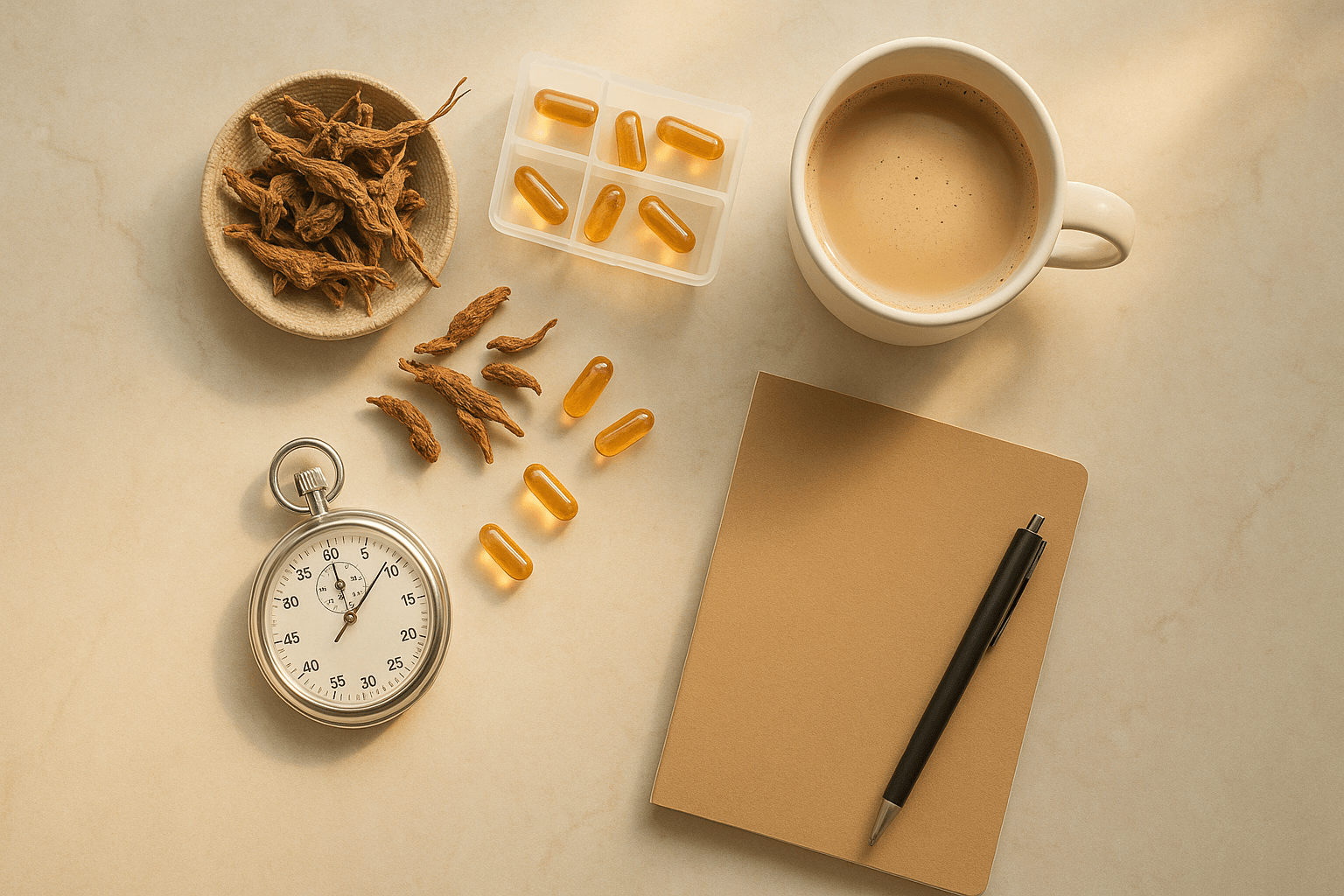
Understanding Rhodiola rosea
Rhodiola rosea—also called roseroot or golden root—is an Arctic/alpine adaptogenic herb used traditionally to improve resilience under mental and physical stress. Modern supplements typically use standardized root extracts (most famously SHR-5) quantified to key actives: rosavins (phenylpropanoids) and salidroside (a phenylethanoid), plus related compounds like tyrosol and flavonoids. While whole roots and teas exist, virtually all clinical trials reference standardized tablets/capsules to ensure consistent levels of bioactives.
How it may work (mechanisms you’ll actually care about):
- HPA-axis modulation: Trials in stress-related fatigue report changes in the cortisol awakening response, consistent with a “stress-buffering” effect typical of adaptogens.
- Neurotransmitter tone: In vitro and animal studies suggest mild monoamine oxidase (MAO-A/B) inhibition and support for central dopamine/serotonin/norepinephrine signaling—plausible routes for mood and cognitive effects.
- Cellular stress responses: Reviews describe upregulation of molecular chaperones and stress proteins and support for neuropeptide Y—mechanistic threads that map to improved stress tolerance and mental stamina.
Why food or casual tea isn’t equivalent: The concentrations used in clinical research require standardized extract (e.g., SHR-5) with defined rosavin/salidroside content. Raw culinary use (or non-standardized tinctures) is unlikely to deliver reproducible doses that match evidence-based protocols. For this reason, reputable products state the extract type, standardization, and per-capsule milligrams.
Key Benefits
Stress-related fatigue relief and better mental performance.
In stressed adults, standardized Rhodiola improved subjective fatigue and objective attention/performance measures within 2–4 weeks versus placebo, with signals of a normalized cortisol pattern.Adjunct support for low mood (mild–moderate).
Short trials show meaningful symptom reductions on depression scales versus baseline and, in head-to-head pilot work, fewer adverse effects than sertraline—though antidepressant efficacy is smaller and sometimes indistinguishable from placebo in underpowered studies.Acute antifatigue effects during demanding tasks.
Single-dose studies in uniform, sleep-restricted populations demonstrate short-term boosts in mental work capacity and antifatigue indices within hours of dosing.
Research Findings
Below are concise, trial-style summaries (human data only):
28 days, n=60, randomized, double-blind, placebo-controlled (adults with stress-related fatigue): SHR-5 at 576 mg/day (4 tablets) led to greater reductions in fatigue, improved attention/performance on computerized testing, and lowered cortisol awakening response versus placebo; well tolerated.
12 weeks, n=57, phase II, randomized, double-blind, placebo-controlled, three-arm (mild–moderate MDD): Dose-escalated Rhodiola SHR-5 (340–1,360 mg/day) vs sertraline 50–200 mg/day vs placebo showed non-significant between-group differences on HAM-D/BDI; sertraline numerically outperformed Rhodiola, but Rhodiola had fewer adverse events (30%) than sertraline (63%) and no discontinuations for side effects.
6 weeks, n≈89, randomized, double-blind, placebo-controlled (mild–moderate depression): SHR-5 at 340 mg/day or 680 mg/day significantly reduced total HAM-D scores and improved domains (insomnia, emotional instability, somatization) versus placebo; no serious adverse events reported.
Single-dose, n=161, randomized, double-blind, placebo-controlled with non-treatment control (healthy cadets under fatigue/stress): Two or three capsules of SHR-5 (≈370–555 mg extract) produced statistically significant antifatigue effects on composite mental work indices within hours versus placebo.
20 days, n≈40, randomized, double-blind, placebo-controlled (students during exam stress): SHR-5, 50 mg twice daily improved physical work capacity, psychomotor performance, and mental fatigue versus placebo; authors noted the low dose was likely suboptimal.
Takeaway: Evidence is strongest for stress-related fatigue (short-term) and promising but mixed for depressive symptoms—Rhodiola is often better tolerated than standard antidepressants but also less potent. Acute cognitive/antifatigue effects are plausible in select settings.
Best Sources & Dosage
What to look for on the label
Standardized extract (root/rhizome): Commonly SHR-5; typical standardization around 3% rosavins and 1% salidroside (ranges vary by brand). Other documented pharma-grade extracts include WS 1375. Products should specify mg per capsule and percent actives.
Forms: Film-coated tablets or capsules; some products combine Rhodiola with B-vitamins or other adaptogens—fine for general wellness, but combos confound dose–response if you’re evaluating Rhodiola specifically.
Evidence-aligned dosing (adults)
Stress-related fatigue / performance under pressure: 288–600 mg/day of standardized extract for 2–4 weeks; many trials range 400–600 mg/day (split doses morning/midday).
Mild–moderate depressive symptoms (adjunct/alternative): 340–680 mg/day; reassess at 6–12 weeks. Expect smaller effects than first-line antidepressants; use clinician oversight if treating depression.
Acute demanding tasks (single dose): ~370–550 mg taken about 1 hour before the task has improved mental work indices in uniform cohorts.
Timing tips
- Morning (and early afternoon if split) with or without light food. Avoid late-evening dosing to reduce the chance of insomnia or jitteriness.
Safety and interactions
Tolerability: Generally favorable at clinical doses; occasional dry mouth, dizziness, headache, or GI upset; rare reports of jitteriness or insomnia—lower the dose or move earlier in the day.
Mood disorders: For major depression, bipolar spectrum, or active psychiatric care, involve your clinician; stimulatory herbs can agitate some individuals.
Drug interactions: Clinically important interactions appear uncommon at standard doses. Still, use caution with SSRIs/SNRIs, MAOIs (theoretical), sedatives/stimulants, and drugs with narrow therapeutic windows.
Pregnancy/lactation: Insufficient safety data—avoid unless specifically advised.
Quality matters: Choose brands that disclose extract type, assay methods, and lot testing; poor-quality products can underdeliver actives.
Dosage Quick-Reference
Stress-related fatigue (short-term): 400–600 mg/day standardized extract, 2–4 weeks → lower fatigue and improved attention/performance.
Mild–moderate low mood (adjunct): 340–680 mg/day, 6–12 weeks → modest symptom reductions; better tolerability than SSRIs but generally less potent.
Acute cognitive demand (single dose): 370–550 mg, 1 hour pre-task → improved antifatigue index and mental work versus placebo in uniform cohorts.
Exam stress (low-dose regimen): 50 mg twice daily (SHR-5), 20 days → improved psychomotor and fatigue measures; dose likely suboptimal compared with modern protocols.