
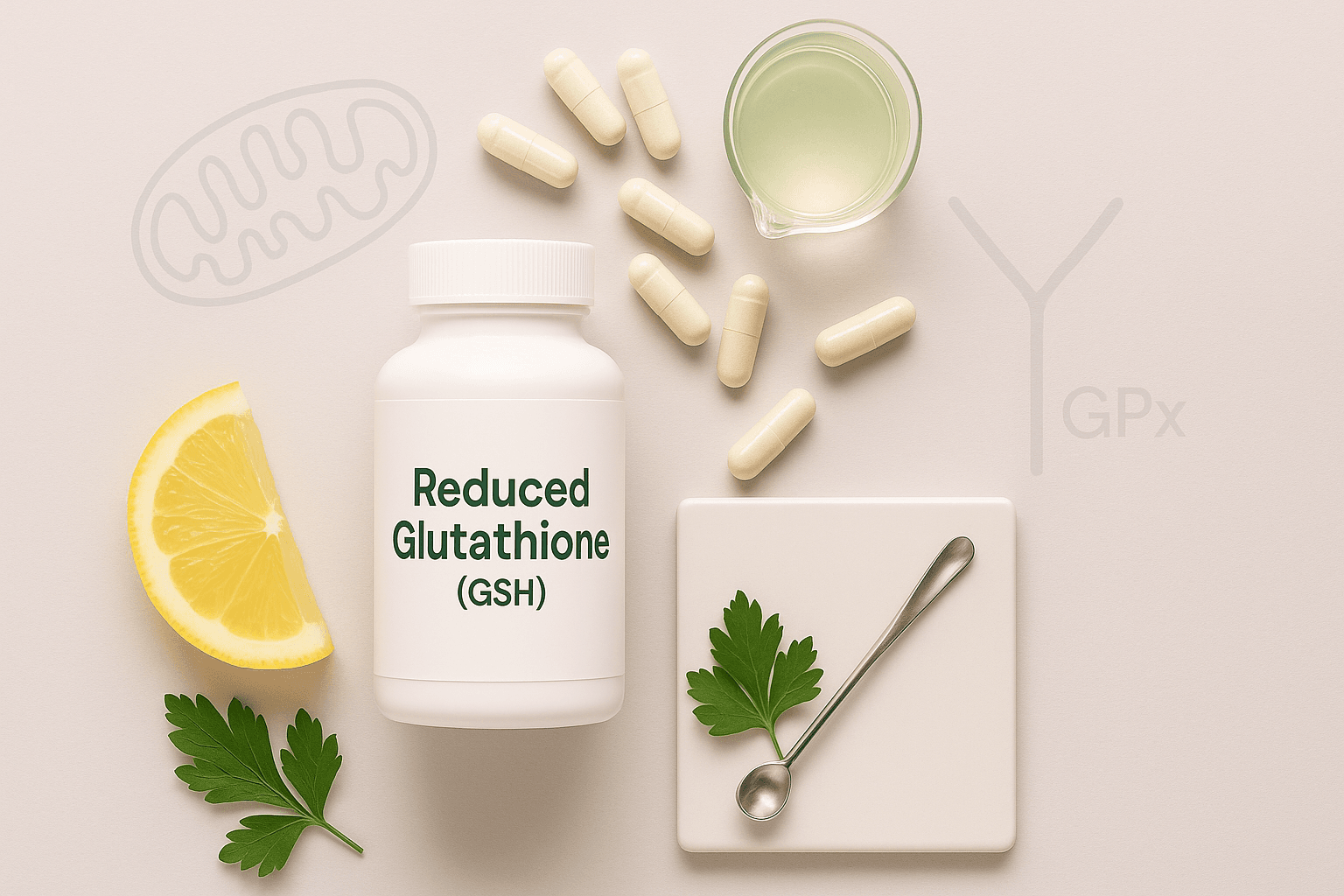
Bold## Cellular defense & detox balance: Understanding Reduced Glutathione (GSH)
Reduced glutathione (GSH) is the body’s master intracellular antioxidant—a tripeptide made from glutamate, cysteine, and glycine. In cells, GSH cycles between reduced (GSH) and oxidized (GSSG) states to neutralize peroxides, regenerate other antioxidants (vitamins C and E), and maintain protein thiol “redox switches.” It also fuels detoxification by serving as a cofactor for glutathione peroxidases (GPx) and as a conjugating partner for glutathione S-transferases (GSTs), which help the liver solubilize and excrete reactive chemicals and metabolites.
Orally, reduced glutathione has long been debated for bioavailability, but modern data suggest that consistent daily use of quality R-GSH (and especially liposomal or sublingual forms) can raise glutathione status in blood and tissues. Clinically, better glutathione tone may feel like steadier energy, improved recovery from metabolic or environmental stressors, clearer skin tone in some contexts, and support for liver-related lab markers when paired with diet and lifestyle.
Wellness takeaway: Reduced glutathione is a direct way to bolster antioxidant and detox capacity. Choose a reputable form, use it daily for 8–12 weeks, and pair it with protein (for cysteine/glycine), colorful plants, sleep, and movement.
Key Benefits
Antioxidant defense: Supports redox balance by directly quenching peroxides and recycling vitamins C and E; useful during oxidative stress.
Liver detox support: Supplies substrate for phase II GST conjugation, aiding the clearance of reactive metabolites and pollutants.
Skin tone & clarity (select populations): Small human trials report modest brightening and evenness with daily oral GSH, alongside antioxidant benefits.
Reality check: Expect gradual, biomarker-level improvements first (e.g., ↑GSH, ↓GSSG/GSH ratio). Visible changes (energy, skin tone) vary and depend heavily on diet, sleep, and total load of stressors.
Research Findings
Time to benefit: 2–12 weeks for shifts in whole-blood or epithelial GSH and redox markers; 12–24 weeks for downstream effects (e.g., skin tone, perceived energy).
Systemic glutathione status: In adults supplementing 250–1000 mg/day oral reduced glutathione for 3–6 months, studies report increases in whole-blood and epithelial cell GSH and improvements in oxidative stress markers. Gains are dose-responsive and more evident at 1000 mg/day.
Skin appearance: Randomized studies using 500 mg/day oral GSH for 8–12 weeks have shown small but significant improvements in skin brightness and reduction in melanin indices in certain body sites, particularly in participants with higher baseline pigmentation.
Liver and metabolic stress: Pilot trials and adjunctive studies suggest that oral GSH or precursors (e.g., NAC) can support liver enzymes (ALT/AST) and oxidative markers in people under metabolic stress; effects are best when combined with weight management, fiber, and reduced alcohol/intake of ultra-processed foods.
Tolerability: Reduced glutathione is generally well tolerated at 250–1000 mg/day. Occasional GI upset, bloating, or headache may occur; these typically resolve by taking with meals or reducing the dose temporarily.
Best Sources & Dosage
What to buy:
Form: Reduced L-glutathione (R-GSH). Consider liposomal liquids or sublingual tablets/lozenges for enhanced uptake; standard capsules are suitable when taken consistently.
Quality markers: Look for ≥98–100% purity, oxygen-protected packaging, and a certificate of analysis (COA) verifying identity, potency, and low contaminants (heavy metals, microbes, solvent residues).
What to avoid: Proprietary blends that list “glutathione complex” without actual milligrams; topical-only beauty products for systemic goals; non-disclosed liposomal sources.
Evidence-aligned ranges (by use case):
General antioxidant & detox support: 250–500 mg/day with food for 8–12 weeks, then reassess; continue or cycle based on outcomes.
Oxidative stress/high demand (travel, intense training, recovery): 500–1000 mg/day (once or divided) for 8–12 weeks; pair with vitamin C (250–500 mg/day from diet or supplement) to assist recycling.
Skin tone/clarity (exploratory, cosmetic use): 250 mg twice daily (500 mg/day) for 8–12 weeks; benefits are modest and vary by baseline pigmentation and UV exposure.
Liposomal/sublingual formats: Doses can be on the lower end (e.g., 200–400 mg/day) due to improved delivery; titrate by response.
Timing & tips:
Take with meals to reduce GI upset and aid adherence.
Stack wisely: Foundational precursors—N-acetyl cysteine (NAC 600–1200 mg/day) and glycine (1–3 g/day)—can support endogenous GSH synthesis; add one change at a time.
Lifestyle amplifiers: Prioritize protein sufficiency (cysteine/glycine), cruciferous and allium vegetables, sleep 7–9 h, and regular aerobic/zone-2 movement—all upregulate antioxidant defenses.
Self-tracking: If available, monitor GSH/GSSG or oxidative stress markers via a clinician; user-friendly proxies include energy ratings (0–10), exercise recovery, and skin tone photographs under consistent lighting.
Safety, interactions & exclusions:
Overall safety: Excellent at typical doses. Start lower if you’re prone to GI sensitivity.
Medications: No common serious interactions are documented for oral GSH. If you’re on chemotherapy or receiving radiation, do not add antioxidants without oncologist approval (timing can matter).
Respiratory conditions: Inhaled/nebulized glutathione has caused bronchospasm in some individuals with asthma; oral GSH is preferred unless supervised.
Special populations: Insufficient data in pregnancy/lactation—avoid unless your clinician recommends. In bile duct obstruction or severe liver disease, coordinate care before starting any detox-related regimen.
Allergies: Rare. If you experience rash, hives, or facial swelling, discontinue and seek care.
Safety flag: Cancer patients should involve their oncology team before using GSH or high-dose antioxidants—do not self-supplement during active treatment without guidance.
Dosage Quick-Reference
Antioxidant/maintenance: 250–500 mg/day, 8–12 wks → ↑GSH status / ↑redox balance (↑).
Higher oxidative load: 500–1000 mg/day, 8–12 wks → ↓oxidative markers / ↑recovery (↑).
Skin tone (exploratory): 250 mg BID (500 mg/day), 8–12 wks → small brightness/evenness gains (→/↑).
Safety note: Choose COA-verified R-GSH; avoid antioxidant stacking during chemo/radiation unless your clinician approves; consider NAC + glycine to support your own GSH synthesis.