
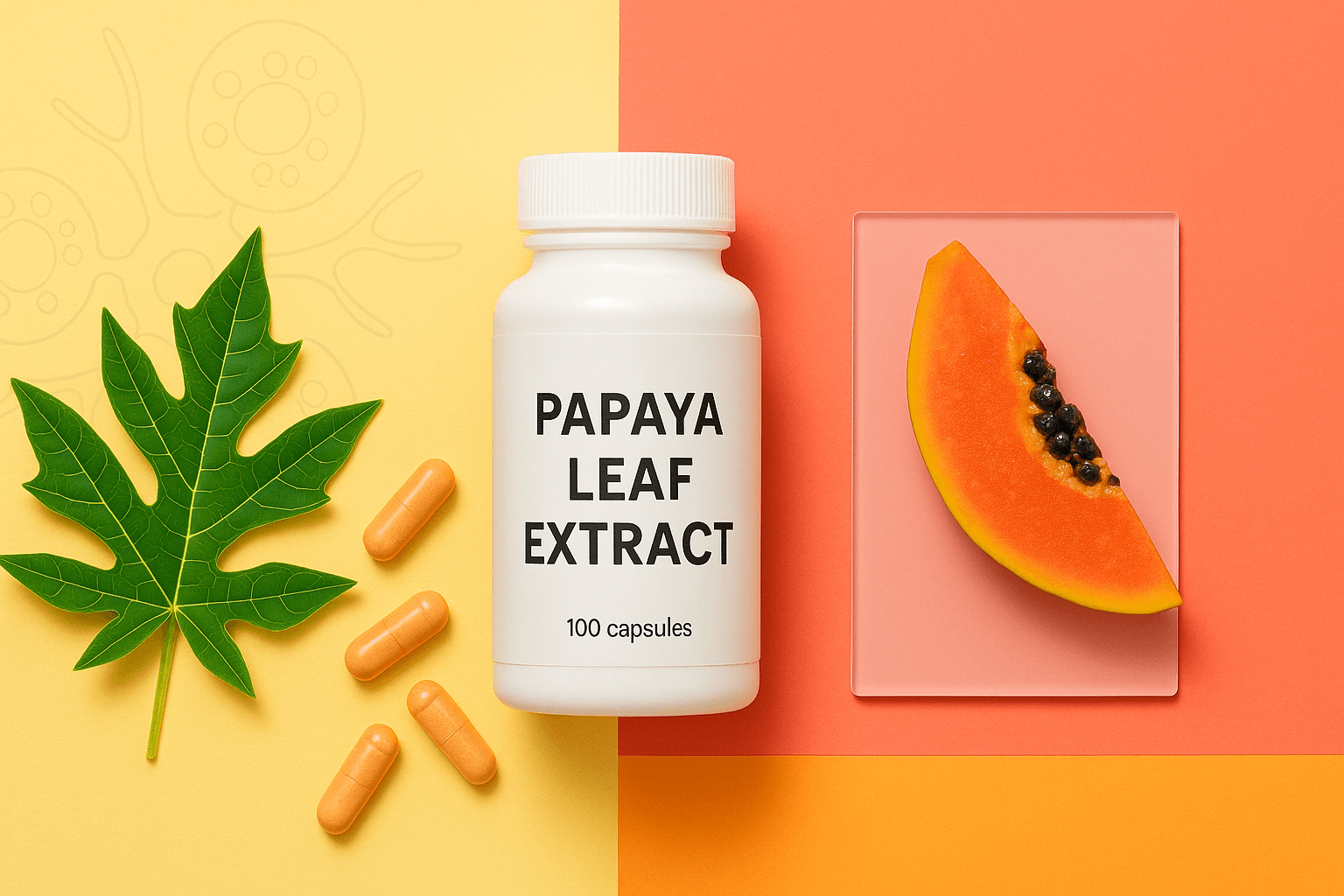
Bold## Platelet upticks & easier recovery: Understanding Papaya Leaf Extract (CPLE)
Papaya leaf extract (CPLE) is a botanical preparation from the leaves of Carica papaya. Products are typically standardized to total flavonoids (e.g., quercetin, kaempferol) and sometimes alkaloids or glycosides. Traditional use centers on fever support and convalescence; modern interest comes from studies suggesting a temporary rise in platelet counts and improved clinical parameters in acute, febrile thrombocytopenic states. Mechanistically, CPLE’s polyphenols may modulate platelet production (thrombopoiesis) and reduce oxidative/inflammatory stress, while certain leaf constituents may influence Arachidonic acid/COX pathways and bone-marrow signaling.
In everyday terms: during acute illness where platelets dip, supervised short courses of CPLE have been associated with faster platelet recovery and better comfort—as an adjunct to medical care, not a replacement. Outside acute settings, some people use CPLE for general immune recovery, though evidence there is less clear.
Wellness takeaway: Consider standardized, COA-verified papaya leaf extract for short-term platelet support under clinician guidance; trial 5–7 days during recovery, or 4–8 weeks for general wellness markers, then reassess.
Key Benefits
Platelet support (adjunct): Short-term use has been linked to higher platelet counts and quicker recovery in febrile thrombocytopenia cohorts.
Symptom relief during recovery: May help reduce fatigue and improve overall well-being scores when used alongside medical care.
Oxidative/inflammatory balance: Polyphenols support antioxidant defenses during and after febrile illness.
Reality check: Evidence is strongest for short, clinician-supervised courses in acute illness; long-term, disease-prevention claims are not established.
Research Findings
Time to benefit: Signals often appear within 24–72 hours for platelet trends in acute settings; symptom and convalescence measures commonly assessed over 3–7 days. For general wellness uses, evaluate over 4–8 weeks.
Acute febrile thrombocytopenia: Randomized and controlled trials of papaya leaf extract or juice for 3–7 days report faster platelet rise and improvements in hematologic/clinical scores versus control. Preparations vary (fresh juice vs. standardized capsules), but the overall direction favors adjunctive benefit.
Hospital metrics (exploratory): Some studies note shorter hospital stay or reduced transfusion need, though results are heterogeneous and depend on baseline severity and supportive care.
Mechanistic/biomarker signals: Preclinical and translational work suggests upregulation of thrombopoietic pathways (e.g., megakaryocyte maturation signals) and reductions in oxidative stress markers, aligning with observed clinical trends.
Tolerability: CPLE is generally well tolerated for short courses. Reported side effects include mild GI upset, nausea, and transient diarrhea. Rare skin reactions may occur in those with latex–fruit syndrome (cross-reactivity: papaya, latex, kiwi, banana).
Best Sources & Dosage
What to buy:
Form: Capsules or liquids labeled “Papaya Leaf Extract (Carica papaya)” with standardization (e.g., “≥2–5% total flavonoids”).
Quality: Choose brands with a certificate of analysis (COA) confirming identity, potency, microbiological purity, and low heavy metals/solvent residues.
Avoid: Unstandardized powders with no testing, fresh/raw leaf DIY brews (dose variability), and blends that hide the actual papaya-leaf milligrams.
Evidence-aligned ranges (by use case):
Acute platelet support (adjunct to medical care):
- 500–1100 mg standardized extract, 1–2×/day for 3–7 days, with food.
- Liquid alternatives (standardized): follow label to supply a comparable daily amount of leaf extract.
Post-illness convalescence / general wellness (exploratory):
- 250–500 mg, 1–2×/day for 4–8 weeks, then pause and reassess energy, activity tolerance, and lab markers if monitored.
Topical/other forms: Not established for platelet-related outcomes.
Timing & tips:
Take with meals to minimize GI upset.
Hydration and adequate protein (for marrow recovery) support outcomes; pair with rest, light movement, and clinician-directed care.
Self-tracking: Daily energy (0–10), bruise frequency, and—in supervised settings—platelet counts and basic chemistries.
Safety, interactions & exclusions:
Medical supervision: If you’re experiencing fever, bleeding, or rapid platelet drops, seek care—supplements are adjuncts only.
Allergy/cross-reactivity: If you have latex–fruit syndrome or known papaya allergy, avoid CPLE.
Pregnancy/lactation: Avoid—insufficient human safety data; papaya latex/enzymes have uterotonic potential in other contexts.
Medications: Use caution with anticoagulants/antiplatelets (warfarin, DOACs, aspirin, clopidogrel). While CPLE is studied for raising platelets, its complex phytochemistry could still affect bleeding risk; coordinate with your clinician and monitor.
Diabetes/antihyperglycemics: Papaya leaves may lower blood glucose in preclinical work; monitor glucose if on diabetes medications.
Liver/kidney conditions: Rare case reports suggest idiosyncratic reactions to botanical extracts—use only with clinician oversight if you have active hepatic or renal disease.
Safety flag: Do not replace prescribed medical management with papaya leaf. Use short-term and COA-verified products only, under professional guidance.
Dosage Quick-Reference
Acute platelet support (adjunct): 500–1100 mg 1–2×/day, 3–7 days → ↑platelet trend / ↑clinical recovery signals (↑).
Convalescence/wellness (exploratory): 250–500 mg 1–2×/day, 4–8 weeks → ↑energy / →immune-comfort cues (→/↑).
Maintenance: Not routinely recommended; reserve for short courses, then reassess.
Safety note: Prioritize COA-verified, standardized CPLE; avoid in pregnancy, known papaya/latex allergy, and unsupervised use when platelets are dangerously low or bleeding is present.