1. Understanding Nicotinamide Riboside (NR)
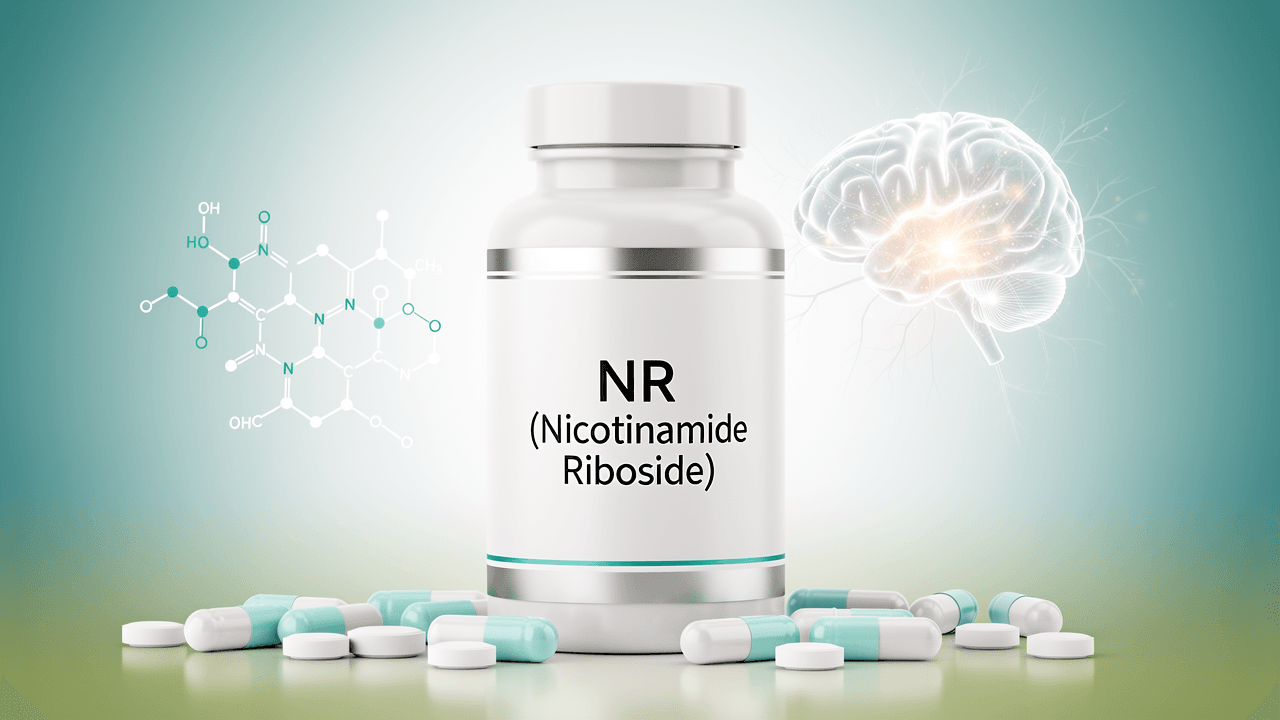
Nicotinamide riboside (NR) is a specialized form of vitamin B3 and a precursor to nicotinamide adenine dinucleotide (NAD⁺), a central coenzyme involved in energy production, DNA repair, and cellular stress responses.
What NR Is
- Chemical class: A pyridine-nucleoside form of vitamin B3 (niacin family)
- Nutrient role: Serves as a building block for NAD⁺
- Supplement form: Usually sold as nicotinamide riboside chloride, often branded as Niagen® or included in NAD+ booster blends
NR is naturally present in trace amounts in foods like milk and yeast, but typical dietary intake is very low. As a supplement, NR provides a concentrated, bioavailable way to increase NAD⁺ levels.
How NR Works in the Body
NR is converted to NAD⁺ through the NRK (nicotinamide riboside kinase) pathway:
- Absorption: Oral NR is absorbed in the gut and enters cells.
- Phosphorylation: NR is phosphorylated by NRK1/NRK2 to form nicotinamide mononucleotide (NMN).
- NAD⁺ synthesis: NMN is then converted to NAD⁺ by NMN adenylyltransferases.
Raising NAD⁺ levels influences several key processes:
- Mitochondrial function: NAD⁺ is essential for oxidative phosphorylation and ATP generation.
- Sirtuin activation: NAD⁺-dependent enzymes (SIRT1, SIRT3, etc.) regulate metabolism, inflammation, and longevity-related pathways.
- DNA repair: NAD⁺ is required by PARPs (poly-ADP-ribose polymerases) to repair DNA damage.
- Cellular stress resistance: Higher NAD⁺ supports better response to metabolic and oxidative stress.
NAD⁺ levels naturally decline with age and chronic metabolic stress (obesity, high-fat diet, some chronic diseases). NR aims to restore or boost NAD⁺, potentially improving cellular resilience and metabolic health.
2. Key Benefits of NR Supplementation
2.1 Supports Cellular Energy and Mitochondrial Function
By increasing NAD⁺, NR may enhance mitochondrial efficiency and ATP production. This is most evident in preclinical models and early human studies showing improved markers of mitochondrial function and metabolic flexibility.
2.2 May Improve Metabolic Health and Insulin Sensitivity (Mixed Evidence)
Animal studies consistently show improved glucose tolerance and protection against diet-induced obesity with NR. Human data are mixed: some trials report improved metabolic markers, while others show no significant change in insulin sensitivity.
2.3 Potential Neuroprotective and Cognitive Support (Preclinical)
NR boosts brain NAD⁺ in animal models, improving neuronal resilience, synaptic plasticity, and cognitive performance in models of neurodegeneration and brain injury. Human evidence is still limited and mostly indirect.
2.4 Healthy Aging and Cellular Stress Resistance
By activating sirtuins and supporting DNA repair, NR is being explored as a healthy aging intervention. Benefits may include improved muscle function in older adults, better lipid profiles, and reduced inflammatory markers in some studies, though clear clinical anti-aging outcomes are not yet established.
3. Research Findings on NR
3.1 NR and NAD⁺ Levels in Humans
Study: Trammell et al., 2016 (Open-label, pharmacokinetic)
- Participants: 12 healthy adults (both sexes)
- Design: Single doses of NR 100, 300, and 1000 mg; measurement of blood NAD⁺ and metabolites
- Findings:
- Oral NR was well tolerated at all doses.
- Blood NAD⁺ increased in a dose-dependent manner, with up to ~2.7-fold increase at higher doses.
- No serious adverse events reported.
Study: Martens et al., 2018 (Randomized, double-blind, placebo-controlled)
- Participants: 60 middle-aged and older adults (55–79 years)
- Dose: NR 500 mg twice daily (1000 mg/day) for 6 weeks
- Results:
- Whole blood NAD⁺ increased by ~60%.
- No significant improvement in insulin sensitivity or physical performance over 6 weeks.
- NR was well tolerated; mild gastrointestinal (GI) symptoms were the most common side effect.
3.2 NR and Metabolic Health
Study: Dollerup et al., 2018 (Randomized, double-blind, placebo-controlled)
- Participants: 40 lean, healthy men
- Dose: NR 1000 mg/day for 12 weeks
- Outcomes: Insulin sensitivity (hyperinsulinemic-euglycemic clamp), lipid profile, body composition
- Findings:
- No significant improvement in insulin sensitivity vs. placebo.
- No major changes in body composition or resting energy expenditure.
- Slight decrease in hepatic fat content in some participants, but not robust.
Study: Dollerup et al., 2019 (Randomized, double-blind, placebo-controlled)
- Participants: 40 patients with type 2 diabetes (T2D)
- Dose: NR 1000 mg/day for 12 weeks, added to standard care
- Findings:
- No significant improvement in HbA1c or insulin sensitivity compared with placebo.
- Some favorable changes in lipid metabolism markers and hepatic fat in subgroups, but not conclusive.
Interpretation: In humans, NR reliably raises NAD⁺ but has modest or inconsistent effects on insulin sensitivity and glycemic control over 8–12 weeks.
3.3 NR and Cardiovascular / Vascular Function
Study: Martens et al., 2018 (same as above)
- Participants: 55–79 years, 6-week intervention
- Outcomes: Aortic stiffness, blood pressure, oxidative stress markers
- Findings:
- No significant change in aortic stiffness or blood pressure.
- Some reduction in inflammatory cytokines and oxidative stress markers, but exploratory.
Study: Remie et al., 2020 (Randomized, double-blind, crossover)
- Participants: 24 healthy, overweight/obese men
- Dose: NR 1000 mg/day for 6 weeks vs. placebo
- Outcomes: Energy metabolism, substrate utilization, peripheral blood mononuclear cell NAD⁺
- Findings:
- NR increased NAD⁺ in blood cells.
- No major changes in resting metabolic rate or substrate oxidation.
3.4 NR and Muscle Function / Aging
Study: Elhassan et al., 2019 (Randomized, placebo-controlled)
- Participants: 40 healthy, sedentary older men (70–80 years)
- Dose: NR 1000 mg/day for 21 days
- Outcomes: Skeletal muscle NAD⁺ metabolism, mitochondrial function, muscle strength
- Findings:
- NR increased muscle NAD⁺ metabolite levels and altered muscle metabolic pathways.
- No significant improvement in muscle strength or endurance over 3 weeks.
- Safety profile remained favorable.
3.5 Neuroprotection and Brain Health (Preclinical Focus)
Human cognitive trials are limited, but animal studies are more numerous:
- Alzheimer’s models: NR improved cognitive performance and reduced neuroinflammation and amyloid pathology in mouse models when given at doses equivalent to high human intakes.
- Traumatic brain injury and stroke models: NR reduced neuronal damage and improved functional recovery in rodents, likely via enhanced NAD⁺-dependent repair and reduced oxidative stress.
No large, long-term human trials have yet confirmed cognitive or neuroprotective benefits.
3.6 Safety and Tolerability in Clinical Trials
Across multiple human studies (typically 250–2000 mg/day, 4–12 weeks):
- NR is generally well tolerated.
- Common adverse effects: mild nausea, diarrhea, abdominal discomfort, flushing (less than with niacin), and headache.
- No consistent signal of liver toxicity at studied doses, though long-term data are limited.
4. Best Sources & Dosage
4.1 Forms of NR
- Nicotinamide riboside chloride (NR chloride): Main supplemental form, often patented as Niagen®.
- Capsules/Tablets: Most common, typically 125–500 mg per capsule.
- Combination products: NR paired with other NAD⁺ precursors (e.g., NMN), polyphenols (e.g., resveratrol), or mitochondrial support nutrients (e.g., CoQ10, PQQ). Evidence for combinations is less clear than for NR alone.
4.2 Evidence-Based Dosage Ranges
General NAD⁺ Support / Healthy Adults
- Typical dose: 250–500 mg/day.
- Many human trials use 500–1000 mg/day; lower end (250–300 mg) may still raise NAD⁺ but is less studied.
Metabolic Health / Overweight or Older Adults (Research Context)
- Studied dose: 1000 mg/day (often 500 mg twice daily).
- Duration in trials: 6–12 weeks.
- Effects on metabolic outcomes are modest; benefits may relate more to cellular markers than clinical endpoints.
Experimental / High-End Dosing (Not clearly superior)
- Some studies and anecdotal use go up to 2000 mg/day.
- No clear evidence that >1000 mg/day offers proportionally greater benefits in humans.
4.3 Timing and Administration
- With or without food: Can be taken either way; some people prefer with food to minimize GI upset.
- Once vs. split dosing: For 500 mg/day, once daily is common; for 1000 mg/day, split 500 mg twice daily may maintain steadier NAD⁺ levels.
- Consistency: Effects on NAD⁺ are chronic rather than acute; benefits (if any) are expected over weeks to months of consistent use.
4.4 Stacking Considerations (Nootropic / Longevity Context)
NR is sometimes stacked with:
- Resveratrol or pterostilbene: To potentially synergize with sirtuin activation (preclinical rationale, limited human data).
- CoQ10, PQQ, alpha-lipoic acid: For mitochondrial support.
- Other B vitamins: To support broader NAD⁺-related pathways.
Evidence for specific stacks is limited; most research evaluates NR alone.
5. Safety, Side Effects, and Interactions
5.1 Overall Safety Profile
Short- to medium-term studies (up to 12 weeks, some up to ~6–12 months in extension phases) suggest NR is generally safe at doses of 250–2000 mg/day.
Common, usually mild side effects:
- Gastrointestinal upset (nausea, diarrhea, abdominal discomfort)
- Headache
- Mild flushing or warmth (less pronounced than with high-dose niacin)
- Fatigue in some users
Most adverse events are dose-related and often resolve with dose reduction or taking with food.
5.2 Liver Health and Methylation Considerations
Unlike high-dose niacin, NR has not consistently shown hepatotoxicity in human trials at standard doses. However:
- NR metabolism produces nicotinamide, which is further methylated and excreted.
- Chronic high-dose NR might, in theory, increase methylation demand (use of SAMe and methyl donors like folate, B12, choline).
- People with marginal B-vitamin status or methylation issues may want to ensure adequate folate, B12, and choline intake.
Routine liver function test abnormalities have not been a prominent finding in trials, but long-term (>1 year) high-dose safety data are limited.
5.3 Potential Drug Interactions
Data on specific drug–NR interactions are limited, but theoretical and practical considerations include:
Chemotherapy and Cancer Therapies
- NAD⁺ can support cell survival and DNA repair. There is concern that boosting NAD⁺ might protect not only healthy but also cancer cells.
- Some cancer treatments rely on inducing DNA damage or metabolic stress; NR could theoretically interfere with their efficacy.
- Patients on chemotherapy, PARP inhibitors, or other cancer therapies should avoid NR unless explicitly approved by their oncologist.
Immunosuppressive or Anti-inflammatory Drugs
- NR may modulate inflammatory pathways via sirtuins and NAD⁺-dependent enzymes.
- Clinical significance of interactions is unknown, but caution is advised in complex autoimmune or transplant patients.
Antidiabetic Medications (e.g., Metformin, Insulin)
- Human NR trials have not shown strong glucose-lowering effects, but subtle metabolic modulation is possible.
- Diabetic patients combining NR with medications should monitor blood glucose and consult their clinician.
Hepatotoxic Drugs
- While NR isn’t strongly hepatotoxic at studied doses, combining with other hepatotoxic agents (e.g., high-dose acetaminophen, certain anticonvulsants, chronic alcohol) warrants periodic liver function monitoring.
Because NR is relatively new as a high-dose supplement, comprehensive interaction studies are lacking. People on multiple medications should review NR use with a healthcare professional.
5.4 Special Populations
- Pregnancy and breastfeeding: Insufficient safety data. NR should generally be avoided unless prescribed in a clinical research setting.
- Children and adolescents: Limited or no data. NR supplementation is not routinely recommended for minors.
- Kidney or liver disease: NAD⁺ metabolism and clearance may be altered; use only under medical supervision.
6. Who Should and Shouldn’t Use NR
6.1 Who May Consider NR
Middle-aged and older adults (40+) interested in cellular aging support
- Rationale: Age-related NAD⁺ decline; NR is one of the better-studied NAD⁺ precursors.
- Goal: Support mitochondrial function, stress resistance, and cellular repair, acknowledging that clinical anti-aging outcomes are not yet proven.
Individuals with high metabolic or oxidative stress (but otherwise stable health)
- Examples: Sedentary lifestyle, high-fat diet, chronic psychological stress (with medical clearance).
- NR may support cellular resilience, though it is not a substitute for diet, exercise, and sleep.
Biohackers / nootropic users seeking NAD⁺ support
- NR may be used as part of a broader regimen targeting energy, recovery, or long-term brain health.
- Expect subtle, long-term effects rather than dramatic acute cognitive enhancement.
Participants in supervised clinical trials
- People with specific conditions (e.g., early neurodegenerative disease, metabolic syndrome) may access NR under research protocols with careful monitoring.
6.2 Who Should Be Cautious or Avoid NR
Active cancer or history of cancer
- Because NAD⁺ can support cell growth and DNA repair, there is a theoretical risk of supporting malignant cells.
- Until more is known, individuals with current or recent cancer should avoid NR unless cleared by an oncologist.
Patients on Chemotherapy, Radiotherapy, or PARP Inhibitors
- NR might reduce treatment efficacy by enhancing DNA repair or stress resistance in cancer cells.
- Use only if explicitly approved and monitored by the treating oncology team.
Pregnant or Breastfeeding Women
- Lack of human safety data at supplemental doses.
- Standard prenatal vitamins provide sufficient niacin; extra NR is not recommended.
Children and Adolescents
- Safety and long-term developmental effects are unknown.
- NR should generally not be used in this group outside of clinical research.
Individuals with Significant Liver or Kidney Disease
- Altered metabolism and excretion of NAD⁺ precursors and metabolites.
- If considered at all, it should be under strict medical supervision with lab monitoring.
People with Unexplained Fatigue or Complex Chronic Illness Without Evaluation
- NR may mask symptoms or complicate diagnosis.
- Medical evaluation is recommended before adding NAD⁺-modulating supplements.
7. Practical Takeaways
- Mechanism: NR is a vitamin B3 derivative that raises NAD⁺ levels, supporting mitochondrial function, DNA repair, and cellular stress responses.
- Evidence: Human studies consistently show increased NAD⁺, but clinical benefits (metabolic, cognitive, cardiovascular) are modest or mixed so far.
- Dosage: 250–500 mg/day for general NAD⁺ support; up to 1000 mg/day used in research. Higher doses (>1000 mg/day) lack clear added benefit and long-term safety data.
- Safety: Generally well tolerated; mild GI symptoms are most common. Long-term, high-dose safety and cancer-related risks require further study.
- Best use-case: As a supportive, experimental longevity or cellular health supplement, not as a primary treatment for disease.
Anyone considering NR—especially those with medical conditions or on prescription medications—should discuss it with a healthcare professional to weigh potential benefits against uncertainties and individual risk factors.