1. Understanding Noopept – What It Is and How It Works
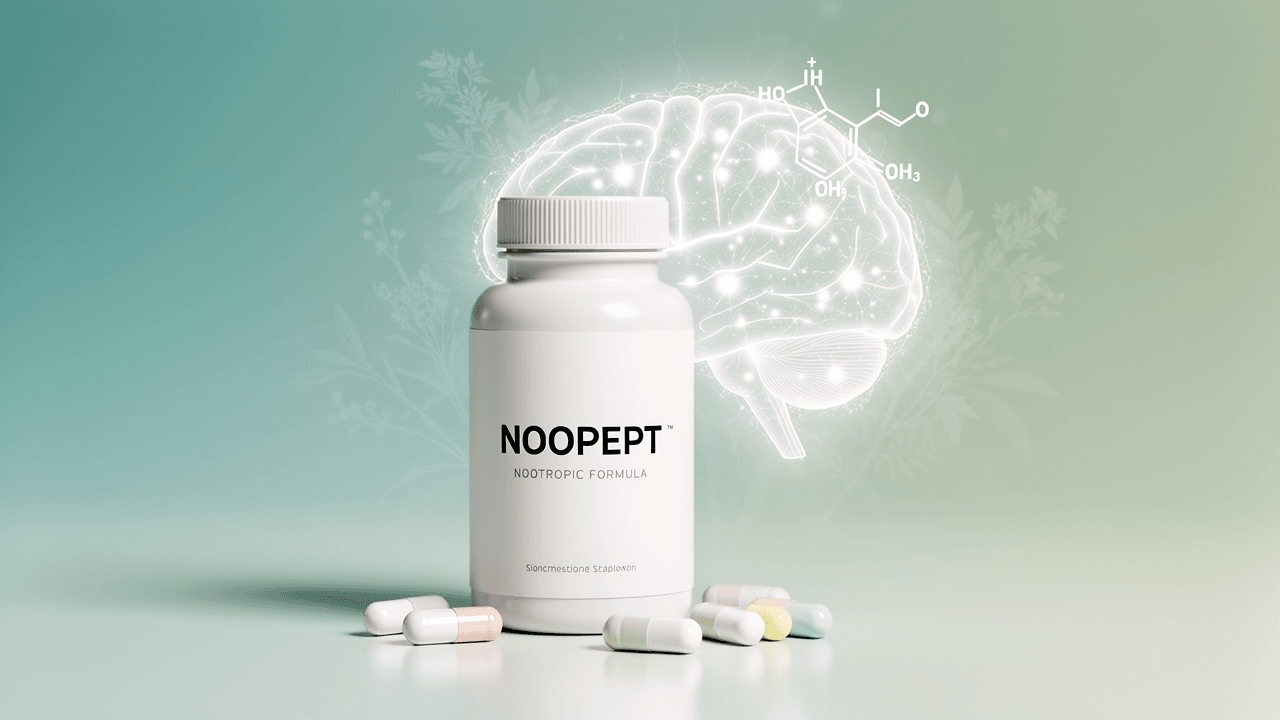
Noopept (chemical name: N‑phenylacetyl‑L‑prolylglycine ethyl ester) is a synthetic nootropic compound developed in Russia in the 1990s. It is often grouped with the racetam family (e.g., piracetam), although its structure is distinct. In several Eastern European countries it has been used as a prescription medication for cognitive impairment; in many other regions it is sold online as an unapproved dietary supplement or research chemical.
Mechanistically, Noopept is considered a prodrug that is rapidly absorbed and then metabolized to cycloprolylglycine, a dipeptide that may act as an endogenous neuromodulator. Most evidence for its mechanisms comes from animal and in‑vitro studies, so human data remain limited.
1.1 Proposed Mechanisms of Action
Current research suggests several overlapping mechanisms:
Modulation of glutamate signaling
- Noopept appears to influence AMPA and NMDA receptors, key components of excitatory glutamatergic transmission.
- In rodent models, Noopept normalized glutamate receptor activity under conditions of ischemia or neurotoxicity, which may help protect neurons from excitotoxic damage.
Enhancement of neurotrophic factors (BDNF and NGF)
- Multiple animal studies show increased expression of brain‑derived neurotrophic factor (BDNF) and nerve growth factor (NGF) in the hippocampus and cortex after repeated Noopept administration.
- BDNF and NGF support synaptic plasticity, neuronal survival, and long‑term memory formation.
Antioxidant and anti‑inflammatory effects
- In models of brain injury and beta‑amyloid toxicity, Noopept reduced markers of oxidative stress (e.g., lipid peroxidation) and normalized antioxidant enzyme activity (e.g., superoxide dismutase).
- It has also shown reductions in pro‑inflammatory cytokines in some rodent studies.
Neuroprotection and anti‑apoptotic effects
- Animal data suggest Noopept may reduce neuronal death in models of traumatic brain injury, stroke, and beta‑amyloid–induced toxicity.
- Proposed pathways include modulation of calcium homeostasis and inhibition of pro‑apoptotic signaling.
Cholinergic system modulation
- Some studies suggest Noopept may influence acetylcholine utilization or receptor sensitivity, which could underlie reported effects on memory and learning.
- This mechanism is less well characterized than for classic racetams, but it is often cited to explain synergy with choline donors.
Overall, Noopept appears to act as a neuroprotective, pro‑cognitive modulator of glutamatergic and neurotrophic pathways. However, most mechanistic evidence comes from non‑human models, so translation to healthy humans remains uncertain.
2. Key Benefits – What Noopept May Help With
Based on available evidence, Noopept’s potential benefits fall into four main categories:
2.1 Cognitive Function and Memory (Especially in Impaired Individuals)
Human clinical trials—mostly from Russia—have evaluated Noopept in people with mild cognitive impairment (MCI), post‑traumatic brain injury, or cerebrovascular disease. Results generally show:
- Improved memory, attention, and everyday cognitive performance compared with baseline.
- In some trials, outcomes comparable or superior to piracetam at much lower doses.
Evidence in healthy young adults is minimal and largely anecdotal. Most of the controlled data involve individuals with some degree of cognitive deficit.
2.2 Neuroprotection and Brain Health
Preclinical research suggests Noopept may protect brain cells under stress:
- Reduced neuronal damage in models of ischemia (reduced blood flow) and traumatic brain injury.
- Attenuation of beta‑amyloid–induced toxicity, a hallmark of Alzheimer’s disease models.
- Increased expression of BDNF/NGF, which support long‑term brain health.
These findings are promising but are largely from animal and cell studies. Direct evidence that Noopept prevents or slows neurodegenerative disease in humans is lacking.
2.3 Anxiety and Emotional Reactivity
Several human trials and post‑marketing surveys from Russia report:
- Reductions in anxiety, irritability, and emotional lability in patients with organic brain disorders or post‑concussive syndrome.
- Some participants report improved sleep quality and reduced fatigue.
However, at higher doses or in sensitive individuals, Noopept can cause increased anxiety, irritability, and insomnia, indicating a narrow window between anxiolytic and overstimulating effects.
2.4 Sensory Perception and Mental Clarity (Subjective Reports)
Anecdotal reports from users (forums, self‑experiments) often mention:
- Sharper visual and auditory perception.
- Enhanced mental clarity, faster recall, and improved focus.
- Occasionally, mild headaches or pressure sensations, sometimes linked to inadequate choline intake or excessive dosing.
These subjective effects have not been rigorously quantified in controlled trials, so they should be considered speculative.
3. Research Findings – What the Studies Show
Most Noopept research originates from Russia and Eastern Europe, often published in regional journals and not always available in English. Methodological details can be variable, and many trials are relatively small. Below are representative findings.
3.1 Noopept vs. Piracetam in Mild Cognitive Impairment
Study design:
- Population: 53 patients (aged 50–80) with mild cognitive impairment of cerebrovascular or traumatic origin.
- Design: Open‑label, comparative trial.
- Intervention: Noopept 20 mg/day (10 mg twice daily) vs. piracetam 1,200 mg/day.
- Duration: 56 days.
Results:
- Both groups showed cognitive improvement on neuropsychological tests (memory, attention, daily functioning).
- The Noopept group demonstrated earlier and somewhat stronger improvements on some measures compared with piracetam.
- Noopept was generally well tolerated; adverse effects were mild (transient irritability, headache, sleep disturbances in a minority of participants).
Limitations:
- Not double‑blind; potential for expectation bias.
- Small sample size and limited external validation.
3.2 Noopept in Patients with Organic Cognitive Disorders
Study design:
- Population: 60 patients with organic cognitive decline (post‑traumatic brain injury or cerebrovascular disease).
- Design: Randomized, parallel‑group, active‑controlled.
- Intervention: Noopept 20 mg/day vs. a reference nootropic (often piracetam or standard therapy).
- Duration: 60–90 days (varied by study).
Results (summarized across similar trials):
- Noopept improved short‑term memory, attention, and executive function scores versus baseline.
- Some studies reported a higher proportion of clinical responders (defined by standardized scales) in the Noopept group vs. control.
- Reductions in anxiety, emotional lability, and headache frequency were also noted.
Limitations:
- Many trials lacked full methodological transparency (e.g., randomization procedures, blinding).
- Outcomes often based on clinician‑rated scales and may be subject to bias.
3.3 Animal Research: Memory and Neuroprotection
Because human data are limited, animal studies provide much of the mechanistic insight:
Memory and learning
- Rodent studies using models of scopolamine‑induced amnesia or chronic cerebral hypoperfusion show that Noopept (0.1–1.0 mg/kg, intraperitoneal) improved performance in maze tests and passive avoidance tasks.
- Effects were often comparable to or slightly stronger than piracetam at much lower doses (e.g., 30–50 mg/kg for piracetam).
BDNF and NGF expression
- In rats given Noopept orally for 28 days, hippocampal and cortical BDNF mRNA and protein levels significantly increased compared with controls.
- Similar upregulation was observed for NGF, suggesting a trophic effect on neurons.
Beta‑amyloid and Alzheimer’s models
- In cell culture and rodent models exposed to beta‑amyloid peptides, Noopept reduced neuronal death, improved mitochondrial function, and decreased markers of oxidative damage.
- Some studies reported improved memory performance in Alzheimer‑like models after chronic Noopept administration.
Ischemia and traumatic brain injury
- In rodent models of focal cerebral ischemia or traumatic brain trauma, Noopept reduced infarct size, improved neurological scores, and normalized some electrophysiological markers of synaptic transmission.
Caveat:
Animal doses and routes (often intraperitoneal) do not translate directly to human oral dosing. While these studies support biological plausibility, they do not guarantee similar magnitude of effect in healthy humans.
3.4 Gaps in the Evidence
- Healthy adults: There is a lack of high‑quality, double‑blind, placebo‑controlled trials in healthy young or middle‑aged adults. Most claims about cognitive enhancement in this group are extrapolated or anecdotal.
- Long‑term safety: Human data beyond 2–3 months of continuous use are sparse.
- Regulatory oversight: In many countries, Noopept is not an approved drug or dietary ingredient, so quality control and post‑marketing surveillance are limited.
4. Best Sources & Dosage – Forms, Dosing, Timing, and Safety
4.1 Forms and Sourcing
In countries where it is approved as a medication (e.g., Russia):
- Tablets or capsules: Typically 10 mg per tablet, standardized pharmaceutical product.
- Oral use: Taken by mouth, sometimes recommended to be held under the tongue for faster absorption.
In regions where it is sold as a nootropic supplement:
- Bulk powder: Often 99%+ purity claimed, but independent verification is rare.
- Capsules: Commonly 10–30 mg per capsule.
- Sublingual formulations: Some users dissolve powder under the tongue for quicker onset.
Quality considerations:
- Choose vendors that provide third‑party lab testing (CoA) for identity, purity, and contaminants.
- Be cautious of products marketed with exaggerated claims or without clear dosing information.
- In some jurisdictions, purchase or possession may be restricted; always check local regulations.
4.2 Typical Dosage Ranges
Clinical trials generally used 20 mg/day (10 mg twice daily) in adults with cognitive impairment. Nootropic users often experiment within a range of 10–30 mg/day.
4.2.1 General Cognitive Support (Impaired Individuals)
- Common clinical dose: 20 mg/day, divided into 10 mg twice daily.
- Administration: Oral, after meals to reduce potential GI discomfort.
- Duration in studies: 1–3 months, sometimes followed by breaks or medical reassessment.
4.2.2 Experimental Use in Healthy Adults (Not Medically Endorsed)
Because robust data are lacking, the following are typical user practices, not medical recommendations:
- Starting dose: 5–10 mg once daily to assess sensitivity.
- Usual range: 10–20 mg/day, often split into 1–2 doses (e.g., morning and early afternoon).
- Upper range: Some users take up to 30 mg/day, but adverse effects (irritability, headache, insomnia) appear more common at higher doses.
- Timing:
- Morning or early afternoon to avoid sleep disruption.
- Some prefer sublingual administration (holding under tongue for 1–2 minutes) for faster onset.
4.2.3 Cycling and Duration
There is no universally accepted cycling protocol, but common patterns (based on anecdote and to mitigate tolerance concerns) include:
- On/off cycles:
- 4–8 weeks of use, followed by 2–4 weeks off.
- Some use shorter cycles (e.g., 5 days on, 2 days off).
- Reasoning: Limited long‑term safety data; cycling may reduce potential for receptor downregulation or blunted response.
Because Noopept is not an essential nutrient, continuous long‑term use without medical supervision is not advisable.
4.3 Stacking with Other Supplements
Common combinations ("stacks") reported by users:
Choline donors (e.g., alpha‑GPC 150–300 mg, CDP‑choline 150–300 mg)
- Rationale: May support acetylcholine synthesis and reduce Noopept‑associated headaches.
- Evidence: Largely anecdotal; no robust clinical trials on combined use.
Foundational support:
- Omega‑3 fatty acids (EPA/DHA), magnesium, and general lifestyle optimization (sleep, exercise) often provide more consistent cognitive benefit than any single nootropic.
Caution: Combining multiple stimulatory or psychoactive agents (e.g., high caffeine, other racetams, prescription stimulants) can increase risk of anxiety, insomnia, or cardiovascular strain.
4.4 Safety, Side Effects, and Drug Interactions
4.4.1 Common Side Effects (Usually Dose‑Dependent)
Based on clinical reports and user surveys, the most frequently described side effects include:
- Headache or head pressure
- Irritability or emotional blunting
- Increased anxiety or agitation
- Insomnia or disturbed sleep, especially with late‑day dosing
- Nausea or mild gastrointestinal discomfort
- Dizziness or lightheadedness (less common)
These effects often:
- Appear at higher doses (≥20–30 mg/day) or with frequent redosing.
- Improve with dose reduction, earlier dosing, or discontinuation.
- May be influenced by individual sensitivity and concurrent medications.
4.4.2 Serious Adverse Effects
Serious events have been rarely reported in the limited clinical literature. However, the absence of evidence is not proof of safety, especially with:
- Long‑term use beyond 2–3 months.
- High doses or combination with other psychoactive drugs.
- Use in populations not studied (e.g., children, pregnant individuals).
Because Noopept influences glutamatergic and cholinergic systems, there is theoretical risk of:
- Lowered seizure threshold in susceptible individuals.
- Mood destabilization in people with bipolar disorder or other psychiatric conditions.
4.4.3 Drug Interactions (Theoretical and Observed)
There are no large, systematic interaction studies, but caution is warranted with:
CNS‑active medications
- Benzodiazepines, sedatives, antipsychotics, antidepressants, stimulants, anticonvulsants.
- Noopept may alter excitatory/inhibitory balance, potentially affecting response to these drugs.
- Individuals on psychiatric or neurological medications should not use Noopept without physician oversight.
Other nootropics and stimulants
- Combining with racetams, modafinil, high caffeine, or pre‑workout stimulants may increase anxiety, insomnia, or cardiovascular strain.
Alcohol
- Limited data, but given Noopept’s neuroactive profile, combining with significant alcohol intake is not advisable.
- Some animal data suggest neuroprotection against alcohol‑induced damage, but this does not justify co‑use.
Anticoagulants / antiplatelet drugs
- No strong evidence of interaction, but because some nootropics can subtly affect blood flow or platelet function, caution is reasonable in individuals on warfarin, DOACs, or antiplatelet agents.
Whenever prescription medications are involved, discuss any potential Noopept use with a healthcare professional.
4.5 Who Should and Should Not Use Noopept
4.5.1 Potential Candidates (With Medical Supervision)
- Adults with mild cognitive impairment or post‑concussive symptoms, in countries where Noopept is an approved medication and prescribed by a neurologist or psychiatrist.
- Adults participating in clinical trials under professional oversight.
For healthy individuals, benefits are uncertain and risks are not fully characterized; lifestyle and evidence‑based interventions (sleep, exercise, cognitive training, management of cardiovascular risk factors) should be prioritized.
4.5.2 Populations That Should Avoid or Use Extreme Caution
Noopept is not recommended for:
Pregnant or breastfeeding individuals
- No adequate human safety data; animal reproductive toxicity studies are limited.
Children and adolescents
- Developing brains are more vulnerable to neuromodulatory agents; Noopept has not been systematically studied in this group.
Individuals with seizure disorders or epilepsy
- Glutamatergic modulation may theoretically lower the seizure threshold; avoid unless specifically advised and monitored by a neurologist.
People with bipolar disorder, psychosis, or unstable major depression
- Stimulatory or activating effects may worsen agitation, insomnia, or precipitate mood swings.
- Only consider under direct psychiatric supervision, if at all.
Those on multiple CNS‑active medications
- Polypharmacy increases the risk of unpredictable interactions.
- This includes individuals on antidepressants, antipsychotics, mood stabilizers, benzodiazepines, or stimulants.
Individuals with uncontrolled hypertension or serious cardiovascular disease
- While Noopept is not a classic stimulant, any compound that affects arousal and stress response may have secondary cardiovascular effects in sensitive individuals.
People with known hypersensitivity to Noopept or excipients
- Any prior allergic or idiosyncratic reaction is a clear contraindication.
5. Practical Guidance and Takeaways
- Evidence base: Most controlled human studies involve older adults or patients with cognitive impairment; robust data in healthy young adults are lacking.
- Mechanisms: Noopept likely acts via glutamate receptor modulation, BDNF/NGF upregulation, and antioxidant/neuroprotective pathways, but these mechanisms are mostly demonstrated in animals.
- Dosing: Clinical studies commonly use 20 mg/day (10 mg twice daily). Nootropic users often start lower (5–10 mg) and rarely exceed 30 mg/day.
- Safety: Short‑term use at standard doses appears relatively well tolerated in studied populations, but long‑term safety is unknown. Side effects include headache, irritability, anxiety, and insomnia.
- Regulation and quality: In many countries, Noopept is not an approved drug or dietary ingredient. Product purity and labeling accuracy can vary widely.
For anyone considering Noopept:
- Consult a healthcare professional, especially if you have any neurological or psychiatric history or take prescription medications.
- Prioritize foundational factors (sleep, exercise, nutrition, stress management) before experimenting with nootropics.
- If used, keep doses conservative, avoid poly‑nootropic stacking, and limit duration, monitoring closely for mood, sleep, or cognitive changes.
Given the current evidence, Noopept may hold promise as a neuroprotective agent for certain clinical populations, but its role as a general cognitive enhancer in healthy people remains uncertain and not well validated.