1. Understanding NMN – What It Is and How It Works
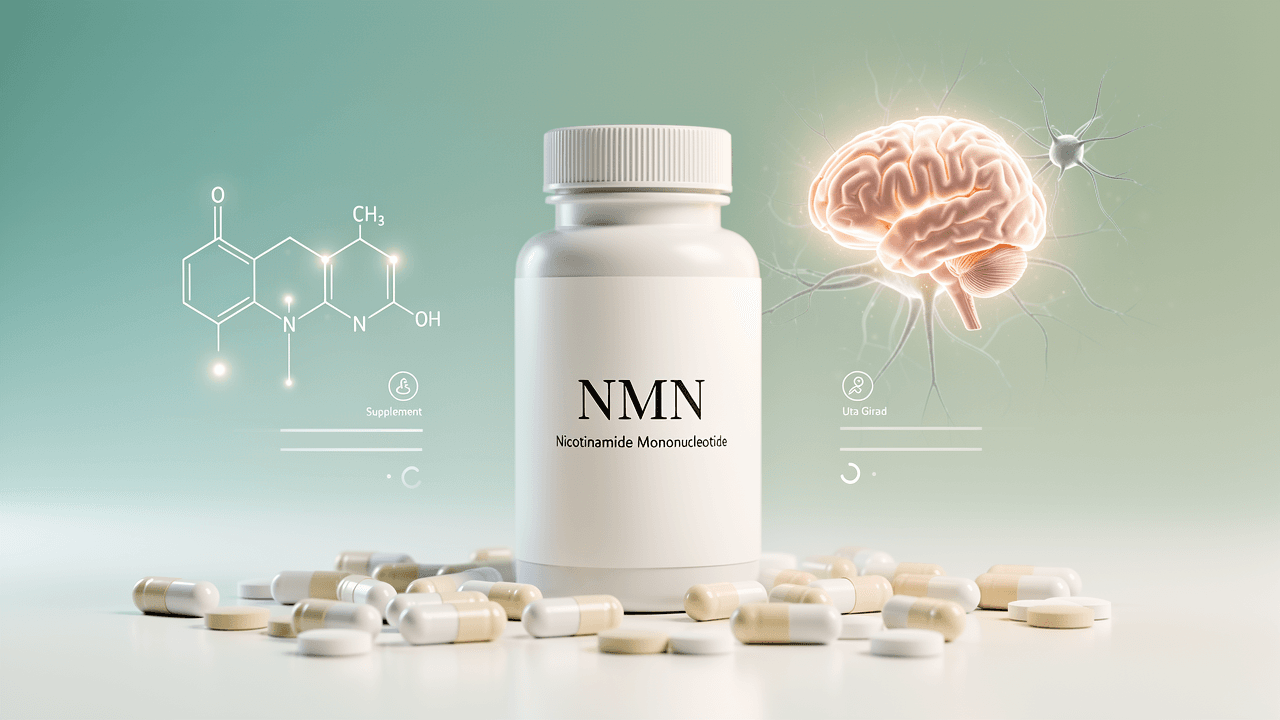
Nicotinamide mononucleotide (NMN) is a nucleotide derived from vitamin B3 (niacin). It is a direct precursor to nicotinamide adenine dinucleotide (NAD⁺), a central coenzyme involved in:
- Cellular energy production (ATP generation in mitochondria)
- DNA repair
- Regulation of gene expression via sirtuins
- Redox reactions and cellular stress responses
1.1 NMN and NAD⁺ metabolism
NAD⁺ levels decline with age in many tissues, which has been linked to:
- Reduced mitochondrial function
- Increased oxidative stress
- Impaired DNA repair
- Metabolic dysfunction and insulin resistance
NMN is converted to NAD⁺ primarily through the salvage pathway:
- Nicotinamide (NAM) from diet or NAD⁺ breakdown is converted to NMN by the enzyme NAMPT (nicotinamide phosphoribosyltransferase).
- NMN is converted to NAD⁺ by NMNAT (nicotinamide mononucleotide adenylyltransferase).
Supplementing NMN bypasses some rate-limiting steps in this pathway, potentially restoring intracellular NAD⁺ levels.
1.2 Absorption and bioavailability
In animals, orally administered NMN is absorbed in the small intestine and can increase NAD⁺ levels in multiple tissues (liver, skeletal muscle, brain). Evidence in humans is more limited but growing:
- A 2021 Japanese trial (Yoshino et al., Science, 2021) showed that oral NMN at 250 mg/day for 10 weeks increased skeletal muscle NAD⁺ metabolites in older adults.
- Pharmacokinetic data in humans suggest NMN is detectable in plasma after oral intake and is generally well tolerated, though the exact transport mechanisms (e.g., Slc12a8 in mice) remain under active investigation.
1.3 Mechanisms relevant to nootropic and health-span effects
Key proposed mechanisms:
- Enhanced mitochondrial function: By increasing NAD⁺, NMN supports mitochondrial oxidative phosphorylation and ATP production.
- Activation of sirtuins (SIRT1, SIRT3): NAD⁺-dependent deacetylases involved in longevity, metabolic regulation, and neuroprotection.
- Improved DNA repair: NAD⁺ is a required substrate for PARPs (poly-ADP-ribose polymerases), which repair DNA damage.
- Metabolic regulation: NAD⁺-dependent pathways modulate insulin sensitivity, glucose tolerance, and lipid metabolism.
- Neuroprotection and synaptic function: Preclinical studies suggest NMN can protect neurons from ischemic and oxidative damage and support synaptic plasticity.
While these mechanisms are biologically plausible, direct evidence in humans—especially for cognitive enhancement—is still limited.
2. Key Benefits of NMN Supplementation
2.1 Support for healthy aging and cellular energy
By raising NAD⁺ levels, NMN may help maintain mitochondrial function and cellular resilience during aging. Animal studies consistently show improvements in markers of health-span, though translation to humans is still being studied.
2.2 Metabolic health and insulin sensitivity
Human and animal data suggest NMN may:
- Improve insulin sensitivity
- Enhance skeletal muscle glucose uptake
- Support healthier lipid profiles in some contexts
These effects appear most pronounced in individuals with impaired metabolic health (e.g., prediabetes, overweight).
2.3 Vascular and cardiovascular support
Preclinical data indicate NMN may:
- Improve endothelial function and nitric oxide (NO) bioavailability
- Reduce arterial stiffness
- Protect against ischemia-reperfusion injury in heart and brain
Early human data are suggestive but not definitive.
2.4 Potential neuroprotective and cognitive effects (preclinical)
In rodent models, NMN has shown:
- Protection against ischemic stroke damage
- Improvements in memory and synaptic plasticity in aging models
- Reduced neuroinflammation and oxidative stress
However, robust human trials demonstrating clear cognitive enhancement are not yet available. NMN should currently be viewed as a promising but unproven nootropic in humans.
3. Research Findings – What the Studies Show
3.1 Human clinical trials
Human data are still limited compared to animal research, but several small trials provide early insights.
3.1.1 NMN and muscle insulin sensitivity (Yoshino et al., 2021)
- Study design: Randomized, double-blind, placebo-controlled
- Participants: 25 postmenopausal women with prediabetes (ages 55–75)
- Dose: 250 mg/day oral NMN vs placebo
- Duration: 10 weeks
- Key findings:
- NMN increased muscle insulin sensitivity (assessed by hyperinsulinemic–euglycemic clamp)
- Enhanced expression of genes related to muscle remodeling and NAD⁺ metabolism
- No significant changes in whole-body glucose tolerance or body composition
- Well tolerated with no serious adverse events
This suggests NMN can beneficially modulate skeletal muscle metabolism in older adults with impaired glucose control.
3.1.2 Safety and NAD⁺ metabolism (multiple small trials)
Several phase I trials in healthy adults and older individuals have focused on safety and pharmacokinetics:
- Doses: Typically 100–500 mg/day, some up to 900–1200 mg/day
- Duration: 4–12 weeks
- Findings:
- NMN is generally well tolerated, with mild side effects (e.g., transient nausea, abdominal discomfort) in a minority of participants.
- Increases in blood NAD⁺ or NAD⁺ metabolites have been observed, though the magnitude and tissue specificity vary.
- No significant changes in liver enzymes, kidney function, or hematologic parameters in the short term.
These studies are small (often <50 participants) and short in duration, so long-term safety remains uncertain.
Note: As of 2024, large, long-term randomized controlled trials in humans assessing hard outcomes (mortality, major disease endpoints, or robust cognitive outcomes) are still lacking.
3.2 Animal and preclinical data
3.2.1 Lifespan and health-span
- In multiple mouse studies, NMN supplementation (often 100–300 mg/kg/day) has:
- Improved physical activity and energy metabolism
- Reduced age-related weight gain and insulin resistance
- Enhanced mitochondrial function and reduced oxidative stress
- Some studies report improved health-span (quality of aging) but not always a clear extension of maximum lifespan.
3.2.2 Neuroprotection and cognition
- In rodent models of aging and neurodegeneration, NMN has:
- Improved performance on memory and learning tasks
- Reduced neuronal cell death after ischemic injury
- Decreased neuroinflammation and oxidative damage in the brain
These findings underpin the interest in NMN as a nootropic, but they are preclinical and may not fully translate to humans.
3.2.3 Cardiovascular and vascular health
- In mice, NMN improved endothelial function, increased nitric oxide availability, and reduced arterial stiffness.
- NMN pre-treatment reduced infarct size and improved functional outcomes in models of myocardial infarction and stroke.
Again, these results are promising but require confirmation in human populations.
3.3 Limitations of current evidence
- Small sample sizes and short durations in human trials
- Often middle-aged/older adults with specific metabolic profiles; results may not generalize
- No large-scale cognitive trials in healthy adults
- Potential publication bias toward positive findings
Overall, NMN has good mechanistic plausibility and promising preclinical data, with early human evidence for metabolic benefits and safety at modest doses. However, its status as a nootropic in humans remains provisional.
4. Best Sources & Dosage – Forms, Dosing, Timing, Safety
4.1 Forms and quality considerations
NMN is typically available as:
- Capsules or tablets (most common)
- Sublingual powders or lozenges (marketed for faster absorption, though human data are limited)
- Bulk powder (for custom dosing)
Quality considerations:
- Look for third-party testing (e.g., NSF, USP, Informed-Choice, or independent lab COAs) to confirm purity and actual NMN content.
- Avoid products with unclear labeling, proprietary blends without exact NMN amounts, or lacking batch-specific testing.
- Store in a cool, dry place, as NMN can degrade with heat and moisture.
4.2 Typical dosage ranges
There is no officially established therapeutic dose for NMN. Current human studies and expert practice suggest the following general ranges:
4.2.1 General health and healthy aging
- Common dose: 250–500 mg/day
- Often used in studies: 250 mg/day (e.g., Yoshino et al.)
- May be taken once daily, typically in the morning with or without food.
4.2.2 Metabolic support (prediabetes, insulin resistance)
- Studied dose: 250 mg/day in older women with prediabetes
- Some practitioners use 250–600 mg/day, divided into 1–2 doses
- Should be viewed as adjunctive to diet, exercise, and medical care, not a standalone treatment.
4.2.3 Higher doses (experimental / research contexts)
- Some early-phase trials and anecdotal regimens use 600–1000+ mg/day.
- Evidence for added benefit over 250–500 mg/day is unclear, and long-term safety at higher doses is not well established.
4.3 Timing and stacking
- Morning dosing is common, aligning with circadian patterns of NAD⁺ metabolism and to avoid potential interference with nighttime melatonin signaling.
- NMN is sometimes combined with:
- Resveratrol or pterostilbene (to potentially synergize with SIRT1 activation)
- Other B3 forms (e.g., nicotinamide riboside), though combining multiple NAD⁺ precursors may not be necessary and could increase cost and theoretical side-effect risk.
Because evidence for specific “stacks” is limited, combinations should be approached cautiously.
4.4 Safety, side effects, and drug interactions
4.4.1 Short-term safety
Across small human trials (up to 12 weeks):
- NMN has been generally well tolerated.
- Reported side effects (usually mild, not in all studies):
- Nausea or GI discomfort
- Abdominal bloating or diarrhea
- Headache or flushing (less common than with niacin)
- No consistent signal of liver or kidney toxicity at doses up to ~500 mg/day in short-term studies.
4.4.2 Theoretical risks and unknowns
Because NMN raises NAD⁺, which is involved in cell growth and DNA repair, some theoretical concerns exist:
Cancer risk:
- NAD⁺ is required by both healthy and malignant cells.
- In theory, raising NAD⁺ could support the survival or growth of existing cancers.
- Animal data are mixed; some suggest protective effects via improved DNA repair, but definitive human data are lacking.
- People with active cancer or strong cancer predisposition should use NMN only under oncologist guidance, if at all.
Long-term safety:
- There are no multi-year human studies on NMN.
- Chronic high-dose use (e.g., >1000 mg/day) is particularly understudied.
4.4.3 Possible drug and supplement interactions
Evidence on specific drug interactions is limited, but consider:
Antidiabetic medications (e.g., metformin, insulin, sulfonylureas):
- NMN may modestly improve insulin sensitivity.
- In theory, combination could increase risk of hypoglycemia, especially if other lifestyle changes are made.
- Monitor blood glucose closely and coordinate with a healthcare provider.
Blood pressure medications:
- If NMN improves vascular function, it could slightly affect blood pressure.
- Those on antihypertensives should monitor blood pressure when starting NMN.
Chemotherapy and targeted cancer therapies:
- Given NAD⁺’s role in cell survival and DNA repair, there is potential for interaction with cancer treatments.
- NMN should not be used during active cancer treatment without explicit oncologist approval.
Other NAD⁺-boosting supplements (e.g., nicotinamide riboside, high-dose niacinamide):
- Combined use may further increase NAD⁺ but also may increase unknown long-term risks.
- It is generally prudent to use one NAD⁺ precursor at a time, unless supervised in a research or clinical context.
4.5 Who should and shouldn’t use NMN
4.5.1 Potential candidates for NMN (with medical guidance)
- Middle-aged and older adults interested in supporting healthy aging and energy metabolism.
- Individuals with early metabolic dysfunction (e.g., prediabetes, insulin resistance), in conjunction with lifestyle changes and medical care.
- People with high oxidative/metabolic stress (e.g., shift workers, high training loads) may be interested, though direct evidence is limited.
In all cases, NMN should be an adjunct to—not a replacement for—sleep, nutrition, exercise, and medical management.
4.5.2 Groups that should avoid or use NMN only under strict supervision
Pregnant or breastfeeding individuals:
- No adequate safety data.
- Best to avoid unless part of a controlled clinical trial.
Children and adolescents:
- No safety or efficacy data.
- Not recommended.
People with active cancer or history of certain cancers:
- Theoretical risk that enhanced NAD⁺ could support tumor cell metabolism or survival.
- Use only under oncologist supervision, if at all.
Individuals on chemotherapy or targeted cancer therapies:
- Potential interactions with treatment mechanisms.
- Avoid unless explicitly cleared by an oncology team.
People with severe liver or kidney disease:
- Metabolism and excretion of NAD⁺ precursors may be altered.
- Use only under specialist guidance, with lab monitoring.
Those with poorly controlled chronic diseases (e.g., uncontrolled diabetes, severe cardiovascular disease):
- Any new supplement should be discussed with a healthcare provider, especially if it may influence metabolic or vascular function.
4.6 Practical use guidelines
Start low, go slow:
- Begin at 125–250 mg/day.
- Monitor for side effects for 1–2 weeks before considering a dose increase.
Monitor health markers (in consultation with a clinician):
- Fasting glucose, HbA1c (if metabolic concerns)
- Blood pressure
- Liver and kidney function (ALT, AST, creatinine, eGFR) if using long term
Cycle vs continuous use:
- Some practitioners recommend cycles (e.g., 5 days on / 2 days off, or 3 months on / 1 month off) to reduce theoretical long-term risks.
- There is no consensus; evidence is lacking either way.
Summary
NMN (nicotinamide mononucleotide) is a vitamin B3-derived compound that serves as a direct precursor to NAD⁺, a central coenzyme in cellular energy production, DNA repair, and metabolic regulation. Animal research strongly supports NMN’s role in improving metabolic health, vascular function, and markers of healthy aging, with promising neuroprotective effects.
Human trials to date are small and short but suggest that NMN at 250–500 mg/day can increase NAD⁺-related metabolites, improve muscle insulin sensitivity in older adults with prediabetes, and is generally well tolerated. Evidence for direct cognitive enhancement in humans is currently insufficient, so NMN should be viewed as a potential health-span and metabolic support supplement, not a proven nootropic.
Appropriate doses for most adults fall in the 250–500 mg/day range, ideally under medical supervision, especially in those with chronic conditions or on medications. Long-term safety and cancer-related risks remain uncertain, and NMN is not recommended for pregnant or breastfeeding individuals, children, or people with active cancer outside of clinical trials.
As with all supplements, NMN should complement—not replace—core lifestyle factors (sleep, diet, exercise, stress management) and appropriate medical care.