1. Understanding NAC – What It Is and How It Works
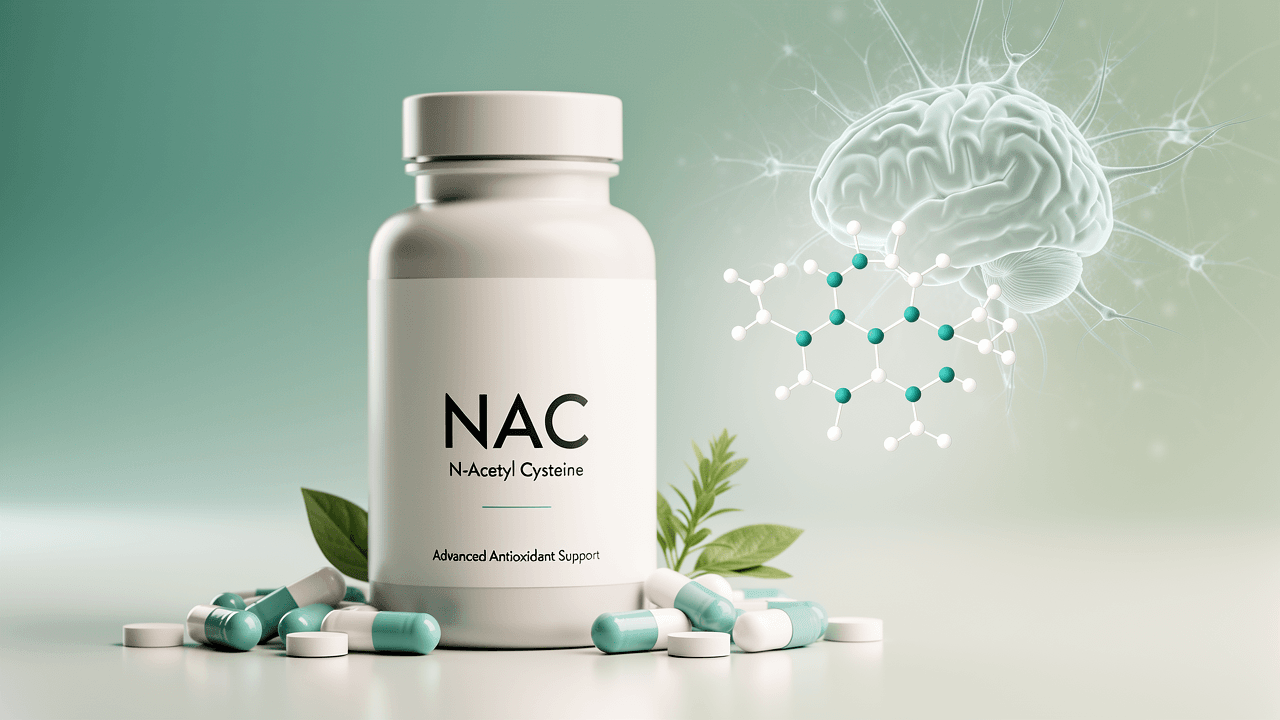
N‑acetyl cysteine (NAC) is a supplemental form of the amino acid L‑cysteine. It has been used for decades in medicine and is also widely taken as an over‑the‑counter dietary supplement and nootropic.
Clinically, NAC is best known for two uses:
- As an antidote for acetaminophen (paracetamol) overdose (intravenous or high‑dose oral)
- As a mucolytic drug to thin mucus in chronic respiratory diseases
As a supplement, people use NAC for antioxidant support, mental health, liver health, and respiratory support.
1.1 Biochemical role and mechanisms
NAC works primarily through three mechanisms:
Glutathione precursor
- NAC supplies cysteine, the rate‑limiting amino acid for glutathione (GSH) synthesis.
- Glutathione is a major intracellular antioxidant and detoxification molecule.
- By boosting glutathione, NAC can help neutralize reactive oxygen species (ROS) and support cellular defense.
Direct antioxidant and redox modulation
- NAC itself has a free thiol (-SH) group that can directly scavenge some oxidants.
- It influences redox‑sensitive signaling pathways, including NF‑κB and Nrf2, which regulate inflammation and antioxidant responses.
Mucolytic and disulfide bond breaking
- NAC breaks disulfide bonds in mucus glycoproteins, decreasing mucus viscosity.
- This is why it is used in chronic bronchitis, COPD, and other conditions with thick mucus.
Additional proposed mechanisms relevant to nootropic/psychiatric use include:
- Glutamatergic modulation – NAC may normalize extracellular glutamate by acting on the cystine–glutamate antiporter (system Xc−), potentially stabilizing glutamate signaling in the brain.
- Anti‑inflammatory effects – by reducing oxidative stress and NF‑κB activation, NAC can indirectly lower pro‑inflammatory cytokines.
2. Key Benefits of NAC
2.1 Antioxidant and liver support
Because NAC replenishes glutathione, it is widely used for liver support and detoxification, especially in the context of oxidative stress, toxin exposure, or acetaminophen use.
In hospitals, IV or high‑dose oral NAC is standard of care for acetaminophen overdose, where it prevents or limits liver failure by restoring glutathione needed to detoxify the toxic metabolite NAPQI.
At supplemental doses, NAC may:
- Support liver enzyme normalization in some liver conditions
- Reduce markers of oxidative stress
- Support detoxification pathways that depend on glutathione
2.2 Respiratory and mucolytic benefits
NAC is a mucolytic—it reduces mucus thickness and improves clearance.
Studies in chronic bronchitis and COPD show that oral NAC can:
- Reduce exacerbation frequency
- Improve sputum viscosity and clearance
- Modestly improve symptoms like cough and dyspnea in some patients
It is also used off‑label for chronic sinusitis and as supportive therapy in some respiratory infections.
2.3 Mental health and nootropic potential
NAC has drawn attention in psychiatry and nootropics for its effects on glutamate regulation, oxidative stress, and neuroinflammation.
Clinical trials have explored NAC as an adjunct in:
- Obsessive–compulsive and related disorders (OCD, trichotillomania, skin picking)
- Addictive behaviors (cocaine, cannabis, nicotine)
- Mood disorders (major depression, bipolar disorder)
- Schizophrenia (negative symptoms and cognition)
Results are mixed but promising in certain subgroups, especially in compulsive and addictive behaviors.
2.4 Metabolic and cardiometabolic effects
By reducing oxidative stress and improving endothelial function, NAC may offer modest benefits for:
- Insulin sensitivity and blood sugar regulation
- Endothelial function and vascular health
- Lipid peroxidation and oxidative damage related to atherosclerosis
However, evidence is not strong enough to consider NAC a primary treatment for metabolic or cardiovascular disease; it is better viewed as adjunctive support.
3. Research Findings
Below are selected human studies illustrating NAC’s effects in different domains. This is not exhaustive but highlights key evidence.
3.1 NAC and psychiatric / nootropic applications
Obsessive–compulsive disorder (OCD)
- Study: Double‑blind RCT, 44 adults with OCD (Afshar et al., 2012)
Design: 12‑week trial; NAC (up to 2400 mg/day) + fluvoxamine vs. placebo + fluvoxamine.
Findings: NAC group showed significantly greater improvement on Yale–Brown Obsessive Compulsive Scale (Y‑BOCS) scores from week 8 onward, suggesting adjunctive benefit.
Trichotillomania (hair‑pulling disorder)
- Study: Double‑blind RCT, 50 adults (Grant et al., 2009)
Design: 12 weeks; NAC 1200–2400 mg/day vs. placebo.
Findings: NAC significantly reduced hair‑pulling symptoms compared with placebo.
Implication: NAC appears helpful in some body‑focused repetitive behaviors.
Substance use and addiction
Cocaine dependence
- Study: Double‑blind RCT, 111 adults (LaRowe et al., 2013)
Design: 8 weeks; NAC 1200 mg twice daily (2400 mg/day) vs. placebo.
Findings: Overall primary outcomes were not significantly different, but subgroup analyses suggested NAC may reduce cue‑induced craving and use in participants with higher baseline craving.
- Study: Double‑blind RCT, 111 adults (LaRowe et al., 2013)
Cannabis use disorder (adolescents)
- Study: Double‑blind RCT, 116 adolescents/young adults (Gray et al., 2012)
Design: 8 weeks; NAC 1200 mg twice daily + contingency management vs. placebo + contingency management.
Findings: NAC group had more than double the odds of negative urine cannabinoid tests compared to placebo (OR ≈ 2.4).
Note: A later adult trial did not replicate this effect as clearly.
- Study: Double‑blind RCT, 116 adolescents/young adults (Gray et al., 2012)
Depression and bipolar disorder
- Study: Double‑blind RCT, 75 adults with bipolar disorder (Berk et al., 2008)
Design: 24 weeks; NAC 1000 mg twice daily (2000 mg/day) vs. placebo as adjunct to usual treatment.
Findings: NAC significantly improved depressive symptoms (MADRS scores), functioning, and quality of life compared to placebo, particularly by week 20–24.
Follow‑up: Some later studies showed weaker or inconsistent effects, indicating NAC may help a subset of patients or work better under specific conditions.
3.2 NAC and respiratory health
Chronic bronchitis and COPD
Study: BRONCUS trial, 523 COPD patients (Decramer et al., 2005)
Design: 3‑year, double‑blind RCT; NAC 600 mg once daily vs. placebo.
Findings: No overall slowing of FEV1 decline, but a modest reduction in exacerbations in patients not on inhaled corticosteroids.Meta‑analysis: 13 RCTs, ~4155 participants with chronic bronchitis/COPD (Cazzola et al., 2015)
Findings: NAC ≥1200 mg/day significantly reduced COPD exacerbations, especially in patients with frequent exacerbations. Lower doses (600 mg/day) showed smaller or inconsistent benefit.
3.3 NAC and liver function
Non‑acetaminophen liver support
- Study: RCT, 80 patients with non‑acetaminophen acute liver failure (Lee et al., 2009)
Design: IV NAC vs. placebo for 72 hours.
Findings: NAC improved transplant‑free survival in patients with early‑stage hepatic encephalopathy, but not in advanced cases.
NAFLD / metabolic liver disease (supplement‑relevant)
- Study: Small RCT, 30 patients with non‑alcoholic fatty liver disease (NAFLD) (Khoshbaten et al., 2010)
Design: 3 months; NAC 600 mg twice daily (1200 mg/day) vs. vitamin C.
Findings: NAC significantly reduced ALT levels compared with vitamin C, suggesting liver enzyme improvement. Imaging‑based outcomes were not robustly reported.
Evidence for chronic liver disease is still limited and heterogeneous; NAC is adjunctive, not a standalone treatment.
3.4 NAC and metabolic / cardiovascular markers
Insulin resistance in PCOS
- Study: RCT, 100 women with polycystic ovary syndrome (PCOS) (Oner et al., 2011)
Design: 24 weeks; NAC 600 mg three times daily (1800 mg/day) vs. metformin 500 mg three times daily.
Findings: Both groups improved insulin sensitivity and menstrual regularity; metformin was generally more potent, but NAC showed meaningful metabolic benefits and was better tolerated.
- Study: RCT, 100 women with polycystic ovary syndrome (PCOS) (Oner et al., 2011)
Endothelial function
- Several small trials (sample sizes 20–60) have shown that acute or short‑term NAC (600–1200 mg/day or IV) can improve flow‑mediated dilation and reduce oxidative stress markers in individuals with cardiovascular risk factors.
- These studies are short and do not demonstrate long‑term event reduction.
4. Best Sources & Dosage – Forms, Dosing, Timing, Safety
4.1 Forms of NAC
Capsules / tablets
- Most common supplemental form. Typical strengths: 300 mg, 500 mg, 600 mg.
- Often taken with water; can be taken with or without food (food may reduce stomach upset).
Powder
- Can be mixed with water or juice; has a sulfurous taste.
- Useful for flexible dosing.
Effervescent tablets / sachets
- Common in Europe as mucolytic medications.
- Often 600 mg per dose.
Intravenous (IV) or inhaled forms
- Medical use only (e.g., acetaminophen overdose, hospital respiratory therapy).
- Not applicable for self‑supplementation.
4.2 General supplemental dosage ranges
For adults, typical oral supplemental doses are:
Common health / antioxidant support:
- 600–1200 mg per day, usually divided into 1–2 doses.
Respiratory / mucolytic support (non‑prescription context):
- 600–1200 mg per day; some protocols use 600 mg 2–3 times daily (1200–1800 mg/day) for limited periods.
Psychiatric / nootropic adjunct (based on trials):
- 1200–3000 mg per day, divided into 2–3 doses.
- Many RCTs used 2000–2400 mg/day.
Metabolic support (e.g., PCOS, insulin resistance):
- 1200–1800 mg per day, divided.
Upper limits used in research:
Clinical trials have safely used oral doses up to 3000 mg/day for several months in adults. Higher doses and IV use require medical supervision.
4.3 Timing and practical use
With or without food:
- NAC can be taken with or without food.
- Taking with food may reduce gastrointestinal side effects (nausea, heartburn).
Divided dosing:
- For doses above 600–900 mg/day, splitting into 2–3 doses (e.g., morning and evening) may improve tolerance and maintain more stable plasma levels.
Duration of use:
- Short‑term (days to weeks) is common for respiratory support.
- For psychiatric or metabolic applications, trials often last 8–24 weeks.
- Long‑term daily use should be periodically reassessed with a healthcare professional.
4.4 Safety, side effects, and interactions
NAC is generally well tolerated at typical supplemental doses, but it is not risk‑free.
Common side effects
Most side effects are dose‑related and gastrointestinal:
- Nausea
- Vomiting (less common at typical doses)
- Diarrhea or loose stools
- Abdominal discomfort or heartburn
- Flatulence
Taking NAC with food and starting at a lower dose (e.g., 300–600 mg/day) and titrating upward can improve tolerance.
Less common / rare side effects
- Headache
- Fatigue or lethargy in some individuals
- Skin rash or pruritus (itching)
- Rare allergic reactions, including bronchospasm or anaphylactoid reactions, are mainly reported with IV NAC in hospital settings.
Potential nutrient effects
- NAC may influence zinc and copper status in theory via chelation, though evidence in typical supplemental doses is limited. Long‑term high‑dose use may warrant attention to overall mineral intake.
4.5 Drug interactions and cautions
NAC can interact with certain medications and conditions.
Nitroglycerin and other nitrates
- NAC can enhance vasodilatory effects of nitroglycerin, potentially improving anti‑anginal effect but also increasing risk of headache and hypotension.
- This combination has been used intentionally in cardiology under supervision. Do not combine NAC with nitrates without medical guidance.
Anticoagulants and antiplatelet drugs
- NAC may have mild antiplatelet effects and can affect platelet aggregation in vitro.
- Caution with warfarin, DOACs (apixaban, rivaroxaban), aspirin, clopidogrel, or other blood thinners, especially at higher doses.
- Monitor for bleeding and consult a clinician before combining.
Activated charcoal and certain adsorbents
- In poisoning settings, timing of NAC vs. activated charcoal is coordinated to avoid reduced NAC absorption.
- For typical supplement use, this is rarely relevant unless someone is also taking charcoal products.
Chemotherapy agents
- Because NAC is a strong antioxidant, there is theoretical concern it may interfere with some chemo or radiation therapies that rely on oxidative damage to tumor cells.
- Some oncology protocols use NAC intentionally to reduce toxicity, but this must be strictly supervised by an oncologist.
- Cancer patients should not self‑supplement NAC during active treatment without explicit approval.
Immunosuppressive or redox‑sensitive medications
- NAC’s antioxidant and glutathione‑boosting effects could, in theory, modulate immune responses or redox‑sensitive drugs, though strong clinical evidence is limited.
- Use caution and discuss with a physician if you are on complex immunosuppressive regimens.
4.6 Contraindications and special populations
Who should avoid NAC or use only under medical supervision
People with known allergy or hypersensitivity to NAC
- Anyone who has experienced a prior allergic reaction (e.g., rash, bronchospasm, anaphylactoid reaction) to NAC, especially IV, should avoid it or use only under strict medical supervision.
Asthma or reactive airway disease
- Inhaled NAC can provoke bronchospasm in some asthmatics.
- Oral NAC is usually better tolerated, but caution is still advised. Start with low doses and only under clinician guidance if you have moderate‑to‑severe asthma.
Active peptic ulcer disease or severe gastritis
- NAC can irritate the gastrointestinal tract in some people.
- Those with active ulcers or significant GI inflammation should use it cautiously and only under supervision.
Bleeding disorders or on multiple blood thinners
- Because of potential antiplatelet effects, individuals with hemophilia, thrombocytopenia, or on strong combinations of blood thinners should be cautious and consult a specialist.
Pregnancy and breastfeeding
- NAC is used intravenously in pregnancy for acetaminophen overdose and appears relatively safe in that acute, life‑saving context.
- However, data on chronic supplemental use during pregnancy and lactation are limited.
- Pregnant or breastfeeding individuals should only use NAC under medical supervision for clear indications.
Children and adolescents
- NAC has been studied in adolescents (e.g., cannabis use disorder trials) and is used medically in pediatrics for specific indications.
- Routine over‑the‑counter supplementation in minors should be guided by a pediatrician.
Who might consider NAC (with professional guidance)
NAC may be worth discussing with a healthcare provider if you:
- Have chronic bronchitis/COPD with frequent exacerbations (for mucolytic support)
- Are being treated for OCD‑spectrum or body‑focused repetitive behaviors and are interested in adjunctive options
- Have bipolar depression or treatment‑resistant depression and your psychiatrist is open to evidence‑based adjuncts
- Have non‑alcoholic fatty liver disease or metabolic syndrome and are optimizing lifestyle and medical therapy
- Have high oxidative stress or environmental toxin exposure and are looking for glutathione‑supportive strategies
In all cases, NAC should be viewed as adjunctive—supporting, not replacing, standard medical care.
4.7 Practical starting guidelines (for generally healthy adults)
This is not personal medical advice, but a general framework often used in practice:
Goal: general antioxidant / liver support
- Start: 600 mg once daily with food.
- If well tolerated, may increase to 600 mg twice daily (1200 mg/day).
Goal: respiratory/mucus support (short‑term)
- 600 mg 2–3 times daily (1200–1800 mg/day) for several days to weeks, then reassess.
Goal: psychiatric / nootropic adjunct
- Typical research doses: 1000–1500 mg twice daily (2000–3000 mg/day).
- Start lower (e.g., 600 mg twice daily) and titrate up over 1–2 weeks if tolerated and under clinician supervision.
Monitoring:
- Watch for GI upset, headaches, or new symptoms.
- For long‑term high‑dose use, periodic check‑ins with a clinician and basic labs (liver function, complete blood count, possibly minerals) are reasonable.
5. Limitations of the Evidence
- Many NAC studies are small, short‑term, or adjunctive, making it hard to isolate its independent effect.
- Psychiatric data are mixed—some trials show clear benefit, others do not. NAC is not a replacement for standard psychiatric treatment.
- Long‑term safety data at high doses (>2400–3000 mg/day) are limited, especially beyond 6–12 months.
- Effects can be condition‑specific and individual—what works for OCD may not work for depression, and not all patients respond.
6. Summary
N‑acetyl cysteine (NAC) is a well‑studied compound with:
- A clear biochemical role as a glutathione precursor and mucolytic
- Evidence‑supported uses in respiratory health, adjunctive psychiatric treatment (especially some compulsive and addictive disorders), and metabolic/liver support
- Typical oral doses of 600–3000 mg/day, with 1200–2400 mg/day most common in clinical trials
While generally safe and accessible, NAC can interact with medications (notably nitrates and blood thinners) and may not be appropriate for everyone, especially those with asthma, bleeding disorders, active ulcers, or undergoing cancer therapy. It is best used under the guidance of a healthcare professional, particularly at higher doses or for chronic use.