1. Understanding Lion’s Mane – What It Is and How It Works
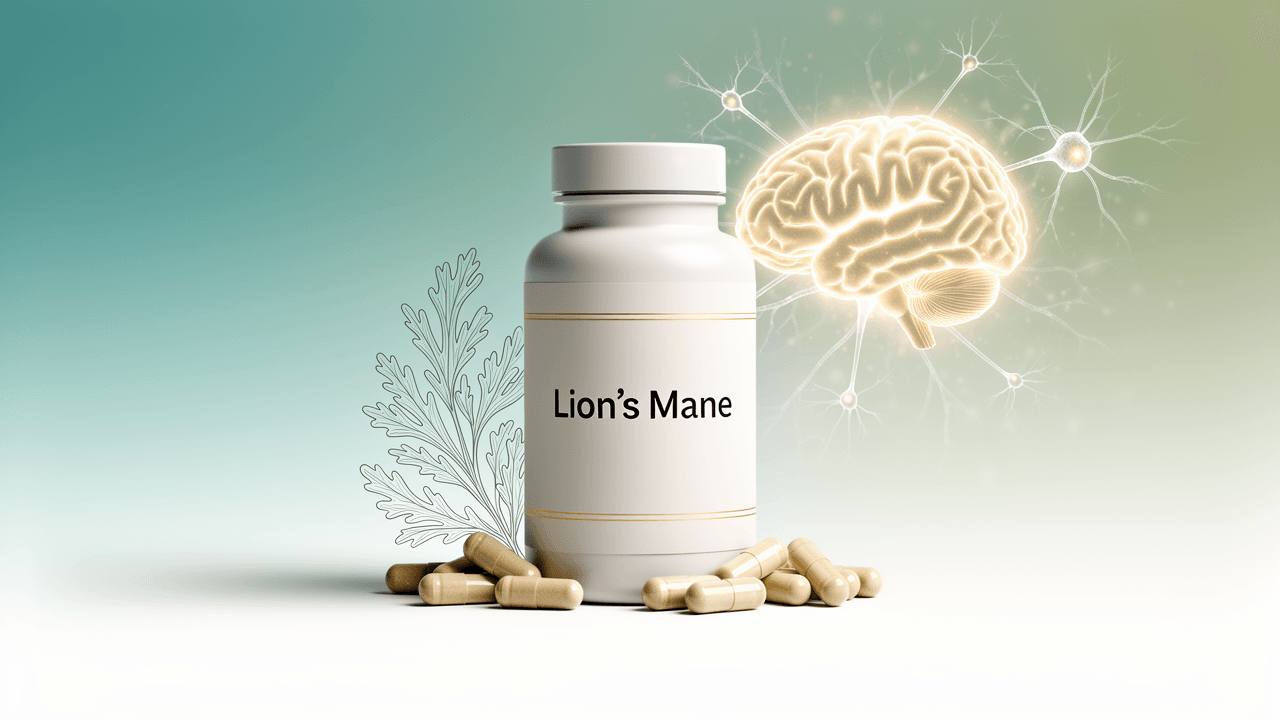
Lion’s Mane (Hericium erinaceus) is an edible medicinal mushroom traditionally used in East Asian medicine. It has gained popularity as a nootropic and neuroprotective supplement due to its potential to support brain health, nerve regeneration, and mood.
What is Lion’s Mane?
- Species: Hericium erinaceus, a white, shaggy mushroom resembling a lion’s mane
- Traditional use: Gastrointestinal support, general vitality, and cognitive health in Chinese and Japanese medicine
- Supplement forms: Powder, capsules, tinctures, and extracts from fruiting body, mycelium, or both
Key Active Compounds
Lion’s Mane contains several bioactive constituents:
- Hericenones – primarily found in the fruiting body
- Erinacines – primarily found in the mycelium
- Polysaccharides (especially β-glucans) – immunomodulatory and antioxidant
- Phenolic compounds and terpenoids – contribute to anti-inflammatory and antioxidant effects
Hericenones and erinacines are of particular interest for brain health because they appear to stimulate nerve growth factor (NGF) and possibly brain-derived neurotrophic factor (BDNF) in experimental models.
How Lion’s Mane Works in the Body
Based on preclinical and early human research, Lion’s Mane may act via several mechanisms:
Neurotrophic support
- In cell and animal studies, hericenones and erinacines stimulate NGF synthesis in the brain and peripheral nerves. NGF supports:
- Growth and maintenance of cholinergic neurons
- Neurite outgrowth (extension of nerve cell processes)
- Synaptic plasticity, which underlies learning and memory
- In cell and animal studies, hericenones and erinacines stimulate NGF synthesis in the brain and peripheral nerves. NGF supports:
Neuroprotection and antioxidant activity
- Lion’s Mane extracts show antioxidant effects, reducing oxidative stress and lipid peroxidation in animal models.
- It may protect neurons from excitotoxicity and β-amyloid–induced toxicity, potentially relevant to neurodegenerative diseases.
Anti-inflammatory effects
- In vitro and animal studies suggest downregulation of pro-inflammatory cytokines (e.g., TNF-α, IL-1β) and inhibition of NF-κB signaling.
- This may reduce neuroinflammation and systemic inflammation.
Modulation of neurotransmitters
- Animal studies suggest Lion’s Mane may influence levels of acetylcholine, dopamine, and serotonin, which could impact cognition and mood.
- It may also support hippocampal neurogenesis, important for memory formation.
Peripheral nerve regeneration
- In rodent models of nerve injury, Lion’s Mane improved functional recovery and nerve regeneration, likely via NGF-like activity and enhanced remyelination.
While these mechanisms are promising, most mechanistic evidence comes from preclinical research. Human data are still relatively limited and focus mainly on cognition and mood.
2. Key Benefits of Lion’s Mane
1. Cognitive Support and Mild Cognitive Impairment
Human trials suggest Lion’s Mane may modestly improve cognitive function in older adults with mild cognitive impairment (MCI). Benefits appear to depend on continuous use and may diminish after stopping.
2. Mood and Anxiety Support
Small human studies indicate Lion’s Mane may reduce symptoms of anxiety and depression, possibly by modulating neurotrophic factors, inflammation, and neurotransmitter systems.
3. Nerve and Brain Health
Preclinical studies show enhanced nerve regeneration and neuroprotection, suggesting potential use as an adjunct for nerve injury recovery and long-term brain health.
4. Immune and Gut Support (Early Evidence)
Lion’s Mane polysaccharides may modulate immune function and support gut health by influencing the microbiome and intestinal barrier, though human data are still preliminary.
3. Research Findings on Lion’s Mane
Below are key human and animal studies that shape our current understanding.
3.1 Cognitive Function & Mild Cognitive Impairment
Study 1 – Older adults with MCI
- Design: Randomized, double-blind, placebo-controlled trial
- Participants: 30 Japanese adults aged 50–80 with mild cognitive impairment
- Intervention: 3 g/day Lion’s Mane powdered tablets (from fruiting body) vs placebo for 16 weeks, followed by 4-week off period
- Outcomes: Cognitive function assessed by cognitive function scale (Hasegawa’s Dementia Scale-Revised and other tests)
- Results:
- The Lion’s Mane group showed significant improvements in cognitive scores at weeks 8, 12, and 16 compared with baseline and placebo.
- After discontinuation for 4 weeks, cognitive scores declined toward baseline, suggesting benefits require ongoing use.
- Implication: Lion’s Mane may modestly improve cognition in MCI, but effects are reversible after stopping.
3.2 Mood, Anxiety, and Menopausal Symptoms
Study 2 – Menopausal women with mood symptoms
- Design: Randomized, double-blind, placebo-controlled pilot study
- Participants: 30 women (mean age ~48) with menopausal symptoms
- Intervention: Lion’s Mane cookies containing 0.5 g powdered fruiting body, 4 times daily (total 2 g/day) vs placebo cookies for 4 weeks
- Outcomes: Depression, anxiety, sleep quality, and menopausal symptoms measured by standardized questionnaires (e.g., CES-D, POMS)
- Results:
- The Lion’s Mane group showed significant reductions in depression and anxiety scores compared with placebo.
- Some improvement in sleep and concentration was also reported.
- Implication: Lion’s Mane may support mood and anxiety in middle-aged women, but larger, more diverse studies are needed.
3.3 Nerve Regeneration (Preclinical)
Study 3 – Peripheral nerve injury in rats
- Design: Experimental animal study
- Intervention: Rats with crushed sciatic nerves received oral Lion’s Mane extract at various doses for several weeks.
- Outcomes: Nerve conduction velocity, axon regeneration, and functional recovery
- Results:
- Rats receiving Lion’s Mane showed faster nerve regeneration, improved myelination, and better functional recovery than controls.
- Implication: Supports a neuroregenerative effect, but translation to humans is not yet proven.
3.4 Neuroprotection and Neurodegenerative Models
Study 4 – Alzheimer’s disease model in mice
- Design: Transgenic mouse model of Alzheimer’s disease
- Intervention: Lion’s Mane extract administered for several months
- Outcomes: Memory tests, β-amyloid plaque deposition, neuronal health
- Results:
- Improved performance in memory tasks compared to controls.
- Reduced β-amyloid–related pathology and oxidative damage in brain tissue.
- Implication: Suggests potential for Lion’s Mane as a neuroprotective agent in neurodegenerative conditions, but human trials are lacking.
3.5 Immune and Gut Health
Immune function (animal and in vitro)
- Lion’s Mane polysaccharides have been shown to enhance macrophage activity, NK cell function, and antibody production in animal models.
- β-glucans may modulate the immune response, potentially supporting host defense and reducing chronic low-grade inflammation.
Gut health (preclinical and early human data)
- Animal studies show Lion’s Mane extracts can improve gastric mucosal integrity, reduce ulcer formation, and modulate gut microbiota composition.
- A few small human studies and case reports suggest benefits for digestive discomfort, but robust clinical trials are limited.
Evidence Quality Overview
- Strongest human evidence: Mild cognitive impairment, modest mood/anxiety support (small trials)
- Moderate preclinical evidence: Neuroprotection, nerve regeneration, anti-inflammatory and antioxidant effects
- Emerging/limited evidence: Immune modulation, gut health, long-term neurodegenerative disease outcomes
Overall, Lion’s Mane shows promise but is not a proven treatment for any medical condition. It should be viewed as a supportive nootropic or wellness supplement rather than a standalone therapy.
4. Best Sources & Dosage – Forms, Dosing, Timing, Safety
4.1 Supplement Forms
Fruiting body extracts
- Derived from the visible mushroom.
- Rich in hericenones and β-glucans.
- Common in traditional preparations and many modern supplements.
Mycelium-based products
- Derived from the fungal mycelium (the root-like structure), often grown on grain.
- Rich in erinacines, which may have stronger NGF-stimulating activity in preclinical studies.
- Quality varies; some products contain significant residual grain.
Full-spectrum (fruiting body + mycelium)
- Aim to provide both hericenones and erinacines.
- Composition depends on extraction and raw material ratio.
Extraction methods
- Hot water extracts: Emphasize polysaccharides (β-glucans).
- Alcohol or dual extracts: Capture both polysaccharides and alcohol-soluble compounds (e.g., hericenones, erinacines, terpenoids).
- High-quality products usually specify extraction ratio (e.g., 8:1) and β-glucan content.
4.2 General Dosage Guidelines
There is no universally established therapeutic dose, but human trials and traditional use provide practical ranges. Always start at the lower end and titrate up as tolerated.
For General Cognitive Support / Nootropic Use
- Typical range: 500–1,500 mg/day of standardized extract (often 10:1 or similar), usually divided into 1–2 doses.
- Whole powdered mushroom: 1–3 g/day is common, though less standardized in active compounds.
- Evidence-based anchors:
- MCI study: 3 g/day powdered fruiting body for 16 weeks.
- Menopausal mood study: 2 g/day powdered fruiting body for 4 weeks.
Practical approach:
- Start with 500 mg once daily of a quality extract.
- After 1–2 weeks, increase to 1,000–1,500 mg/day if well tolerated and desired.
For Mood and Stress Support
- Similar to cognitive dosing: 1,000–2,000 mg/day of extract, in 1–2 divided doses.
- Combine with general lifestyle interventions (sleep, exercise, therapy) rather than using Lion’s Mane alone.
For Long-Term Brain & Nerve Health (Preventive Use)
- Conservative long-term dose: 500–1,000 mg/day of standardized extract.
- Periodic breaks (e.g., 5 days on / 2 days off, or 3 months on / 1 month off) may be reasonable, though not strictly evidence-based.
For Experimental Adjunct in Nerve Injury (Under Medical Supervision)
- Research in humans is insufficient to recommend a specific therapeutic dose.
- If used adjunctively (e.g., for peripheral nerve recovery) under healthcare guidance, doses in the 1,000–3,000 mg/day range of extract are sometimes used in practice, based on extrapolation from cognitive studies and animal data.
4.3 Timing and Administration
- With or without food:
- Can be taken with or without meals; some people report better tolerance with food.
- Morning vs evening:
- Often taken in the morning or early afternoon.
- A minority report mild stimulation; if sleep is affected, avoid late-evening dosing.
- Stacking with other nootropics:
- Often combined with bacopa, L-theanine, or low-dose caffeine for cognitive support.
- When stacking, introduce one supplement at a time to monitor effects.
4.4 Safety, Side Effects, and Interactions
Overall Safety Profile
- Lion’s Mane is generally considered well tolerated in human studies lasting up to 16 weeks.
- No serious adverse events have been consistently reported in clinical trials at doses of 2–3 g/day of powdered fruiting body.
Common Side Effects (Usually Mild)
- Gastrointestinal upset (nausea, bloating, soft stools)
- Itching or skin rash (possibly related to immune modulation or mild allergic reaction)
- Rarely, headaches or a sense of mild overstimulation
If side effects occur:
- Reduce dose or split into smaller doses.
- Discontinue if symptoms persist or worsen.
Allergies and Hypersensitivity
- As a mushroom, Lion’s Mane may trigger allergic reactions in individuals sensitive to mushrooms or molds.
- Case reports describe asthma exacerbation and respiratory symptoms in workers exposed to mushroom spores; oral supplement reactions are rarer but possible.
Avoid or use extreme caution if:
- You have a known allergy to mushrooms or mold.
- You develop hives, swelling, wheezing, or breathing difficulty after taking it (seek immediate medical care).
Drug Interactions (Theoretical and Emerging)
Human interaction data are limited; most concerns are theoretical or extrapolated from preclinical findings.
Anticoagulants and antiplatelet drugs
- Some mushrooms have mild antiplatelet or anticoagulant effects; Lion’s Mane may potentially increase bleeding risk when combined with:
- Warfarin, apixaban, rivaroxaban
- Aspirin, clopidogrel
- High-dose fish oil, ginkgo, or other blood-thinning supplements
- Evidence is limited, but caution is advised, especially before surgery.
- Some mushrooms have mild antiplatelet or anticoagulant effects; Lion’s Mane may potentially increase bleeding risk when combined with:
Immunomodulatory drugs
- Due to β-glucan–mediated immune modulation, Lion’s Mane could theoretically interfere with:
- Immunosuppressants (e.g., after organ transplant)
- Biologic agents for autoimmune disease
- No direct clinical data, but consult your specialist before use.
- Due to β-glucan–mediated immune modulation, Lion’s Mane could theoretically interfere with:
Antidiabetic medications
- Some animal data suggest mild blood sugar–lowering effects.
- In people taking insulin or oral hypoglycemics, monitor for hypoglycemia if Lion’s Mane is added.
CNS-active medications
- Given its potential impact on mood and cognition, use caution with:
- Antidepressants, anxiolytics, stimulants, antipsychotics
- No strong evidence of harmful interactions, but monitor for changes in mood, anxiety, or sleep.
- Given its potential impact on mood and cognition, use caution with:
Always discuss new supplements with a healthcare professional if you take prescription medications.
4.5 Special Populations – Who Should and Shouldn’t Use It
Likely Appropriate (With Standard Caution)
- Healthy adults seeking cognitive support, focus, or long-term brain health.
- Middle-aged and older adults with subjective cognitive complaints or mild cognitive impairment, as an adjunct to medical care.
- Adults with mild mood or stress concerns, as a complement to standard treatments and lifestyle strategies.
Use Only Under Medical Supervision
People with diagnosed neurodegenerative diseases (e.g., Alzheimer’s, Parkinson’s):
- Lion’s Mane is not a cure; evidence in these populations is mainly preclinical.
- Discuss with a neurologist before use.
Individuals on multiple medications, especially:
- Anticoagulants or antiplatelets
- Antidiabetic drugs
- Immunosuppressants or biologic agents
- CNS-active psychiatric medications
People with autoimmune conditions:
- Immune-modulating effects could theoretically exacerbate or modulate disease activity.
- Involve your rheumatologist or immunologist.
Generally Not Recommended (Without Specialist Approval)
Pregnant or breastfeeding individuals
- Human safety data are insufficient.
- Most guidelines recommend avoiding non-essential supplements in pregnancy and lactation unless clearly indicated and supervised.
Children and adolescents
- Virtually no pediatric data.
- Avoid use unless specifically advised by a pediatric specialist.
People with known mushroom allergies
- High risk of allergic reaction; Lion’s Mane should be avoided.
Pre-surgical patients
- Due to theoretical bleeding risk, many practitioners advise stopping Lion’s Mane at least 1–2 weeks before surgery.
5. Practical Summary
- What it is: Lion’s Mane (Hericium erinaceus) is a medicinal mushroom with neurotrophic, antioxidant, and anti-inflammatory properties, used as a nootropic and wellness supplement.
- How it works: Likely supports nerve growth factor (NGF), neuroplasticity, and neuroprotection; modulates inflammation and oxidative stress; may influence neurotransmitters.
- Main benefits (based on current evidence):
- Modest improvement in cognition in mild cognitive impairment (3 g/day for 16 weeks in one key trial).
- Reduction in anxiety and depressive symptoms in a small study of menopausal women (2 g/day for 4 weeks).
- Strong preclinical support for nerve regeneration and neuroprotection; human confirmation pending.
- Typical dosage:
- 500–1,500 mg/day of standardized extract for general cognitive and mood support; up to 2–3 g/day powdered fruiting body used in studies.
- Take for at least 4–12 weeks to assess effects.
- Safety: Generally well tolerated; mild GI upset or rash possible. Use caution with mushroom allergies, anticoagulant or immunosuppressive therapy, pregnancy, and chronic disease.
- Who should use it: Healthy adults and older individuals seeking adjunctive support for cognition or mood, under appropriate medical guidance.
- Who should avoid it: Pregnant/breastfeeding individuals, children, people with mushroom allergies, and those on complex medication regimens without professional oversight.
Lion’s Mane is best viewed as a supportive, long-term brain health supplement, not a stand-alone treatment. For significant cognitive or mood concerns, it should complement—never replace—evidence-based medical care, therapy, and lifestyle interventions.