1. Understanding Lemon Balm – What It Is and How It Works
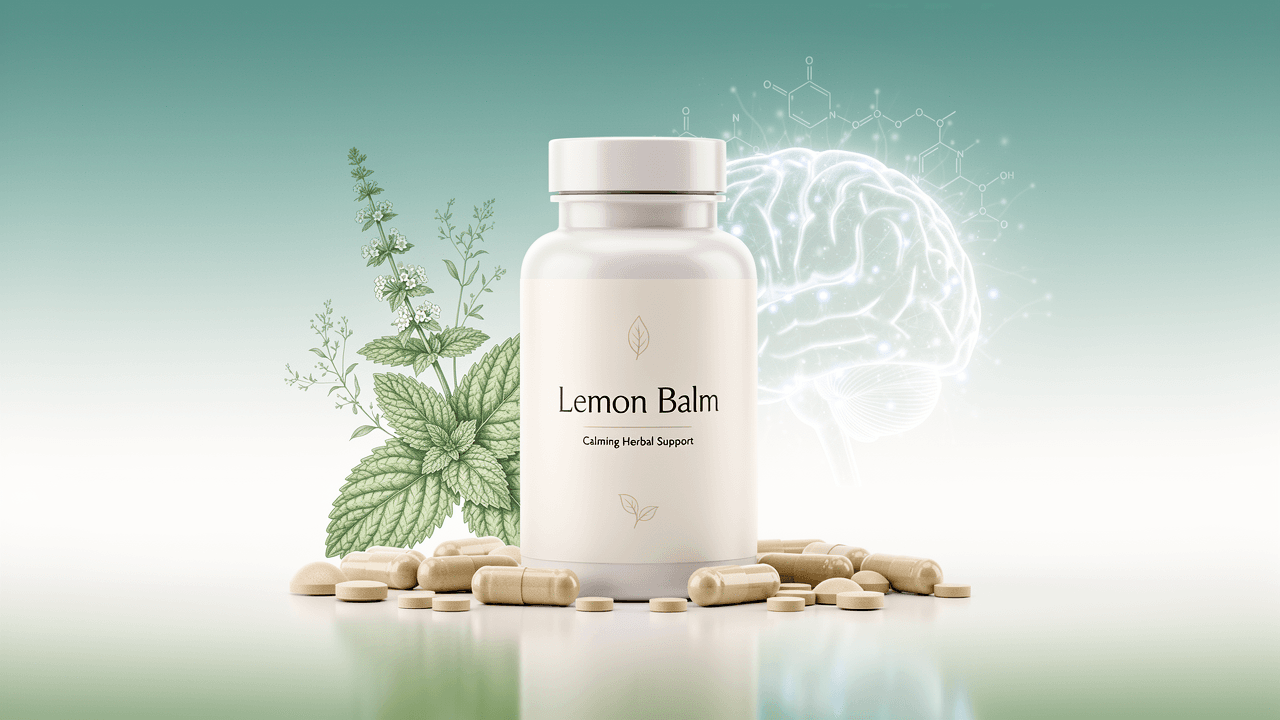
Lemon balm (Melissa officinalis) is a lemon-scented herb from the mint family (Lamiaceae), traditionally used in European herbal medicine for anxiety, insomnia, digestive discomfort, and tension-related headaches. Today it’s commonly taken as a dietary supplement or herbal tea and is increasingly marketed as a gentle nootropic and calming aid.
Active Compounds
Lemon balm contains a variety of bioactive constituents:
- Rosmarinic acid – a polyphenol with antioxidant and GABA-modulating properties
- Flavonoids (e.g., luteolin, quercetin, apigenin derivatives) – antioxidant and neuroprotective
- Phenolic acids (caffeic acid, chlorogenic acid)
- Terpenes and essential oil components – including citral, citronellal, geraniol, linalool
- Triterpenes (e.g., ursolic and oleanolic acid)
The exact composition varies with plant part, growing conditions, and extraction method (water, ethanol, etc.).
How Lemon Balm May Work in the Body
Research suggests several mechanisms relevant to mood, stress, and cognition:
GABAergic modulation
- In vitro studies indicate lemon balm extracts and rosmarinic acid may inhibit GABA transaminase (the enzyme that breaks down GABA), potentially increasing GABA levels in the brain.
- Enhanced GABAergic activity is associated with anxiolytic (anti-anxiety) and sedative effects.
Cholinergic activity and cognitive effects
- Some extracts show acetylcholinesterase (AChE) inhibitory activity in vitro, which may increase acetylcholine levels, a neurotransmitter important for memory and attention.
- This mechanism underlies the interest in lemon balm as a mild nootropic and a supportive herb in cognitive decline.
Antioxidant and anti-inflammatory actions
- Rosmarinic acid and flavonoids have strong antioxidant properties, scavenging free radicals and reducing oxidative stress.
- Animal models show reduced neuroinflammation and oxidative markers, which may be neuroprotective over the long term.
Modulation of the HPA axis and stress response
- Human studies suggest lemon balm may reduce cortisol and subjective stress, indicating a possible effect on the hypothalamic–pituitary–adrenal (HPA) axis.
Spasmolytic and carminative effects
- Traditionally used for digestive upset, lemon balm appears to have smooth muscle–relaxing properties in the gut, potentially easing spasms and discomfort.
Overall, lemon balm is best characterized as a mild, calming herb with potential cognitive benefits, rather than a strong stimulant-type nootropic.
2. Key Benefits of Lemon Balm
2.1 Reduced Anxiety and Stress
Lemon balm is most consistently supported for mild anxiety and situational stress:
- May promote a calmer mood and reduce nervousness
- Can help with tension-related symptoms (e.g., restlessness, irritability)
- Often combined with other calming herbs (e.g., valerian, chamomile, passionflower)
2.2 Improved Sleep Quality (Especially in Combination Formulas)
Lemon balm is frequently used to support sleep onset and quality, particularly in people whose insomnia is related to anxiety or stress. Evidence is stronger when combined with valerian root, though some data support lemon balm alone.
2.3 Cognitive Performance and Calm Focus
Acute dosing studies in healthy adults suggest lemon balm can:
- Improve calmness and alertness under stress
- Support working memory and attention at certain doses
- Reduce mental fatigue in demanding tasks
However, effects appear dose- and preparation-dependent, and not all studies show cognitive benefits.
2.4 Digestive Comfort and Functional GI Symptoms
Traditionally, lemon balm is used for:
- Mild digestive upset, bloating, and gas
- Functional dyspepsia and cramp-like discomfort
Clinical evidence is more limited and often in combination formulas, but the herb’s spasmolytic and carminative actions are biologically plausible and supported by traditional use.
3. Research Findings
Below are representative human studies illustrating lemon balm’s potential effects. Note that preparations, doses, and combinations vary widely.
3.1 Anxiety and Stress
1. Acute stress and cognitive performance in healthy volunteers
- Design: Randomized, double-blind, placebo-controlled, crossover
- Participants: 18 healthy adults
- Intervention: Single doses of standardized lemon balm extract (300 mg and 600 mg) vs placebo, separated by 7-day washout; participants completed cognitive tasks and mood assessments under induced stress.
- Findings:
- 300 mg: Improved calmness and alertness compared to placebo, with minimal sedation.
- 600 mg: Greater calming effect but some sedation and reduced alertness.
- Implication: Moderate doses may support calm focus, while higher doses may be more sedating.
2. Lemon balm in laboratory-induced stress
- Design: Randomized, double-blind, placebo-controlled
- Participants: 20–30 healthy adults (varied across related studies)
- Intervention: Single doses of lemon balm extract (e.g., 300 mg) alone or combined with other herbs (often valerian), followed by stress-inducing tasks.
- Findings:
- Reduced self-reported anxiety and stress.
- Some improvement in working memory performance under stress.
- Limitations: Small samples; some studies use multi-herb formulas, making it hard to isolate lemon balm’s effect.
3. Mild to moderate anxiety and sleep disturbance
- Design: Open-label (no placebo), prospective
- Participants: 20 adults with mild-to-moderate anxiety and sleep complaints
- Intervention: Standardized lemon balm extract providing ~600 mg/day for 15 days.
- Findings:
- Approximately 70% of participants showed ≥50% reduction in anxiety scores.
- Sleep quality also improved in most participants.
- Limitations: No control group; placebo effect cannot be excluded; short duration.
3.2 Sleep (Often in Combination with Valerian)
4. Children with sleep disturbances
- Design: Open-label, multicenter observational study
- Participants: 918 children (median age ~8 years) with sleep problems and restlessness
- Intervention: Combination of valerian root extract and lemon balm extract, doses adjusted by age, taken for 4 weeks.
- Findings:
- 80–90% of parents and physicians rated sleep quality and restlessness as “much” or “very much” improved.
- Tolerability was rated “good” or “very good” in >90% of cases.
- Limitations: No placebo control; combination product; results cannot be attributed to lemon balm alone.
5. Adults with insomnia
- Design: Randomized, double-blind, placebo-controlled
- Participants: ~100 adults with primary insomnia
- Intervention: Valerian (400–600 mg) + lemon balm (80–120 mg) vs placebo, nightly for 2–4 weeks.
- Findings:
- Treatment group showed improved sleep latency (time to fall asleep) and sleep quality versus placebo.
- Daytime performance generally unchanged, suggesting minimal next-day sedation.
- Limitations: Combination therapy; individual contribution of lemon balm unclear.
3.3 Cognition and Mood
6. Cognitive performance in healthy adults
- Design: Randomized, double-blind, placebo-controlled, crossover
- Participants: 20–30 healthy young adults
- Intervention: Single doses of lemon balm extract (e.g., 300, 600, and 900 mg) vs placebo, with cognitive and mood assessments over 6 hours.
- Findings:
- Certain doses improved accuracy and speed in memory tasks and attention.
- Mood ratings showed increased calmness and reduced anxiety, especially at 300–600 mg.
- Higher doses sometimes led to slower reaction times (sedation).
- Implication: There may be an inverted U-shaped dose–response, where moderate doses optimize cognitive benefit and higher doses cause drowsiness.
7. Alzheimer’s disease (AD) – adjunctive therapy
- Design: Randomized, double-blind, placebo-controlled
- Participants: 42 patients with mild to moderate AD
- Intervention: 60 drops/day of lemon balm tincture (hydroalcoholic extract) vs placebo for 4 months.
- Findings:
- The lemon balm group showed significant improvements in cognitive scores (e.g., ADAS-cog) versus placebo.
- Some improvement in agitation and neuropsychiatric symptoms.
- Limitations: Small sample; specific tincture preparation; results need replication.
3.4 Digestive Health
8. Functional gastrointestinal complaints
- Design: Observational and small controlled studies using multi-herb formulas
- Participants: Adults with functional dyspepsia, bloating, and mild GI spasm
- Intervention: Herbal combinations including lemon balm (often with peppermint, chamomile, caraway, etc.) for 2–4 weeks.
- Findings:
- Reduction in abdominal pain, bloating, and fullness scores.
- Improved overall digestive comfort.
- Limitations: Multi-herb formulas; limited high-quality RCTs with lemon balm as a single agent.
4. Best Sources & Dosage
4.1 Common Forms of Lemon Balm
Dried herb (tea or loose herb)
- Typically 1–3 g (about 1–2 teaspoons dried leaf) per cup of hot water.
- Steep 5–10 minutes, up to 3–4 times daily.
Standardized extracts (capsules or tablets)
- Often standardized to rosmarinic acid or total hydroxycinnamic acids.
- Typical capsule strengths: 200–600 mg per dose.
Tinctures and liquid extracts
- Hydroalcoholic preparations (e.g., 1:5 herb-to-solvent).
- Common adult dose: 2–4 mL, 2–3 times daily (follow product label).
Combination products
- Lemon balm is frequently combined with valerian, hops, passionflower, chamomile, or L-theanine in sleep and stress formulas.
- Doses of lemon balm in these products are often smaller (e.g., 80–300 mg per serving) but can still be effective, particularly for sleep.
4.2 Evidence-Informed Dosage Ranges
These ranges are based on typical clinical trial doses and traditional use in adults. Always adjust for individual sensitivity and consult a healthcare provider.
For Mild Anxiety and Daytime Stress
Standardized extract:
- 300–600 mg, 1–2 times daily.
- Many studies used single acute doses of 300–600 mg for situational stress.
Tea:
- 1–2 cups, 2–3 times per day (each cup with ~1–2 g dried herb).
Tincture:
- ~2–3 mL, up to 3 times daily, depending on strength.
Timing:
- Take 30–60 minutes before anticipated stress or as a divided daily dose (e.g., morning and afternoon).
- For nootropic-style use, 300 mg in the morning or early afternoon may support calm focus without excessive sedation.
For Sleep and Insomnia
Standardized extract (single herb):
- 300–600 mg in the evening, 30–60 minutes before bed.
- Higher doses (≥600 mg) may be more sedating but can cause next-morning grogginess in some.
Combination with valerian:
- Many clinical studies used ~80–120 mg lemon balm plus 400–600 mg valerian at bedtime.
Tea:
- 1–2 cups of lemon balm tea in the evening; can be combined with chamomile or passionflower.
For Cognitive Support and Calm Focus
- Standardized extract:
- 300–600 mg taken once, or divided into 2 doses during the day.
- Lower to mid-range doses (around 300 mg) tend to support calmness and attention without strong sedation.
Note: For long-term cognitive support (e.g., in mild cognitive impairment or AD), specific tincture or extract protocols used in research should be supervised by a clinician.
For Digestive Discomfort
Tea:
- 1 cup after meals, up to 3 times daily.
- Often combined with peppermint, chamomile, or fennel.
Tincture:
- 2–3 mL in a small amount of water after meals.
4.3 Safety, Side Effects, and Interactions
Lemon balm is generally considered well tolerated when used at typical doses for short to moderate periods (weeks to a few months). However, it is still pharmacologically active and not risk-free.
Common Side Effects (Usually Mild)
- Drowsiness or sedation (more likely at higher doses, ≥600 mg)
- Headache
- Nausea or mild GI upset
- Dizziness in sensitive individuals
These effects often improve with dose reduction.
Potential Drug Interactions
Sedatives and CNS depressants
- Benzodiazepines (e.g., diazepam, lorazepam)
- Z-drugs (e.g., zolpidem)
- Barbiturates
- Sedating antihistamines (e.g., diphenhydramine)
- Opioids
- Other sleep aids or calming herbs (valerian, kava, hops, passionflower)
Risk: Additive sedation, impaired alertness, and psychomotor performance.
Recommendation: Use with caution; start at lower doses and avoid activities requiring full alertness (driving, operating machinery) until you know how you respond.Thyroid medications
- Historically, lemon balm has been suggested to influence thyroid function, particularly hyperthyroidism, based on in vitro studies.
- Human data are limited and inconsistent, but a theoretical interaction with thyroid hormone replacement (levothyroxine) or anti-thyroid drugs (methimazole, propylthiouracil) exists.
Recommendation: People with thyroid disorders or on thyroid medications should consult their healthcare provider before using lemon balm regularly.
Anticonvulsants
- Due to its GABAergic activity, lemon balm could theoretically influence seizure threshold or interact with anticonvulsant drugs.
- Clinical evidence is lacking, but caution is advised in epilepsy.
Alcohol
- May enhance sedation and impair coordination when combined with alcohol.
Recommendation: Avoid or limit alcohol when using lemon balm for calming or sleep.
- May enhance sedation and impair coordination when combined with alcohol.
Long-Term Use
- Most clinical studies last days to a few months; long-term safety data (many months to years) are limited.
- There is no strong evidence of dependence or withdrawal, but it is prudent to:
- Use the lowest effective dose.
- Take periodic breaks (e.g., 1–2 weeks off after 6–8 weeks of continuous use) if used daily.
Special Populations
Pregnancy and breastfeeding
- Human data are insufficient.
- Traditionally, lemon balm tea in small amounts is sometimes used, but concentrated extracts lack robust safety data.
Recommendation: Avoid high-dose supplements during pregnancy and lactation unless supervised by a qualified clinician.
Children and adolescents
- Some studies (especially combination products) suggest safety in children for short-term use in sleep and restlessness.
- However, dosing must be weight-appropriate, and extracts should be used under pediatric guidance.
Recommendation: Herbal teas at modest doses are generally preferred over concentrated extracts in children, with professional oversight.
Liver or kidney disease
- No strong signal of hepatotoxicity or nephrotoxicity in typical use.
- Nevertheless, people with significant liver or kidney impairment should exercise caution with any concentrated herbal extract.
5. Who Should and Shouldn’t Use Lemon Balm
5.1 Who May Benefit from Lemon Balm
Lemon balm may be appropriate for adults who:
- Experience mild to moderate anxiety, nervousness, or tension
- Have situational stress (e.g., exams, public speaking) and want a gentle calming aid
- Have difficulty falling asleep due to an overactive mind or stress (especially in combination with valerian or other calming herbs)
- Seek calm focus rather than stimulation, and prefer a non-caffeinated option
- Want a gentle digestive aid for functional discomfort like mild cramping and bloating
It may also be considered as an adjunct in:
- Older adults with mild cognitive impairment or Alzheimer’s disease, under medical supervision
5.2 Who Should Use Extra Caution or Avoid Lemon Balm
You should avoid or use lemon balm only under medical supervision if you:
Take sedative medications or other CNS depressants
- Risk of excessive sedation and impaired coordination.
Have a diagnosed thyroid disorder or take thyroid medication
- Due to theoretical effects on thyroid hormone metabolism or receptor binding.
Have epilepsy or seizure disorders
- Theoretical interaction with anticonvulsants and seizure threshold.
Are pregnant or breastfeeding
- Lack of robust safety data for high-dose extracts.
Have significant liver or kidney disease
- Limited data on concentrated extracts in these populations.
Need to maintain high levels of alertness
- Pilots, heavy machinery operators, or anyone in safety-critical roles should be cautious, especially with bedtime doses that may cause next-morning drowsiness.
5.3 Practical Use Guidelines
- Start low, go slow: Begin at the lowest effective dose (e.g., 200–300 mg extract or 1 cup of tea) and increase only if needed.
- Assess daytime sedation: If you feel groggy or slowed, reduce the dose or restrict use to the evening.
- Use as part of a broader plan: Lemon balm works best alongside sleep hygiene, stress management, and healthy lifestyle practices.
- Consult a professional: Especially if you have chronic conditions, take prescription medications, or are considering long-term daily use.
Summary
Lemon balm (Melissa officinalis) is a traditional calming herb with growing evidence for mild anxiety reduction, sleep support, and calm-focused cognition. Its effects likely stem from GABAergic modulation, cholinesterase inhibition, and antioxidant/anti-inflammatory actions.
Clinical studies—though often small and using varied preparations—generally support doses of 300–600 mg standardized extract for acute stress, anxiety, and cognitive performance, and somewhat similar or lower doses (often in combination with valerian) for sleep. Side effects are usually mild, with sedation being the most notable at higher doses.
While lemon balm is among the safer herbal supplements, it can interact with sedatives, may have theoretical effects on thyroid function and seizure threshold, and lacks strong data in pregnancy and breastfeeding. Used thoughtfully and at appropriate doses, it can be a useful tool for those seeking a gentle, plant-based option for stress, sleep, and cognitive support.