
Understanding L-Theanine
L-theanine is a non-protein amino acid found almost exclusively in tea leaves, particularly green tea (Camellia sinensis). It contributes to tea’s distinct umami flavor and is known for its calming yet non-sedating effects. Unlike essential amino acids, theanine is not required for protein synthesis; instead, it acts on the brain and nervous system. Structurally similar to glutamate, the primary excitatory neurotransmitter, theanine can cross the blood–brain barrier and influence signaling pathways that regulate relaxation, mood, and attention.
In the brain, L-theanine appears to modulate neurotransmitters by increasing GABA, dopamine, and serotonin activity while reducing glutamate overstimulation. It has also been linked to increased alpha-wave activity—an EEG marker associated with a relaxed but alert state. Unlike sedatives, theanine does not impair wakefulness, making it distinct among calming agents. While the body does not produce L-theanine naturally, tea remains the main dietary source, though the amounts vary widely by leaf type and brewing method (often 5–25 mg per cup). Supplemental L-theanine offers standardized doses that go beyond what a few cups of tea typically provide.
Key Benefits
Calm without sedation
Promotes a relaxed mental state without causing drowsiness.
Improved attention under stress
May help sustain focus and reduce distraction, particularly in high-pressure or multitasking settings.
Sleep quality support
Can modestly improve sleep efficiency and reduce sleep latency in some individuals.
Research Findings
In a 12-week RCT (n=46) of healthy adults with stress-related complaints, 200 mg/day L-theanine reduced anxiety symptoms and improved sleep quality compared to placebo (2019 RCT).
In a crossover trial (n=16 young adults), 200 mg L-theanine improved attention-switching performance and reduced reaction-time variability under a multitasking stress test, suggesting enhanced focus (2008 RCT).
In a 4-week RCT (n=98 boys with ADHD), 400 mg/day (divided doses) improved some aspects of sleep quality, including reduced nighttime activity, though cognitive effects were mixed (2011 RCT).
Overall, findings support a modest role for L-theanine in stress reduction and cognitive performance under demanding conditions. Effects are not universal, and benefits appear stronger in individuals with higher baseline stress or poor sleep.
Best Sources & Dosage
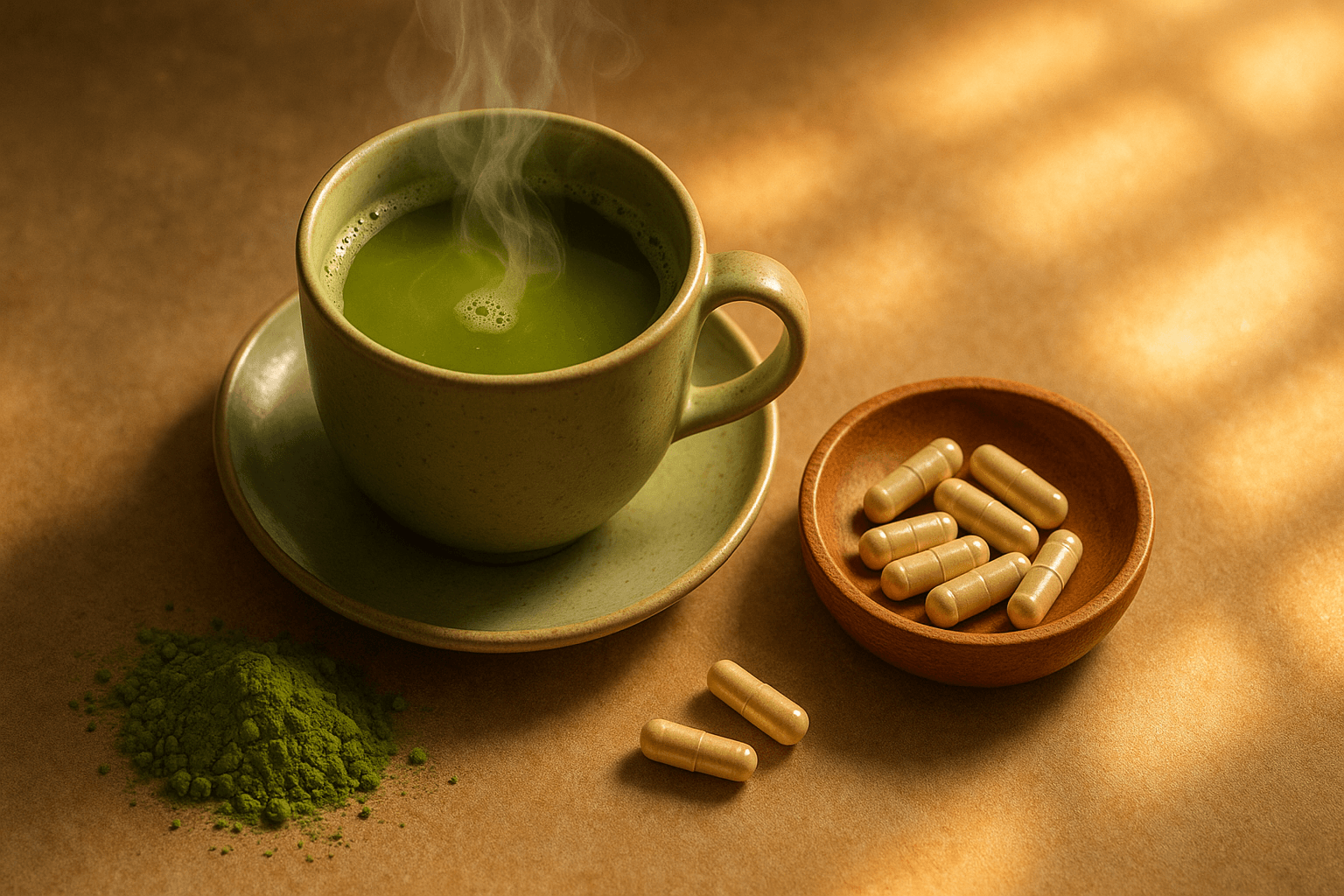
Food sources: Green, black, white, and oolong teas provide L-theanine, with green tea often highest (≈6–25 mg per cup depending on leaf grade, brewing time, and temperature). Matcha powder can deliver higher amounts due to whole-leaf consumption.
Supplement forms: L-theanine is typically sold in capsule or tablet form, standardized to 100–200 mg per serving. Suntheanine®, a branded form, is widely used in clinical research and offers high purity.
Evidence-based dosage ranges:
- 100–200 mg taken once or twice daily for relaxation and stress management.
- 200–400 mg per day for sleep quality support, often divided between afternoon and evening doses.
- When paired with caffeine (≈40–60 mg, equivalent to a small cup of tea), L-theanine at 100–200 mg may improve attention and reduce “jitters.”
Timing: For relaxation or focus, take during the day; for sleep, use 30–60 minutes before bedtime. Can be taken with or without food.
Safety and caveats:
• Generally recognized as safe (GRAS) with a strong safety profile in human studies.
• No serious adverse effects reported at typical doses (100–400 mg/day).
• Some individuals may experience mild headache or dizziness.
• Limited data in pregnancy and breastfeeding—avoid unless supervised by a healthcare professional.
• Does not cause dependence or withdrawal.
• Not a replacement for medical treatment of anxiety, insomnia, or ADHD, but may serve as a gentle adjunct in daily life.
L-theanine is a naturally occurring amino acid that may help ease stress, support sustained focus, and modestly improve sleep quality. Its best-documented role is fostering a calm but alert mental state, making it especially useful for students, professionals, and anyone seeking non-sedating relaxation.