1. Understanding L-Glutamine – What It Is and How It Works
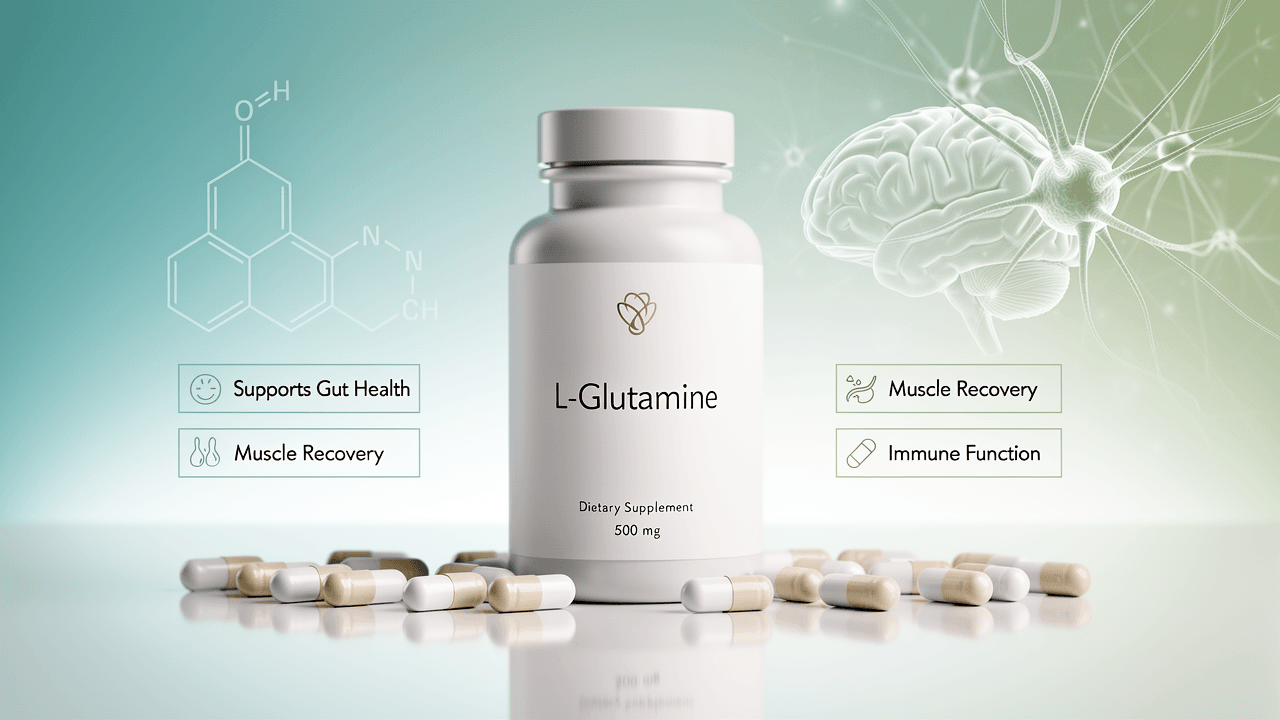
L-glutamine is the most abundant free amino acid in the human body. It is considered “conditionally essential”: under normal conditions, your body can synthesize enough, but during stress (illness, injury, intense training, surgery), demand can exceed supply.
What is L-Glutamine?
- Type: Amino acid (building block of proteins)
- Status: Conditionally essential
- Main storage site: Skeletal muscle (stores ~60% of the body’s free glutamine)
- Key users: Intestinal cells, immune cells, kidneys, and to a lesser extent, the brain
How L-Glutamine Works in the Body
L-glutamine plays several critical physiological roles:
Fuel for rapidly dividing cells
- Enterocytes (intestinal lining cells) and many immune cells (lymphocytes, macrophages) use glutamine as a primary energy source.
- Supports gut barrier integrity and immune function.
Nitrogen and carbon donor
- Transports nitrogen between tissues, aiding protein synthesis and tissue repair.
- Serves as a carbon source for gluconeogenesis (glucose production) in the kidney and liver.
Gut barrier and tight junctions
- Helps maintain intestinal tight junction proteins, which reduce intestinal permeability ("leaky gut").
- Supports mucosal healing in conditions involving gut injury or inflammation.
Acid–base balance
- In the kidney, glutamine is metabolized to produce ammonia, which helps buffer acids and maintain pH balance.
Brain and neurotransmitter precursor
- In the brain, glutamine is a precursor to glutamate (excitatory neurotransmitter) and GABA (inhibitory neurotransmitter) via the glutamine–glutamate–GABA cycle.
- Astrocytes convert glutamate to glutamine, which neurons then reconvert, helping regulate neurotransmitter pools and protect against excitotoxicity.
Immune modulation
- Supports proliferation and function of lymphocytes and macrophages.
- Low glutamine levels are associated with impaired immune response, especially in critical illness and overtraining.
Because of these roles, L-glutamine is used in:
- Clinical nutrition (e.g., critical illness, surgery, burns)
- Sports nutrition and recovery
- Gut health protocols
- Occasionally as a supportive nootropic (indirectly via gut–brain and neurotransmitter pathways), though evidence for direct cognitive enhancement in healthy people is limited.
2. Key Benefits of L-Glutamine
2.1 Gut Health and Intestinal Barrier Support
L-glutamine is one of the most researched nutrients for intestinal integrity:
- Provides energy to enterocytes (intestinal cells)
- Helps maintain tight junction proteins, reducing permeability
- May support recovery from intestinal injury and inflammation
This has been explored in:
- Critically ill patients
- People with inflammatory bowel disease (IBD) and irritable bowel syndrome (IBS)
- Patients undergoing chemotherapy, radiotherapy, or major surgery
2.2 Immune Function and Stress Recovery
Glutamine is a major fuel for immune cells:
- During trauma, infection, burns, or surgery, plasma glutamine levels often fall.
- Supplementation in clinical settings has been associated with improved immune markers and sometimes reduced infection rates.
Athletes undergoing intense training may also experience transient drops in glutamine, potentially affecting immune resilience.
2.3 Muscle Recovery and Exercise Performance
L-glutamine is popular in sports nutrition for:
- Supporting muscle protein balance during catabolic stress
- Potentially reducing muscle soreness and markers of muscle damage
- Supporting glycogen resynthesis post-exercise
However, evidence for performance enhancement (strength, speed, VO₂max) in healthy athletes is mixed to weak.
2.4 Potential Cognitive and Mood Effects (Indirect)
Glutamine’s nootropic reputation stems from:
- Its role as a precursor to glutamate and GABA
- Its involvement in the gut–brain axis (through gut barrier and immune modulation)
Evidence for direct cognitive enhancement in healthy adults is limited. Most data are from:
- Clinical populations (e.g., hepatic encephalopathy, severe illness)
- Indirect outcomes like fatigue, mood, or stress response
L-glutamine may be best viewed as a supportive nutrient for brain health (via gut and metabolic health) rather than a classic fast-acting nootropic.
3. Research Findings
3.1 Gut Health and Intestinal Permeability
Critically ill and surgical patients
- Study: Randomized controlled trial, 84 ICU patients post–major abdominal surgery
Intervention: 0.35 g/kg/day IV glutamine vs. isonitrogenous control for 5 days
Findings: Glutamine group had improved intestinal permeability markers (reduced lactulose/mannitol ratio) and fewer infectious complications.
Implication: Parenteral glutamine can help maintain gut barrier function under severe stress.
Chemotherapy-induced mucositis
- Study: RCT, 129 patients receiving chemotherapy for various cancers
Intervention: Oral glutamine 30 g/day vs. placebo during chemotherapy cycles
Duration: Several weeks according to chemotherapy protocol
Findings: Reduced severity and duration of oral mucositis; some studies show better nutritional status.
Limitation: Most data in clinical, not healthy, populations.
IBS and functional gut symptoms
- Study: Double-blind RCT, 54 patients with diarrhea-predominant IBS and increased intestinal permeability
Intervention: 5 g L-glutamine three times daily (15 g/day) vs. placebo
Duration: 8 weeks
Findings: Glutamine significantly improved IBS symptom severity scores and normalized intestinal permeability (measured by urinary lactulose/mannitol).
Note: Results promising but need replication and broader population studies.
3.2 Immune Function and Critical Illness
Meta-analyses in critical care
- Several meta-analyses of parenteral glutamine in critically ill patients (e.g., 10–20 RCTs, total n > 1,000) have found:
- Reduced infection rates in some analyses
- Reduced length of hospital stay in certain subgroups
- Mixed results on mortality; some large trials (e.g., REDOXS) raised concerns at very high doses in multi-organ failure.
Overall, moderate-dose glutamine in selected ICU populations appears beneficial for immune and gut function, but high-dose use in severe multi-organ failure is controversial.
3.3 Exercise Recovery and Muscle Health
Muscle soreness and damage markers
Study: RCT, 16 resistance-trained men
Intervention: 0.3 g/kg L-glutamine or placebo after eccentric exercise
Duration: Single bout with follow-up over several days
Findings: Some reduction in muscle soreness and creatine kinase (CK) levels in the glutamine group, though effects were modest.Study: RCT, 31 athletes
Intervention: 0.1 g/kg/day glutamine for 6 weeks vs. placebo
Findings: No significant improvement in performance metrics, but some trends toward reduced infection symptoms and muscle soreness.
Glycogen resynthesis
- Study: Crossover trial, 6 endurance-trained subjects
Intervention: Carbohydrate alone vs. carbohydrate + glutamine (0.3 g/kg) post-exercise
Findings: Glutamine co-ingestion enhanced muscle glycogen storage compared to carbohydrate alone in the short term.
Overall, glutamine may help recovery and immune resilience in heavily training athletes, but it is not a strong ergogenic aid for performance.
3.4 Cognitive Function and Mood
Robust, large RCTs of glutamine as a primary nootropic in healthy adults are lacking. Existing data include:
Clinical fatigue and stress: Some small studies in medical patients suggest reduced fatigue and better well-being with glutamine-enriched nutrition, but glutamine is usually part of a multi-nutrient formula, making it hard to isolate its effect.
Hepatic encephalopathy: Here, the concern is often reducing ammonia and glutamine accumulation, not supplementing it; this underscores why glutamine is contraindicated in significant liver failure.
At present, evidence does not support L-glutamine as a primary cognitive enhancer in healthy individuals. Any benefits are likely indirect, via gut health, immune modulation, and metabolic support.
4. Best Sources & Dosage – Forms, Dosing, Timing, Safety
4.1 Dietary Sources of Glutamine
Glutamine is abundant in protein-rich foods:
- Animal sources: meat, poultry, fish, eggs, dairy (especially whey and casein)
- Plant sources: legumes, tofu, cabbage, spinach, beans, nuts
Most people consuming adequate protein (≈1.0–1.6 g/kg/day) likely obtain several grams of glutamine daily from food.
4.2 Supplemental Forms
Common supplemental forms:
L-Glutamine (free form):
- Most common; usually a white, slightly sweet powder.
- High solubility; can be mixed with water or shakes.
Glutamine peptides (e.g., from hydrolyzed wheat protein):
- Sometimes better stability and absorption; often used in clinical nutrition formulas.
- More expensive; typical sports supplements often use free L-glutamine instead.
Glutamine-enriched medical formulas:
- Used in hospitals (enteral/parenteral nutrition) under medical supervision.
4.3 Evidence-Based Dosage Guidelines
Below are typical oral dosing ranges for adults. Always adjust based on individual health status and professional guidance.
General Health / Gut Support
- Typical dose: 5–10 g/day, divided into 1–2 doses
- Used for: Mild gut support, general wellness, recovery from non-severe stress
- Timing: Often taken on an empty stomach (e.g., morning and/or before bed), though can also be taken with meals if GI upset occurs.
IBS / Increased Intestinal Permeability (as in research)
- Research dose: 15 g/day (5 g, three times daily) in the IBS study cited above
- Duration: 8 weeks in the RCT; longer-term use should be supervised by a clinician
- Note: This is a therapeutic dose and not intended as a casual long-term preventive dose without medical oversight.
Sports Recovery / Intense Training
- Common range: 5–20 g/day
- Lower end (5–10 g/day) for general support
- Higher end (up to 20 g/day) sometimes used in short-term intense training blocks
- Typical protocol:
- 5 g post-workout + 5 g before bed, or 5 g 2–3 times/day
- Evidence: Supports immune and gut function; performance effects are modest.
Clinical / Severe Stress (under medical supervision)
- Doses in clinical trials often range 0.2–0.5 g/kg/day, sometimes higher in parenteral nutrition.
- These regimens are not appropriate for self-experimentation and should only be used under specialist supervision.
4.4 Onset of Effects and Duration of Use
- Gut and IBS symptoms: Improvements typically reported after several weeks (4–8 weeks) of consistent use.
- Recovery/immune support: Effects may be more acute during periods of high stress or training, but often subtle.
- Cognitive/energy: No strong evidence for rapid “nootropic” effects; any benefits are likely gradual and indirect.
Long-term daily use of moderate doses (5–10 g/day) appears generally safe in healthy individuals, but data beyond 6–12 months at higher doses are limited.
4.5 Safety, Side Effects, and Interactions
General Safety Profile
For healthy adults, oral L-glutamine is generally well-tolerated at doses up to 20–30 g/day in studies lasting several weeks to a few months.
Commonly reported side effects (usually mild):
- Gastrointestinal discomfort (bloating, gas, abdominal pain)
- Nausea
- Rarely, headache or fatigue
These are more likely at higher single doses (≥10 g at once). Splitting the dose and taking with food can help.
Serious Risks and Contraindications
Severe liver disease / hepatic encephalopathy
- In advanced liver failure, ammonia detoxification is impaired. Glutamine metabolism can increase ammonia burden.
- Avoid supplementation unless under direct specialist supervision.
Severe renal impairment
- Kidneys play a role in glutamine metabolism and acid–base balance.
- In significant kidney disease, amino acid handling is altered; high-dose glutamine may not be appropriate.
Critical illness with multi-organ failure
- Some large ICU trials using very high-dose IV/enteral glutamine in patients with multi-organ failure reported increased mortality.
- These findings do not necessarily apply to moderate oral doses in otherwise stable individuals, but they highlight that high-dose glutamine is not benign in all settings.
History of seizures or significant neuro-excitability disorders
- Theoretically, because glutamine is a precursor to glutamate, there is caution in conditions with excitotoxicity or unstable seizure thresholds.
- Evidence is limited, but medical consultation is advised before use.
Drug and Condition Interactions
Antiepileptic drugs:
- Theoretical interaction via glutamate pathways; no strong clinical data, but use cautiously and monitor.
Chemotherapy / cancer:
- Paradox: glutamine can support gut and immune health during chemotherapy but is also a fuel for rapidly dividing cells.
- Many oncologists do use glutamine for mucositis at specific doses, but always coordinate with the oncology team.
Lactulose, rifaximin, or other hepatic encephalopathy treatments:
- In patients on these drugs for liver-related brain issues, avoid self-supplementation with glutamine.
Other amino acid supplements / high-protein diets:
- Combined high intake of multiple amino acids may strain kidneys in individuals with underlying kidney disease.
Special Populations
Pregnancy and breastfeeding:
- Glutamine is naturally present in the diet and body, but high-dose supplementation (e.g., >10 g/day) has not been well studied.
- Use only under medical supervision.
Children and adolescents:
- Glutamine is used in pediatric clinical settings under supervision.
- Routine high-dose supplementation in healthy children is not recommended without professional guidance.
5. Who Should and Shouldn’t Use L-Glutamine
5.1 Who May Benefit from L-Glutamine
Individuals with gut issues (under guidance)
- IBS with diarrhea and increased intestinal permeability
- Mild gut barrier concerns, frequent GI upset, or after GI infections
- Those recovering from non-severe GI stress (e.g., short-term NSAID use, travel-related diarrhea)
Athletes and highly active individuals
- Endurance athletes with heavy training loads
- People experiencing frequent minor infections or prolonged soreness during intense training blocks
People under high physiological stress
- Post-surgery recovery (when recommended by a clinician)
- Those with increased metabolic demands but preserved organ function
Individuals with suboptimal protein intake
- People struggling to meet protein needs who want targeted support for gut or immune function (though fixing overall protein intake is usually the priority).
5.2 Who Should Avoid or Use L-Glutamine Only Under Medical Supervision
People with advanced liver disease or hepatic encephalopathy
- Risk of worsening ammonia-related brain symptoms.
Individuals with moderate to severe kidney disease
- Impaired amino acid handling; potential for metabolic complications.
Critically ill patients, especially with multi-organ failure
- High-dose glutamine has shown possible harm in this group; only use within evidence-based hospital protocols.
People with seizure disorders or significant neurologic instability
- Theoretical risk due to glutamate pathways; require neurologist input.
Pregnant or breastfeeding women
- Avoid high-dose supplementation unless specifically advised by a healthcare provider.
Cancer patients
- Glutamine may be beneficial for mucositis but should be coordinated with the oncology team due to theoretical tumor metabolism concerns.
6. Practical Use Summary
- Role: Conditionally essential amino acid; key for gut, immune, and metabolic health; indirect brain support rather than a classic nootropic.
- Benefits (best-supported):
- Supports intestinal barrier integrity and may improve IBS-D symptoms at 15 g/day
- Supports immune function and recovery in stress states
- May aid exercise recovery and glycogen resynthesis; performance effects modest
- Dosing:
- General support: 5–10 g/day
- IBS / gut permeability (under guidance): 15 g/day divided
- Sports recovery: 5–20 g/day divided, short to medium term
- Safety: Generally safe for healthy adults at moderate doses; avoid or use with strict medical supervision in liver/renal disease, critical illness, seizure disorders, pregnancy, and cancer.
L-glutamine can be a valuable adjunct for gut and immune support and a supportive component of a brain-health strategy, but it should not be viewed as a stand-alone cognitive enhancer. As with all supplements, it is most effective when integrated into a broader plan that includes adequate protein, balanced nutrition, sleep, and stress management.