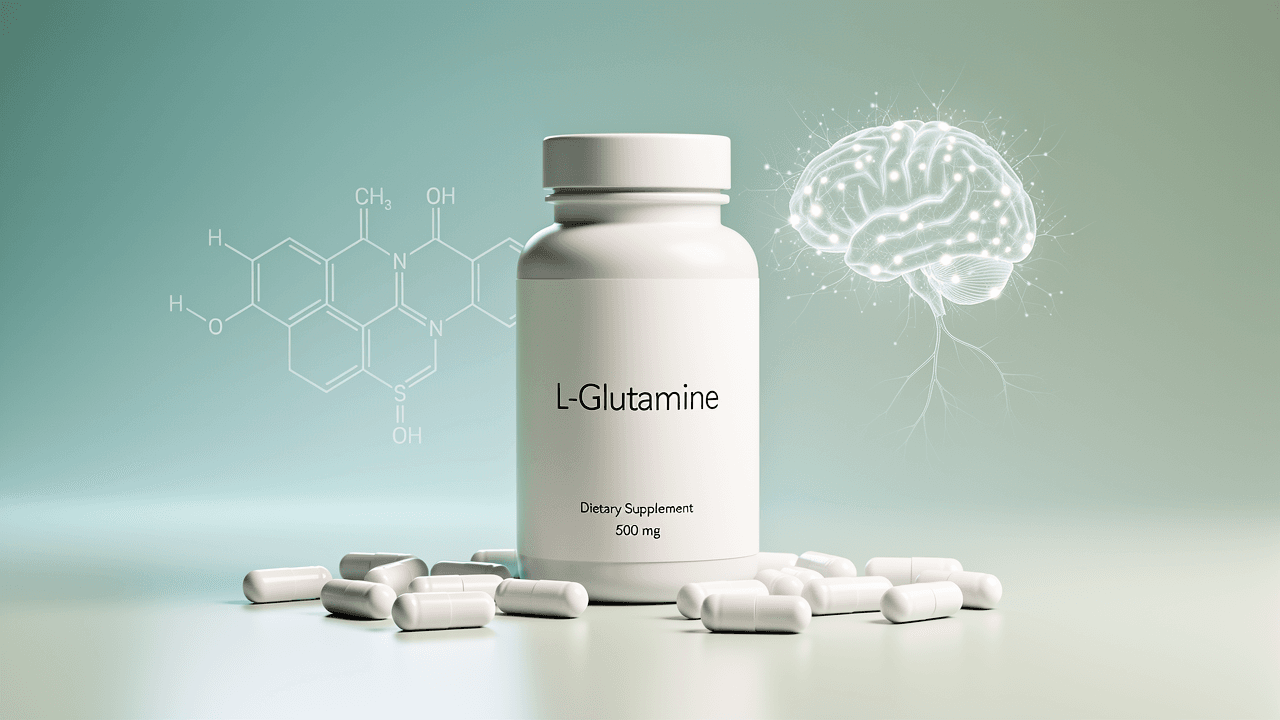
1. Understanding L-Glutamine – What It Is and How It Works
L-glutamine is the most abundant free amino acid in human blood and muscle. It is considered “conditionally essential”: under normal conditions the body can synthesize enough, but during stress (infection, trauma, intense exercise, major surgery) demand can exceed production.
What L-Glutamine Does in the Body
L-glutamine plays several key roles:
- Nitrogen and carbon carrier: Transports nitrogen between tissues, supporting protein synthesis and healing.
- Fuel for rapidly dividing cells: Especially intestinal cells (enterocytes), immune cells (lymphocytes, macrophages), and some kidney cells.
- Acid–base regulation: In the kidney, glutamine metabolism helps maintain blood pH.
- Precursor to neurotransmitters: In the brain, glutamine is a key precursor to glutamate (excitatory neurotransmitter) and GABA (inhibitory neurotransmitter) via the glutamine–glutamate–GABA cycle.
- Glutathione synthesis: Contributes to production of glutathione, a major intracellular antioxidant.
How L-Glutamine Is Metabolized
- Absorption: Oral L-glutamine is absorbed in the small intestine via active transport.
- First-pass utilization: A large portion is used directly by intestinal cells and immune cells in the gut-associated lymphoid tissue.
- Distribution: Remaining glutamine circulates in blood, taken up by muscle, liver, brain, and immune cells.
- Brain: Crosses the blood–brain barrier via specific transporters; in the brain it is converted to glutamate and GABA within neurons and glial cells.
Because of these roles, L-glutamine is often used as a supplement for:
- Gut health and intestinal barrier support
- Recovery from intense exercise or illness
- Immune support during stress
- Potential cognitive and mood effects (via neurotransmitter precursors), though evidence for nootropic use is limited and mixed.
2. Key Benefits of L-Glutamine
2.1 Gut Health & Intestinal Barrier Support
- Enterocytes (intestinal cells) rely heavily on glutamine as a primary fuel source.
- Glutamine supports tight junction integrity, which helps maintain the gut barrier and may reduce intestinal permeability ("leaky gut") in certain conditions.
- Supplemental glutamine has been studied in inflammatory bowel disease (IBD), chemotherapy-induced mucositis, and critical illness.
2.2 Immune Function Under Stress
- Immune cells (lymphocytes, macrophages, neutrophils) use glutamine as a key energy and nitrogen source.
- During trauma, sepsis, burns, or major surgery, plasma glutamine levels can fall, correlating with worse outcomes.
- Parenteral and enteral glutamine have been used in hospital settings to support immune function and recovery.
2.3 Muscle Recovery and Exercise
- Glutamine is abundant in muscle tissue and may:
- Reduce markers of muscle damage
- Support glycogen resynthesis
- Help maintain immune function after intense training
- Evidence for increased muscle mass or strength in healthy athletes is weak; benefits seem more related to recovery and immune support.
2.4 Potential Cognitive and Mood Effects (Nootropic Angle)
- As a precursor to glutamate and GABA, glutamine may influence:
- Excitatory–inhibitory balance in the brain
- Stress response and mood
- However, human data for cognitive enhancement is sparse. Most evidence relates to:
- Cognitive protection in medical settings (e.g., chemotherapy)
- Indirect effects via improved gut health or reduced fatigue
- Over-supplementation may, in theory, disturb glutamate balance in susceptible individuals (e.g., certain neurological conditions).
3. Research Findings
3.1 Gut Health and Intestinal Permeability
IBD and intestinal barrier support
Randomized controlled trial – 14 patients with Crohn’s disease
- Design: Double-blind, crossover; 0.5 g/kg/day L-glutamine vs. control for 4 weeks.
- Findings: Glutamine significantly reduced intestinal permeability (measured by lactulose/mannitol test) compared with control, but did not significantly change clinical disease activity scores.
- Interpretation: Supports barrier function, but not a stand-alone treatment for symptoms.
Chemotherapy-induced mucositis
- Several small trials (sample sizes ~20–60) using 10–30 g/day oral glutamine showed reductions in severity and duration of oral mucositis in patients undergoing chemotherapy or radiation.
- Results are mixed across studies; some show clear benefit, others show modest or no effect.
3.2 Critical Illness and Surgical Recovery
ICU patients – meta-analyses of parenteral/enteral glutamine
- Earlier meta-analyses (pre-2013) suggested reduced infections and shorter hospital stays with glutamine supplementation in critically ill patients.
- A large RCT (REDOXS trial, ~1,223 patients) using high-dose glutamine in severe critical illness showed no mortality benefit and potential harm at high doses, especially in patients with multi-organ failure.
- Current view:
- Moderate doses may be helpful in selected, non–multi-organ failure patients.
- High-dose glutamine in severe critical illness is not recommended.
Post-surgical recovery
- Trials in abdominal surgery patients (sample sizes ~40–150) using 0.3–0.5 g/kg/day parenteral or enteral glutamine found:
- Reduced infectious complications
- Shorter hospital stay
- Evidence is stronger in malnourished or high-risk surgical patients.
- Trials in abdominal surgery patients (sample sizes ~40–150) using 0.3–0.5 g/kg/day parenteral or enteral glutamine found:
3.3 Exercise, Recovery, and Immune Function
Endurance exercise and immune markers
- Study: 151 runners and rowers received either 5 g glutamine or placebo immediately after exercise and again 2 hours later.
- Findings: Incidence of infections (self-reported) in the 7 days post-exercise was 19% in the glutamine group vs. 51% in placebo.
- Limitations: Self-reported infections; not all studies replicate this magnitude of effect.
Muscle soreness and recovery
- Small RCTs (n = 8–30) using 0.1–0.3 g/kg/day for 3–7 days around eccentric exercise:
- Some show reduced muscle soreness and faster strength recovery.
- Others show no significant difference vs. placebo.
- Overall: Possible modest benefit for soreness and recovery; not a robust muscle-building agent.
- Small RCTs (n = 8–30) using 0.1–0.3 g/kg/day for 3–7 days around eccentric exercise:
3.4 Cognitive Function and Neurological Contexts
Direct human evidence for glutamine as a nootropic is limited:
Chemotherapy-related cognitive impairment
- Some trials using oral glutamine (10–30 g/day) to reduce chemotherapy toxicity reported subjective improvements in concentration and mental clarity, but cognitive outcomes were not primary endpoints and were poorly quantified.
Hepatic encephalopathy caution
- In severe liver disease, glutamine can be converted to ammonia, potentially worsening encephalopathy. This is a safety concern rather than a cognitive benefit.
Animal and mechanistic studies show that glutamine availability can modulate glutamate and GABA levels and affect learning and memory, but there are no high-quality human trials showing clear cognitive enhancement in healthy individuals.
3.5 Metabolic and Glucose Control
- Some small trials in type 2 diabetes (n ≈ 20–50) using 30 g/day glutamine for 6 weeks showed:
- Improved postprandial insulin secretion
- Modest reductions in fasting blood glucose
- Results are preliminary and not consistent; glutamine is not a primary treatment for diabetes.
4. Best Sources & Dosage
4.1 Dietary Sources of Glutamine
Glutamine is present in most protein-containing foods:
- Animal sources: Beef, chicken, fish, eggs, dairy (milk, yogurt, cheese)
- Plant sources: Beans, lentils, tofu, nuts, cabbage, spinach
Typical mixed diets provide 3–6 g/day of glutamine, varying with total protein intake.
4.2 Supplemental Forms
- L-Glutamine powder
- Most common; mixes in water or juice
- Often unflavored; slightly sweet taste
- Capsules or tablets
- More convenient for smaller doses (e.g., 500–1,000 mg per capsule)
- Peptide-bound glutamine (e.g., glutamine peptides)
- Sometimes used in sports supplements; may have better stability in solution but not clearly superior in outcomes.
4.3 Evidence-Informed Dosage Ranges
Below are commonly used supplemental doses in research and practice. Always individualize based on health status and medical advice.
General Gut Support / Intestinal Permeability
- Typical range: 5–15 g/day, divided into 2–3 doses.
- Example protocol:
- 5 g upon waking
- 5 g in the evening
- Duration in studies: 4–8 weeks, sometimes longer under medical supervision.
Exercise Recovery & Immune Support
- Common athletic doses: 5–10 g/day total.
- Timing:
- 5 g immediately post-workout
- Optional additional 5 g before bed or later in the day
- For very intense training blocks or endurance events, some protocols use 0.1–0.3 g/kg/day (e.g., 7–20 g/day for a 70 kg person), typically short term (days to a few weeks).
Clinical / Hospital Settings
- Doses in critical illness and surgery studies: 0.3–0.5 g/kg/day (often via enteral or parenteral nutrition).
- These higher doses should only be used under medical supervision.
Potential Cognitive / Nootropic Use
There is no standardized evidence-based nootropic dose. If used cautiously for indirect benefits (e.g., gut-brain axis, fatigue):
- Conservative range: 3–10 g/day, often split into 2 doses.
- Example:
- 3–5 g in the morning
- 3–5 g in the late afternoon or evening
Because of the lack of strong cognitive data, glutamine should not be considered a primary nootropic. Focus should be on gut and recovery benefits.
4.4 Timing and Administration Tips
- Empty vs. fed state: Often taken on an empty stomach for gut-targeted use, but can also be taken with food if GI discomfort occurs.
- With other supplements: Commonly combined with:
- Protein powders (whey, casein)
- Electrolytes for endurance athletes
- Gut-supportive nutrients (zinc carnosine, probiotics, etc.)
- Hydration: Take with adequate water, especially at higher doses.
5. Safety, Side Effects, and Interactions
5.1 General Safety Profile
For healthy adults, oral L-glutamine at doses up to 30 g/day for several weeks has generally been well tolerated in clinical studies.
Commonly reported side effects (usually mild):
- Gastrointestinal discomfort (bloating, gas)
- Nausea
- Abdominal pain or cramping
- Headache (occasionally reported)
These effects are often dose-related and may improve by:
- Reducing dose
- Splitting into smaller doses throughout the day
- Taking with food
5.2 Serious Risks and Special Populations
Certain conditions require caution or medical supervision:
Severe liver disease / hepatic encephalopathy
- Glutamine can be metabolized to ammonia; in advanced liver disease, this can worsen encephalopathy.
- Generally avoided or used only under specialist guidance in this population.
Severe renal (kidney) impairment
- Impaired excretion of nitrogenous waste may increase risk of metabolic complications.
- Use only under medical supervision, if at all.
Critical illness and multi-organ failure
- High-dose glutamine (as in some ICU trials) has been associated with increased mortality in very sick patients.
- Routine high-dose use in severe critical illness is not recommended.
History of seizures or certain neurological disorders
- Theoretical concern: changes in glutamate/GABA balance could affect seizure threshold.
- Clinical data are limited; caution is advised, especially at higher doses.
Pregnancy and breastfeeding
- Glutamine is a normal dietary component, but high-dose supplementation lacks robust safety data.
- Best to limit to dietary intake and seek medical advice before supplemental use.
Children and adolescents
- Used clinically in some pediatric settings, but dosing must be individualized.
- Routine high-dose supplementation for healthy children is not well studied; medical supervision recommended.
5.3 Drug and Supplement Interactions
Evidence for direct drug–glutamine interactions is limited, but consider the following:
Anticonvulsants (e.g., valproate, carbamazepine, phenytoin)
- Theoretical: changes in glutamate/GABA balance could influence seizure control.
- No strong clinical data, but caution with high doses; discuss with a neurologist.
Lactulose or rifaximin (used in hepatic encephalopathy)
- Glutamine may counteract efforts to lower ammonia in severe liver disease.
- Avoid high-dose glutamine in this context unless directed by a specialist.
Chemotherapy and radiation
- Some oncologists use glutamine to reduce mucositis and neuropathy; others are cautious due to theoretical concerns about supporting rapidly dividing cells.
- Always coordinate with the oncology team before using glutamine during cancer treatment.
Other amino acid supplements and high-protein diets
- High total nitrogen load could stress kidneys in individuals with underlying renal impairment.
- Monitor kidney function if combining high-dose glutamine with very high protein intake in at-risk individuals.
5.4 Long-Term Use
- Long-term data (months to years) at moderate doses (≤10–15 g/day) in healthy adults are limited but have not shown major safety signals.
- Periodic breaks and medical monitoring are prudent if using chronically, especially at higher doses.
6. Who Should and Shouldn’t Use L-Glutamine
6.1 Who May Benefit from L-Glutamine Supplementation
1. Individuals with increased physiological stress
- Recovering from major surgery, trauma, burns (under medical supervision)
- Hospitalized patients with moderate–severe illness where clinicians deem glutamine appropriate
2. Athletes and physically active individuals
- Endurance athletes or those in heavy training blocks
- People prone to frequent upper respiratory infections after intense exercise
- Those seeking modest support for recovery and reduced soreness
3. People with gut-related concerns (with professional guidance)
- Functional gut issues with suspected increased intestinal permeability
- IBD patients (Crohn’s disease, ulcerative colitis) as an adjunct to medical therapy, not a replacement
- Individuals with chemotherapy- or radiation-induced mucositis (under oncology supervision)
4. Individuals with low dietary protein intake
- Those with limited protein sources in the diet may use glutamine as part of broader protein and amino acid support.
6.2 Who Should Avoid or Use With Caution
Avoid or only use under specialist supervision if:
- You have advanced liver disease or history of hepatic encephalopathy
- You have severe kidney disease or are on dialysis
- You are critically ill with multi-organ failure
- You have a history of seizures or certain neurological disorders, especially if poorly controlled
- You are undergoing active cancer treatment, unless your oncology team specifically recommends glutamine
Use cautiously and consult a healthcare professional if:
- You are pregnant or breastfeeding
- You have type 2 diabetes or metabolic syndrome and are considering high doses
- You plan to combine glutamine with multiple other amino acid or protein supplements
6.3 Practical Checklist Before Starting L-Glutamine
Ask yourself and/or discuss with your clinician:
- What is my primary goal? (Gut support, recovery, immune support?)
- Do I have any liver, kidney, or neurological conditions?
- What medications am I on? (Especially anticonvulsants, liver-related meds, cancer therapies.)
- Is my protein intake already adequate? (1.2–1.6 g/kg/day for active individuals often provides substantial glutamine.)
- Can I start at a low dose (e.g., 3–5 g/day) and monitor tolerance?
7. Summary
- L-glutamine is a conditionally essential amino acid with central roles in gut integrity, immune function, nitrogen transport, and neurotransmitter synthesis.
- Evidence is strongest for:
- Supporting intestinal barrier function and reducing permeability in some contexts
- Aiding recovery and immune function under physiological stress (surgery, illness, heavy training)
- Reducing mucositis in some cancer treatment settings (with mixed results)
- As a nootropic, evidence is limited and indirect. Its main value lies in systemic support (gut, immune, recovery) that may secondarily benefit cognition and fatigue, rather than direct cognitive enhancement.
- Typical supplemental doses range from 5–15 g/day for gut and recovery purposes, with higher doses reserved for medical settings.
- L-glutamine is generally safe in healthy adults at moderate doses, but caution is required in liver disease, kidney impairment, critical illness, and certain neurological conditions.
For most healthy people, focusing first on adequate dietary protein, sleep, and overall lifestyle will provide substantial glutamine and broader benefits. Supplementation can be a useful targeted tool when there is clear rationale and appropriate medical oversight.