1. Understanding L-Glutamine – What It Is and How It Works
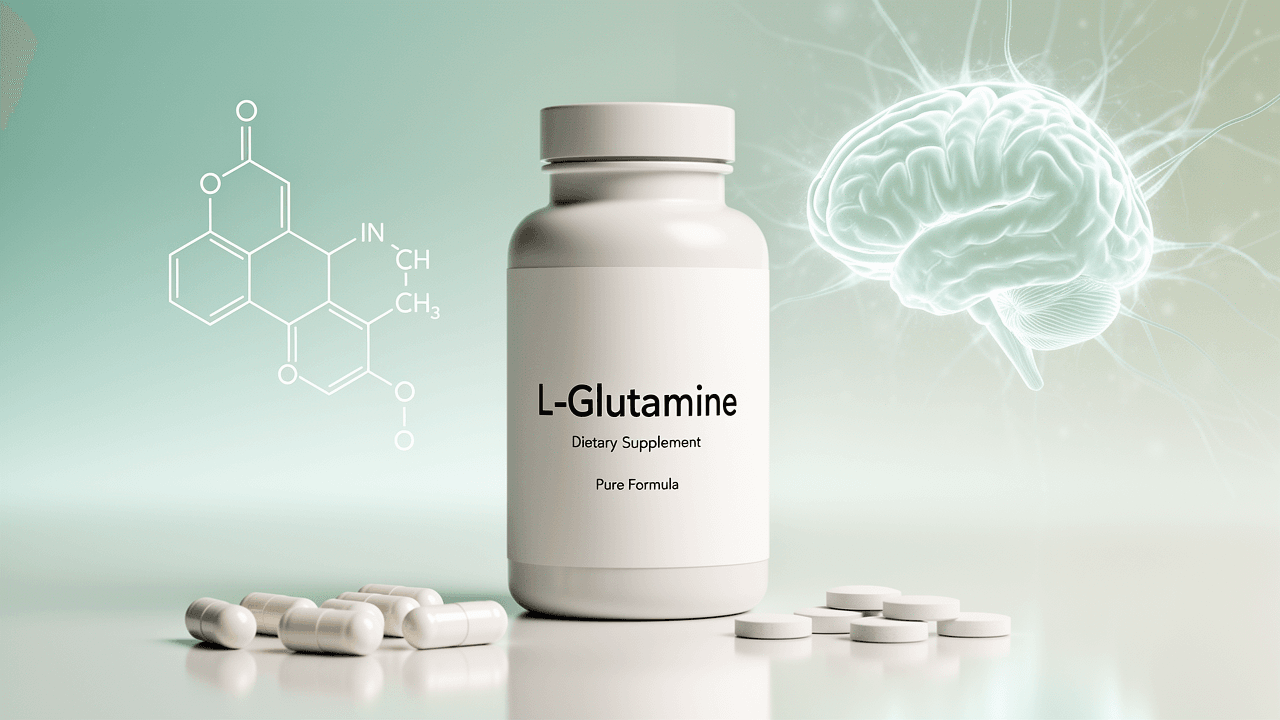
L‑glutamine is the most abundant free amino acid in human blood and tissues. It is considered a conditionally essential amino acid: under normal conditions the body can synthesize enough, but during stress, illness, trauma, intense exercise, or infection, demand can exceed production.
What is L‑glutamine?
- A key building block of proteins
- Primary fuel source for intestinal cells (enterocytes) and many immune cells
- Major carrier and donor of nitrogen and an important source of carbon for energy metabolism
- A precursor for glutamate and GABA in the brain, both critical neurotransmitters
How L‑glutamine works in the body
Gut and intestinal barrier
- Enterocytes use glutamine as their main fuel, even more than glucose.
- Supports tight junction proteins that maintain intestinal barrier integrity.
- Helps reduce intestinal permeability ("leaky gut") in stressed or injured states.
Immune function
- Lymphocytes, macrophages, and neutrophils consume large amounts of glutamine during activation.
- Glutamine is used for nucleotide synthesis, supporting rapid immune cell proliferation.
- Acts as a substrate in antioxidant defense, indirectly supporting glutathione production.
Nitrogen transport and acid–base balance
- Glutamine shuttles nitrogen between tissues; this is crucial for ammonia detoxification.
- In the kidneys, glutamine metabolism helps generate bicarbonate, contributing to acid–base balance.
Brain and neurotransmitters (nootropic relevance)
- In the brain, glutamine is part of the glutamine–glutamate–GABA cycle:
- Astrocytes convert glutamate to glutamine.
- Neurons convert glutamine back to glutamate (excitatory) or to GABA (inhibitory).
- This cycle is essential for synaptic transmission, plasticity, and overall neural excitability.
- However, peripheral supplementation does not directly translate into large, rapid increases in brain glutamate/GABA, because the brain tightly regulates amino acid transport across the blood–brain barrier.
- In the brain, glutamine is part of the glutamine–glutamate–GABA cycle:
Energy and muscle metabolism
- Skeletal muscle is the major reservoir and producer of glutamine.
- During intense exercise, infection, trauma, or burns, muscle glutamine stores can be depleted, which may impair immune function and gut integrity.
2. Key Benefits of L‑Glutamine
L‑glutamine’s benefits are most established in clinical and high-stress settings (critical illness, surgery, trauma) and in gut and immune support. Its role as a nootropic is more indirect and less well-established.
2.1 Gut health and intestinal barrier support
- Supports the structure and function of the intestinal lining.
- May reduce intestinal permeability, especially under stress (e.g., heavy exercise, illness, or injury).
- Commonly used in protocols for IBD, IBS, and leaky gut, though evidence quality varies.
2.2 Immune support under stress
- Helps maintain immune cell function during intense physical stress or critical illness.
- May reduce infection rates and complications in hospitalized or surgical patients (especially parenteral/enteral glutamine in clinical nutrition, not just oral OTC doses).
2.3 Exercise recovery and muscle preservation
- May reduce markers of muscle damage and infection risk after strenuous exercise.
- Evidence for direct improvements in strength or muscle gain is limited and mixed.
- Some data support reduced delayed-onset muscle soreness (DOMS) and better immune resilience in overreached athletes.
2.4 Potential cognitive and mood effects (nootropic relevance)
- Glutamine is a precursor for glutamate and GABA, so it is mechanistically relevant to brain function.
- Some small studies suggest possible benefits for mental fatigue and mood in specific contexts.
- Evidence in healthy people for memory, focus, or long-term cognitive enhancement is limited and not robust.
3. Research Findings
3.1 Gut health and intestinal barrier
Critically ill and surgical patients
- A meta-analysis of 14 randomized controlled trials (RCTs) in critically ill patients receiving parenteral nutrition (total n ≈ 1,300) found that glutamine-supplemented nutrition reduced infection rates and length of hospital stay, though effects on mortality were inconsistent (Bollhalder et al., 2013, Clin Nutr). Doses often ranged 0.3–0.5 g/kg/day via IV or enteral routes.
- In patients undergoing elective abdominal surgery, an RCT (n = 40) found that oral glutamine 0.3 g/kg/day for 5 days pre-op and 7 days post-op improved gut permeability markers and reduced postoperative infectious complications versus control (Ziegler et al., 2002, Ann Surg).
Exercise-induced gut permeability
- An RCT in endurance athletes (n = 31) used 0.9 g/kg/day glutamine for 7 days and found significantly reduced exercise-induced increases in intestinal permeability compared with placebo (Pugh et al., 2017, Eur J Appl Physiol).
- Another trial in recreational runners (n = 10, crossover design) showed 0.25 g/kg glutamine taken before running in the heat attenuated the rise in intestinal permeability markers (van Wijck et al., 2012, Int J Sport Nutr Exerc Metab).
IBS and IBD
- In IBS with diarrhea (IBS-D), a double-blind RCT (n = 54) used 5 g L‑glutamine three times daily (15 g/day) for 8 weeks. The glutamine group had significant improvements in IBS symptom scores and reduced intestinal permeability compared to placebo (Zhou et al., 2019, Nutr J).
- In inflammatory bowel disease, results are mixed: some small trials show improved mucosal healing and reduced permeability, while others show no significant clinical benefit. Heterogeneity in disease stage, formulation (oral vs enteral), and dose complicates conclusions.
Takeaway: Evidence is strongest for gut barrier support under stress and in some IBS-D patients; results in IBD are inconsistent.
3.2 Immune function and infection risk
Athletes and intense exercise
- A classic study in marathon and ultra-endurance runners (n = 151) found that 5 g glutamine immediately after exercise and 2 hours later reduced self-reported infection symptoms in the 7 days post-race: 19% in the glutamine group vs 51% in placebo (Castell et al., 1996, Eur J Appl Physiol).
- A later RCT in athletes (n = 24) using 0.3 g/kg/day glutamine for 6 weeks during heavy training did not show clear performance gains but reported fewer upper respiratory tract infection (URTI) symptoms compared to placebo (Krzywkowski et al., 2001, Eur J Appl Physiol).
Hospitalized and critically ill patients
- Multiple RCTs and meta-analyses have found that parenteral or enteral glutamine in critically ill patients can reduce infection rates and sometimes length of stay.
- However, some large trials (e.g., REDOXS study, Heyland et al., 2013, N Engl J Med, n = 1,223) using high-dose glutamine (0.35 g/kg/day IV + 30 g enteral) in multi-organ failure patients found no mortality benefit and possible harm, particularly in those with renal dysfunction.
Takeaway: Moderate doses in selected patients or stressed athletes may support immune function; very high doses in critically ill patients with organ failure can be risky.
3.3 Exercise recovery and muscle outcomes
- An RCT in resistance-trained men (n = 31) used 0.3 g/kg/day glutamine or placebo for 6 weeks while on a resistance training program. No significant differences were found in strength or lean body mass between groups (Antonio et al., 2002, J Strength Cond Res).
- Another crossover RCT (n = 9) examined 0.1 g/kg glutamine vs placebo after eccentric exercise. Glutamine reduced muscle soreness and improved isometric force recovery at 24–72 hours, though the sample size was small (Street et al., 2011, Amino Acids).
- Several small studies show reductions in creatine kinase (CK) and subjective soreness, but not consistent improvements in performance or hypertrophy.
Takeaway: L‑glutamine is not a primary muscle-building supplement. It may modestly help with recovery and soreness, especially in high-volume or endurance training, but evidence is mixed.
3.4 Cognitive and mood effects (nootropic evidence)
Human data for L‑glutamine as a nootropic are limited and often indirect.
- In patients with sickle cell disease (n = 62), oral L‑glutamine (0.3 g/kg/day) for 24 weeks improved some measures of fatigue and quality of life, including mental fatigue, though this was in the context of chronic illness rather than healthy cognition (Niihara et al., 2014, Blood).
- In alcohol dependence, some older, small studies suggested that glutamine might reduce alcohol cravings and improve mood, but methodologies were weak and not comparable to modern RCT standards.
- Animal studies show that glutamine can influence learning, memory, and anxiety-like behavior via modulation of glutamatergic and GABAergic signaling, but translation to humans is uncertain.
No direct, high-quality RCTs demonstrate robust improvements in memory, attention, or executive function in healthy adults from standard oral L‑glutamine doses.
Takeaway: Mechanistically relevant to brain function, but current human evidence does not justify strong nootropic claims for healthy people.
3.5 Metabolic and other effects
- In type 2 diabetes, some small trials (e.g., n = 30–40 participants; doses 15–30 g/day for 6–12 weeks) reported modest improvements in fasting glucose and insulin sensitivity, possibly via gut hormone (GLP‑1) modulation. However, sample sizes are small and findings are not yet definitive.
- In sickle cell disease, a phase 3 trial (n = 230) using L‑glutamine oral powder 0.3 g/kg twice daily showed a significant reduction in pain crises and hospitalizations vs placebo (Niihara et al., 2018, N Engl J Med). This led to an FDA-approved prescription L‑glutamine product for sickle cell disease (Endari). This is a disease-specific use at medical doses, not typical OTC supplementation.
4. Best Sources & Dosage – Forms, Use Cases, Safety
4.1 Dietary sources of glutamine
Most people obtain substantial glutamine from diet:
- High-protein foods: beef, chicken, pork, fish, eggs
- Dairy: milk, yogurt, cheese
- Plant sources: beans, lentils, tofu, cabbage, spinach, beets, wheat products
Typical mixed diets provide 5–10 g/day or more of glutamine from food.
4.2 Supplement forms
- L‑glutamine powder (most common; usually 5 g per scoop)
- Capsules/tablets (often 500–1,000 mg per capsule)
- Prescription oral powder (e.g., Endari for sickle cell disease; medical supervision required)
- Sometimes included in protein powders or "recovery" formulas.
L‑glutamine powder is generally well absorbed and has good oral bioavailability.
4.3 Evidence-informed dosage ranges
Below are typical oral supplement dosages studied in adults. Always consider lower starting doses and individual tolerance.
4.3.1 General gut support / intestinal permeability
- Common range: 5–15 g/day, divided into 2–3 doses.
- Example protocols from trials:
- IBS-D: 5 g three times daily (15 g/day) for 8 weeks.
- Post-surgical gut support: ~0.3 g/kg/day (about 20–25 g/day for a 70–80 kg adult) in clinical settings.
- Practical starting point for general gut support (non-hospitalized adults):
- 5 g once or twice daily (5–10 g/day), taken between meals.
4.3.2 Exercise recovery and immune support in athletes
- Acute post-exercise: 5–10 g immediately after intense exercise, sometimes repeated 1–2 hours later (e.g., 5 g x 2).
- Chronic heavy training: 0.1–0.3 g/kg/day (about 7–20 g/day for a 70 kg person), often split into 2–3 doses.
4.3.3 Potential cognitive/mood support
There is no standardized evidence-based dose specifically for nootropic effects. If used for general support:
- Conservative range: 5–10 g/day, divided into 1–2 doses, often taken away from protein-heavy meals to avoid competition for transport.
4.3.4 Clinical and disease-specific uses
These should be supervised by a healthcare professional:
- Sickle cell disease (Endari): 0.3 g/kg twice daily (total ~0.6 g/kg/day).
- Critical illness / parenteral nutrition: 0.3–0.5 g/kg/day, usually as part of specialized medical nutrition.
4.4 Timing and practical tips
- With or without food: Can be taken either way; some prefer between meals for GI comfort or to minimize competition with other amino acids.
- Powder use: Mix in water, juice, or a non-acidic beverage; it is generally neutral-tasting and dissolves easily.
- Titration: Start at 3–5 g/day and increase by 3–5 g every few days to target dose, monitoring for GI side effects.
4.5 Safety, side effects, and interactions
4.5.1 General safety profile
- In healthy adults, oral L‑glutamine is generally well tolerated at doses up to 20–30 g/day for short to moderate durations in clinical studies.
- The U.S. FDA recognizes L‑glutamine as Generally Recognized as Safe (GRAS) when used as a food ingredient at typical levels.
Common side effects (usually dose-related)
- Gastrointestinal:
- Bloating
- Gas
- Mild abdominal discomfort
- Nausea or loose stools at higher doses (>15–20 g/day)
- Usually resolved by lowering the dose or dividing into smaller doses.
4.5.2 Serious risks and special populations
Kidney disease or impaired renal function
- Glutamine metabolism generates ammonia, which must be detoxified and excreted.
- In moderate to severe kidney impairment, high-dose glutamine may worsen azotemia or hyperammonemia.
- People with chronic kidney disease (CKD) should avoid high doses and only use under medical supervision.
Liver disease (especially severe or with hepatic encephalopathy)
- The liver is central in ammonia detoxification.
- In advanced liver disease, excess nitrogen load can worsen hepatic encephalopathy.
- High-dose glutamine is generally not recommended without close medical oversight.
Critically ill patients with multi-organ failure
- The REDOXS trial showed potential harm from very high-dose glutamine in ICU patients with organ failure, particularly kidney dysfunction.
- This does not directly apply to healthy users at standard doses, but underscores that glutamine is not inherently benign at all doses and in all contexts.
Cancer
- Many rapidly dividing cancer cells use glutamine as a major fuel ("glutamine addiction").
- While some oncologists use glutamine to reduce mucositis from chemotherapy/radiation, there is theoretical concern that supplementation could support tumor growth in certain cancers.
- Evidence is mixed, and decisions should be individualized; cancer patients should only use glutamine under oncologist guidance.
Children and pregnancy/breastfeeding
- Glutamine is important for growth, but data on high-dose supplementation in children and pregnant or breastfeeding women are limited.
- Use should be conservative and medically supervised.
4.5.3 Drug and supplement interactions
Documented direct drug–glutamine interactions are limited, but several theoretical or context-dependent interactions are important:
- Anticonvulsants / seizure risk: Because glutamine can increase glutamate availability, there is a theoretical risk of altering neuronal excitability. People with epilepsy or on anticonvulsants should be cautious and consult their neurologist.
- Hepatotoxic or nephrotoxic drugs: In individuals taking medications that strain the liver or kidneys (e.g., high-dose NSAIDs, some chemotherapy agents), high-dose glutamine could add metabolic burden; medical supervision is advisable.
- Chemotherapy and radiation: Glutamine is sometimes used to reduce treatment-related mucositis but may interact with tumor metabolism. Coordination with an oncologist is essential.
- Other amino acid supplements: Large doses of multiple amino acids can compete for transporters in the gut and at the blood–brain barrier; separating dosing may help.
As always, people on multiple medications or with chronic conditions should consult a healthcare professional before starting high-dose supplementation.
4.6 Who should and shouldn’t use L‑glutamine
Potentially good candidates
- Athletes and highly active individuals under heavy training loads, especially endurance athletes, who experience frequent infections or GI distress.
- People with stress-related gut issues or IBS-D, under guidance from a clinician, particularly where intestinal permeability is suspected.
- Individuals recovering from surgery, burns, or trauma, if recommended as part of a medical nutrition plan.
- Patients with sickle cell disease, but only using prescription formulations under specialist care.
Those who should be cautious or avoid use
- Kidney disease (moderate to severe): Avoid high doses; use only with nephrologist approval.
- Significant liver disease or hepatic encephalopathy: Avoid high doses; consult hepatologist.
- Active cancer: Do not self-prescribe; use only if an oncologist recommends it for specific indications (e.g., mucositis).
- History of seizures or significant neurological disorders: Cautious use; discuss with neurologist.
- Pregnant or breastfeeding women and children: Avoid high-dose supplementation unless specifically recommended and monitored by a healthcare professional.
5. Summary
- L‑glutamine is a conditionally essential amino acid central to gut integrity, immune function, nitrogen transport, and brain neurotransmitter cycles.
- Evidence supports benefits for intestinal barrier function, especially under stress, and for immune support in athletes and certain clinical settings.
- It may modestly aid exercise recovery and reduce infection risk after extreme exertion, but it is not a proven muscle-building or performance-enhancing supplement.
- As a nootropic, its role is mechanistically plausible but not strongly supported by current human RCTs for healthy cognition.
- Typical oral doses for general use range from 5–15 g/day, with higher doses reserved for specific medical indications under supervision.
- L‑glutamine is generally safe for healthy adults at moderate doses, but high-dose use can pose risks in kidney or liver disease, critical illness, and possibly some cancers.
- Individuals with chronic conditions, on multiple medications, or in vulnerable groups should seek personalized medical advice before using L‑glutamine supplements.