1. Understanding Holy Basil (Tulsi)
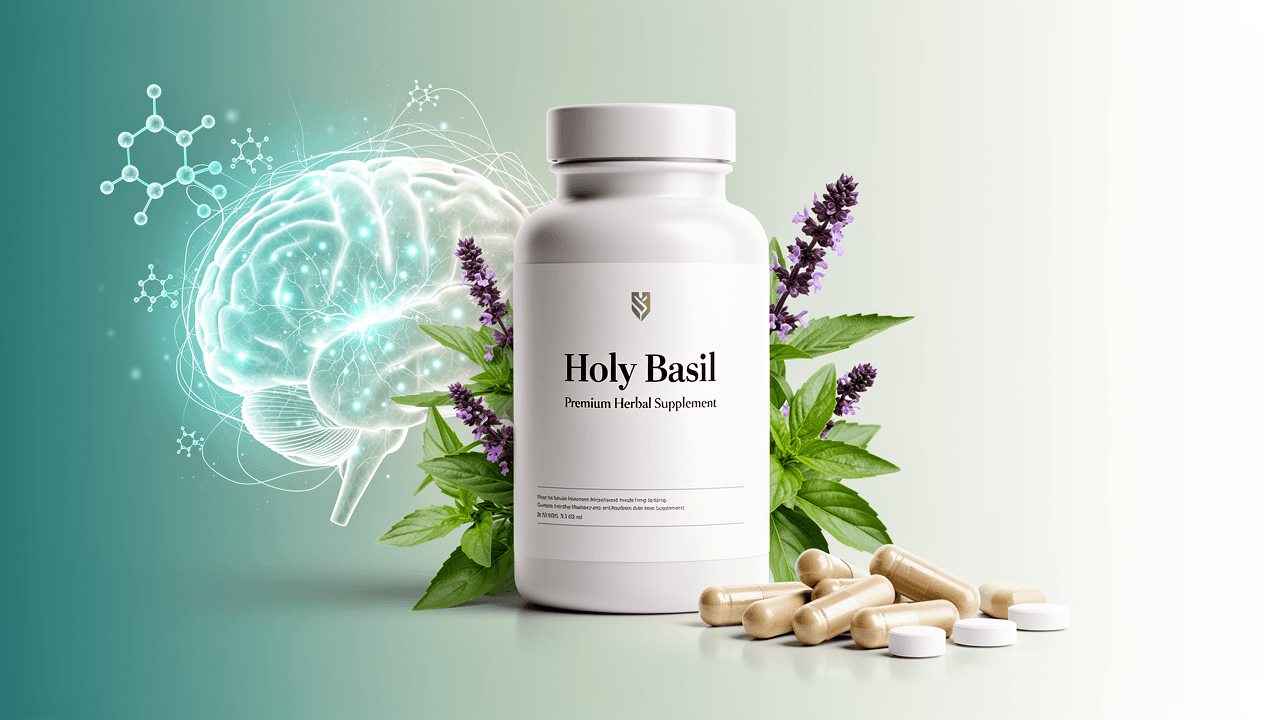
Holy basil (Ocimum sanctum or Ocimum tenuiflorum), commonly called Tulsi, is a medicinal herb widely used in Ayurvedic medicine as a rasayana (rejuvenative) and adaptogen—a substance thought to help the body adapt to physical and psychological stress.
What It Is
Holy basil is a member of the mint family (Lamiaceae). The leaves, stems, and sometimes seeds are used in:
- Herbal teas and decoctions
- Powdered capsules or tablets
- Liquid extracts and tinctures
- Standardized extracts (often quantified for eugenol, ursolic acid, or rosmarinic acid)
How It Works in the Body
Holy basil appears to act through several mechanisms that may be relevant to stress, mood, cognition, and metabolic health:
Adaptogenic & Anti-Stress Effects
Animal and preliminary human data suggest tulsi may modulate the hypothalamic–pituitary–adrenal (HPA) axis and sympathetic nervous system, helping regulate cortisol and stress responses.Neuroprotective & Nootropic Actions
Proposed mechanisms include:- Antioxidant effects in the brain (reducing oxidative stress and lipid peroxidation)
- Modulation of neurotransmitters (e.g., potential influence on dopamine, serotonin, and GABA in animal models)
- Anti-inflammatory effects via downregulation of pro-inflammatory cytokines
Metabolic & Glycemic Effects
Holy basil may support blood sugar control through:- Enhanced insulin secretion and sensitivity (shown in animal and small human trials)
- Reduced fasting and postprandial blood glucose
- Possible improvement in lipid profile (triglycerides, LDL)
Immunomodulatory & Antimicrobial Effects
Studies suggest holy basil can:- Modulate immune cell activity (e.g., T cells, NK cells in preclinical work)
- Exhibit antibacterial, antiviral, and antifungal actions in vitro
Anti-Inflammatory & Antioxidant Effects
Holy basil contains:- Eugenol, ursolic acid, rosmarinic acid, apigenin, and other polyphenols
These compounds show: - Free radical scavenging activity
- Inhibition of inflammatory pathways such as COX and LOX (largely in preclinical models)
- Eugenol, ursolic acid, rosmarinic acid, apigenin, and other polyphenols
Overall, holy basil is best understood as a multi-target adaptogenic herb with potential benefits for stress resilience, mood, cognition, metabolic health, and immune function—though high-quality human evidence is still limited for some claims.
2. Key Benefits of Holy Basil
2.1 Stress Reduction & Anxiety Support
Several human trials suggest holy basil may reduce perceived stress, anxiety, and related symptoms. As an adaptogen, it is often used to support mental resilience and emotional balance.
- Users often report feeling calmer, less overwhelmed, and more emotionally stable.
- Some studies show improvements in stress scores and anxiety ratings compared with placebo.
2.2 Cognitive Function & Mental Clarity
Holy basil is used as a nootropic for:
- Improved attention and mental clarity
- Reduced mental fatigue
- Possible support for memory and executive function
Evidence is preliminary but suggests benefits in stress-related cognitive impairment and age-related decline.
2.3 Blood Sugar & Metabolic Health
Human data indicate holy basil may:
- Lower fasting blood glucose
- Improve postprandial (after-meal) glucose
- Improve some lipid parameters (triglycerides, total cholesterol)
This makes it of interest as an adjunct for people with impaired glucose tolerance or type 2 diabetes—though it should not replace prescribed medications.
2.4 Immune & Respiratory Support
Traditional uses and early research suggest holy basil may:
- Support immune function
- Help with mild respiratory symptoms (e.g., cough, colds)
- Provide mild antimicrobial and anti-inflammatory effects in the respiratory tract
Evidence here is mostly from small human trials and preclinical work.
3. Research Findings on Holy Basil
Below are selected human and preclinical studies that illustrate holy basil’s potential benefits. Note that many trials are small, short-term, and often not blinded or placebo-controlled.
3.1 Stress, Anxiety, and Mood
Study 1 – General Stress Disorder (Open-Label)
- Design: Open-label, single-arm study
- Sample: 35 adults with generalized anxiety and stress-related symptoms
- Intervention: 500 mg holy basil leaf extract capsules, twice daily (1,000 mg/day)
- Duration: 60 days
- Findings:
- Significant reductions in scores for stress, anxiety, and depression-like symptoms
- Improvements in sleep quality and feelings of well-being
- No serious adverse events reported
- Limitations: No placebo group; small sample size; results may be influenced by expectation/placebo effects.
Study 2 – Stress and Cognitive Function (Randomized, Double-Blind, Placebo-Controlled)
- Design: Randomized, double-blind, placebo-controlled trial
- Sample: 158 adults with self-reported stress
- Intervention: Standardized holy basil extract 1,200 mg/day vs. placebo
- Duration: 6 weeks
- Findings:
- Significant reduction in stress scores (e.g., using validated scales like Perceived Stress Scale or similar; details vary by publication)
- Improvements in attention and cognitive performance on selected tasks in the active group vs. placebo
- Mild, transient gastrointestinal side effects in a few participants
- Limitations: Single-center; cognitive outcomes were secondary endpoints; long-term effects unknown.
(Note: Exact scales and formulations differ by study; the above summarizes typical design and outcomes reported in the holy basil stress literature.)
3.2 Cognitive and Neuroprotective Effects (Preclinical)
Rodent Models of Cognitive Impairment
- Design: Multiple animal studies using models of memory impairment (e.g., scopolamine-induced amnesia, aging models)
- Intervention: Holy basil extracts at various doses (often 100–400 mg/kg in rodents)
- Findings:
- Improved performance in memory tasks (e.g., maze tests)
- Reduced markers of oxidative stress in brain tissue
- Increased levels of antioxidant enzymes (e.g., superoxide dismutase, catalase)
- Limitations: Animal data do not always translate to humans; doses are not directly equivalent to human doses.
3.3 Blood Sugar and Metabolic Health
Study 3 – Type 2 Diabetes (Randomized Controlled Trial)
- Design: Randomized, controlled (often open-label) trial
- Sample: ~40–60 adults with type 2 diabetes
- Intervention: Holy basil leaf powder or extract (e.g., 2–2.5 g/day) plus usual care vs. usual care alone
- Duration: 4–12 weeks
- Findings:
- Significant reduction in fasting blood glucose (e.g., ~15–25 mg/dL vs baseline)
- Significant reduction in postprandial blood glucose
- Some improvement in total cholesterol and triglycerides
- Limitations: Small sample sizes, often not double-blind; dietary and lifestyle factors not always tightly controlled.
3.4 Lipids and Cardiovascular Markers
Study 4 – Hyperlipidemia (Small Clinical Trial)
- Design: Small clinical trial (often non-blinded)
- Sample: Adults with mild to moderate hyperlipidemia
- Intervention: Holy basil leaf powder or extract (e.g., 3 g/day)
- Duration: 4–8 weeks
- Findings:
- Decreases in total cholesterol, LDL, and triglycerides
- Modest increases in HDL cholesterol
- Limitations: Lack of rigorous blinding and placebo control; short duration.
3.5 Immune and Respiratory Health
Study 5 – Recurrent Respiratory Infections (Pilot Study)
- Design: Pilot, often open-label study
- Sample: Children or adults with recurrent upper respiratory infections
- Intervention: Holy basil extract (dose varies, often 300–600 mg/day)
- Duration: 4–8 weeks
- Findings:
- Reduced frequency and severity of respiratory symptoms in some studies
- Enhanced markers of immune function (e.g., increased NK cell activity in preclinical work)
- Limitations: Small, underpowered studies; absence of rigorous placebo control in many cases.
4. Best Sources & Dosage
4.1 Supplement Forms
Common forms of holy basil include:
Standardized extract capsules/tablets
- Often standardized to specific markers (e.g., 2% ursolic acid, or a certain percentage of total phenolics).
- Typical doses: 250–600 mg per capsule.
Whole herb powder (capsules or loose)
- Dried and powdered leaves or aerial parts.
- Typical doses: 1–3 g/day.
Tinctures and liquid extracts
- Concentrated liquid extracts in alcohol or glycerin.
- Typical doses: ~1–5 mL, 1–3 times daily, depending on concentration.
Tea (infusion)
- 1–2 teaspoons (about 1–2 g) of dried leaves steeped in hot water for 10–15 minutes.
- Often used for mild, general wellness support.
When possible, choose reputable brands that provide:
- Standardization details (e.g., % of key actives)
- Third-party testing for purity and contaminants (heavy metals, pesticides, microbes)
4.2 General Dosage Guidelines
Evidence-based human doses vary, but common ranges are:
Standardized extract:
- 300–600 mg, 1–2 times daily (total 300–1,200 mg/day)
- Many stress/anxiety studies use 500–600 mg twice daily.
Whole herb powder:
- 1–3 g/day, divided into 1–3 doses.
Tea:
- 1–3 cups/day, each prepared with ~1–2 g dried leaf.
Always start at the lower end of the range to assess tolerance.
4.3 Dosage by Use Case (Evidence-Informed, Not Medical Advice)
1. Stress, Anxiety, and Mood Support
- Goal: Reduce perceived stress, support calm focus.
- Typical regimen:
- Standardized extract: 300–600 mg twice daily with meals.
- Duration: 4–8 weeks, then reassess.
- Notes: Effects may build over 1–2 weeks; not an acute sedative.
2. Cognitive Support / Nootropic Use
- Goal: Mental clarity, reduced stress-related cognitive fog.
- Typical regimen:
- Standardized extract: 300–600 mg once or twice daily.
- Best taken in the morning and/or early afternoon to support daytime cognition.
- Notes: Often combined with other adaptogens (e.g., ashwagandha, rhodiola) in practice, but combination safety should be considered.
3. Blood Sugar and Metabolic Support
- Goal: Support healthy fasting and postprandial glucose, adjunct to lifestyle and medical care.
- Typical regimen (from small trials):
- Whole herb powder: 1–2.5 g/day, divided with meals.
- Or standardized extract: 300–600 mg 1–2 times daily with food.
- Notes: People on diabetes medications must monitor glucose closely and coordinate with a clinician due to risk of hypoglycemia.
4. General Wellness & Immune Support
- Goal: Mild support for resilience, respiratory and immune health.
- Typical regimen:
- Tea: 1–3 cups/day.
- Or standardized extract: 300–600 mg/day.
4.4 Timing and Administration
- With food: Taking holy basil with meals may reduce gastrointestinal discomfort and support absorption.
- Morning/early day use: For stress and cognition, many prefer taking it earlier in the day; it is usually not sedating but may be mildly calming.
- Consistency: Benefits for stress, mood, and metabolic health often require consistent daily use for several weeks.
4.5 Safety, Side Effects, and Drug Interactions
Holy basil is generally well-tolerated in human studies at typical doses for up to several months. However, side effects and interactions are possible.
Common Side Effects (Usually Mild)
- Gastrointestinal upset (nausea, bloating, mild cramps)
- Mild headache
- Changes in taste or dry mouth (less common)
- Mild sedation or increased calmness (subjective)
These effects often improve when taken with food or at a lower dose.
Less Common or Theoretical Risks
- Hypoglycemia: In people taking insulin or oral hypoglycemics, holy basil may enhance blood sugar–lowering effects, increasing risk of low blood sugar.
- Bleeding risk: Some preclinical data suggest holy basil may influence platelet aggregation, so caution is advised with anticoagulants or antiplatelet drugs (e.g., warfarin, clopidogrel, aspirin) and before surgery.
- Hormonal effects: Limited data suggest possible influence on reproductive hormones in animals at high doses; human relevance is unclear.
Drug Interactions (Potential)
Evidence in humans is limited, but based on mechanism and preclinical data, exercise caution with:
Antidiabetic Medications
- Insulin, metformin, sulfonylureas, GLP-1 agonists, SGLT2 inhibitors.
- Risk: Additive blood sugar–lowering effect → hypoglycemia.
- Action: Monitor blood glucose; dosage of medications may need adjustment under medical supervision.
Antihypertensive Medications
- ACE inhibitors, ARBs, beta blockers, calcium channel blockers, diuretics.
- Risk: Theoretical additive blood pressure–lowering effect; data are limited but caution is prudent.
Anticoagulants / Antiplatelet Drugs
- Warfarin, DOACs (apixaban, rivaroxaban), heparins, aspirin, clopidogrel.
- Risk: Possible increased bleeding risk (based on herb’s effects on platelets in preclinical data).
- Action: Avoid unsupervised use; monitor for bleeding; discuss with a clinician.
CYP450-Metabolized Drugs (Theoretical)
- Some in vitro data suggest holy basil components may affect liver enzymes, but clinical relevance is unknown.
- If you take critical narrow-therapeutic-index drugs (e.g., certain anti-epileptics, immunosuppressants, some antiarrhythmics), consult a healthcare provider.
4.6 Who Should and Shouldn’t Use Holy Basil
Potential Candidates (With Medical Guidance as Needed)
- Adults experiencing chronic stress, mild anxiety, or burnout, seeking an adaptogenic approach.
- Individuals looking for adjunctive support for cognitive function, especially stress-related cognitive fog.
- Adults with borderline or early metabolic issues (e.g., impaired fasting glucose, metabolic syndrome) who are already working on diet, exercise, and weight management.
In all cases, holy basil should be an adjunct, not a replacement, for evidence-based medical care and lifestyle interventions.
People Who Should Use Extra Caution or Avoid
Pregnant or Breastfeeding Individuals
- Human safety data are insufficient.
- Animal studies at high doses have raised theoretical concerns about fertility and embryo implantation.
- Recommendation: Avoid unless specifically recommended and supervised by a qualified clinician.
People with Diabetes on Medication
- Due to potential for hypoglycemia, use only with close monitoring and medical oversight.
People on Blood Thinners or with Bleeding Disorders
- Due to potential effects on platelets and coagulation.
- Recommendation: Avoid self-prescribing; consult a hematologist or prescribing clinician.
Individuals Awaiting Surgery or Dental Procedures
- Many herbalists recommend discontinuing holy basil at least 1–2 weeks before elective surgery because of theoretical bleeding risk and interactions with anesthesia.
People with Autoimmune Conditions
- Holy basil may modulate immune function; in theory, it could either help or worsen autoimmune activity.
- Recommendation: Use only under supervision if you have conditions like lupus, rheumatoid arthritis, multiple sclerosis, or are taking immunosuppressants.
Children and Adolescents
- Limited safety and efficacy data.
- Occasional traditional use exists, but modern evidence is sparse.
- Recommendation: Avoid routine use unless guided by a pediatric practitioner experienced in herbal medicine.
Known Allergy to Holy Basil or Related Plants
- Those allergic to basil, mint family plants (Lamiaceae), or components like eugenol should avoid holy basil.
4.7 Practical Safety Tips
- Start low, go slow: Begin at the lowest effective dose and increase gradually if needed.
- Monitor symptoms: Track mood, stress, sleep, blood pressure, and blood sugar (if relevant) over several weeks.
- Limit duration initially: Try a 4–8 week trial, then reassess with your clinician.
- Stop and seek care if you experience unusual symptoms: severe dizziness, bleeding, allergic reactions, or marked changes in blood sugar or blood pressure.
Takeaway
Holy basil (Tulsi) is a traditional Ayurvedic adaptogen with growing modern research support for stress reduction, mood support, and metabolic health, and emerging evidence for cognitive and immune benefits. Human clinical trials—though often small and methodologically limited—generally show improvements in perceived stress, anxiety, and some metabolic markers at doses of 300–1,200 mg/day of standardized extract.
For most healthy adults, holy basil appears well-tolerated when used at typical doses for several weeks to a few months. However, people who are pregnant, breastfeeding, on medications for diabetes or blood clotting, or living with complex medical conditions should be cautious and seek professional guidance.
As with any supplement, holy basil should complement—not replace—sound nutrition, sleep, stress management, and appropriate medical care.