
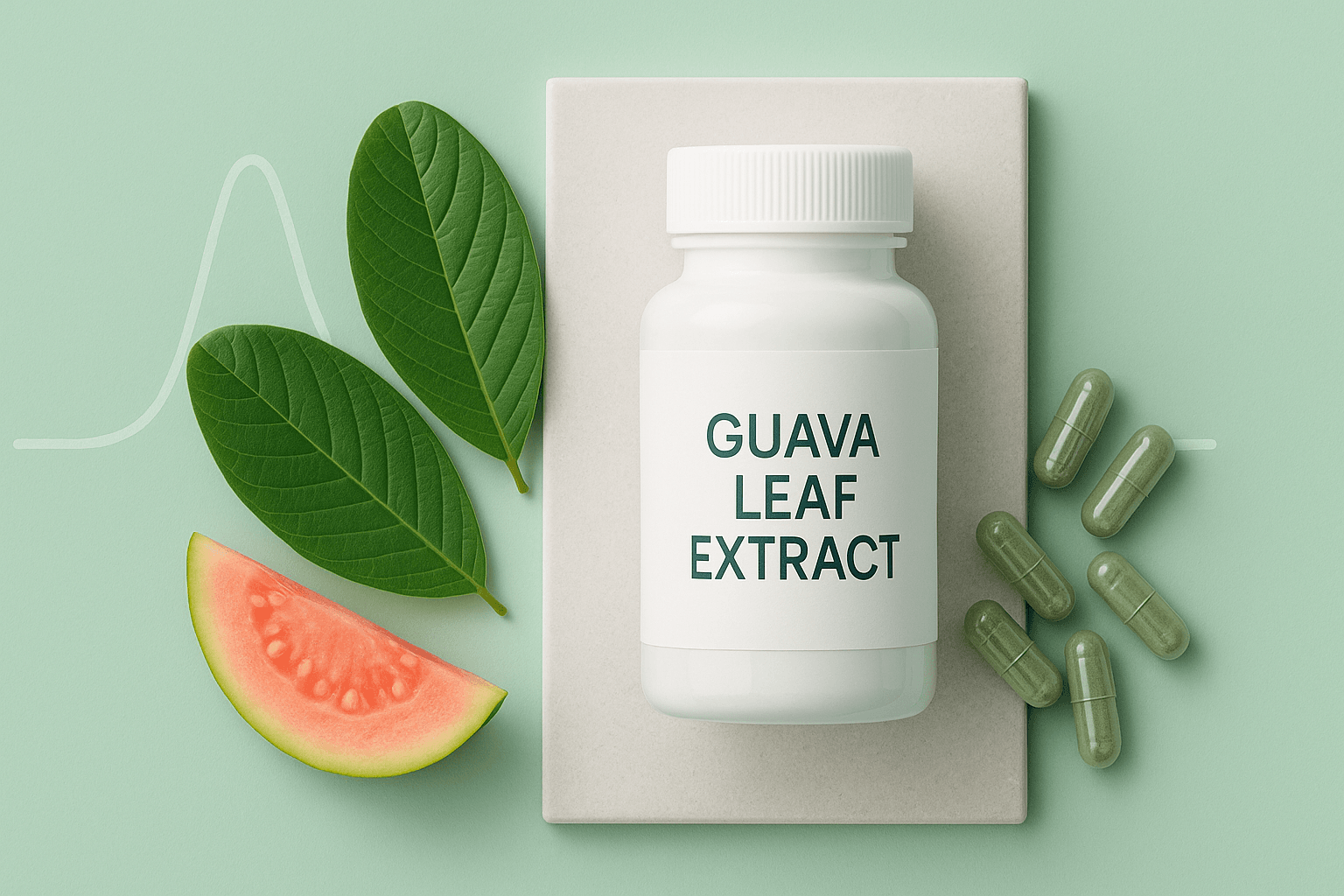
Smoother after-meal glucose & calmer gut: Understanding Guava Leaf Extract
Guava leaf extract (from Psidium guajava leaves) is a polyphenol-rich botanical standardized by some brands for quercetin and related flavonols. Traditionally brewed as a tea, modern supplements deliver capsules or standardized tea bags. Mechanistically, guava leaf compounds inhibit intestinal α-glucosidase enzymes, slowing the breakdown of complex carbs and blunting post-meal glucose spikes. They also show antimicrobial and antispasmodic activity in the gut, which may support mild, self-limited diarrhea and functional GI discomfort. In the mouth, guava leaf’s polyphenols and essential oils exhibit anti-plaque and anti-gingivitis effects.
Wellness takeaway: If your main aims are steadier post-meal glucose, gentler digestion, and better oral freshness, guava leaf is a practical, food-adjacent option. Use consistently with meals for 8–12 weeks, track your response, and reassess.
Key Benefits
Post-prandial glucose control: Helps flatten after-meal blood sugar by slowing carbohydrate breakdown in the small intestine.
Digestive comfort: Traditional tea and standardized extracts can ease mild, short-term diarrhea and cramping while supporting a healthier microbial balance.
Oral health adjunct: Guava leaf mouth rinses or lozenges reduce plaque and gingival inflammation when used alongside routine brushing/flossing.
Reality check: Effects are supportive, not a substitute for medical care. Best results come with a balanced plate (protein + fiber + healthy fats) and movement after meals.
Research Findings
Time to benefit:
Glucose control: Within 1–2 hours of a meal for acute effects; clearer day-to-day gains by 2–8 weeks of routine use.
Digestive support: Hours to days for mild, self-limited diarrhea; reassess if symptoms persist beyond 48–72 hours.
Oral health: Improvements in plaque/gingival scores typically appear by 2–4 weeks of twice-daily use.
Human study highlights (succinct):
After-meal glucose: Trials using guava leaf tea or capsules taken with or just before carb-containing meals show smaller post-prandial glucose excursions versus control. Effects scale with the carbohydrate load and product strength.
Metabolic markers: In adults with elevated fasting glucose or metabolic syndrome traits, daily guava leaf tea/extract for 8–12 weeks has been associated with improved fasting or 2-hr glucose and small favorable shifts in triglycerides—modest but directionally helpful.
Diarrhea/functional GI: Small randomized and pragmatic studies report shorter duration of mild infectious diarrhea and less abdominal discomfort, consistent with guava leaf’s antispasmodic and antimicrobial actions.
Oral health: Guava leaf mouthwash (alcohol-free) reduced plaque index and gingival bleeding scores versus baseline when used twice daily for 2–4 weeks after professional cleaning.
Tolerability: Generally well tolerated. Occasional GI fullness, mild constipation, or nausea may occur—often mitigated by dose with meals and adequate fluids. Rare allergic reactions (especially in those sensitive to Myrtaceae family plants) have been described.
Best Sources & Dosage
What to buy:
Forms:
Standardized extract capsules (commonly 250–500 mg per capsule; some specify ≥10–20% polyphenols or quercetin equivalents).
Tea bags/granules labeled Psidium guajava leaf with standardized polyphenol content.
Alcohol-free mouthwash/lozenges with guava leaf extract for oral health.
Quality: Choose brands with a certificate of analysis (COA) covering identity, potency, microbial limits, solvents, and heavy metals.
Avoid: Vague “guava complex” blends with undisclosed milligrams; products that spike formulas with added sugars (defeats the glucose goal).
Evidence-aligned ranges (by use case):
Post-meal glucose support:
Capsules: 250–500 mg guava leaf extract with each carb-containing meal (1–3×/day).
Tea: 1–2 tea bags steeped 5–10 min, consumed with or just before meals (carb-rich).
Use daily for 8–12 weeks; continue if objective measures improve.
Digestive comfort (mild, self-limited):
- 250–500 mg extract 2–3×/day after meals for 2–5 days, plus aggressive hydration and light, bland diet; seek care if symptoms persist/worsen.
Oral health adjunct:
- Guava leaf mouthwash (per label) 2×/day after brushing/flossing for 2–4 weeks, then as needed for maintenance.
Timing & tips:
Take with the first bites of your meal or immediately before to target carbohydrate breakdown.
Pair meals with protein and fiber (beans, lentils, vegetables) and try a 10–15 minute walk post-meal for additive glucose benefits.
For self-tracking, use a glucometer or CGM to compare pre-meal vs. 1-hr and 2-hr glucose with and without guava leaf on similar meals; also track GI comfort (0–10) and oral freshness/bleeding on brushing.
Safety, interactions & exclusions:
Diabetes medications: Because guava leaf can lower post-meal glucose, monitor closely if you use insulin, sulfonylureas, or meglitinides—risk of hypoglycemia increases when stacking effects. Coordinate any changes with your clinician.
GI caution: If you have chronic diarrhea, blood in stool, fever, or dehydration, seek medical care; guava leaf is not a stand-alone treatment for significant infections.
Surgery/fasting: Discuss use with your care team; products that alter glucose handling are often paused 1–2 weeks pre-op.
Pregnancy/lactation: Human data are limited—avoid unless recommended by your obstetric clinician.
Allergies: Avoid if you have known hypersensitivity to guava or related Myrtaceae plants.
Oral care: Mouthwash is an adjunct—continue routine dental care and professional cleanings.
Bold safety flag: If you experience sweating, shakiness, or confusion (possible hypoglycemia), check glucose immediately, consume fast-acting carbs, and review dose/med interactions with your prescriber.
Dosage Quick-Reference
After-meal glucose control: 250–500 mg with meals, daily 8–12 wks → ↓1-hr/2-hr glucose spikes (↑).
Mild diarrhea/functional GI: 250–500 mg 2–3×/day, 2–5 days → ↓frequency/cramping (→/↑).
Oral health adjunct: Mouthwash 2×/day, 2–4 wks → ↓plaque/gingival bleeding (↑).
Safety note: Monitor glucose if on diabetes meds; use COA-verified extracts; seek care for persistent GI symptoms or signs of hypoglycemia.