Aging-smart antioxidant with senolytic promise: Understanding Fisetin
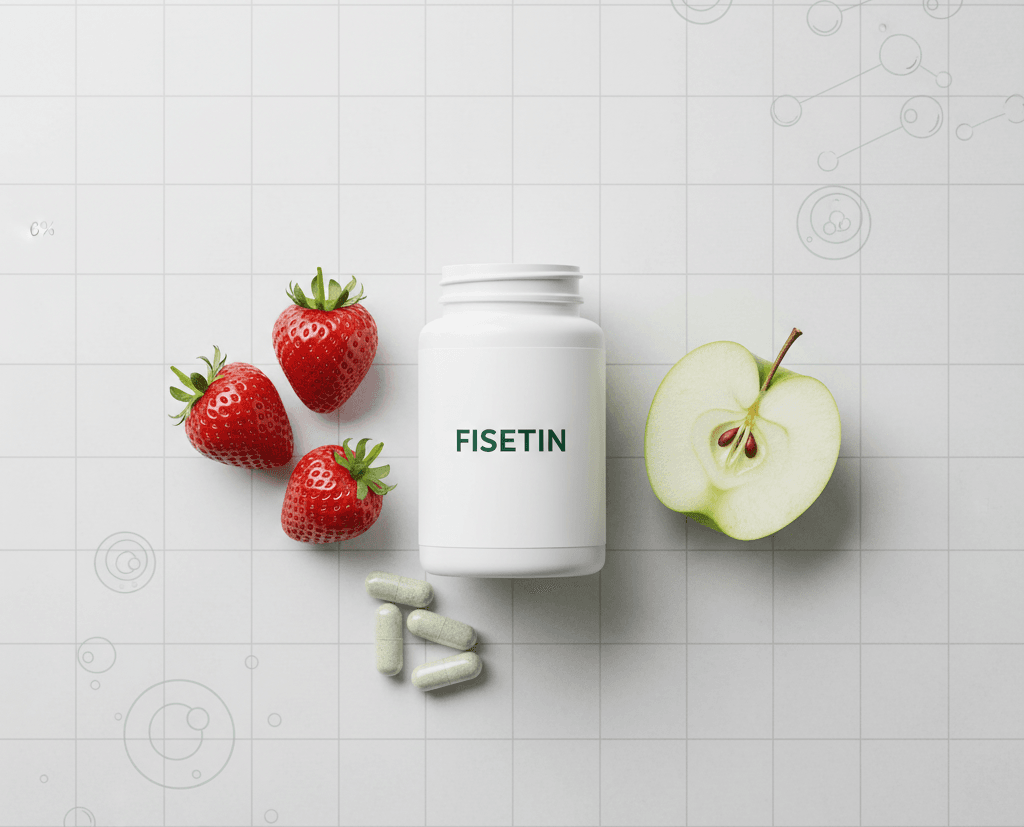
Fisetin is a dietary flavonoid found in strawberries, apples, onions, and persimmons. As a supplement, it’s positioned for cellular aging support because preclinical work suggests two complementary actions: (1) robust antioxidant/anti-inflammatory activity (Nrf2 upregulation, NF-κB downshift), and (2) potential senolytic effects—helping the body clear “senescent” cells that accumulate with age. In the brain, fisetin supports neuronal energy and synaptic signaling in models of oxidative stress; in joints, it may modulate inflammatory cascades associated with cartilage degradation. Human outcome data are still early, but the mechanistic rationale is strong and trials are underway.
Wellness takeaway: Use daily, moderate-dose fisetin for antioxidant/healthy-aging support, and reserve intermittent, high-dose “senolytic-style” protocols for clinical trials or clinician oversight. Trial for 8–12 weeks, then reassess.
Key Benefits
Cellular aging support: Antioxidant and anti-inflammatory signaling that may ease oxidative load and support healthy cellular function over time.
Brain aging & clarity (exploratory): Preclinical neuroprotective signals align with steadier cognitive aging; human confirmation is pending.
Joint comfort signals: Early human trials in knee osteoarthritis are exploring symptom relief and cartilage biomarkers.
Reality check: Human evidence for fisetin as a senolytic is preliminary. Expect subtle wellness effects first (energy, recovery); disease-level claims await well-powered RCTs.
Research Findings
Time to benefit: For general antioxidant/comfort goals, allow 4–12 weeks. Intermittent, trial-style senolytic dosing is evaluated over days to a few weeks with follow-up on biomarkers.
Knee osteoarthritis (Phase I/II RCT): A randomized, double-blind, placebo-controlled study is testing fisetin for symptomatic knee OA with senescence-related biomarkers and imaging endpoints; publication reports are emerging from 2025 (safety first; efficacy under analysis).
Sepsis in older adults (Phase 2, adaptive RCT): The STOP-Sepsis trial is evaluating fisetin as a senolytic to reduce organ failure progression in adults ≥65, using 20 mg/kg oral fisetin as a single dose or two doses 24 h apart, vs placebo. Results pending.
Healthy aging—state of the science: Recent reviews catalog ~30 human studies involving fisetin (alone or in combos) but conclude that carefully controlled trials are still needed to translate senolytic and other benefits to routine care.
Tolerability: Fisetin is generally well tolerated in short-term human studies; mild GI upset or headache can occur. Oral bioavailability is modest (estimates ~40–50%), which is why many products pair fisetin with fats or delivery systems to improve exposure.
Best Sources & Dosage
What to buy:
- Form: Fisetin (aglycone), ideally in oil-based softgels or a formula recommending with-fat intake to offset low bioavailability.
- Quality: Choose COA-verified products (identity, potency, heavy metals, solvent/micro tests).
- Avoid: Underdosed blends (“proprietary senolytic matrix”) without clear milligrams; megadose stacks without medical oversight.
Evidence-aligned ranges:
Daily healthy-aging support (antioxidant/inflammation balance):
- 100–200 mg/day with a meal containing fat for 8–12 weeks; continue if helpful. Use alongside fundamentals (sleep, exercise, colorful plants).
Joint comfort (exploratory):
- 100–200 mg/day with food for 8–12 weeks while you implement a knee-strengthening plan; monitor pain/stiffness (0–10) weekly. (Human OA trials are in progress.)
Senolytic-style protocols (research/clinician-guided only):
- Intermittent high-dose regimens (~20 mg/kg/day for 1–2 days) are being tested in trials (e.g., sepsis; aging biomarkers). Do not self-dose this way outside supervision.
Timing & tips:
Take with dietary fat (e.g., main meals) to support absorption.
Stack one change at a time—common pairings for healthy aging include vitamin D, omega-3s, and magnesium; add only after you’ve assessed fisetin solo.
Track: weekly energy (0–10), activity recovery, joint comfort, and—if enrolled in care—relevant labs/biomarkers your clinician orders.
Safety, interactions & exclusions:
Bleeding risk: Flavonoids may exert mild antiplatelet effects; if you use anticoagulants/antiplatelets (warfarin, DOACs, clopidogrel, aspirin), involve your clinician and monitor for bruising/bleeding.
Medication timing: Separate from quinolone antibiotics and mineral-dense multis by a few hours to avoid absorption conflicts (general polyphenol practice).
Conditions: If you have upcoming surgery, a bleeding disorder, or advanced liver/kidney disease, seek medical guidance before use.
Pregnancy/lactation: Insufficient data—avoid unless your clinician recommends.
Allergies: If you’re sensitive to strawberries or related fruits, check excipients; fisetin itself is purified, but caution is reasonable.
Bold safety flag: High-dose, intermittent senolytic protocols belong in clinical trials or specialist care—don’t self-experiment.
Dosage Quick-Reference
Healthy-aging support: 100–200 mg/day, 8–12 wks → ↑antioxidant tone / ↓inflammatory load (→/↑).
Joint comfort (exploratory): 100–200 mg/day, 8–12 wks + exercise → small symptom gains (→/↑).
Research-grade senolytic: ~20 mg/kg/day for 1–2 days, trial-only → biomarker targets under supervision (↗ research).
Safety note: Favor COA-verified products; take with fat for absorption; avoid senolytic megadosing outside clinical oversight.