Understanding Eleuthero – What It Is and How It Works
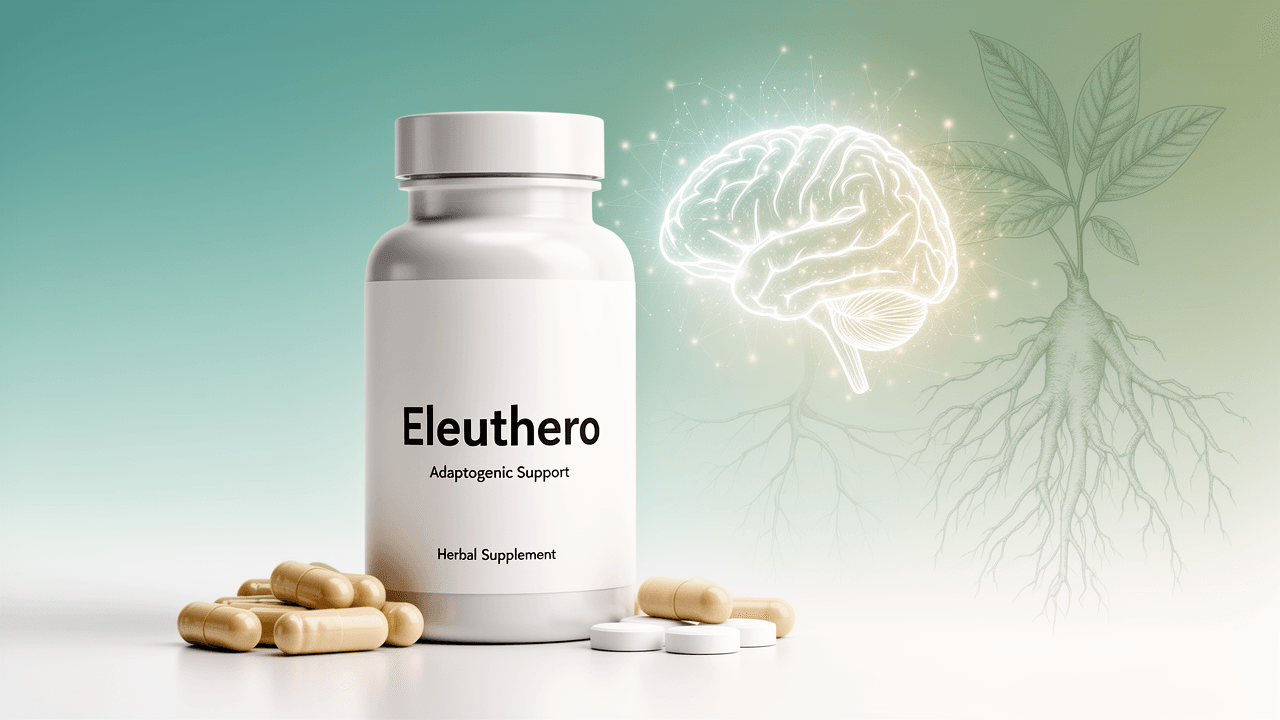
Eleuthero (Eleutherococcus senticosus), often called Siberian ginseng, is a woody shrub native to East Asia. It is not a true ginseng (like Panax ginseng) but is classified as an adaptogen—a substance thought to help the body adapt to physical and psychological stress.
Key Active Compounds
Eleuthero contains:
- Eleutherosides (A–M) – glycosides considered the main active constituents
- Lignans, coumarins, polysaccharides – may contribute to immune and metabolic effects
- Phenolic compounds – antioxidant activity
Unlike Panax ginseng, which is rich in ginsenosides, eleuthero’s profile is dominated by eleutherosides (especially B and E), which are used as quality markers in standardized extracts.
How Eleuthero Works in the Body
Current evidence suggests several overlapping mechanisms:
HPA Axis Modulation (Stress Response)
- Animal and cell studies indicate eleuthero influences the hypothalamic–pituitary–adrenal (HPA) axis, modulating cortisol and other stress hormones.
- This may help maintain more stable stress responses rather than blunt them completely.
Neuroprotective and Nootropic Actions
- Certain eleutherosides show antioxidant and anti-inflammatory effects in brain tissue in animal models.
- Preclinical data suggest protection against ischemic damage, excitotoxicity, and oxidative stress, which could support cognition and mental stamina.
Metabolic and Physical Performance Effects
- Eleuthero appears to influence energy metabolism, possibly enhancing the use of fatty acids and improving endurance in animals.
- Some human trials suggest modest improvements in work capacity and fatigue resistance, particularly under stress.
Immune Modulation
- Polysaccharides and eleutherosides can modulate innate and adaptive immunity in vitro and in animal models.
- Human studies show changes in immune cell activity and reduced incidence or duration of respiratory infections when used in combination formulas.
Overall, eleuthero is best understood as a general stress-resilience and fatigue-support herb, with secondary benefits for cognition and immunity rather than a direct, strong nootropic.
Key Benefits of Eleuthero
1. Fatigue Reduction and Stress Resilience
Eleuthero is most consistently studied for fatigue, stress, and work capacity:
- May reduce subjective fatigue and improve feelings of well-being in people with mild fatigue or stress-related symptoms.
- Some data suggest improved tolerance to physical or mental stress, particularly in demanding work or athletic contexts.
However, effects are modest and most pronounced in people with mild to moderate fatigue, not severe chronic fatigue syndromes.
2. Cognitive Function and Mental Performance
Eleuthero is sometimes used as a nootropic for:
- Mild improvements in mental performance under stress (e.g., shift work, intense training)
- Support of attention and psychomotor performance in fatigued individuals
Evidence is mixed: some small studies show benefits in speed and accuracy of cognitive tasks, while others show no significant effect in healthy, non-fatigued adults.
3. Immune Support and Resistance to Infections
Eleuthero has a long history in traditional medicine for preventing colds and infections:
- Some clinical trials (often with combination products) report reduced incidence, duration, or severity of common colds and respiratory infections.
- It may enhance certain immune parameters (e.g., natural killer cell activity) in stressed or immunocompromised individuals.
Most of the immune data come from combination formulas (e.g., eleuthero with Andrographis or other herbs), so it is hard to isolate eleuthero’s specific contribution.
4. Physical Performance and Recovery
Eleuthero is marketed to athletes for endurance and recovery:
- Some studies report improved aerobic capacity and endurance time, particularly in less-trained individuals.
- Other well-controlled trials in trained athletes show little to no benefit.
Overall, any performance benefit is likely small, and more relevant to individuals under high stress or with lower baseline fitness.
Research Findings on Eleuthero
Fatigue and Stress-Related Symptoms
Study: Eleuthero in Chronic Fatigue
- Design: Double-blind, randomized, placebo-controlled
- Sample: 96 patients with chronic fatigue (USA)
- Intervention: Eleuthero extract standardized to 0.2% eleutherosides, 2 g/day vs placebo
- Duration: 2 months
- Findings:
- No significant benefit in the overall group.
- Subgroup analysis: patients with milder fatigue showed improved subjective fatigue scores vs placebo; those with more severe fatigue did not benefit.
- Implication: Eleuthero may help mild fatigue, but is unlikely to be effective for severe chronic fatigue.
Study: Stress and Quality of Life in Mild Fatigue
- Design: Double-blind, randomized, placebo-controlled
- Sample: Adults with mild chronic fatigue (n ≈ 50–80 depending on report)
- Intervention: Standardized eleuthero extract, ~400 mg/day
- Duration: 6–8 weeks
- Findings:
- Modest improvements in fatigue, sleep quality, and social functioning vs placebo.
- Effects emerged after several weeks and were more noticeable in individuals with higher baseline stress.
Cognitive Function and Mental Performance
Study: Cognitive Performance Under Fatigue (Shift Workers)
- Design: Randomized, placebo-controlled, crossover
- Sample: 20–30 healthy volunteers undergoing sleep restriction or shift-like conditions
- Intervention: Single and repeated doses of eleuthero extract (e.g., 400–800 mg/day)
- Duration: Acute + short-term (several days)
- Findings:
- Some improvement in attention and psychomotor speed under fatigue conditions.
- Effects were more pronounced in tasks requiring sustained attention; minimal impact in well-rested conditions.
- Limitations: Small sample sizes and heterogeneous protocols.
Immune Function and Respiratory Infections
Study: Combination Formula for Common Cold
(Eleuthero + Andrographis paniculata)
- Design: Randomized, double-blind, placebo-controlled
- Sample: ~130 adults with early symptoms of upper respiratory infection
- Intervention: Standardized combination containing eleuthero, taken several times daily
- Duration: 5–10 days
- Findings:
- Faster reduction in sore throat, fatigue, and nasal symptoms vs placebo.
- Shortened illness duration by ~2 days on average.
- Caveat: Cannot attribute results solely to eleuthero; Andrographis is a potent immune herb.
Study: Immune Parameters in Healthy Volunteers
- Design: Open-label or small randomized trials
- Sample: 20–50 healthy adults
- Intervention: Eleuthero extract 300–1200 mg/day
- Duration: 4–8 weeks
- Findings:
- Increases in natural killer (NK) cell activity and certain lymphocyte subpopulations in some studies.
- Clinical relevance (actual infection reduction) remains uncertain.
Physical Performance
Study: Endurance in Recreational Athletes
- Design: Randomized, double-blind, placebo-controlled
- Sample: 20–40 recreationally active adults
- Intervention: Eleuthero extract ~800–1200 mg/day
- Duration: 6–8 weeks
- Findings:
- Some studies reported improvements in VO₂ max and time to exhaustion vs placebo.
- Others found non-significant trends or no difference.
- Conclusion: Possible small ergogenic effect, but inconsistent and likely modest.
Best Sources & Dosage
Forms of Eleuthero
Common supplemental forms include:
- Standardized root extract (most common)
- Typically standardized to 0.8–1.5% eleutherosides or measured in mg of eleutheroside B + E.
- Dried root powder (capsules or loose)
- Less consistent potency; larger doses needed than extracts.
- Tinctures/liquid extracts
- Ethanol or glycerin-based; dosing in mL or drops.
- Teas/decoctions
- Traditional use; potency is variable and usually lower than standardized extracts.
Evidence-Based Dosage Ranges
1. General Adaptogen / Stress Support
- Standardized extract: 300–800 mg/day in divided doses (e.g., 150–400 mg twice daily).
- Dried root: 2–4 g/day, often divided into 2–3 doses.
- Timing: Morning and early afternoon to avoid potential insomnia in sensitive individuals.
2. Mild Fatigue and Work Capacity
- Clinical trials typically used:
- Standardized extract: 400–2000 mg/day (commonly ~400–800 mg/day).
- Suggested practical range:
- 400–800 mg/day of standardized extract, taken for 6–8 weeks, then reassessed.
3. Cognitive Support Under Stress or Fatigue
- Evidence is limited, but protocols often mirror fatigue studies:
- 300–600 mg/day standardized extract, started at least 1–2 weeks before anticipated high-stress periods (exams, shift changes, intense work cycles).
4. Immune Support (Seasonal Use)
- For general immune modulation (extrapolated from available data):
- 300–800 mg/day standardized extract for 4–8 weeks during high-risk periods (e.g., winter) may be reasonable.
- For acute infections, combination formulas are more studied than eleuthero alone.
Cycling and Duration
- Traditional and clinical practice often recommends cycles:
- 6–12 weeks on, followed by 2–4 weeks off, especially at higher doses.
- Long-term continuous use at moderate doses appears relatively safe in healthy adults, but long-term data are limited.
Practical Tips for Use
- Start low: Begin at the lower end of the range (e.g., 150–300 mg/day) and increase gradually over 1–2 weeks.
- Take with food if you experience stomach upset.
- Morning dosing is preferred; add an early afternoon dose if needed. Avoid late-evening dosing.
Safety, Side Effects, and Drug Interactions
General Safety Profile
Eleuthero is generally well tolerated in healthy adults when used at recommended doses for short to moderate durations (up to ~3 months in most studies).
Common, usually mild side effects:
- Insomnia or restlessness (especially with late-day dosing)
- Nervousness or agitation in sensitive individuals
- Headache
- Gastrointestinal upset (nausea, diarrhea, abdominal discomfort)
These effects are often dose-related and may improve with dose reduction or earlier dosing times.
Potential Cardiovascular Effects
- Some reports suggest eleuthero may raise or lower blood pressure depending on baseline status, but data are mixed.
- Occasional cases of increased blood pressure, palpitations, or tachycardia have been reported, particularly at high doses or in those with pre-existing cardiovascular disease.
Recommendation:
- People with hypertension, arrhythmias, or cardiovascular disease should use eleuthero only under medical supervision, if at all.
Hormonal and Endocrine Considerations
- As an adaptogen, eleuthero may influence cortisol and other stress hormones, but robust human endocrine data are limited.
- There are case reports of interference with certain lab tests (e.g., digoxin immunoassays, and possibly hormone assays) due to cross-reactivity.
Recommendation:
- Discontinue eleuthero at least 1–2 weeks before major lab testing or surgery, and inform your healthcare provider about its use.
Drug Interactions
Evidence is limited, but several theoretical or reported interactions are important:
Anticoagulants / Antiplatelet Drugs
- Some data suggest eleuthero may affect platelet aggregation or coagulation parameters.
- Potential interaction with warfarin, DOACs, aspirin, clopidogrel, and other blood thinners.
Antihypertensive Medications
- Eleuthero may raise or lower blood pressure; it could antagonize or potentiate antihypertensive drugs (e.g., beta-blockers, ACE inhibitors, ARBs, calcium channel blockers).
- Blood pressure should be monitored closely if combined.
Hypoglycemic Agents (Diabetes Medications)
- Limited data suggest eleuthero might influence blood glucose and insulin sensitivity.
- Could theoretically interact with insulin, metformin, sulfonylureas, and other antidiabetic drugs.
CNS Stimulants
- Because eleuthero can be mildly stimulating, concurrent use with stimulant medications (e.g., amphetamines, methylphenidate, modafinil) or high caffeine intake may increase nervousness, insomnia, or elevated heart rate.
Immunosuppressants
- Given its potential immune-modulating effects, eleuthero may counteract immunosuppressive therapy (e.g., after organ transplant, autoimmune therapies).
Digoxin
- There are reports of false elevations in digoxin levels due to assay interference from eleuthero components.
- Patients on digoxin should avoid eleuthero unless closely supervised, and labs should be interpreted cautiously.
Always consult a healthcare professional before combining eleuthero with prescription medications, especially those affecting the heart, blood pressure, blood clotting, or immune system.
Special Populations
Pregnancy and Breastfeeding
- High-quality human data are lacking.
- Animal studies are insufficient to establish safety.
- Most professional herbal references recommend avoiding eleuthero during pregnancy and lactation.
Children and Adolescents
- Safety data are limited.
- Use in minors should be avoided or strictly supervised by a qualified clinician.
Overdose and Long-Term Use
- High doses may increase the risk of insomnia, irritability, palpitations, and elevated blood pressure.
- Long-term continuous use beyond 3–6 months has not been rigorously studied; periodic breaks and medical monitoring are prudent.
Who Should and Shouldn’t Use Eleuthero
Who May Benefit from Eleuthero
Eleuthero may be appropriate for adults who:
- Experience mild to moderate fatigue related to stress, work, or lifestyle (not severe chronic fatigue syndromes)
- Want support for stress resilience during demanding periods (e.g., exams, shift work, high-pressure jobs)
- Seek mild cognitive support under fatigue, especially for attention and mental stamina rather than dramatic memory enhancement
- Are generally healthy and not on complex medication regimens
It is best used as part of a broader strategy that includes sleep optimization, nutrition, exercise, and stress management—not as a stand-alone solution.
Who Should Avoid Eleuthero (or Use Only Under Medical Supervision)
1. Cardiovascular Conditions
Avoid or use only with medical oversight if you have:
- Uncontrolled hypertension or labile blood pressure
- Arrhythmias or significant heart disease
- History of stroke or transient ischemic attack (TIA)
2. Bleeding and Clotting Disorders
Avoid or use with caution if you:
- Take anticoagulants or antiplatelet drugs (warfarin, DOACs, aspirin, clopidogrel)
- Have a bleeding disorder or are scheduled for surgery
3. Diabetes or Hypoglycemia
Use only under supervision if you:
- Have type 1 or type 2 diabetes on medication
- Have a history of hypoglycemic episodes
4. Autoimmune Disease or Transplant Recipients
Avoid or seek specialist input if you:
- Have autoimmune diseases treated with immunosuppressants (e.g., lupus, rheumatoid arthritis, multiple sclerosis)
- Have undergone organ or bone marrow transplantation
5. Psychiatric or Neurological Conditions
Caution is warranted if you:
- Have bipolar disorder, severe anxiety, or psychotic disorders (stimulatory herbs can occasionally worsen symptoms)
- Are on multiple psychotropic medications
6. Pregnancy, Breastfeeding, and Children
- Generally not recommended due to insufficient safety data.
7. Concurrent Use of Multiple Stimulants
- If you already use caffeine, energy drinks, or stimulant medications, adding eleuthero may increase the risk of insomnia, anxiety, and palpitations.
Practical Summary
- Role: Eleuthero is a classic adaptogen, with modest evidence for improving mild fatigue, stress resilience, and mental performance under fatigue.
- Evidence strength: Moderate for mild fatigue; limited but suggestive for cognition and immune support; mixed for physical performance.
- Dosage: Typically 300–800 mg/day of standardized extract, taken in the morning and early afternoon, for 6–8 weeks, with periodic breaks.
- Safety: Generally well tolerated in healthy adults, but caution is essential in those with cardiovascular, endocrine, immune, or bleeding disorders, and in anyone on multiple medications.
- Not a cure-all: Benefits are subtle and supportive, best used alongside lifestyle interventions rather than as a primary treatment for serious fatigue or illness.
Always discuss eleuthero use with a healthcare professional, especially if you have underlying medical conditions, take prescription medications, or are considering longer-term use.