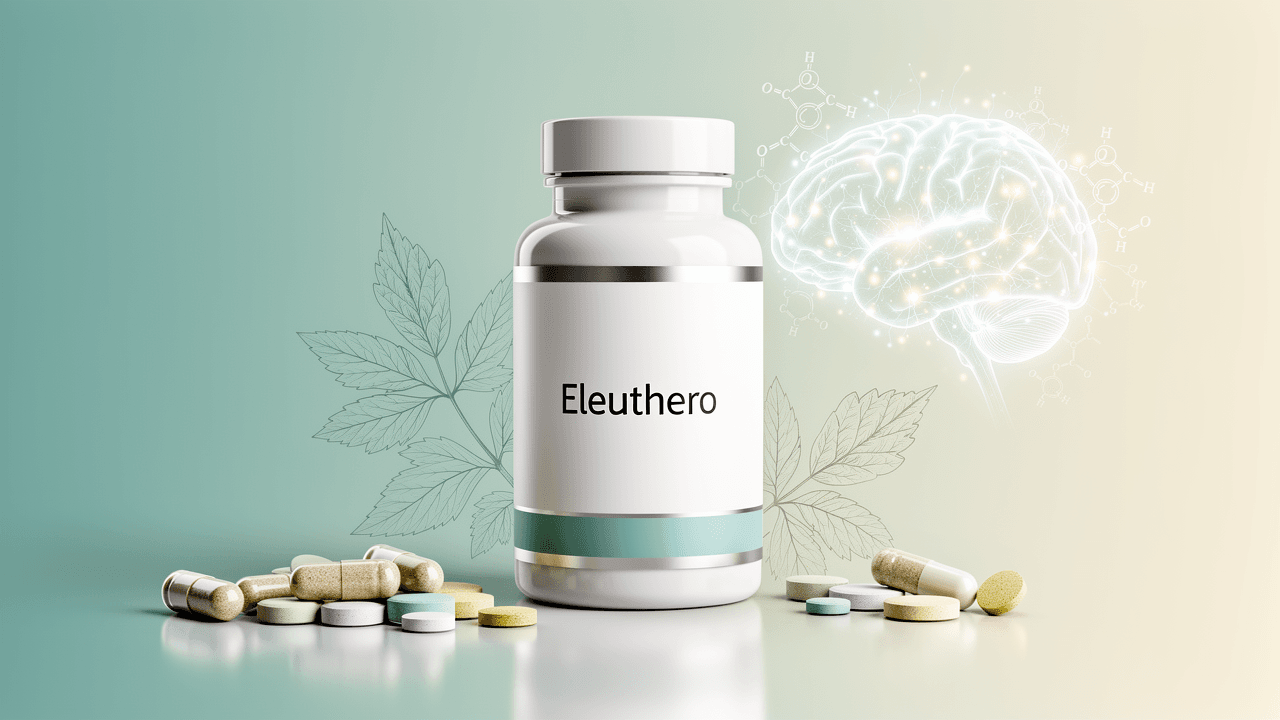
1. Understanding Eleuthero – What It Is and How It Works
Eleuthero (Eleutherococcus senticosus), often called Siberian ginseng, is a woody shrub native to Northeast Asia. Despite the nickname, it is not a true ginseng (Panax species) but a different plant with its own class of active compounds called eleutherosides.
Eleuthero is classified as an adaptogen – a substance thought to help the body adapt to physical, emotional, and environmental stress. It has been used in Russian and Chinese traditional medicine for fatigue, resilience, and immune function.
Key Active Compounds
Eleuthero root contains:
- Eleutherosides (A–M) – glycosides believed to be the main bioactive components
- Lignans, polysaccharides, and phenolic compounds – may contribute to immune and antioxidant effects
How Eleuthero Works in the Body
Research suggests several mechanisms:
HPA axis modulation (stress response)
- Eleuthero appears to influence the hypothalamic–pituitary–adrenal (HPA) axis, which regulates cortisol and stress responses.
- Animal and limited human data suggest it may buffer stress-induced cortisol changes, contributing to a more balanced stress response rather than simple stimulation.
Monoamine and neurochemical effects
- Preclinical studies indicate eleuthero may modulate dopamine, serotonin, and norepinephrine systems, which are involved in mood, motivation, and alertness.
- These effects may underlie reported benefits for fatigue, mental performance, and resilience to stress.
Immune modulation
- Eleuthero polysaccharides and eleutherosides appear to enhance certain immune functions, such as natural killer (NK) cell activity and interferon production in some studies.
- This has led to its use for supporting immune function during stress or illness, although evidence is mixed.
Antioxidant and metabolic effects
- In vitro and animal models show antioxidant activity and potential support for glucose and lipid metabolism.
- These may contribute to long-term protective effects, but human data are still limited.
Overall, eleuthero is best described as a mild, balancing adaptogen rather than a strong stimulant. Many users notice more subtle improvements in resilience, stamina, and stress tolerance rather than an immediate “kick.”
2. Key Benefits of Eleuthero as a Dietary Supplement
1. Reduced Fatigue and Enhanced Stamina
Eleuthero is most often used for fatigue, low energy, and endurance. Clinical trials suggest it may:
- Improve subjective fatigue scores
- Enhance aerobic performance and work capacity in some populations
- Support recovery from physical exertion
2. Stress Resilience and Adaptation
As an adaptogen, eleuthero may help the body cope with physical and mental stress by modulating HPA-axis activity. Studies in stressed workers and athletes show modest improvements in stress perception, performance under stress, and overall well-being.
3. Cognitive Support and Mental Performance
Some research suggests eleuthero can support attention, mental clarity, and cognitive performance, especially under fatigue or stress. Effects tend to be modest and more noticeable in tired or stressed individuals rather than well-rested subjects.
4. Immune Support (Modest, Context-Dependent)
Eleuthero has been studied for reducing incidence and duration of common colds and for supporting immune markers. Results are mixed: some trials show reduced infection rates or faster recovery, others show no significant benefit.
3. Research Findings on Eleuthero
Below are representative human studies illustrating what eleuthero can and cannot do.
Fatigue and Work Performance
Study: Industrial workers with stress and fatigue
- Design: Randomized, double-blind, placebo-controlled
- Participants: 96 workers with chronic mild fatigue and stress
- Intervention: Eleuthero extract (standardized to eleutherosides B and E) vs placebo for 30 days
- Dose: ~400 mg/day (divided doses)
- Findings:
- Significant improvement in subjective fatigue scores vs placebo by day 30.
- Improved well-being and stress tolerance reported.
- No major changes in objective performance metrics.
- Takeaway: Eleuthero may reduce perceived fatigue and improve subjective well-being in stressed workers, but objective performance gains are modest.
Study: Chronic fatigue – limited benefit
- Design: Randomized, double-blind trial in chronic fatigue patients
- Participants: ~96 adults diagnosed with chronic fatigue
- Intervention: Eleuthero extract vs placebo for 2 months
- Findings:
- Overall, no significant benefit vs placebo in the full sample.
- A subgroup with milder fatigue showed some improvement in fatigue scores.
- Takeaway: Eleuthero may help milder, stress-related fatigue, but evidence for severe or chronic fatigue syndromes is weak.
Physical Performance and Endurance
Study: Athletes and endurance capacity
- Design: Randomized, placebo-controlled
- Participants: 45 trained athletes
- Intervention: Eleuthero extract vs placebo for 6–8 weeks
- Dose: 800–1,200 mg/day (standardized extract)
- Findings:
- Some improvement in VO2 max and time to exhaustion in eleuthero group vs placebo.
- Effects were modest and variable between individuals.
- Takeaway: Eleuthero may modestly improve aerobic capacity and endurance in trained individuals, but it is not a performance enhancer on par with targeted training or ergogenic aids like caffeine.
Cognitive Performance and Stress
Study: Cognitive tasks under stress
- Design: Double-blind, placebo-controlled crossover
- Participants: 30 healthy adults exposed to mental stress tests
- Intervention: Single dose of eleuthero extract vs placebo
- Findings:
- Slight improvement in speed and accuracy on attention and mental arithmetic tasks under stress.
- Reduced perceived mental fatigue vs placebo.
- Takeaway: Eleuthero may offer acute support for attention and mental performance in stressful conditions, but effects are small.
Immune Function and Infections
Study: Respiratory infection prevention
- Design: Randomized, double-blind, placebo-controlled
- Participants: ~130 adults during cold/flu season
- Intervention: Eleuthero extract vs placebo for 3–4 months
- Findings:
- Some reduction in number and duration of respiratory infections in eleuthero group, but differences were modest and not always statistically significant.
- Takeaway: Eleuthero may provide mild immune support, but it should not be relied on as a primary treatment or preventive for infections.
Metabolic and Cardiovascular Effects
Smaller human studies and animal research suggest:
- Possible improvements in blood glucose control and insulin sensitivity in animal models.
- Mild blood pressure–modulating effects (often small decreases or normalization in stressed individuals).
However, robust, large-scale human trials are lacking, so metabolic and cardiovascular claims remain preliminary.
4. Best Sources & Dosage – Forms, Dosing, Timing, Safety
Common Forms of Eleuthero
Standardized root extract (most common supplement form)
- Typically standardized to 0.8–1.2% eleutherosides, often B and E.
- Available in capsules, tablets, or liquid extracts.
Tincture / liquid extract
- Often 1:1 or 1:2 ratios (g herb per mL liquid).
- Useful for flexible dosing and combining with other adaptogens.
Dried root / tea
- Less standardized; potency can vary.
- Typically used in traditional preparations or decoctions.
When possible, choose products that:
- Specify Eleutherococcus senticosus (not just “Siberian ginseng”).
- Are standardized to eleutheroside content.
- Provide third-party testing for purity and contaminants.
General Dosage Guidelines
Evidence and traditional use suggest the following adult dosage ranges (for standardized extract):
For General Energy, Stress, and Well-Being
- Typical range: 300–600 mg/day of standardized extract
- Form: 1–2 doses per day (e.g., morning and early afternoon)
- Duration: 6–12 weeks, followed by a 1–2 week break is common practice in herbal medicine, though not strictly evidence-based.
For Fatigue and Physical Performance
- Range used in studies: 400–1,200 mg/day
- Practical range for most people: 400–800 mg/day, divided into 2 doses.
- Start at 300–400 mg/day and increase gradually if well tolerated.
For Cognitive Support and Mental Performance
- Mild support: 300–400 mg/day, taken in the morning (and optionally at midday).
- For acute use (e.g., exam days, high-stress work days), some people take a single morning dose of 300–500 mg.
Tincture / Liquid Extract
- Common range: 2–4 mL, 1–2 times daily (depending on extract strength and manufacturer instructions).
- Always follow product-specific dosing and adjust gradually.
Timing and Stacking Considerations
- Best taken in the morning and possibly early afternoon. Taking it late in the day may cause difficulty sleeping in sensitive individuals due to mild stimulating effects.
- Often combined with other adaptogens like rhodiola, ashwagandha, or schisandra.
- For more stimulating stacks (e.g., with rhodiola), keep doses moderate and avoid late-day use.
- For anxiety-prone individuals, pairing with calming herbs (e.g., ashwagandha, lemon balm) may balance stimulation.
Onset and Duration of Effects
- Acute effects: Some people notice mild increases in alertness and stamina within a few days.
- Adaptogenic effects: More consistent benefits for fatigue and stress resilience typically emerge over 2–4 weeks of regular use.
5. Safety, Side Effects, and Drug Interactions
Eleuthero is generally considered well-tolerated when used at typical doses for short to moderate durations (up to 2–3 months). However, it is not risk-free, especially in people with certain conditions or on specific medications.
Common Side Effects (Usually Mild)
Reported side effects include:
- Insomnia or restlessness (especially at higher doses or when taken late in the day)
- Nervousness, irritability, or agitation in sensitive individuals
- Headache
- Mild gastrointestinal upset, such as nausea or diarrhea
These often improve with:
- Lowering the dose
- Taking earlier in the day
- Discontinuing if symptoms persist
Less Common / Potential Concerns
- Blood pressure changes: Some reports suggest eleuthero can cause mild increases or normalization of blood pressure. In people with uncontrolled hypertension, caution is advised.
- Hormonal effects: Limited data exist, but as an adaptogen affecting the HPA axis, it may have subtle hormonal effects. People with hormone-sensitive conditions should use caution.
Drug Interactions
Eleuthero can interact with certain medications. Evidence is partly based on case reports and theoretical mechanisms, so caution is warranted.
1. Anticoagulants / Antiplatelet drugs
- There have been case reports of possible interaction with warfarin, altering its effect (both increasing and decreasing INR have been suggested in different herbal combinations).
- Although evidence is limited, it is prudent to avoid eleuthero with warfarin or use only under close medical supervision with extra INR monitoring.
2. Antihypertensive medications
- Because eleuthero can influence blood pressure and stress responses, it may add to or counteract blood pressure medications.
- People on antihypertensives should monitor blood pressure more closely when starting or stopping eleuthero.
3. Stimulants (caffeine, ADHD medications, decongestants)
- Eleuthero has mild stimulating properties. Combining with strong stimulants (e.g., high-dose caffeine, amphetamine-based ADHD meds, pseudoephedrine) may increase risk of insomnia, palpitations, or anxiety.
- Use lower doses and monitor for overstimulation.
4. Sedatives and CNS depressants
- As an adaptogen, eleuthero is not strongly sedating; interactions with sedatives are less of a concern than with stimulants. Still, any herb affecting the CNS should be used cautiously with benzodiazepines, sleep medications, or alcohol.
5. Immunosuppressive drugs
- Because eleuthero may have immune-modulating effects, there is a theoretical concern it could counteract immunosuppressive therapy (e.g., after organ transplant or for autoimmune disease).
- Avoid use with immunosuppressants unless specifically approved by a physician.
6. Blood sugar–lowering medications
- Limited evidence suggests eleuthero might modestly influence glucose metabolism. In combination with antidiabetic drugs, this could theoretically enhance hypoglycemic effects.
- Diabetics using eleuthero should monitor blood glucose more frequently.
Special Populations and Long-Term Use
- Pregnancy and breastfeeding: Safety data are insufficient. Most authorities recommend avoiding eleuthero during pregnancy and lactation unless under professional supervision.
- Children and adolescents: Limited data. Use is generally not recommended without guidance from a qualified pediatric practitioner.
- Long-term use (>3 months): There is limited safety data for continuous long-term use. Many practitioners suggest cycling (e.g., 6–12 weeks on, 1–2 weeks off) and periodic reassessment.
Signs You Should Stop Taking Eleuthero
Discontinue and seek medical advice if you experience:
- Persistent insomnia, rapid heartbeat, or high blood pressure
- New or worsening anxiety, agitation, or mood changes
- Unexplained bleeding, bruising, or changes in INR if on anticoagulants
- Any allergic reaction (rash, itching, swelling, difficulty breathing)
6. Who Should and Shouldn’t Use Eleuthero
Who Might Benefit from Eleuthero
Eleuthero may be appropriate for adults who:
- Experience mild to moderate stress-related fatigue or burnout
- Want gentle support for physical stamina and recovery from training
- Need mild cognitive and attention support, especially under stress or workload
- Are generally healthy and not taking interacting medications
It is best used as part of a broader plan that includes sleep optimization, nutrition, exercise, and stress management.
Who Should Use Caution or Avoid Eleuthero
1. People with uncontrolled high blood pressure
- Because eleuthero may affect blood pressure and the stress response, those with poorly controlled hypertension should avoid or use only under medical supervision.
2. People with serious heart disease
- Those with arrhythmias, recent heart attack, or severe cardiovascular disease should avoid unsupervised use due to potential hemodynamic effects.
3. People on specific medications
Avoid or use only with medical guidance if you are on:
- Warfarin or other anticoagulants
- Strong stimulants (ADHD meds, high-dose caffeine, decongestants)
- Antihypertensives
- Immunosuppressants
- Antidiabetic medications (insulin or oral hypoglycemics)
4. Pregnant or breastfeeding individuals
- Due to insufficient safety data, eleuthero is not recommended during pregnancy or lactation without professional guidance.
5. People with autoimmune or hormone-sensitive conditions
- Because of potential immune modulation and HPA-axis effects, those with autoimmune diseases or hormone-sensitive conditions should consult a specialist before use.
6. Individuals with severe anxiety, insomnia, or bipolar spectrum disorders
- Mild stimulating effects could worsen anxiety or sleep problems in some individuals.
- Those with bipolar disorder should be especially cautious with any stimulating or activating supplement.
Practical Summary
- What it is: Eleuthero (Eleutherococcus senticosus) is an adaptogenic herb, sometimes called Siberian ginseng, used for stress resilience, fatigue, and stamina.
- How it works: It appears to modulate the HPA axis, monoamine neurotransmitters, immune function, and antioxidant defenses, leading to improved adaptation to stress.
- Evidence-based benefits: Modest improvements in subjective fatigue, stress tolerance, and endurance; mild support for cognitive performance under stress and possibly immune function, especially in mildly fatigued or stressed individuals.
- Dosage: Typically 300–600 mg/day of standardized extract for general use; 400–800 mg/day for fatigue and performance, taken in the morning and early afternoon.
- Safety: Generally well-tolerated short term, but may cause insomnia, nervousness, headaches, or GI upset. Use caution with hypertension, heart disease, pregnancy, autoimmune disease, and when taking anticoagulants, antihypertensives, stimulants, immunosuppressants, or antidiabetic drugs.
- Best candidates: Adults with mild stress-related fatigue or reduced resilience, who are otherwise healthy and not on interacting medications.
As with any adaptogen or nootropic, eleuthero should be viewed as a supportive tool, not a replacement for medical treatment or lifestyle fundamentals. Consulting a healthcare professional familiar with herbal medicine is advisable before starting eleuthero, especially if you have underlying health conditions or take prescription medications.