1. Understanding Eleuthero – What It Is and How It Works
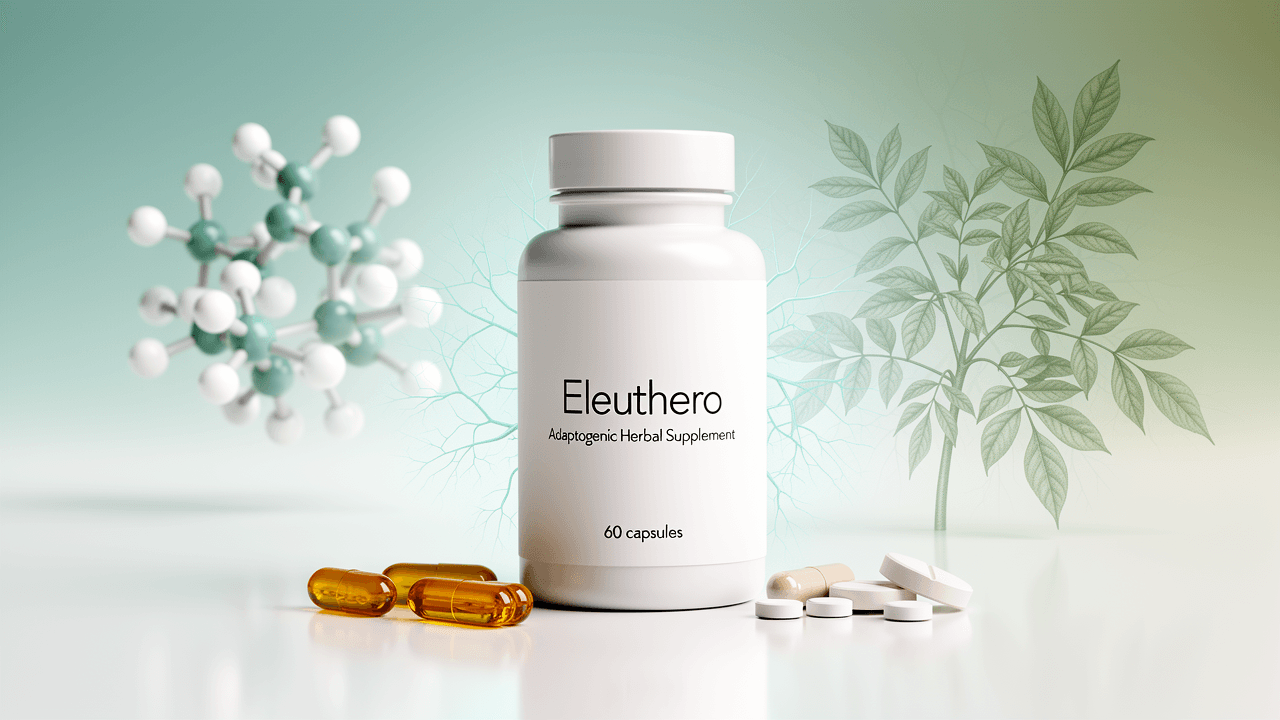
Eleuthero (Eleutherococcus senticosus), often called Siberian ginseng, is a woody shrub native to Russia, China, Korea, and Japan. Despite the nickname, it is not a true ginseng (Panax ginseng or Panax quinquefolius) but a different plant in the Araliaceae family.
The medicinal parts are the root and rhizome, traditionally used in Russian and Chinese medicine to:
- Combat fatigue and improve stamina
- Enhance resilience to stress and infections
- Support cognitive performance and work capacity
Eleuthero is classified as an adaptogen – a substance thought to help the body maintain balance under physical, mental, or environmental stress.
1.1 Key Active Constituents
Eleuthero’s effects are primarily attributed to:
- Eleutherosides (A–M) – a group of glycosides considered the main active markers
- Lignans (e.g., sesamin, syringaresinol)
- Polysaccharides
Standardized extracts typically contain 0.8–1.2% eleutherosides (often measured as eleutheroside B and E).
1.2 How Eleuthero Works in the Body
While mechanisms are not fully defined, current evidence suggests eleuthero may act through several pathways:
HPA Axis Modulation (Stress Response)
- Animal studies show eleuthero can modulate the hypothalamic–pituitary–adrenal (HPA) axis, which regulates cortisol and stress responses.
- It may help normalize stress hormone levels rather than simply suppressing or stimulating them.
Neurotransmitter and Nootropic Effects
- Preclinical research indicates eleuthero can influence dopamine, serotonin, and norepinephrine signaling in the brain, which may underlie its effects on mood, motivation, and cognitive performance.
- Some studies in animals suggest neuroprotective effects, including reduced oxidative stress and improved neuronal survival.
Immune Modulation
- Eleuthero appears to have immunomodulatory activity, enhancing certain immune parameters under stress or infection.
- Polysaccharides and eleutherosides may stimulate natural killer (NK) cells and other immune cells.
Metabolic and Anti-Fatigue Effects
- Animal and human studies show potential improvements in work capacity, endurance, and fatigue resistance.
- Mechanisms may include improved glucose utilization, mild stimulation of the central nervous system, and enhanced mitochondrial function (shown mainly in preclinical work).
Overall, eleuthero is best characterized as a mild CNS stimulant and adaptogen, not a strong acute stimulant like caffeine.
2. Key Benefits of Eleuthero as a Supplement or Nootropic
2.1 Reduced Fatigue and Improved Endurance
Eleuthero is most consistently associated with reduced fatigue and enhanced physical and mental endurance, especially under stress or heavy workload.
- In several human trials, eleuthero improved subjective fatigue scores, work capacity, and recovery from exhaustive effort.
2.2 Cognitive Performance and Work Capacity
Eleuthero may support attention, mental performance, and productivity, especially in situations of stress or overload.
- Some studies in students and workers show improvements in mental arithmetic, visual tracking, and subjective concentration, particularly during stressful or fatigue-inducing tasks.
2.3 Stress Adaptation and Mood Support
As an adaptogen, eleuthero is used to enhance stress resilience and support mood stability.
- Limited clinical data suggest benefits in people with stress-related symptoms such as irritability, poor sleep, and low energy.
- Some studies report modest improvements in overall quality of life and emotional well-being.
2.4 Immune Support (Especially Under Stress)
Eleuthero appears to support aspects of immune function, particularly when the immune system is compromised by stress or illness.
- It has been studied in recurrent infections and immunocompromised individuals (e.g., some cancer patients), often as part of combination formulas.
Limitations:
Many of these benefits come from small or older trials, sometimes with mixed results or combination products (eleuthero plus other herbs). Evidence is suggestive but not definitive, especially for cognitive and nootropic use.
3. Research Findings: What the Studies Show
Below are representative human studies; note that formulations and quality vary, and not all results are consistent.
3.1 Fatigue and Work Capacity
Study: Russian factory workers (double-blind, placebo-controlled)
- Participants: ~40–50 industrial workers (varies by report)
- Duration: 30 days
- Intervention: Eleuthero extract (standardized, 2–4 mL tincture or ~2–4 g crude equivalent per day) vs placebo
- Findings: Improved work output, reduced subjective fatigue, and fewer sick days in the eleuthero group.
- Limitations: Older Soviet-era research with limited methodological detail by modern standards.
Study: Chronic fatigue in middle-aged subjects
- Participants: 96 patients with chronic fatigue (not necessarily chronic fatigue syndrome)
- Duration: 2 months
- Intervention: Eleuthero extract vs placebo
- Findings:
- In those with mild-to-moderate fatigue, eleuthero significantly improved fatigue scores and well-being compared with placebo.
- In severe fatigue, benefits were less clear.
- Limitations: Heterogeneous population; details on standardization not always clear.
3.2 Cognitive Performance and Stress
Study: Healthy volunteers under stress (double-blind, placebo-controlled)
- Participants: 45 healthy adults
- Duration: 30 days
- Intervention: Eleuthero extract (standardized, ~400 mg/day) vs placebo
- Outcome measures: Cognitive tests (attention, speed, accuracy) and subjective stress/fatigue.
- Findings:
- Modest improvements in mental arithmetic speed and visual tracking in the eleuthero group.
- Some reduction in perceived stress and fatigue, particularly in participants with higher baseline stress.
- Limitations: Small sample size; modest effect size; not all cognitive domains improved.
Study: Students during examination stress
- Participants: 40–60 university students
- Duration: 3–4 weeks during exam period
- Intervention: Eleuthero extract vs placebo
- Findings:
- Some reports of improved subjective concentration and reduced exhaustion.
- Objective cognitive benefits were modest and not always statistically significant.
3.3 Immune Function and Infections
Study: Recurrent respiratory infections
- Participants: ~100 adults with frequent colds or respiratory infections
- Duration: 3–6 months
- Intervention: Eleuthero extract vs placebo
- Findings:
- Reduced frequency and duration of respiratory infections in the eleuthero group.
- Some improvement in immune markers (e.g., NK cell activity).
- Limitations: Some studies used combination formulas (eleuthero plus other herbs), making it hard to isolate eleuthero’s effect.
Study: Cancer patients (immunocompromised)
- Participants: Small groups (20–40) of patients undergoing chemotherapy or radiotherapy
- Duration: 4–8 weeks
- Intervention: Eleuthero extract as adjunct therapy vs standard care alone
- Findings:
- Some studies reported improved immune parameters (e.g., leukocyte counts) and quality of life.
- No strong evidence for direct anticancer effects.
- Limitations: Small, often open-label; eleuthero used as adjunct, not standalone.
3.4 Blood Sugar, Cardiovascular, and Other Effects
Evidence here is more preliminary:
- Glucose metabolism: Small human and animal studies suggest eleuthero may improve glucose tolerance and insulin sensitivity, but data are limited and not robust enough for clinical recommendations.
- Cardiovascular function: Some trials show mild improvements in blood pressure stability and exercise tolerance; others show no significant effect.
- Neuroprotection: Animal models of Parkinson’s disease and ischemic brain injury suggest eleuthero may reduce neuronal damage via antioxidant and anti-inflammatory mechanisms. Human data are lacking.
Overall evidence grade (approximate):
- Fatigue and work capacity: Moderate (older but multiple human trials)
- Cognitive/nootropic effects: Low to moderate (small, mixed human trials)
- Immune support: Low to moderate (some human data, often in combinations)
- Glucose/cardiovascular/neuroprotection: Low (mainly preclinical)
4. Best Sources & Dosage – Forms, Dosing, Timing, Safety
4.1 Common Supplement Forms
Standardized Root Extract (capsules or tablets)
- Most common form in nootropic and adaptogenic blends.
- Typically standardized to 0.8–1.2% eleutherosides (often B + E).
Tinctures/Liquid Extracts
- Hydroalcoholic extracts (e.g., 1:1 or 1:2 herb-to-solvent ratio).
- Useful for flexible dosing and people who dislike capsules.
Dried Root (cut or powdered)
- Can be used in decoctions (teas) or powders.
- Less standardized; potency varies by source and preparation.
4.2 Evidence-Based Dosage Ranges
Clinical trials have used a range of doses. Typical adult oral doses:
General Adaptogen / Daily Stress Support
- Standardized extract:
- 300–400 mg, 1–2 times daily (total 300–800 mg/day) of an extract standardized to 0.8–1.2% eleutherosides.
- Dried root:
- 2–3 g/day, divided into 2–3 doses.
Fatigue and Work Capacity
- Standardized extract:
- 400–800 mg/day, typically divided into 2 doses (morning and early afternoon).
- Duration:
- Trials range from 2–8 weeks; many herbalists recommend 6–12 weeks, followed by a 1–2 week break.
Cognitive Support / Nootropic Use
Evidence is limited, but based on available studies and adaptogen practice:
- Standardized extract:
- 300–600 mg/day, usually once in the morning or split into morning + midday doses.
- Often combined with other nootropics or adaptogens (e.g., Rhodiola, Panax ginseng, bacopa), but combination safety and efficacy data are limited.
Tincture (Liquid Extract)
- Common dosing: 2–4 mL, 2–3 times daily (depending on concentration, often equivalent to ~2–4 g crude root per day).
- Always follow the manufacturer’s concentration-specific instructions.
4.3 Timing and Cycling
- Best taken in the morning and early afternoon due to mild stimulating properties.
- Avoid taking late in the evening to reduce risk of insomnia or restlessness.
- Many practitioners suggest cycling: e.g., 6–12 weeks on, 1–2 weeks off, especially at higher doses.
4.4 Safety, Side Effects, and Drug Interactions
Eleuthero is generally considered well tolerated in healthy adults when used at recommended doses for up to 2–3 months. However, it is not risk-free.
Common Side Effects (Usually Mild)
- Insomnia or restlessness, especially if taken late in the day or at high doses
- Nervousness, irritability, or agitation in sensitive individuals
- Headache
- Digestive upset (nausea, diarrhea, or stomach discomfort)
- Slight increases in blood pressure or heart rate in some people
These effects often resolve with dose reduction or discontinuation.
Less Common / Theoretical Risks
- Hypertension: Some reports suggest eleuthero may raise blood pressure in susceptible individuals, particularly at high doses.
- Hormonal effects: As an adaptogen influencing the HPA axis, it may theoretically affect cortisol and related hormones, though clinically significant endocrine effects are rarely reported.
4.5 Drug Interactions
Eleuthero may interact with several medications. Always consult a healthcare professional if you take prescription drugs.
Potential interactions include:
Anticoagulants / Antiplatelet drugs
- Example: warfarin, apixaban, rivaroxaban, clopidogrel, aspirin.
- Some case reports (mainly with Panax ginseng but sometimes generalized to ginseng-like herbs) suggest altered INR or bleeding risk.
- Eleuthero may theoretically affect clotting or drug metabolism; caution and monitoring are advised.
Antidiabetic Medications (Insulin, Metformin, Sulfonylureas)
- Eleuthero may modestly lower blood sugar.
- Combined use could increase risk of hypoglycemia; monitor blood glucose closely.
Antihypertensive Medications
- Because eleuthero can raise or stabilize blood pressure depending on the individual, it may interfere with blood pressure medications.
- Monitor blood pressure closely if combined.
CNS Stimulants
- Example: amphetamine salts, methylphenidate, modafinil, high-dose caffeine.
- Eleuthero’s mild stimulant effect may add to CNS stimulation, increasing risk of insomnia, anxiety, or palpitations.
Sedatives / Anxiolytics
- Example: benzodiazepines, barbiturates.
- Interactions are not well defined, but adaptogens can sometimes counteract sedative effects or alter stress response.
Drugs Metabolized by CYP450 Enzymes
- Limited data suggest eleuthero may affect certain cytochrome P450 enzymes, potentially altering levels of some medications (antidepressants, antiepileptics, immunosuppressants, etc.).
- Evidence is not strong, but caution is warranted.
4.6 Who Should and Should Not Use Eleuthero
Likely Appropriate Candidates (With Medical Guidance When Needed)
- Healthy adults experiencing:
- Mild-to-moderate stress-related fatigue
- Desire for gentle cognitive and endurance support
- High workloads, shift work, or exam stress
- Individuals interested in adaptogens who are not pregnant, not on major medications, and without serious cardiovascular, endocrine, or psychiatric disease.
People Who Should Use Caution or Avoid Eleuthero
Pregnant or Breastfeeding Individuals
- Human safety data are insufficient.
- Most professional guidelines recommend avoiding eleuthero during pregnancy and lactation.
Children and Adolescents
- Limited data on safety and efficacy.
- Avoid or use only under guidance of a pediatric specialist.
People with Uncontrolled Hypertension
- Eleuthero may raise blood pressure in some individuals.
- Avoid if your blood pressure is uncontrolled or highly labile; if used, monitor closely under medical supervision.
Serious Cardiovascular Disease
- History of arrhythmias, recent heart attack, severe coronary disease, or stroke warrants caution.
- Eleuthero’s mild stimulant effect may not be appropriate.
Autoimmune Diseases
- Conditions such as multiple sclerosis, rheumatoid arthritis, lupus: because eleuthero can modulate immune function, there is a theoretical risk of exacerbating autoimmune activity.
- Use only with specialist supervision.
Bipolar Disorder or Severe Psychiatric Conditions
- Any stimulating or activating supplement can potentially trigger agitation, hypomania, or mania in susceptible individuals.
- Avoid without explicit approval from a psychiatrist.
People on Multiple Prescription Medications
- Especially anticoagulants, antidiabetics, antihypertensives, immunosuppressants, and CNS-active drugs.
- Interactions are possible; consult your physician or pharmacist.
4.7 Practical Safety Tips
- Start low and go slow: Begin at the lower end of the dose range (e.g., 150–200 mg standardized extract once daily) and increase gradually if well tolerated.
- Monitor vital signs: If you have a history of blood pressure or heart rate issues, check these regularly after starting eleuthero.
- Watch for sleep changes: If you experience insomnia or restlessness, reduce the dose or move it earlier in the day.
- Limit duration: For self-directed use, limit continuous use to 8–12 weeks, then take a 1–2 week break and reassess.
- Stop before surgery: Discontinue eleuthero at least 1–2 weeks before surgery due to possible cardiovascular and coagulation effects.
5. Summary
Eleuthero (Siberian ginseng) is a traditional adaptogenic herb with mild stimulating and stress-buffering properties. Evidence from human trials suggests it can:
- Reduce fatigue and modestly improve work capacity and endurance
- Provide mild cognitive support, particularly under stress or heavy workload
- Support immune function in some contexts, though data are mixed
However, the research base is older, often small, and sometimes methodologically limited, especially for nootropic applications. Eleuthero is not a powerful cognitive enhancer, but rather a gentle, broad-support adaptogen for stress and fatigue.
Typical doses range from 300–800 mg/day of standardized extract or 2–3 g/day of dried root, taken in the morning and early afternoon. It is generally well tolerated but may cause mild insomnia, nervousness, or blood pressure changes, and can interact with several medications.
Eleuthero may be appropriate for generally healthy adults seeking support for stress resilience, fatigue, and modest cognitive enhancement, but it should be avoided or used with caution in pregnancy, uncontrolled hypertension, serious cardiovascular disease, autoimmune conditions, bipolar disorder, and in those taking multiple prescription medications.
As with any adaptogen or nootropic, eleuthero should complement – not replace – core health foundations such as sleep, nutrition, exercise, and stress management. Consultation with a qualified healthcare professional is strongly recommended before adding eleuthero to your regimen, especially if you have medical conditions or take medications.