
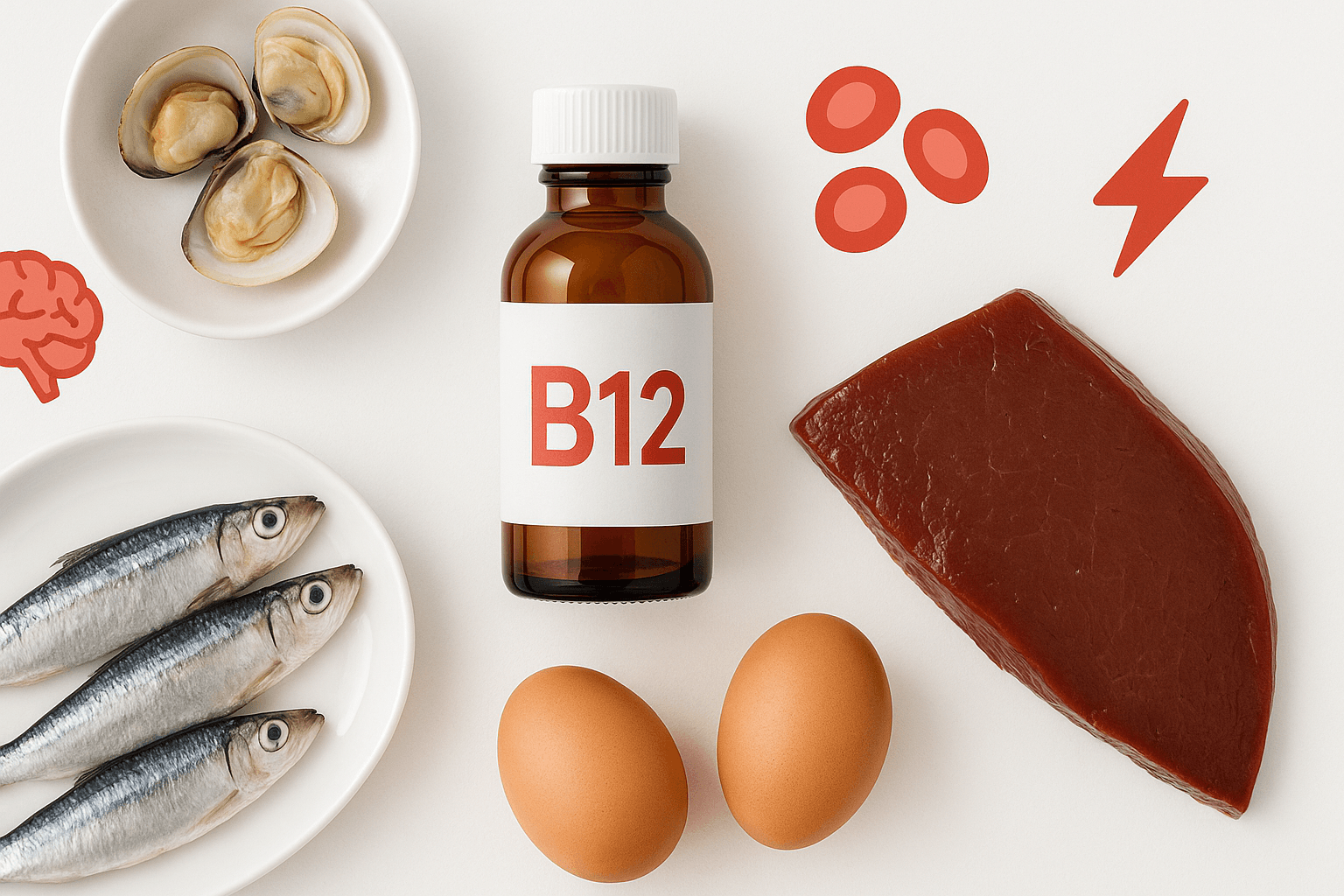
Understanding Vitamin B12
Vitamin B12, also known as cobalamin, is a water-soluble vitamin critical for several biological processes that keep the body functioning smoothly. Structurally, it is unique among vitamins for containing cobalt at its core. In the human body, the biologically active forms—methylcobalamin and adenosylcobalamin—serve as coenzymes in reactions essential for DNA synthesis, red blood cell production, and the maintenance of healthy nerve tissue.
Unlike some nutrients that the body can produce or store indefinitely, humans cannot synthesize B12, and storage capacity, while significant, is finite. The vitamin must be obtained regularly through dietary sources or supplementation. Dietary B12 is bound to proteins in animal-derived foods and released during digestion, after which it binds to intrinsic factor, a glycoprotein produced in the stomach. This B12–intrinsic factor complex is absorbed in the ileum, a section of the small intestine. Without intrinsic factor, absorption is severely impaired—a central issue in pernicious anemia.
Because B12 is naturally found almost exclusively in animal-based foods such as meat, fish, dairy, and eggs, individuals following vegan or certain vegetarian diets are at increased risk of deficiency. Other at-risk groups include older adults (who may produce less stomach acid, reducing B12 release from food), individuals with gastrointestinal disorders like celiac or Crohn’s disease, and those who have undergone bariatric or other gastrointestinal surgery. Even among omnivores, certain medications—such as metformin and proton pump inhibitors—can interfere with absorption.
Key Benefits
Supports red blood cell formation – Adequate B12 is essential for normal red blood cell production; deficiency can cause megaloblastic anemia, marked by large, immature, and poorly functioning red cells.
Maintains neurological function – B12 helps produce and maintain myelin, the protective sheath around nerves, which is critical for efficient nerve signal transmission.
Aids energy metabolism – B12 acts as a coenzyme in the breakdown of carbohydrates and fats, enabling cells to convert these macronutrients into usable energy in the form of ATP.
Research Findings
In a 12-week randomized controlled trial (n=100 adults with low-normal serum B12), daily oral supplementation significantly raised B12 levels and reduced homocysteine, a marker linked to cardiovascular risk, compared with placebo.
A 2-year observational cohort (n=164 adults aged 65+) found that individuals with higher baseline serum B12 experienced slower cognitive decline, although the study could not establish causation. In a 6-month randomized controlled trial (n=60 participants reporting fatigue and low B12), supplementation with 1000 mcg daily modestly improved subjective energy ratings versus placebo, though objective measures of physical performance did not change significantly.
While these studies suggest that maintaining adequate B12 supports blood health, neurological function, and possibly energy perception, they also illustrate the need for nuance: supplementation corrects deficiency effectively, but in already replete individuals, extra B12 does not consistently enhance cognitive or physical performance.
Best Sources & Dosage
Food sources
The richest natural sources include clams, beef liver, trout, salmon, tuna, eggs, milk, yogurt, and cheese. For those avoiding animal products, fortified plant-based milks, breakfast cereals, and nutritional yeast are reliable sources. Because plant foods do not naturally contain meaningful amounts of B12, fortification or supplementation is essential for strict vegans.
Supplement forms
Cyanocobalamin is the most common form in supplements; it is stable, inexpensive, and well-studied. Methylcobalamin and adenosylcobalamin are bioactive forms, sometimes marketed for neurological benefits, though current evidence suggests both cyanocobalamin and methylcobalamin are effective in raising B12 levels. Hydroxocobalamin is often used in clinical injections due to its longer retention time in the body.
Dosage guidance
For healthy adults, the Recommended Dietary Allowance (RDA) is 2.4 micrograms (mcg) per day. Because oral absorption is limited—especially at higher doses—supplements often provide 25–100 mcg daily for maintenance. In cases of deficiency, higher doses (500–1000 mcg/day) are used under medical guidance; these amounts help saturate absorption pathways and can normalize blood levels more quickly. For individuals with severe absorption problems, intramuscular injections may be required.
Timing and absorption
B12 supplements can be taken with or without food. Absorption is slightly better on an empty stomach, but taking with food may help those with sensitive digestion. Sublingual forms (dissolved under the tongue) have not been conclusively shown to be superior to swallowing tablets for most people.
Safety and interactions
B12 is generally regarded as very safe, even at high doses, because excess amounts are excreted in urine. No tolerable upper intake level has been established. However, those with Leber’s hereditary optic neuropathy—a rare genetic disorder—should avoid supplementation, as it may worsen the condition.
People taking metformin or acid-reducing drugs should consider periodic monitoring of B12 levels, as these medications can lower absorption over time.
Pregnant and breastfeeding women should meet the higher RDAs (2.6 mcg/day during pregnancy; 2.8 mcg/day during lactation) to support fetal and infant neurological development.
Special Considerations
Because deficiency can take years to develop—thanks to the body’s ability to store B12 in the liver—symptoms such as fatigue, weakness, tingling in extremities, and memory issues may appear only after prolonged low intake.
This makes periodic monitoring advisable for at-risk groups, even in the absence of symptoms.