
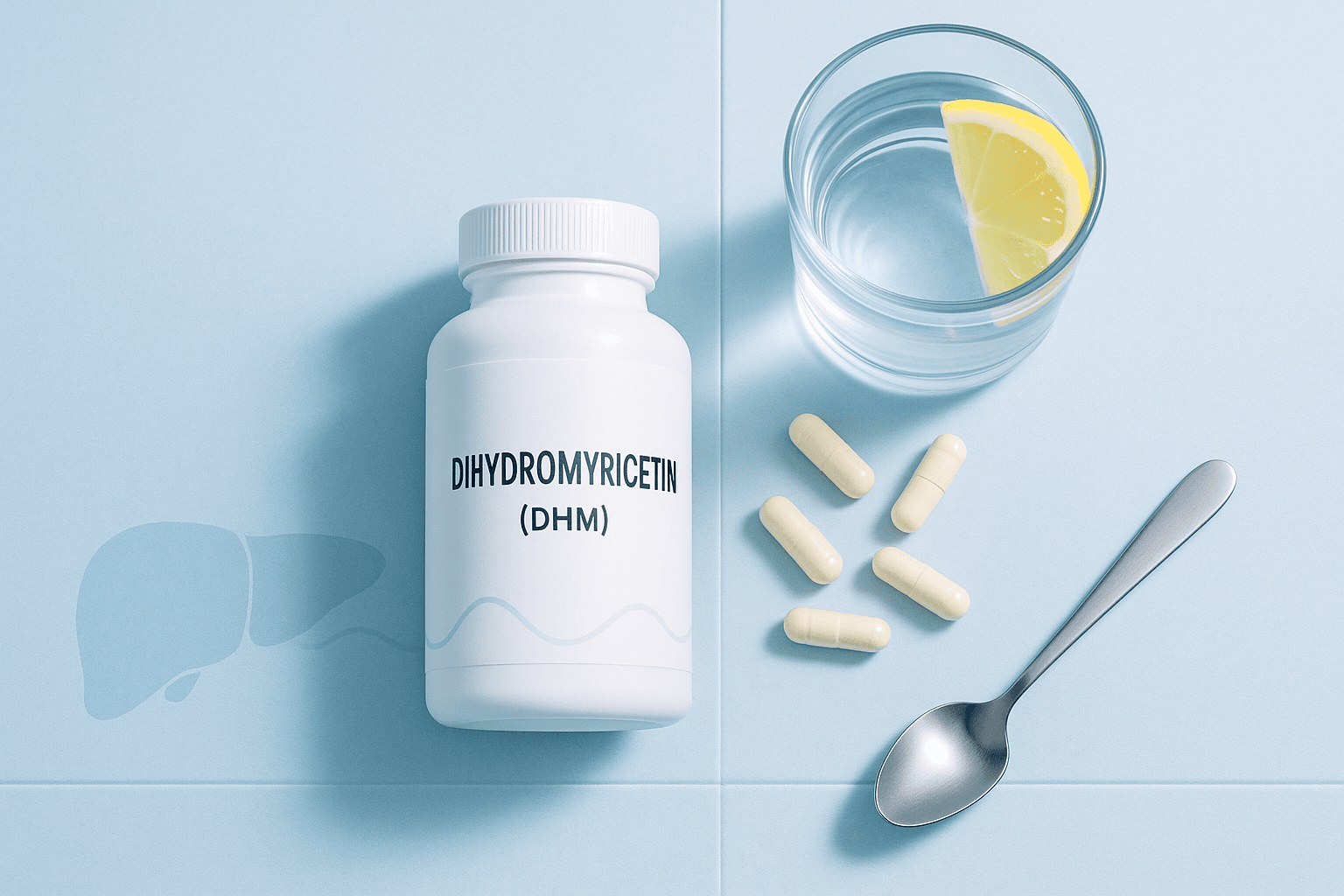
Steadier Mornings, Happier Liver: Understanding Dihydromyricetin
Dihydromyricetin (DHM)—also called ampelopsin—is a flavonoid found in Ampelopsis grossedentata and in the Hovenia dulcis (Japanese raisin) tree, long used in East Asian traditions after drinking. Modern interest centers on two fronts: liver/metabolic support and post-alcohol recovery. Mechanistically, DHM modulates GABA-A receptors (countering some ethanol effects), supports AMPK/SIRT pathways tied to cellular energy and inflammation, and shows antioxidant activity that may help tame oxidative stress in the liver.
Diet won’t supply meaningful DHM; standardized capsules or Hovenia-based beverages provide predictable, study-like dosing. Because oral bioavailability is modest, products often suggest divided dosing with meals or use delivery tech to improve uptake.
Wellness takeaway: If your goals are calmer next-day recovery, liver-friendly labs, and steadier metabolic markers, a time-boxed DHM plan layered onto sleep, hydration, fiber-forward meals, and light activity can be a practical, non-stimulant option.
Key Benefits
Liver & metabolic support. Randomized human data in NAFLD report improved liver enzymes and insulin resistance with daily DHM over 12 weeks.
Hangover relief (Hovenia extracts). Small double-blind crossover trials using Hovenia dulcis beverages (a source of DHM and other actives) shortened intoxication and eased next-day symptoms versus placebo.
Alcohol-effect modulation (mechanistic). DHM interacts with GABA-A targets implicated in ethanol intoxication; animal and mechanistic work support this pathway. Human PK/safety work is in progress.
Reality check: Evidence is strongest for NAFLD-adjacent metabolic markers and promising but early for hangover mitigation. Do not use DHM to enable excessive drinking; it’s a support, not a shield.
Research Findings
Time to benefit: Expect early changes in 4–8 weeks for metabolic markers, with clearer gains by 12 weeks on consistent dosing; hangover trials assess single-occasion effects within hours to next day.
NAFLD/metabolic health (adults): Double-blind RCT, n≈60, 600 mg/day DHM (150 mg × 2 caps, BID) for 12 weeks improved ALT/AST, LDL-C, fasting glucose, and HOMA-IR versus placebo; tolerability was good.
Hangover mitigation (Hovenia beverages): Randomized, double-blind, crossover, n=25, compared Hovenia dulcis drinks (alone or with Pueraria or glutathione) to placebo; active beverages abbreviated intoxication and reduced hangover scores after standardized alcohol challenges. Note: multi-ingredient beverages—effects aren’t DHM-only.
Mechanism & translation: Reviews and translational work highlight DHM’s GABA-A modulation (anti-intoxicating in rodents) and AMPK/SIRT1-linked hepatoprotection; a U.S. Phase I dose-escalation trial is evaluating purified DHM’s safety/PK in healthy volunteers.
Tolerability across studies: generally favorable; mild GI upset or headache were most common. Human bioavailability varies, which may explain mixed “feelable” effects.
Best Sources & Dosage
What to buy (and avoid)
Choose purified DHM or Hovenia dulcis extracts with mg per serving disclosed and third-party testing (identity, potency, contaminants).
If your goal is post-alcohol support, know that many human studies used Hovenia beverages (multiple actives), not DHM alone—pick transparent formulas.
Avoid proprietary blends that hide DHM mg—you can’t match research timing without numbers.
Evidence-aligned adult ranges
Liver/metabolic support (routine): 300–600 mg/day DHM, split BID with meals, for 8–12 weeks, then reassess labs (ALT/AST, fasting glucose, lipids). The NAFLD RCT used ~600 mg/day.
Post-alcohol recovery (adjunct): 300 mg DHM with water during or after the last drink, plus 300 mg upon waking; or follow label for Hovenia drinks used in trials (single-occasion dosing). Hydration and sleep are non-negotiable.
Bioavailability note: Pair with food and consider split dosing; delivery tech (liposomal/phytosome) may help in some users.
Timing & tips
For liver/metabolic goals, anchor doses with breakfast and dinner; track a simple metric set each week: fasting glucose (or CGM trend), ALT/AST if available, waist, energy.
For social occasions, plan ahead: pace drinks, hydrate 1:1 water:alcohol, finish alcohol 3+ hours before bed, and use DHM only as a supportive add-on, not permission to over-drink.
Stack with fiber-forward meals, 10–15 min walks after eating, and sleep regularity to compound benefits.
Safety, interactions & who should avoid it
Generally well tolerated; occasional GI upset, headache, or dizziness can occur.
Medications: DHM/Hovenia products may interact with CNS-active meds (via GABA-A pathways) and theoretically with drugs handled by CYP/P-gp; if you take benzodiazepines, sedatives, anti-seizure meds, or narrow-therapeutic-window drugs, check with your clinician.
Liver conditions: If you have active liver disease or abnormal labs, coordinate use with your clinician; DHM is not a substitute for medical care.
Pregnancy/lactation: insufficient data—avoid unless advised.
Alcohol use disorder: Do not rely on DHM to prevent intoxication or withdrawal; seek medical support. Never use it to “drink more safely.”
Label literacy—fast checks
- Clear “Dihydromyricetin (DHM)” mg per serving or Hovenia equivalence; batch COA available.
- Servings align with your plan (e.g., 150–300 mg per cap to build 300–600 mg/day).
- Transparent excipients; avoid undisclosed stimulant/sedative add-ins.
Dosage Quick-Reference
NAFLD-adjacent metabolic support: 300–600 mg/day DHM, BID with meals • 8–12 weeks • Outcome: ALT/AST, LDL-C, fasting glucose ↓ (modest).
Post-alcohol recovery (adjunct): 300 mg during/after last drink + 300 mg AM • Single occasion • Outcome: intoxication/hangover indices ↓ (most data from Hovenia drinks).
General wellness/antioxidant: 150–300 mg 1–2×/day with meals • 4–8 weeks • Outcome: subjective recovery/energy ↑; bioavailability varies.
Safety note: Do not use to justify heavier drinking; coordinate with your clinician if on CNS-active or narrow-window medications.