1. Understanding Cordyceps – What It Is and How It Works
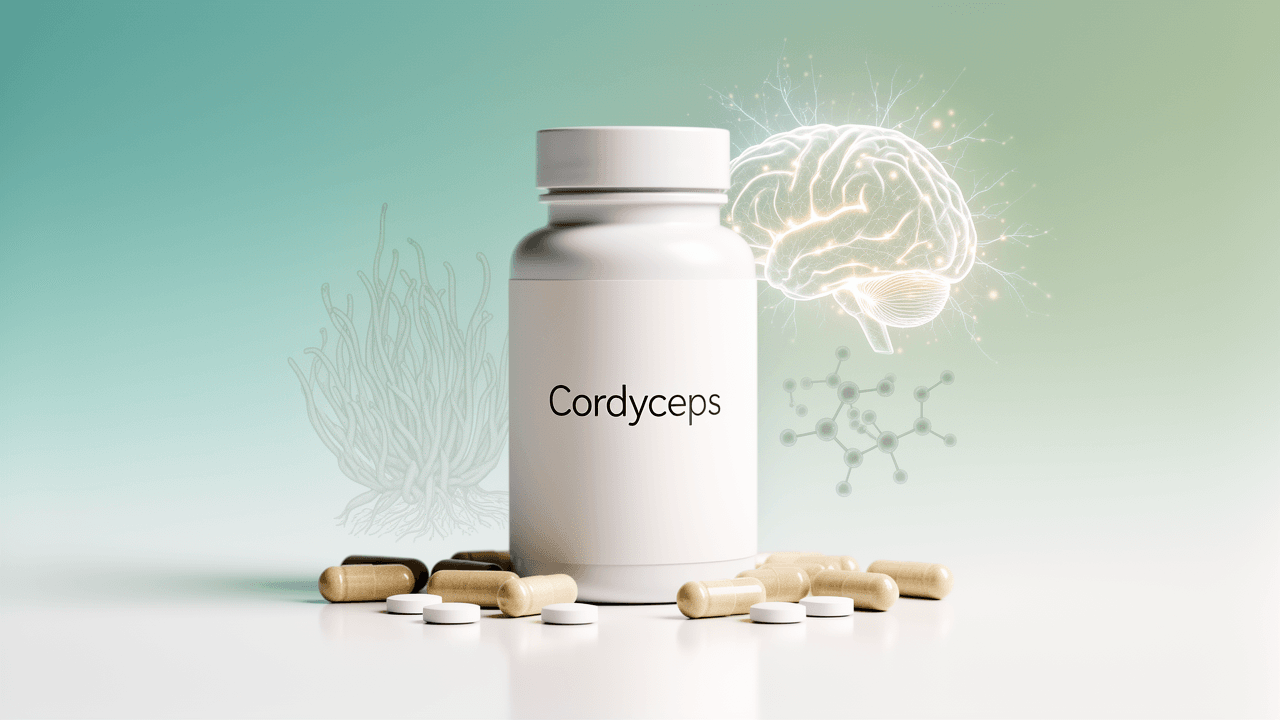
Cordyceps is a genus of parasitic fungi traditionally used in Chinese and Tibetan medicine for fatigue, respiratory issues, and longevity. As a supplement, you will almost always see:
- Cordyceps sinensis (often labeled Ophiocordyceps sinensis) – very rare in nature; most products use a cultured mycelium form (e.g., CS-4)
- Cordyceps militaris – easier to cultivate, naturally richer in cordycepin
Most modern products are grown on substrates (like grain or liquid culture) rather than harvested from insects. The key bioactive compounds include:
- Cordycepin (3'-deoxyadenosine) – adenosine analog that may influence energy metabolism, inflammation, and cell signaling
- Adenosine and related nucleosides – affect cellular energy (ATP), vasodilation, and possibly sleep–wake regulation
- Polysaccharides (β-glucans) – immunomodulatory and antioxidant effects
- Sterols (e.g., ergosterol) – may support cholesterol balance and hormone-related pathways
- Peptides and small molecules – with antioxidant and anti-inflammatory actions
How Cordyceps May Work in the Body
Cordyceps appears to act as an adaptogen, helping the body respond to physical and metabolic stress. Proposed mechanisms (based on cell, animal, and limited human data) include:
Mitochondrial support & ATP production
- Cordyceps extracts have been shown to increase ATP levels and improve mitochondrial function in animal and cell studies, which could explain improved endurance and reduced fatigue.
Improved oxygen utilization
- Some human trials report increased VO₂ max (maximal oxygen uptake) and ventilatory threshold, suggesting more efficient oxygen use during exercise.
Modulation of immune function
- Polysaccharides can stimulate or balance immune responses (e.g., affecting macrophages, NK cells, and cytokine production), potentially supporting host defense.
Antioxidant and anti-inflammatory activity
- Cordyceps increases endogenous antioxidant enzymes (SOD, catalase, glutathione peroxidase) and reduces markers of oxidative stress and inflammation in animal and limited human studies.
Neuroprotective and nootropic potential
- In preclinical models, cordyceps compounds may protect neurons from oxidative damage, modulate neuroinflammation, and support synaptic plasticity—mechanisms relevant to cognition and mood, though human data are still sparse.
Endocrine and metabolic effects
- Some research suggests mild support for blood glucose regulation, lipid profiles, and possibly testosterone and libido, especially in older individuals.
2. Key Benefits of Cordyceps as a Supplement
1. Exercise Performance and Reduced Fatigue
Cordyceps is best known for its potential to support endurance and energy:
- May increase VO₂ max and ventilatory threshold, improving aerobic capacity
- May reduce perceived exertion and post-exercise fatigue
- Could support ATP production and oxygen utilization
Effects tend to be modest and more evident in older or less-trained individuals than in young, highly trained athletes.
2. Immune Support and Anti-Inflammatory Effects
Cordyceps polysaccharides can:
- Modulate innate and adaptive immunity (e.g., macrophage, NK cell, T-cell activity)
- Increase antioxidant defenses and reduce inflammatory cytokines in preclinical and some human data
This may translate into better resilience to infections and systemic stress, though large, high-quality human trials are limited.
3. Metabolic and Cardiovascular Support
Cordyceps may offer mild support for:
- Glucose metabolism – small improvements in fasting glucose and insulin sensitivity in some studies
- Lipid profiles – reductions in LDL and triglycerides, increases in HDL in certain populations
- Blood pressure and circulation – via adenosine-mediated vasodilation and endothelial support (mostly preclinical and small human trials)
4. Cognitive and Mood Support (Emerging Evidence)
Human data are limited, but preclinical work suggests:
- Neuroprotection against oxidative and inflammatory damage
- Improved learning and memory in rodent models
- Potential support for mood via modulation of inflammatory pathways and possibly monoamine systems
At this stage, cordyceps should be considered a promising but not yet well-validated nootropic.
3. Research Findings – What the Studies Show
Exercise Performance and Fatigue
Older adults and untrained individuals
VO₂ max and ventilatory threshold (Cordyceps CS-4)
- Design: Randomized, double-blind, placebo-controlled trial
- Participants: 30 healthy older adults (50–75 years)
- Intervention: 3 g/day of CS-4 (cultured C. sinensis mycelium) vs placebo for 6 weeks
- Results: Significant increases in VO₂ max (~7%) and ventilatory threshold in the cordyceps group vs placebo; subjective fatigue decreased.
- Implication: Cordyceps may improve aerobic capacity in older, relatively untrained adults.
Functional capacity in elderly subjects
- Design: Randomized, double-blind, placebo-controlled
- Participants: 20 elderly subjects (~65 years)
- Intervention: 3 g/day CS-4 vs placebo for 12 weeks
- Results: Improved 6-minute walk distance and self-reported fatigue in the cordyceps group; no major adverse effects reported.
Younger or trained individuals
College-aged adults, moderate training status
- Design: Randomized, double-blind, placebo-controlled
- Participants: 20–30 recreationally active adults
- Intervention: ~4 g/day cordyceps-containing mushroom blend for 3 weeks
- Results: Small but significant improvement in VO₂ max (~5–7%) vs placebo; no large changes in time-to-exhaustion.
- Implication: Benefits may be present but modest in younger populations.
Trained cyclists
- Design: Randomized, double-blind, placebo-controlled
- Participants: ~20 trained cyclists
- Intervention: Cordyceps-containing supplement for 3–4 weeks
- Results: No significant improvements in time-trial performance vs placebo in some trials.
- Implication: Performance gains in highly trained athletes are inconsistent and generally small.
Overall: Evidence supports mild improvements in aerobic capacity and reduced fatigue, particularly in older or less-trained individuals, with mixed results in high-level athletes.
Immune Function and Antioxidant Activity
Immune modulation in healthy adults
- Design: Small randomized or open-label trials
- Participants: 20–50 healthy adults
- Intervention: 1–3 g/day cordyceps extract for 4–8 weeks
- Findings (across studies):
- Increased NK cell activity and/or macrophage function
- Elevated antioxidant enzymes (SOD, glutathione peroxidase)
- Reduced markers of lipid peroxidation (e.g., MDA)
- Limitations: Small sample sizes, heterogeneous products, sometimes lacking placebo controls.
Chronic kidney disease (CKD) and immune markers
- Several Chinese trials (often using CS-4 at 3–5 g/day) in CKD patients reported improved immune parameters and reduced infections; however, many lack rigorous methodology by modern standards.
Overall: There is plausible evidence that cordyceps can modulate immune activity and enhance antioxidant defenses, but high-quality, large-scale trials are limited.
Metabolic and Cardiovascular Effects
Type 2 diabetes – glycemic control
- Design: Randomized or controlled clinical studies in China
- Participants: 40–100 patients with type 2 diabetes
- Intervention: 3 g/day cordyceps (often CS-4) for 2–3 months, sometimes alongside standard medications
- Results: Modest improvements in fasting blood glucose, HbA1c, and insulin sensitivity indices vs control or baseline; some studies also report improved lipid profiles.
- Limitations: Many studies are older, with limited blinding and incomplete reporting.
Dyslipidemia and cardiovascular risk markers
- Design: Small clinical trials
- Participants: Adults with elevated cholesterol or triglycerides
- Intervention: 3–4.5 g/day cordyceps preparations for 6–12 weeks
- Results: Reductions in total cholesterol and LDL, modest increases in HDL, and decreased triglycerides in some studies.
- Implication: Cordyceps may have mild lipid-lowering effects, but it should not replace standard therapy.
Blood pressure and circulation
- Human data are limited and mixed; some small studies show mild reductions in blood pressure and improved peripheral circulation, likely via adenosine-mediated vasodilation.
Cognitive and Neuroprotective Effects
Human data:
- Currently no large, high-quality randomized trials specifically assessing cordyceps as a nootropic in healthy adults.
- Some multi-herb formula studies (e.g., traditional Chinese preparations including cordyceps) report improved cognitive scores in elderly patients with mild cognitive impairment, but cordyceps’ independent contribution cannot be isolated.
Preclinical data:
- Rodent models show that cordyceps extracts can:
- Improve performance in memory tasks (e.g., water maze, passive avoidance)
- Reduce neuronal damage and oxidative stress in models of ischemia or neurotoxicity
- Modulate BDNF expression and synaptic markers
These findings support a theoretical nootropic and neuroprotective role, but human confirmation is still needed.
Sexual Function and Hormonal Effects
- Several small Chinese trials and case series suggest cordyceps may improve libido and sperm quality in men, and support sexual function in older adults.
- Animal studies show increased testosterone and improved sperm parameters with cordyceps supplementation.
- Human evidence remains preliminary; benefits, if present, are likely modest.
4. Best Sources & Dosage – Forms, Dosing, Timing, and Safety
Common Supplemental Forms
Cultured mycelium (e.g., CS-4)
- Derived from C. sinensis mycelium grown in liquid culture or on grain
- Used in many of the older Chinese clinical trials
- Typically standardized to polysaccharide content
Cordyceps militaris fruiting body extract
- Often higher in cordycepin and related nucleosides
- Available as hot-water extracts, alcohol extracts, or dual extracts
Whole mushroom powders
- Dried and powdered mycelium or fruiting bodies
- Lower concentration of active compounds per gram compared with standardized extracts
Standardized extracts
- Labeled with specific markers (e.g., 10–30% polysaccharides, 1–2% cordycepin)
- Provide more consistent dosing
When possible, choose products that:
- Specify species (e.g., C. militaris or CS-4) and plant part (mycelium vs fruiting body)
- Provide standardization (e.g., % polysaccharides, % cordycepin)
- Are third-party tested for heavy metals, microbial contamination, and adulterants
Evidence-Based Dosage Guidelines
Important: These ranges are based on clinical studies and common practice, but individual needs vary. Start at the lower end and adjust cautiously.
1. General Health, Energy, and Adaptogenic Support
- Typical dose:
- 1,000–2,000 mg/day of a high-quality extract (standardized to polysaccharides and/or cordycepin)
- Or 2–3 g/day of CS-4 mycelium (as used in many Chinese trials)
- Timing:
- Morning and/or early afternoon with food (cordyceps can be mildly stimulating in some people)
2. Exercise Performance and Fatigue
- For older or recreationally active adults:
- 2–3 g/day CS-4 or 1,000–3,000 mg/day of C. militaris extract
- Duration in studies: 3–12 weeks for measurable effects
- For athletes:
- 1,000–3,000 mg/day of a concentrated extract
- Combine with an appropriate training program; effects are likely modest
3. Immune and Antioxidant Support
- Typical dose:
- 1,000–3,000 mg/day of extract, often divided into 2 doses
- Consider stacking with other medicinal mushrooms (e.g., reishi, turkey tail) for immune synergy
4. Metabolic Support (Glucose and Lipids)
- Typical dose in studies:
- 3 g/day of CS-4 or similar preparations, often in divided doses
- Duration: 8–12 weeks or longer
- Clinical caution: Always coordinate with a healthcare provider if you are on glucose- or lipid-lowering medications.
5. Nootropic / Cognitive Support (Emerging Use)
- Due to limited human data, use conservative dosing:
- 1,000–2,000 mg/day of a high-quality extract
- Combine with evidence-backed nootropics (e.g., omega-3s, bacopa, citicoline) rather than relying on cordyceps alone.
Safety, Side Effects, and Drug Interactions
Cordyceps is generally well tolerated in clinical studies up to doses of ~3–6 g/day for several months, but long-term safety data are limited.
Common, Usually Mild Side Effects
- Gastrointestinal:
- Nausea
- Loose stools or mild diarrhea
- Abdominal discomfort
- Other:
- Dry mouth or throat
- Mild insomnia or restlessness in sensitive individuals (especially if taken late in the day)
These effects often improve by reducing the dose or taking with food.
Potential Allergic Reactions
- Rare, but possible: rash, itching, or respiratory symptoms in people with mold or mushroom allergies.
- Discontinue immediately and seek medical care if you experience signs of allergy.
Drug Interactions and Special Precautions
Anticoagulant and antiplatelet drugs
- Cordyceps may have mild antiplatelet effects in preclinical data.
- Potential interaction with: warfarin, DOACs (apixaban, rivaroxaban), heparin, aspirin, clopidogrel, and other blood thinners.
- Recommendation: Use with caution; monitor for bleeding/bruising; consult your clinician before combining.
Immunosuppressive medications
- Because cordyceps can modulate immune activity, it may theoretically counteract immunosuppressive drugs.
- Relevant medications: corticosteroids (at immunosuppressive doses), calcineurin inhibitors (cyclosporine, tacrolimus), biologics (e.g., anti-TNF agents), post-transplant regimens.
- Recommendation: Avoid or use only under medical supervision if you are on immunosuppressants or have had an organ transplant.
Antidiabetic medications
- Cordyceps can modestly lower blood glucose in some individuals.
- Risk: Additive hypoglycemia when combined with insulin or oral hypoglycemics (metformin, sulfonylureas, SGLT2 inhibitors, GLP-1 agonists, etc.).
- Recommendation: Monitor blood glucose more closely; dosage adjustments of medications may be needed under medical guidance.
Antihypertensive medications
- Mild vasodilatory and blood pressure–lowering effects are possible.
- Risk: Additive hypotension when combined with blood pressure medications.
- Recommendation: Monitor blood pressure, especially when starting or changing dose.
Hormone-sensitive conditions
- Some preclinical data suggest effects on sex hormones and steroidogenesis.
- In those with hormone-sensitive cancers or on hormone therapies, caution is advisable until more data are available.
Who Should and Shouldn’t Use Cordyceps
Likely Appropriate Candidates (with Professional Guidance When Needed)
- Adults seeking mild support for energy and endurance, especially older or deconditioned individuals
- People looking for adjunctive immune and antioxidant support (e.g., frequent mild infections, high oxidative stress) alongside lifestyle measures
- Individuals interested in a broad-spectrum adaptogen within a comprehensive health plan
- Recreational athletes wanting modest aerobic performance support
Populations That Should Use Extra Caution or Avoid Cordyceps
Pregnant or breastfeeding women
- Human safety data are insufficient.
- Recommendation: Avoid unless specifically recommended and supervised by a qualified clinician.
Children and adolescents
- Very limited safety and efficacy data.
- Recommendation: Avoid routine use; if considered, it should be under pediatric specialist supervision.
Individuals on immunosuppressive therapy or post-transplant
- Possible interference with immunosuppressive drugs.
- Recommendation: Generally avoid unless a transplant/immune specialist approves and monitors.
People with bleeding disorders or on anticoagulants/antiplatelets
- Theoretical increased bleeding risk.
- Recommendation: Use only with medical approval and monitoring, or avoid.
Uncontrolled autoimmune diseases
- Immunomodulatory effects could theoretically exacerbate or ameliorate autoimmune conditions; data are lacking.
- Recommendation: Consult a rheumatologist or relevant specialist before use.
Known mushroom or mold allergies
- Higher risk of allergic reactions.
- Recommendation: Avoid cordyceps supplements.
Severe kidney or liver disease
- Many traditional trials included CKD patients, but formulations and quality control varied.
- Because cordyceps is metabolized and excreted through these organs, and contamination is a concern, use only under specialist supervision.
Practical Use Tips
- Start low, go slow: Begin at 500–1,000 mg/day of extract and increase gradually over 1–2 weeks.
- Take earlier in the day: To avoid potential sleep disruption, use in the morning or early afternoon.
- Cycle use: Some practitioners recommend 8–12 weeks on, 2–4 weeks off, especially at higher doses, though this is based on tradition rather than strong data.
- Combine with lifestyle: Cordyceps works best alongside adequate sleep, nutrition, and exercise, not as a substitute.
- Quality matters: Choose reputable brands with third-party testing and clear labeling of species, plant part, and standardization.
Summary
Cordyceps is a traditional medicinal mushroom with modern research suggesting modest benefits for energy, aerobic performance, immune modulation, antioxidant defenses, and metabolic health. Its role as a nootropic is promising but not yet well established in humans.
Doses of 1–3 g/day of standardized extracts (or CS-4) are most commonly used in studies and are generally well tolerated, though mild gastrointestinal upset and rare allergic reactions can occur. Key cautions apply to individuals who are pregnant or breastfeeding, on immunosuppressants, anticoagulants, or antidiabetic medications, and those with serious underlying conditions.
Cordyceps can be a useful adjunct in a broader health strategy, but it should not replace evidence-based medical treatments. Consultation with a healthcare professional is recommended, especially if you have chronic illnesses or take prescription medications.