1. Understanding Cordyceps – What It Is and How It Works
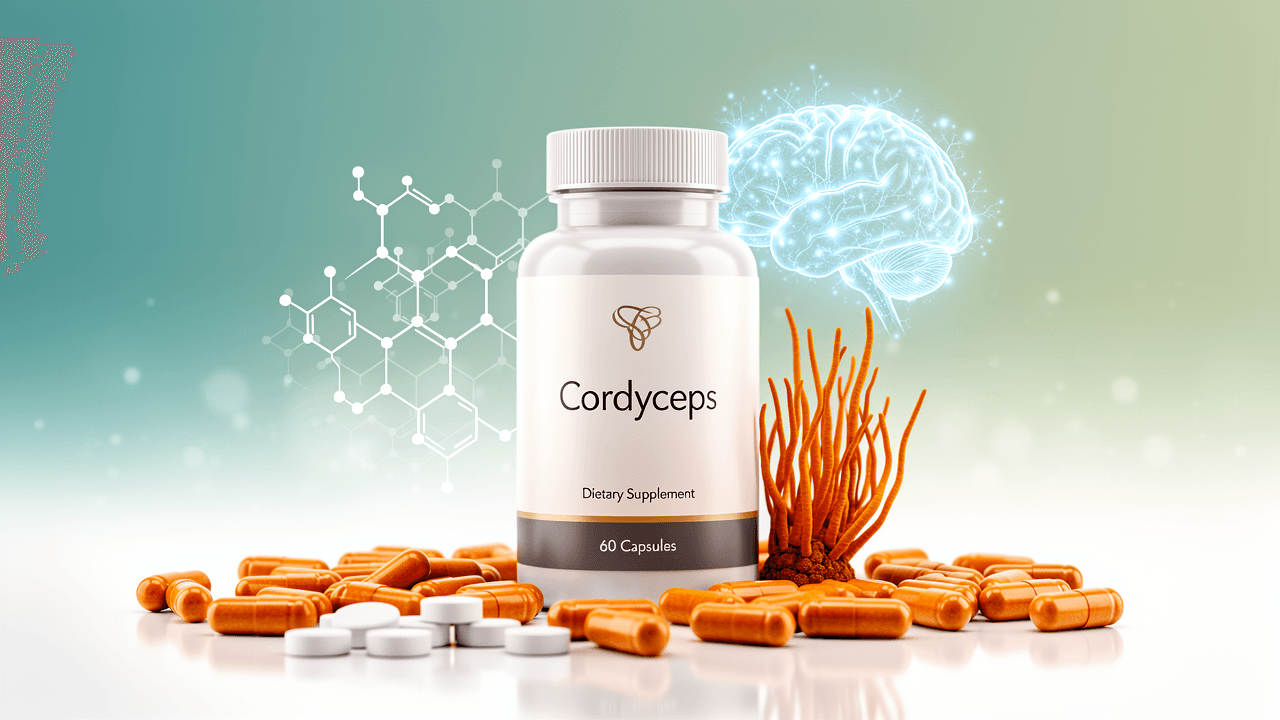
Cordyceps is a genus of parasitic fungi traditionally used in Chinese and Tibetan medicine for fatigue, respiratory health, and longevity. Modern supplements typically use:
- Cordyceps sinensis (Ophiocordyceps sinensis) – the wild “caterpillar fungus,” rare and extremely expensive; most products use cultured mycelium rather than wild fruiting bodies.
- Cordyceps militaris – easier to cultivate, naturally higher in cordycepin and often used in standardized extracts.
Commercial products are usually:
- Fruiting body extracts (often from C. militaris)
- Mycelium on grain (C. sinensis or C. militaris grown on rice or other substrate)
- Standardized extracts (e.g., 10–40% polysaccharides, 1–3% cordycepin)
1.1 Key Active Compounds
Cordyceps contains several bioactive constituents:
- Cordycepin (3′-deoxyadenosine) – structurally similar to adenosine; may affect energy metabolism, inflammation, and cell signaling.
- Polysaccharides (β-glucans) – immune-modulating and antioxidant effects.
- Nucleosides (adenosine, uridine, etc.) – may influence ATP production and vascular function.
- Sterols (ergosterol) and peptides – potential antioxidant and anti-inflammatory actions.
1.2 How Cordyceps May Work in the Body
Mechanisms proposed from in vitro, animal, and limited human data include:
Mitochondrial and energy metabolism support
- Cordyceps extracts have been shown to increase ATP production and improve mitochondrial function in animal and cell studies.
- Cordycepin and adenosine-like compounds may influence the adenosine monophosphate-activated protein kinase (AMPK) pathway, which regulates energy balance.
Improved oxygen utilization
- Some human trials report improved VO₂ max and ventilatory thresholds, suggesting better oxygen use during exercise.
- Possible modulation of erythropoietin (EPO) and nitric oxide pathways has been proposed, though human evidence is limited.
Anti-inflammatory and antioxidant effects
- Cordyceps polysaccharides can reduce markers of oxidative stress and inflammatory cytokines in animal and small human studies.
- May help protect mitochondria and vascular endothelium from oxidative damage.
Immune modulation
- β-glucan-rich polysaccharides can modulate innate and adaptive immune responses, sometimes described as “immunomodulatory” rather than purely stimulating or suppressing.
Neuroprotective and nootropic potential
- Animal and cell studies suggest cordyceps may protect neurons from oxidative and excitotoxic damage, and modulate neurotransmitter systems (e.g., acetylcholine, glutamate).
- Human cognitive data are sparse but some trials suggest reduced fatigue and improved subjective well-being, which may indirectly support cognition.
2. Key Benefits of Cordyceps
2.1 Exercise Performance and Endurance
Cordyceps is most studied for aerobic performance and fatigue resistance.
- May modestly improve VO₂ max, time to exhaustion, and subjective fatigue in some populations.
- Effects are more consistent in older or less-trained adults; results in young trained athletes are mixed.
2.2 Anti-Fatigue and Vitality
- Traditional use focuses on fatigue, low stamina, and recovery.
- Modern trials show improvements in subjective fatigue scores, particularly in older adults or people with mild fatigue.
2.3 Metabolic and Cardiovascular Support
- May help improve lipid profiles (lower triglycerides, modest HDL increases) and some markers of glucose metabolism.
- Some evidence suggests improved endothelial function and antioxidant protection, potentially supporting cardiovascular health.
2.4 Immune and Anti-Inflammatory Effects
- Cordyceps polysaccharides can modulate immune activity, potentially supporting host defense while reducing chronic low-grade inflammation.
- Early research suggests possible benefits in respiratory health (e.g., chronic bronchitis, COPD) when used alongside standard care, though evidence is still limited.
2.5 Nootropic and Neuroprotective Potential (Preliminary)
- Animal data suggest cordyceps may protect against cognitive decline via antioxidant and anti-inflammatory pathways.
- Human data are mostly indirect (reduced fatigue, improved quality of life), so cordyceps should be considered a supportive rather than primary nootropic at this time.
3. Research Findings
3.1 Exercise Performance and Fatigue
Older adults and untrained individuals
VO₂ max and exercise capacity in older adults
- Study: 20 healthy older adults (mean age ~65), double-blind, placebo-controlled, 12 weeks.
- Intervention: 333 mg/day of a C. sinensis–containing formula (3×/day) vs placebo.
- Results: Significant increases in VO₂ max (~7%) and anaerobic threshold (~10%) compared to placebo; improvements in exercise tolerance and subjective fatigue.
- Implication: Cordyceps may meaningfully improve aerobic capacity in older, deconditioned adults with consistent use.
Short-term performance in healthy adults
- Study: 20 healthy adults, double-blind, placebo-controlled, 3 weeks.
- Intervention: 4 g/day C. sinensis mycelial culture vs placebo.
- Results: Small but significant improvements in VO₂ max and time to exhaustion in the cordyceps group; no major changes in body composition.
- Implication: Short-term supplementation may provide modest endurance gains in recreationally active individuals.
Trained athletes
- Cycling performance in trained athletes
- Study: 22 trained male cyclists, double-blind, placebo-controlled, 5 weeks.
- Intervention: 4.5 g/day C. sinensis mycelial extract vs placebo.
- Results: No significant difference in VO₂ max or time trial performance between groups.
- Implication: Cordyceps may not provide substantial performance benefits in already highly trained athletes.
3.2 Fatigue and Quality of Life
Elderly fatigue and well-being
- Study: 50 older adults with fatigue, randomized, 30 days.
- Intervention: 3 g/day C. sinensis mycelium vs placebo.
- Results: Significant improvements in fatigue scores, cold intolerance, and sexual function in the cordyceps group; generally well tolerated.
- Implication: Cordyceps may help reduce age-related fatigue and improve perceived vitality.
Chronic fatigue-like symptoms (pilot)
- Study: Small open-label pilot (n≈20) using C. militaris extract 1–1.5 g/day for 6–8 weeks.
- Results: Participants reported reduced fatigue and improved sleep and mood; lack of control group limits conclusions.
- Implication: Suggestive but low-quality evidence; controlled trials are needed.
3.3 Metabolic and Cardiovascular Effects
Dyslipidemia in adults
- Study: ~273 hyperlipidemic patients, controlled (Chinese clinical trial), 1–2 months.
- Intervention: 3–4.5 g/day C. sinensis mycelium vs usual care.
- Results: Significant reductions in total cholesterol (≈10–20%) and triglycerides, with modest increases in HDL in the cordyceps groups; generally good tolerance.
- Implication: Cordyceps may modestly improve lipid profiles when used alongside diet and standard therapies.
Type 2 diabetes markers
- Study: Small human studies (sample sizes ~30–60) using 3 g/day C. sinensis for 2–3 months.
- Results: Modest reductions in fasting blood glucose and improvements in HbA1c in some trials; others show no significant change.
- Implication: Potential adjunct to metabolic management, but not a replacement for standard diabetes care; evidence is mixed and limited.
3.4 Immune and Respiratory Health
- Chronic bronchitis and COPD (adjunctive)
- Study: Several Chinese trials (sample sizes 50–130) using 3–4.5 g/day C. sinensis mycelium for 1–3 months alongside standard therapy.
- Results: Improved symptom scores (cough, dyspnea), fewer acute exacerbations, and improved quality of life compared with standard therapy alone.
- Limitations: Many studies have methodological weaknesses (poor blinding, unclear randomization).
- Implication: May be helpful as an adjunct in chronic respiratory conditions, but stronger, well-designed trials are needed.
3.5 Neuroprotection and Cognition (Preclinical)
Most nootropic claims for cordyceps come from animal and cell studies:
In rodent models, cordyceps extracts have shown:
- Reduced oxidative damage in brain tissue.
- Improved performance in memory and learning tasks (e.g., Morris water maze) when animals were under stress or toxin exposure.
- Protection against β-amyloid–induced neurotoxicity in Alzheimer’s models.
Mechanisms include increased antioxidant enzymes (SOD, catalase), reduced pro-inflammatory cytokines, and modulation of cholinergic signaling.
However, well-controlled human trials directly assessing cognition are lacking, so cordyceps should currently be considered a supportive adaptogen with potential neuroprotective effects rather than a primary cognitive enhancer.
4. Best Sources & Dosage – Forms, Dosing, Timing, Safety
4.1 Forms and Quality Considerations
Fruiting body extracts (often C. militaris)
- Typically hot-water or dual (water + alcohol) extracts.
- Often standardized to polysaccharides (e.g., 20–40%) and sometimes cordycepin (e.g., 1–3%).
- Generally preferred for higher concentration of fungal compounds and lower grain content.
Mycelium on grain (C. sinensis or C. militaris)
- Grown on rice or other substrates; final product can contain substantial starch from the substrate.
- May have lower levels of fungal actives per gram; quality varies widely.
- Many of the older clinical trials used C. sinensis mycelium at 3–4.5 g/day.
Standardized extracts
- Look for products specifying:
- Species (e.g., Cordyceps militaris fruiting body)
- Extraction ratio (e.g., 8:1, 10:1)
- Standardization (e.g., ≥20–30% polysaccharides, cordycepin content when available)
- Look for products specifying:
Powder vs capsules vs tinctures
- Capsules/tablets: Convenient, standardized dosing.
- Bulk powder: Cost-effective but less standardized; taste is earthy/bitter.
- Tinctures: Less studied; extraction solvent and ratio matter.
4.2 Evidence-Informed Dosage Ranges
Note: Human studies use a wide range of doses and forms. The following are typical ranges, not medical prescriptions.
4.2.1 General Health & Vitality
- Typical range: 500–1,500 mg/day of a concentrated extract (e.g., 10:1, 20–40% polysaccharides), or ~1–3 g/day of non-concentrated mycelium.
- Dosing: Once or divided into 2 doses (morning and early afternoon).
4.2.2 Exercise Performance & Endurance
- Range used in studies:
- 3–4.5 g/day C. sinensis mycelial culture (non-concentrated), or
- 1,000–2,000 mg/day of standardized fruiting body extract.
- Timing:
- Daily use for at least 2–4 weeks appears more important than acute pre-workout dosing.
- Some users take a portion 30–60 minutes before exercise, but evidence suggests chronic supplementation is key.
4.2.3 Anti-Fatigue and Recovery
- Range: 1–2 g/day of standardized extract, or 3 g/day mycelium, used for 4–12 weeks in studies.
- Population: Especially in older adults or those with mild fatigue, not severe chronic fatigue syndromes.
4.2.4 Metabolic and Cardiovascular Support
- Range in studies: 3–4.5 g/day C. sinensis mycelium for 1–3 months.
- For standardized extracts, many practitioners use 1–2 g/day, though direct evidence at these exact doses is limited.
4.3 Timing and Stacking
- With or without food: Can be taken with meals to reduce any potential GI upset; absorption does not appear highly food-dependent.
- Time of day: Morning and/or early afternoon. Some people report mild stimulation; avoid late-evening dosing if you are sensitive.
- Common stacks:
- For endurance: Cordyceps + beta-alanine or beetroot (nitrates) + adequate carbohydrates.
- For general nootropic support: Cordyceps + lion’s mane (for neurotrophic support) + omega-3s; evidence for stacks is largely anecdotal.
5. Safety, Side Effects, and Drug Interactions
Cordyceps is generally well tolerated in human trials, but long-term safety data are limited, especially at high doses.
5.1 Common Side Effects
Reported side effects are usually mild and infrequent:
- Gastrointestinal: Nausea, diarrhea, dry mouth, or mild stomach discomfort.
- CNS: Occasional reports of insomnia or restlessness if taken late in the day.
- Allergic reactions: Rare, but possible (rash, itching, respiratory symptoms) in sensitive individuals.
If side effects occur, reducing the dose or taking with food often helps.
5.2 Potential Drug Interactions
Evidence for interactions is mostly theoretical or based on animal/in vitro data, so caution is warranted:
Anticoagulants / Antiplatelet drugs
- Cordyceps may have mild antiplatelet effects.
- Caution with warfarin, DOACs (e.g., apixaban), aspirin, clopidogrel, or other blood thinners.
- Monitor for bruising, bleeding; consult a clinician before combining.
Immunosuppressant medications
- Cordyceps can modulate immune function; in some models it appears mildly immunostimulatory.
- Caution in those on immunosuppressive therapy (e.g., post-transplant drugs like cyclosporine, tacrolimus; biologics for autoimmune disease).
- Use only under medical supervision if at all.
Hypoglycemic agents (diabetes medications)
- Some studies suggest modest blood sugar–lowering effects.
- Combined with insulin or oral hypoglycemics (metformin, sulfonylureas, etc.), there is a theoretical risk of additive hypoglycemia.
- Monitor blood glucose more closely if starting cordyceps and coordinate with your healthcare provider.
Antihypertensives
- Cordyceps may slightly affect blood pressure and vascular tone; interactions are not well studied but theoretically could augment BP-lowering medications in some individuals.
Caffeine and stimulants
- Many people tolerate the combination well; some report increased stimulation or jitteriness when combining cordyceps with high caffeine doses or other stimulants.
- Start with lower doses if stacking with stimulants.
5.3 Special Populations and Contraindications
Pregnancy and breastfeeding
- There is insufficient safety data in pregnant or breastfeeding women.
- Most professional guidelines recommend avoiding cordyceps in these groups unless clearly indicated and supervised by a clinician.
Autoimmune disease
- Due to immune-modulating properties, cordyceps could theoretically exacerbate some autoimmune conditions or interfere with immunosuppressive therapy.
- People with conditions like lupus, rheumatoid arthritis, multiple sclerosis, or inflammatory bowel disease should use cordyceps only under medical guidance, if at all.
Bleeding disorders or upcoming surgery
- Because of potential antiplatelet effects, individuals with bleeding disorders or those scheduled for surgery should stop cordyceps at least 1–2 weeks before procedures unless otherwise directed by a physician.
Children and adolescents
- Very limited data are available; cordyceps is not routinely recommended for children.
- Any use should be guided by a pediatric professional.
Cancer patients
- Cordyceps is sometimes marketed in oncology contexts due to immunomodulatory and anti-proliferative effects in preclinical studies.
- However, it may interact with chemotherapy, radiotherapy, and immunotherapies.
- Cancer patients should not self-prescribe cordyceps and should discuss any supplement use with their oncology team.
5.4 Long-Term Use
- Most human trials last 1–3 months; a few extend to 6–12 months in specific populations.
- There is no robust long-term (>1 year) safety database at high doses.
- A conservative approach:
- Use cordyceps in cycles (e.g., 8–12 weeks on, 2–4 weeks off).
- Periodically re-evaluate need and monitor blood work if using for metabolic or cardiovascular support.
6. Who Should and Shouldn’t Use Cordyceps
6.1 Who May Benefit
Cordyceps may be particularly useful for:
- Middle-aged and older adults with low energy, mild fatigue, or declining exercise tolerance.
- Recreationally active individuals looking for a modest boost in aerobic performance and recovery.
- People seeking general vitality and adaptogenic support, especially in combination with lifestyle measures (sleep, nutrition, exercise).
- Individuals with mild dyslipidemia or metabolic issues who are already working on diet and exercise and want to explore adjunctive support (under medical supervision).
6.2 Who Should Be Cautious or Avoid Use
Cordyceps is not appropriate or needs caution in:
- Pregnant or breastfeeding women – avoid due to lack of safety data.
- People on anticoagulants/antiplatelet drugs – use only with medical supervision.
- Individuals on immunosuppressive therapy or with organ transplants – generally avoid unless specifically cleared by a specialist.
- People with autoimmune diseases – potential for immune modulation; discuss with a rheumatologist or relevant specialist.
- Those with uncontrolled diabetes – potential additive glucose-lowering effects; close monitoring required.
- Individuals with known mushroom or mold allergies – higher risk of allergic reaction.
7. Practical Takeaways
- Cordyceps is a well-known adaptogenic fungus with the best evidence for improving aerobic performance and reducing fatigue, especially in older or less-trained adults.
- Benefits for lipids, glucose control, immune and respiratory health are promising but based on relatively small, sometimes methodologically weak studies.
- Evidence as a direct nootropic is still preliminary and largely preclinical; cognitive benefits in humans are likely indirect (via reduced fatigue and improved metabolic health).
- Typical supplemental doses: 500–2,000 mg/day of standardized extract or 3–4.5 g/day of mycelial products, taken for at least several weeks.
- Generally well tolerated, but caution is needed with blood thinners, immunosuppressants, diabetes medications, and in pregnancy, autoimmune disease, and cancer care.
Cordyceps should be viewed as a supportive tool, best combined with evidence-based lifestyle strategies and, when relevant, conventional medical care. Anyone with chronic illness or on prescription medications should consult a qualified healthcare professional before starting cordyceps or any other potent herbal or fungal supplement.