1. Understanding Cordyceps – What It Is and How It Works
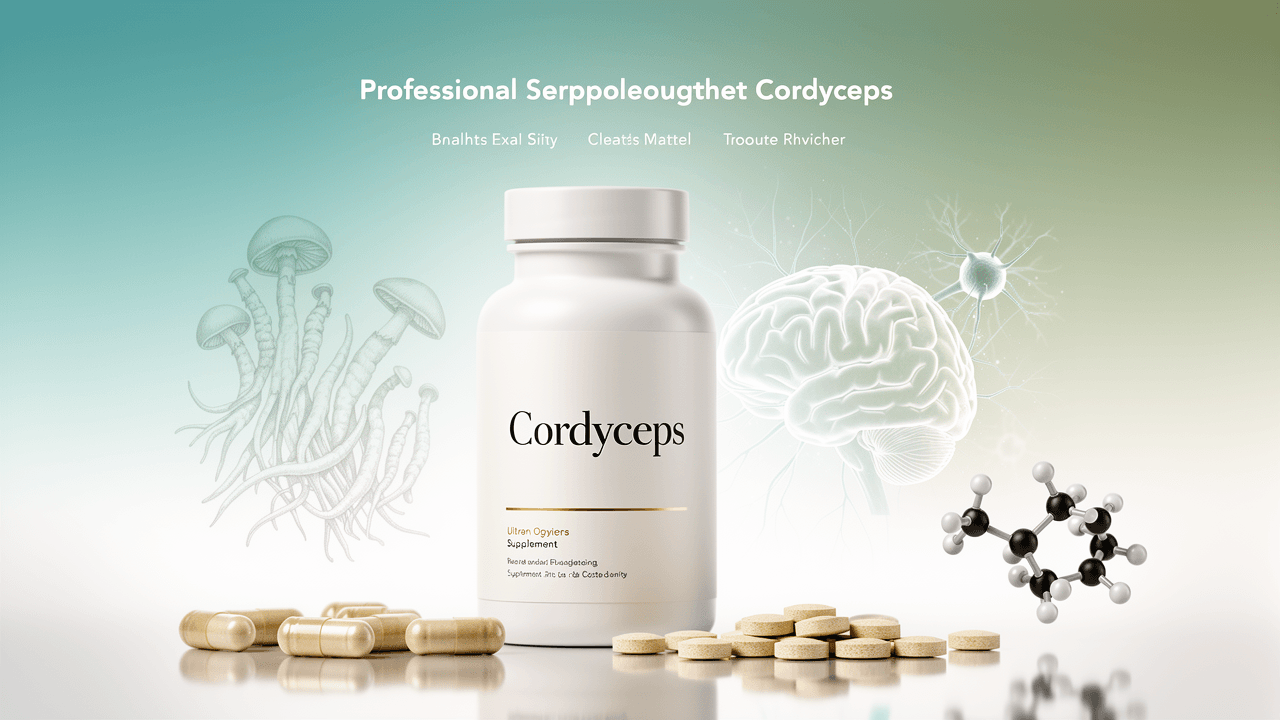
Cordyceps is a genus of parasitic fungi traditionally used in Chinese and Tibetan medicine for vitality, stamina, and lung health. The most commonly used dietary supplement forms are:
- Cordyceps sinensis (Ophiocordyceps sinensis) – the wild form that grows on caterpillars at high altitudes; now mostly replaced by lab-grown mycelium due to cost and sustainability.
- Cordyceps militaris – cultivated on plant-based substrates; naturally richer in cordycepin, a key active compound.
Modern cordyceps supplements usually contain:
- Mycelial biomass (mycelium grown on grain)
- Fruiting body extracts (from C. militaris)
- Standardized extracts (e.g., 10–40% polysaccharides, 0.1–1% cordycepin)
Key Active Compounds
Cordyceps contains several bioactive molecules:
- Cordycepin (3'-deoxyadenosine) – structurally similar to adenosine; may affect energy metabolism, inflammation, and signaling pathways (e.g., AMPK, mTOR).
- Polysaccharides (β-glucans) – immune-modulating and antioxidant effects.
- Nucleosides (adenosine, uridine, guanosine) – may influence cellular energy and signaling.
- Sterols (ergosterol), peptides, and phenolic compounds – contribute to antioxidant and anti-inflammatory actions.
How Cordyceps May Work in the Body
Current evidence (mostly preclinical, with some human data) suggests cordyceps acts via several mechanisms:
Mitochondrial and Energy Metabolism Support
- Cordycepin and polysaccharides may activate AMP-activated protein kinase (AMPK), a central energy sensor.
- Animal and cell studies show increased ATP production and improved mitochondrial function, which could translate to better endurance and reduced fatigue.
Improved Oxygen Utilization and Blood Flow
- Cordyceps appears to influence adenosine signaling and nitric oxide (NO) pathways, potentially improving vasodilation and oxygen delivery to tissues.
- This is one proposed mechanism behind reported improvements in VO₂ max and exercise performance.
Anti-Inflammatory and Antioxidant Effects
- Cordyceps polysaccharides reduce pro-inflammatory cytokines (e.g., TNF-α, IL‑1β, IL‑6) and increase antioxidant enzymes like superoxide dismutase (SOD) and glutathione peroxidase in animal models.
- This may protect tissues (including brain and muscles) from oxidative stress.
Immune Modulation
- Cordyceps appears to be immunomodulatory, not simply immune-boosting.
- It can stimulate or down-regulate immune activity depending on context, via effects on macrophages, NK cells, and T cells.
Neuroprotective and Nootropic Potential
- In animal models, cordyceps enhances neurotrophic factors, reduces neuroinflammation, and may protect neurons from oxidative damage.
- Human data for cognition are limited but suggest possible benefits for mental energy and fatigue.
Cordyceps should be viewed as a metabolic and vitality-supporting adaptogen with secondary nootropic and performance effects, rather than a classic stimulant.
2. Key Benefits of Cordyceps
1. Exercise Performance and Reduced Fatigue
Cordyceps is best known for its potential to support aerobic performance, especially in less-trained or older individuals.
- May increase VO₂ max (maximal oxygen uptake) in some populations.
- Can reduce subjective fatigue and improve exercise tolerance.
- Mechanisms likely involve better oxygen utilization, mitochondrial efficiency, and reduced oxidative stress.
2. Energy, Vitality, and Anti-Fatigue Effects
- Traditional use focuses on fatigue, low stamina, and recovery.
- Modern studies show improvements in subjective energy levels and exercise tolerance, especially in older adults or those with low baseline fitness.
3. Potential Cognitive and Mood Support
While human data are limited, cordyceps may:
- Reduce mental fatigue and perceived exertion.
- Support neuroprotection via antioxidant and anti-inflammatory effects.
- Potentially support mood and resilience through adaptogenic mechanisms.
4. Metabolic, Cardiovascular, and Immune Effects (Emerging Evidence)
Preclinical and early human data suggest:
- Metabolic health: possible improvements in insulin sensitivity and lipid profiles.
- Cardiovascular support: mild improvements in blood flow and endothelial function.
- Immune modulation: balancing immune responses, with both stimulatory and anti-inflammatory actions depending on context.
These areas are promising but still preliminary and should not replace standard medical care.
3. Research Findings on Cordyceps
Human research on cordyceps is growing but still modest. Many studies use proprietary blends or C. militaris extracts, so results may not generalize to all products.
Exercise Performance and VO₂ Max
1. Young adults, cordyceps blend, 3 weeks
- Study design: Randomized, double-blind, placebo-controlled.
- Participants: 20 healthy young adults (~22 years old).
- Intervention: 4 g/day of a cordyceps-containing mushroom blend (including C. militaris) vs placebo for 3 weeks.
- Outcomes: VO₂ max, time to exhaustion on treadmill, ventilatory threshold.
- Results:
- VO₂ max increased significantly in the cordyceps group compared with placebo (~7% relative improvement), while placebo showed minimal change.
- Time to exhaustion also improved modestly in the cordyceps group.
- Implication: Cordyceps-containing products may enhance aerobic capacity in recreationally active but not highly trained individuals.
2. Older adults, cordyceps CS-4, 12 weeks
- Study design: Randomized, double-blind, placebo-controlled.
- Participants: 30 healthy older adults (60–75 years).
- Intervention: 3 g/day of CS-4 (a cultured C. sinensis mycelial product) vs placebo for 12 weeks.
- Outcomes: VO₂ max, anaerobic threshold, metabolic parameters.
- Results:
- Significant improvements in VO₂ max and ventilatory threshold in the CS-4 group vs placebo.
- Participants reported reduced fatigue and improved exercise tolerance.
- Implication: Older adults may be more responsive to cordyceps for endurance and fatigue.
3. Trained athletes, mixed results
Several small studies in trained athletes (cyclists, runners) using 1–4 g/day cordyceps for 2–6 weeks often show:
- Minimal or no statistically significant improvement in VO₂ max or time trial performance.
- Occasional small improvements in lactate threshold or subjective fatigue.
This suggests cordyceps may be more beneficial for untrained or moderately trained individuals than for highly conditioned athletes.
Anti-Fatigue and Quality of Life
Older adults with fatigue
- Study design: Open-label pilot or small randomized trials.
- Participants: 20–50 older adults (50–75 years) with self-reported fatigue.
- Intervention: 1–3 g/day cordyceps (often CS-4) for 4–12 weeks.
- Outcomes: Fatigue scales, physical performance tests (e.g., 6-minute walk test).
- Results:
- Modest improvements in fatigue scores and walking distance.
- Some improvement in global quality-of-life measures.
- Limitations: Small sample sizes, sometimes lacking strict placebo controls.
Cognitive and Neuroprotective Evidence
Human data are sparse and mostly indirect (e.g., improved fatigue and energy). Evidence for direct nootropic effects comes mostly from animal and cell studies:
- Rodent models of cognitive impairment: Cordyceps extracts improved performance in maze tests, increased antioxidant enzymes in brain tissue, and reduced neuroinflammatory markers.
- Neuroprotection: Cordycepin protected neurons from glutamate- or β-amyloid-induced toxicity in cell cultures, partly via antioxidant and anti-apoptotic pathways.
These findings support biological plausibility for brain benefits, but robust human trials on memory, focus, or mood are lacking. Cordyceps is better characterized as a fatigue and vitality aid with potential secondary cognitive benefits.
Metabolic and Cardiovascular Findings
Blood lipids and glucose (small human trials)
- Several small studies in individuals with hyperlipidemia or type 2 diabetes used 3–4.5 g/day of cordyceps (often C. sinensis mycelium) for 6–12 weeks.
- Reported findings include:
- Small reductions in total cholesterol and LDL, modest increases in HDL.
- Mild improvements in fasting glucose and insulin sensitivity.
- These studies often lack rigorous controls and have small sample sizes (n = 20–60), so results are preliminary.
Blood pressure and vascular health
- Limited human data suggest possible mild improvements in endothelial function and blood flow, likely via adenosine and NO pathways.
- Effects appear modest and not sufficient to replace standard treatments.
Immune and Anti-Inflammatory Effects
Most evidence is preclinical:
- Animal models show reduced inflammatory markers and improved outcomes in models of kidney disease, lung injury, and autoimmune conditions.
- Human data are limited to small studies showing changes in cytokine profiles or NK cell activity.
Cordyceps appears to modulate rather than simply boost immunity, which is important when considering autoimmune disease or concurrent immunosuppressive therapy.
4. Best Sources & Dosage – Forms, Dosing, Timing, Safety
Forms of Cordyceps Supplements
Cordyceps militaris Fruiting Body Extracts
- Often standardized to 10–40% polysaccharides and sometimes 0.1–1% cordycepin.
- Typically higher in cordycepin than C. sinensis mycelium.
- Preferred for those seeking nootropic and performance benefits due to richer actives.
Cordyceps sinensis Mycelial Products (e.g., CS-4)
- Grown via fermentation; used in many of the older Chinese clinical studies.
- Often standardized for polysaccharides; cordycepin content is usually low.
- Many human endurance and fatigue studies used these preparations.
Whole Mycelium on Grain (Biomass)
- Contains both fungal mycelium and residual grain substrate.
- Typically lower in active compounds per gram; quality varies widely.
Combination Formulas
- Cordyceps is often combined with other adaptogens (e.g., rhodiola, ginseng) or mushrooms (reishi, lion’s mane).
- Can be useful but makes it harder to attribute effects to cordyceps alone.
Evidence-Based Dosage Ranges
Note: Human trials use various preparations; dosages below are typical ranges, not strict rules.
1. General Health, Vitality, and Mild Fatigue
- Cordyceps militaris extract (fruiting body):
- 500–1,000 mg once or twice daily (total 500–2,000 mg/day) of a 10–20% polysaccharide extract.
- C. sinensis mycelial products (e.g., CS-4):
- 1–3 g/day, usually divided into 1–3 doses.
Start at the lower end for 1–2 weeks to assess tolerance, then titrate upward if needed.
2. Exercise Performance and Endurance
Based on human studies:
- Cordyceps blends / C. militaris extracts:
- 1–4 g/day for at least 3–4 weeks.
- CS-4 (C. sinensis mycelium):
- 3 g/day for 6–12 weeks has been used in older adults.
Timing:
- Daily use is more important than exact timing, but many users take cordyceps 30–60 minutes before exercise for perceived benefits in energy and breathing.
- Taking with food may improve tolerance for those with sensitive digestion.
3. Cognitive and Anti-Fatigue (Nootropic Context)
Given limited direct cognitive data, doses are extrapolated from energy and fatigue studies:
- C. militaris extract:
- 500–1,500 mg/day, often in the morning and early afternoon.
- Stacking: Cordyceps is often combined with L-theanine, rhodiola, or lion’s mane for broader nootropic support.
Avoid taking large doses late in the evening if you notice increased alertness that interferes with sleep.
Duration of Use
- Many trials run 4–12 weeks.
- For general vitality or training support, cordyceps can be used continuously or in cycles (e.g., 8–12 weeks on, 2–4 weeks off) to periodically reassess need and effect.
Safety, Side Effects, and Drug Interactions
Cordyceps is generally well tolerated in human studies at doses up to 3–4 g/day for several months. However, safety data beyond 6–12 months are limited.
Common Side Effects (Usually Mild)
- Digestive upset: nausea, soft stools, diarrhea, or stomach discomfort.
- Dry mouth or mild thirst.
- Insomnia or restlessness in sensitive individuals, especially with high doses taken late in the day.
Reducing the dose or taking with food often alleviates digestive symptoms.
Less Common / Theoretical Concerns
- Allergic reactions: rare, but possible (rash, itching, shortness of breath). Discontinue immediately and seek medical care if these occur.
- Immune modulation: may theoretically affect autoimmune conditions or those on immunosuppressive therapy (see below).
Drug and Condition Interactions
Evidence is limited and mostly theoretical or based on preclinical data, so caution is warranted.
Anticoagulant / Antiplatelet Medications
- Cordyceps may have mild antiplatelet effects.
- Caution with warfarin, DOACs (e.g., apixaban, rivaroxaban), aspirin, clopidogrel, or other blood thinners.
- Monitor for signs of bleeding (easy bruising, nosebleeds, prolonged bleeding) and consult a clinician before use.
Immunosuppressive Drugs
- Because cordyceps modulates immune function, it may interfere with immunosuppressants used after organ transplant or in autoimmune disease (e.g., cyclosporine, tacrolimus, corticosteroids, biologics).
- Use only under close medical supervision, if at all.
Hypoglycemic Agents (Diabetes Medications)
- Some studies suggest cordyceps may lower blood glucose modestly.
- Combined with insulin or oral hypoglycemics (e.g., metformin, sulfonylureas, GLP‑1 agonists), there is a theoretical risk of hypoglycemia.
- Monitor blood sugar more closely when starting or changing dose; consult your clinician for possible medication adjustments.
Antihypertensives
- Mild vasodilatory effects may add to blood pressure-lowering medications.
- Monitor blood pressure, especially when starting or increasing dosage.
Because supplement quality varies, some products may also contain contaminants or undeclared ingredients, which can introduce additional risks.
Who Should and Should Not Use Cordyceps
Potentially Good Candidates
Cordyceps may be appropriate for:
- Adults with low to moderate fitness seeking support for endurance, breathing, and fatigue reduction, after ruling out medical causes of fatigue.
- Older adults looking for modest improvements in exercise tolerance and vitality, under medical guidance.
- Individuals under physical or mental stress who prefer adaptogen-style support rather than stimulants.
Cordyceps should be used as an adjunct to, not a replacement for, proper sleep, nutrition, exercise, and medical care.
Use with Caution (Medical Supervision Recommended)
People with autoimmune diseases (e.g., rheumatoid arthritis, lupus, multiple sclerosis):
- Cordyceps modulates immune function; it may either help or worsen disease activity. Close monitoring is essential if used.
Individuals on immunosuppressive therapy (post-transplant, autoimmune biologics):
- Generally advised to avoid unless specifically cleared by a transplant or specialist physician.
People on blood thinners or with bleeding disorders:
- Use only with clinician approval and monitoring.
People with diabetes or on glucose-lowering medications:
- Monitor blood glucose and coordinate with a healthcare provider.
Generally Advised to Avoid (Unless Specialist-Supervised)
Pregnant or breastfeeding individuals:
- Human safety data are lacking. Most guidelines recommend avoiding cordyceps during pregnancy and lactation.
Children and adolescents:
- Very limited safety data. Use in minors should be under pediatric supervision, if at all.
Individuals with known mushroom or mold allergies:
- Higher risk of allergic reactions.
Practical Use Summary
- Primary evidence-backed benefits: modest improvements in aerobic performance, fatigue, and vitality, especially in older or less-trained individuals.
- Nootropic role: indirect; may support mental energy and resilience more than sharp cognitive enhancement.
- Typical dosage:
- C. militaris extract: 500–2,000 mg/day.
- C. sinensis mycelium (CS-4): 1–3 g/day.
- Onset: effects on fatigue and exercise may appear within 2–4 weeks; more pronounced benefits often reported after 6–12 weeks.
- Safety: generally well tolerated in healthy adults at standard doses, but caution is required with certain medications and medical conditions.
Before starting cordyceps—especially if you have chronic illness, take prescription medications, or are pregnant or breastfeeding—discuss its use with a qualified healthcare professional who can help you weigh potential benefits against individual risks.