Calmer Lipids, Steadier Metabolism: Understanding Citrus Bergamot
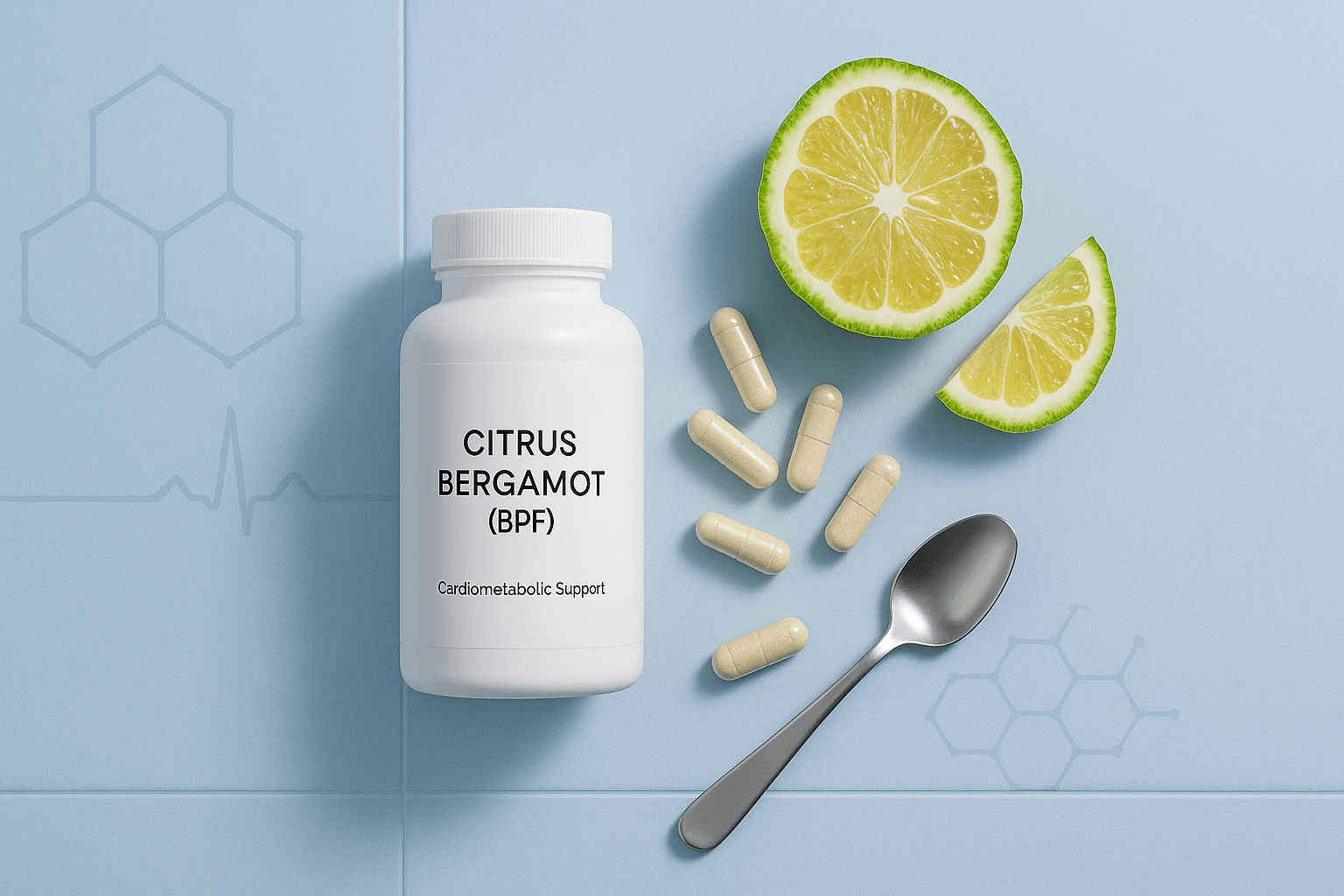
Citrus bergamot (Citrus bergamia) is a bitter Calabrian citrus whose polyphenol-rich juice and peel yield a standardized extract commonly labeled Bergamot Polyphenolic Fraction (BPF). It concentrates flavonoids such as neoeriocitrin, neohesperidin, naringin, and the statin-like melitidin and brutieridin. In human programs, bergamot is best known for lowering LDL cholesterol and triglycerides, nudging HDL upward, and assisting glycemic control—especially in insulin-resistant patterns.
Mechanistically, bergamot works on several metabolic “levers”:
- Cholesterol handling: polyphenols appear to modestly inhibit HMG-CoA reductase activity and improve LDL-receptor expression, helping clear LDL from circulation. Some trials also note shifts away from small dense LDL particles.
- Triglyceride metabolism: AMPK-adjacent signaling and bile-acid effects can reduce hepatic lipogenesis and improve VLDL export/turnover, translating to lower triglycerides.
- Glycemic tone & liver support: antioxidant and mitochondrial effects in the liver align with ALT/AST improvements and small reductions in fasting glucose/HOMA-IR.
Why supplement? Bergamot’s active polyphenol levels are difficult to obtain from food alone. Standardized, juice-derived extracts (not essential oil) provide predictable mg per day used in clinical trials and avoid the photosensitizing furocoumarins more typical of essential oils.
Wellness takeaway: If your goals are friendlier LDL, tidier triglycerides, and steadier metabolic markers, a standardized Citrus bergamot extract pairs well with a fiber- and protein-forward diet, daily walks, and sleep regularity.
Key Benefits
LDL & non-HDL reduction. Standardized bergamot consistently lowers LDL and non-HDL cholesterol, with the largest drops in people starting higher.
Triglyceride support. Many users see triglycerides come down over 8–12 weeks, especially alongside meal quality and post-meal activity.
Glycemic & liver markers (adjunct). Modest improvements in fasting glucose/HOMA-IR and ALT/AST have been reported, supporting a liver-friendly, metabolic routine—not replacing medical therapy.
Reality check: Expect steady, incremental changes (think lab report nudges, not overnight swings). Diet quality, movement, and sleep do most of the heavy lifting—bergamot helps round out the program.
Research Findings
Time to benefit: First shifts can show by 4–8 weeks, with clearer lipid changes by 12–16 weeks on consistent dosing.
Mixed dyslipidemia (adults): A 12-week, randomized, double-blind trial (~n=80–120) using 500–1000 mg/day BPF reported LDL and triglyceride reductions and a modest HDL rise versus placebo, with larger effects in those with higher baselines.
Insulin resistance/metabolic syndrome: In 8–16-week randomized studies (~n=60–120), 500–1000 mg/day bergamot led to lower triglycerides, non-HDL, and HOMA-IR compared with placebo; some trials noted smaller dense LDL shifting toward larger, less atherogenic particles.
NAFLD-adjacent markers: In overweight adults (12–24 weeks; n≈60–100), bergamot (often 1000 mg/day) improved ALT/AST and ultrasound-graded steatosis when paired with diet guidance; weight loss amplified benefits.
Tolerability across trials is favorable; mild GI upset or reflux are the most common complaints. Serious events are rare when using juice-derived, polyphenol-standardized extracts.
Best Sources & Dosage
What to buy (and what to avoid)
Choose juice-derived, polyphenol-standardized bergamot (often labeled BPF, Bergavit®, Bergamonte®, or similar) with clear mg per serving (e.g., 500 mg) and third-party testing.
Look for labels that specify total polyphenols/flavonoids and, ideally, melitidin/brutieridin content.
Avoid bergamot essential oil for internal use and products that do not disclose exact milligrams (proprietary blends).
Evidence-aligned adult ranges
LDL/non-HDL focus (most common): 500–1000 mg/day, taken with breakfast (or split 500 mg twice daily) for 12–16 weeks, then re-check lipids.
Triglycerides/metabolic support: 500 mg twice daily with meals for 12 weeks alongside a protein-forward, high-fiber diet and 10–15 min walks after meals.
On a statin or ezetimibe: some clinicians use 500 mg/day as an adjunct; coordinate with your prescriber and monitor lipids and liver enzymes.
Timing & tips
Take with meals to minimize reflux in sensitive users.
Track LDL, non-HDL, triglycerides, HDL, and, if relevant, ALT/AST at baseline and ~12 weeks.
Pair with 20–30 g fiber/day (oats, legumes, chia/psyllium) and resistance + walking for compounding benefits.
Safety, interactions & who should avoid it
Generally well tolerated; most common are mild GI symptoms (reflux, bloating).
Medications: bergamot polyphenols are not grapefruit juice, but caution is prudent. If you’re on statins, anticoagulants, antiplatelets, calcium-channel blockers, or narrow-window medications, coordinate with your clinician and monitor.
Liver disease: check with your clinician and monitor ALT/AST periodically.
Allergy: citrus sensitivities are rare but possible; discontinue if rash or itching develops.
Pregnancy/lactation: limited data—avoid unless advised.
Essential oil warning: do not ingest bergamot essential oil; it can be phototoxic and is not the studied form.
Label literacy—fast checks
- “Bergamot (Citrus bergamia) extract” from juice (not oil) with mg per serving and polyphenol/flavonoid standardization.
- Capsule count that lets you reach 500–1000 mg/day without excessive pill burden.
- Third-party testing/COA available.
Dosage Quick-Reference
LDL & non-HDL reduction: 500–1000 mg/day BPF • With meals, 12–16 weeks • Outcome: LDL & non-HDL ↓; HDL ↑ (modest).
Triglyceride support: 500 mg BID • 8–12 weeks • Outcome: triglycerides ↓, small dense LDL pattern improves.
Adjunct on statin/ezetimibe: 500 mg/day • 12 weeks • Outcome: additional lipid ↓ (monitor labs).
Safety note: Do not ingest bergamot essential oil; use juice-derived, polyphenol-standardized extracts and coordinate if on lipid-lowering or narrow-window meds.