1. Understanding Citrulline – What It Is and How It Works
What is Citrulline?
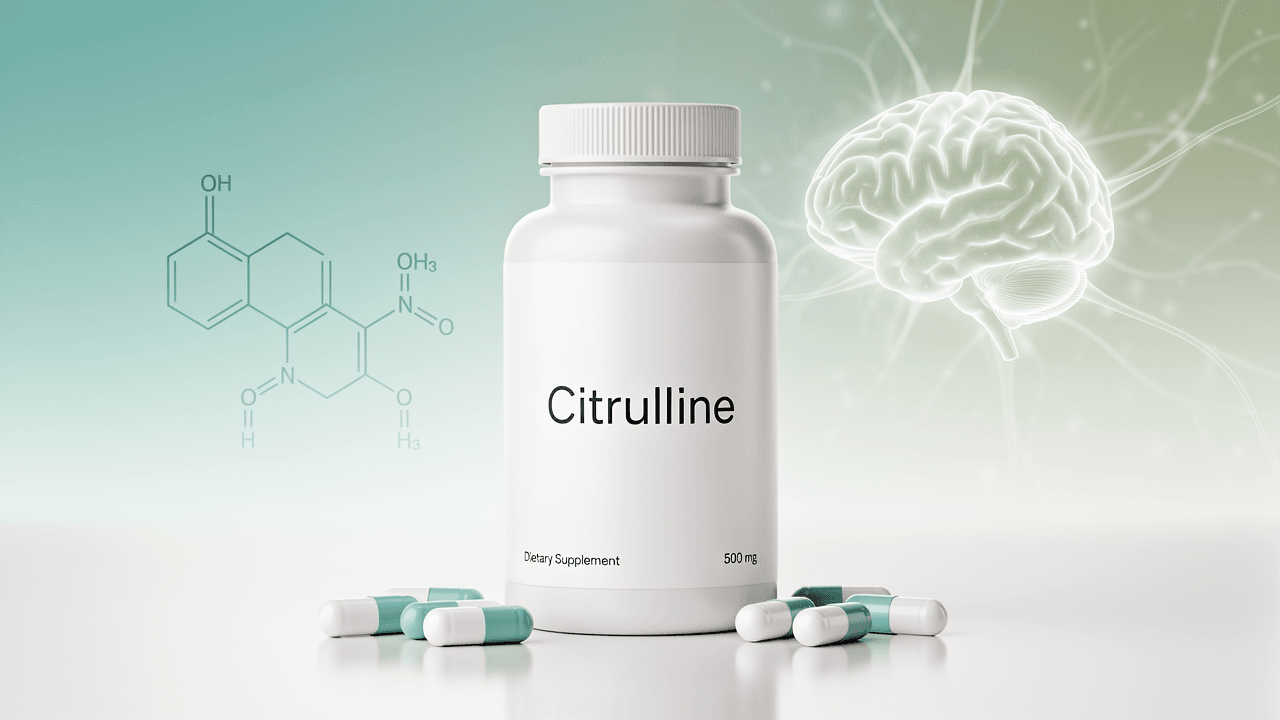
Citrulline (L-citrulline) is a non‑essential amino acid first identified in watermelon (Citrullus vulgaris), which is where its name comes from. Unlike essential amino acids, your body can produce citrulline on its own, but supplemental forms are often used for:
- Exercise performance and recovery
- Blood flow and circulation
- Erectile function
- Support of cardiovascular and metabolic health
Citrulline is usually taken in two main supplemental forms:
- L‑citrulline (the free amino acid)
- Citrulline malate (citrulline bound to malic acid, often used in sports supplements)
How Citrulline Works in the Body
Citrulline is a key part of two major physiological systems:
The Nitric Oxide (NO) Pathway
- Citrulline is converted to arginine in the kidneys.
- Arginine is then used to produce nitric oxide (NO), a gas that relaxes and widens blood vessels (vasodilation).
- Increased NO can improve blood flow, nutrient delivery, and oxygen transport to muscles and organs.
The Urea Cycle (Ammonia Detoxification)
- Citrulline participates in the urea cycle, helping convert toxic ammonia—a byproduct of protein metabolism and intense exercise—into urea for excretion.
- By facilitating ammonia clearance, citrulline may reduce fatigue and improve exercise tolerance.
Why Not Just Take Arginine?
Oral arginine is less effective than citrulline for raising blood arginine levels because:
- Arginine is extensively broken down in the gut and liver (first‑pass metabolism).
- Citrulline largely bypasses this and is efficiently converted to arginine in the kidneys.
Multiple studies show citrulline raises plasma arginine and NO more effectively than arginine itself, which is why citrulline is often preferred in NO‑boosting supplements.
Potential Nootropic Angle
Citrulline is not a classic nootropic, but it may indirectly support brain function by:
- Enhancing cerebral blood flow via NO
- Supporting endothelial function (health of blood vessels)
- Potentially improving exercise capacity, which is linked to better cognitive performance over time
However, direct evidence for cognitive enhancement in healthy adults is limited, and most data are extrapolated from vascular and metabolic studies.
2. Key Benefits of Citrulline
1. Improved Exercise Performance and Reduced Fatigue
By increasing NO and improving blood flow, citrulline can:
- Enhance high‑intensity exercise performance
- Reduce muscle soreness
- Support faster recovery
Benefits appear most consistently in resistance training and high‑intensity efforts, with more mixed data in endurance exercise.
2. Enhanced Blood Flow and Circulation
Citrulline increases plasma arginine and NO, which can:
- Improve endothelial function (blood vessel health)
- Support healthy blood pressure (especially in those with elevated levels)
- Potentially improve blood flow to the brain and other organs
3. Support for Erectile Function
Because erections depend heavily on NO‑mediated vasodilation, citrulline may help:
- Improve erection hardness in men with mild erectile dysfunction (ED)
- Serve as a gentler alternative or adjunct to phosphodiesterase‑5 (PDE5) inhibitors in some cases
Effects tend to be modest compared to prescription medications but may still be meaningful for mild ED.
4. Possible Metabolic and Cardiovascular Support
Early research suggests citrulline may:
- Improve arterial stiffness and endothelial function
- Modestly help in blood pressure management
- Potentially support insulin sensitivity and metabolic health (data are preliminary)
These effects are more evident in people with risk factors (e.g., hypertension, obesity) than in healthy young adults.
3. Research Findings
3.1 Exercise Performance and Recovery
Resistance Training Performance
- Study (Spain, 2010)
- Design: Randomized, double‑blind, placebo‑controlled, crossover
- Participants: 41 men, mean age ~22 years
- Intervention: 8 g citrulline malate vs placebo, taken 1 hour before a bench press protocol
- Outcome: Participants taking citrulline malate performed 52.92% more repetitions in the final set and reported 40% less muscle soreness at 24 and 48 hours post‑exercise.
- Reference: Pérez‑Guisado & Jakeman, J Strength Cond Res, 2010.
High‑Intensity Cycling Performance
- Study (Japan, 2002)
- Design: Randomized, double‑blind, crossover
- Participants: 8 male cyclists
- Intervention: 6 g/day L‑citrulline vs placebo for 7 days
- Outcome: Improved time to exhaustion and reduced perceived exertion during high‑intensity cycling; increased plasma arginine and NO metabolites.
- Note: Small sample size, but consistent with NO‑mediated performance enhancement.
Mixed Findings in Endurance Exercise
- Some endurance trials show no significant improvement in time‑trial performance with citrulline, especially in well‑trained athletes, suggesting the effect may be more robust in:
- Recreationally active individuals
- High‑intensity, anaerobic or resistance‑dominant efforts
3.2 Blood Pressure and Vascular Health
Blood Pressure in Prehypertension/Hypertension
- Meta‑analysis (2019)
- Studies: 8 randomized controlled trials
- Participants: ~200 adults (various health statuses)
- Intervention: L‑citrulline doses from 3–9 g/day for 1–12 weeks
- Findings:
- Systolic blood pressure reduced by ~4–5 mmHg on average in people with elevated BP.
- Diastolic blood pressure reductions were smaller and more variable.
- Implication: Citrulline can modestly lower BP, particularly in those with prehypertension or hypertension.
Arterial Stiffness and Endothelial Function
- Study (Japan, 2010)
- Design: Randomized, double‑blind, placebo‑controlled
- Participants: 17 young men with normal blood pressure
- Intervention: 6 g/day L‑citrulline for 7 days
- Outcome: Significant improvement in arterial stiffness (measured by pulse wave velocity) and increased NO metabolites.
- Note: Effects in healthy young adults may not translate to large clinical outcomes but support vascular benefits.
3.3 Erectile Function
- Study (Italy, 2011)
- Design: Single‑blind, placebo‑controlled
- Participants: 24 men (mean age ~56) with mild erectile dysfunction
- Intervention: 1.5 g/day L‑citrulline for 1 month vs placebo
- Outcome:
- Improvement in erection hardness score from 3 (mild ED) to 4 (normal) in 50% of men on citrulline vs 8.3% on placebo.
- Frequency of intercourse increased from 1.37 to 2.3 times/month.
- No significant adverse effects.
- Conclusion: Modest but meaningful improvement in mild ED; less potent than PDE5 inhibitors but better tolerated.
3.4 Potential Cognitive and Brain‑Related Effects
Direct human data on citrulline as a nootropic are limited, but a few lines of evidence are relevant:
- Animal studies suggest citrulline may improve memory and reduce oxidative stress in models of cognitive impairment, possibly via NO and improved cerebral blood flow.
- Human vascular studies show improved endothelial function and NO bioavailability, which may support brain perfusion, especially in older adults or those with vascular risk factors.
However:
- There are no large, high‑quality trials showing clear cognitive enhancement in healthy adults.
- Any brain benefits are likely indirect (via better vascular health and exercise capacity) rather than a direct nootropic effect.
3.5 Metabolic Health and Other Outcomes
Obesity and Insulin Sensitivity:
Small studies in people with obesity or metabolic syndrome suggest citrulline may improve insulin sensitivity and reduce some markers of inflammation, but data are preliminary and not yet consistent.Sarcopenia and Aging:
Some research in older adults suggests citrulline may enhance muscle protein synthesis when combined with protein, but more data are needed to define its role in sarcopenia.
4. Best Sources & Dosage – Forms, Dosing, Timing, Safety
4.1 Forms of Citrulline
L‑Citrulline (Free Form)
- Typically used for vascular health, blood pressure, ED, and general NO support.
- Often in capsules or powder.
Citrulline Malate
- Citrulline bonded with malic acid, an intermediate in the Krebs cycle (energy production).
- Popular in pre‑workout formulas, often marketed for energy and reduced fatigue.
- Ratios commonly seen: 2:1 (two parts citrulline to one part malate) or 1:1.
- Label claims can be misleading; 8 g of citrulline malate 2:1 contains ~5.3 g actual citrulline.
4.2 Evidence‑Based Dosage Recommendations
1) For Exercise Performance (Pre‑Workout)
L‑citrulline:
- Dose: 6–8 g taken ~60 minutes before exercise.
- Used in many resistance and high‑intensity training studies.
Citrulline malate:
- Dose: 6–8 g (often 8 g) ~60 minutes pre‑workout.
- Common in bodybuilding and strength research.
- Check the malate ratio to know how much actual citrulline you are getting.
2) For Blood Pressure and Vascular Health
- L‑citrulline:
- Dose: 3–6 g/day, divided into 1–2 doses.
- Duration in trials: typically 1–12 weeks.
- Start at 3 g/day and titrate up if tolerated and needed.
3) For Erectile Function (Mild ED)
- L‑citrulline:
- Dose used in clinical study: 1.5 g/day for 1 month.
- Some practitioners use 1.5–3 g/day, sometimes combined with other NO‑supporting nutrients (e.g., pycnogenol, pomegranate, or low‑dose arginine).
4) Potential Cognitive / Brain Support (Indirect)
- No standardized dose for cognition. If used as part of a vascular‑supportive strategy:
- 3–6 g/day L‑citrulline, similar to blood pressure protocols, may be reasonable under medical guidance, especially in older adults with vascular risk factors.
4.3 Timing and Stacking
- Pre‑Workout: Take 6–8 g ~60 minutes before training.
- Daily Vascular Support: Split dose (e.g., 1.5–3 g morning, 1.5–3 g evening) to maintain more stable arginine/NO levels.
- With or Without Food: Can be taken either way; some people prefer with food to minimize any mild GI discomfort.
Common Stacks:
- With nitrates (beetroot, pomegranate) for synergistic NO support.
- With arginine (low dose) in some ED or circulation formulas (though citrulline alone often suffices).
- With creatine, beta‑alanine, caffeine in pre‑workout blends for performance.
4.4 Safety, Side Effects, and Interactions
General Safety Profile
- Citrulline is generally well tolerated in healthy adults.
- Doses up to 10 g/day have been used in research without serious adverse effects.
Common Side Effects (Usually Mild)
- Gastrointestinal discomfort: bloating, stomach upset, or loose stools, especially at higher doses or when taken all at once.
- Headache or flushing: possible in sensitive individuals due to vasodilation and increased NO.
Starting with a lower dose (e.g., 1–2 g) and gradually increasing can minimize side effects.
Drug and Supplement Interactions
Antihypertensive Medications (Blood Pressure Drugs)
- Citrulline can lower blood pressure modestly.
- Combined with BP medications (ACE inhibitors, ARBs, calcium channel blockers, diuretics, beta‑blockers), there is a theoretical risk of additive hypotension (dizziness, lightheadedness, fainting).
- Monitor blood pressure and consult a healthcare provider before combining.
Nitrates and PDE5 Inhibitors (ED Medications)
- Nitrate drugs (e.g., nitroglycerin) and PDE5 inhibitors (sildenafil, tadalafil) already increase NO or enhance its effects.
- Adding citrulline could potentiate vasodilation and cause excessive drops in blood pressure in theory.
- If you use prescription ED drugs or nitrates, do not add citrulline without medical supervision.
Other NO‑Boosting Supplements
- Arginine, beetroot, niacin, and certain herbal vasodilators may have additive effects.
- This is not necessarily harmful but may increase the chance of headaches, flushing, or low blood pressure in sensitive individuals.
Kidney Disease and Urea Cycle Disorders
- Because citrulline is metabolized in the kidneys and participates in the urea cycle, people with kidney impairment or urea cycle disorders should avoid or use only under specialist supervision.
Special Populations
Pregnancy and Breastfeeding:
- Human data are insufficient.
- Avoid high‑dose supplementation unless specifically recommended by a healthcare professional.
Children and Adolescents:
- Safety data in children are limited outside of specific medical uses (e.g., rare urea cycle disorders under medical care).
- Not recommended as a general performance or nootropic supplement in minors without medical guidance.
5. Who Should and Shouldn’t Use Citrulline
Who May Benefit from Citrulline
Recreational and Competitive Athletes
- Particularly those engaged in resistance training or high‑intensity interval training (HIIT).
- Goals: more reps, reduced fatigue, less soreness, improved training volume.
Individuals with Prehypertension or Mild Hypertension
- As an adjunct (not a replacement) to lifestyle changes and, if prescribed, medications.
- Always under medical supervision and with regular BP monitoring.
Men with Mild Erectile Dysfunction
- Especially those preferring a nutraceutical approach or who experience side effects with PDE5 inhibitors.
- Effects are modest; expectations should be realistic.
Middle‑Aged and Older Adults Concerned About Vascular Health
- As part of a broader strategy including diet, exercise, and medical care.
- Potential benefits for endothelial function and arterial stiffness.
People Using Pre‑Workout Formulas
- Those already using multi‑ingredient pre‑workouts may benefit from ensuring they contain effective doses (6–8 g) of citrulline or citrulline malate.
Who Should Be Cautious or Avoid Citrulline
People on Blood Pressure Medications
- Risk of excessive blood pressure lowering.
- Use only with medical supervision and regular BP checks.
People Taking Nitrates or PDE5 Inhibitors
- Potential for additive vasodilation and hypotension.
- Must consult a physician before combining.
Individuals with Kidney Disease or Urea Cycle Disorders
- Altered metabolism of citrulline and nitrogen handling.
- Use only if specifically recommended and monitored by a specialist.
Pregnant or Breastfeeding Women
- Due to limited safety data, avoid high doses unless medically justified.
Children and Adolescents (Non‑Medical Use)
- Insufficient evidence for routine use as a performance or brain supplement.
- Avoid unless under medical guidance for a specific condition.
People with Uncontrolled Cardiovascular Disease
- Those with unstable angina, recent heart attack or stroke, or severe heart failure should not self‑supplement with citrulline; any NO‑modulating therapy should be physician‑directed.
Summary
Citrulline is a non‑essential amino acid that effectively raises arginine and nitric oxide levels, supporting blood flow, vascular health, and exercise performance. Evidence from randomized trials shows benefits for resistance training performance, mild blood pressure reductions, and mild erectile dysfunction, with a generally favorable safety profile at doses of 3–8 g/day.
Its role as a direct nootropic is not yet firmly established, but by improving circulation and exercise capacity, citrulline may indirectly support brain health, especially in individuals with vascular risk factors. As with all supplements, it should be used thoughtfully—ideally with professional guidance in people taking cardiovascular medications or those with underlying health conditions.