
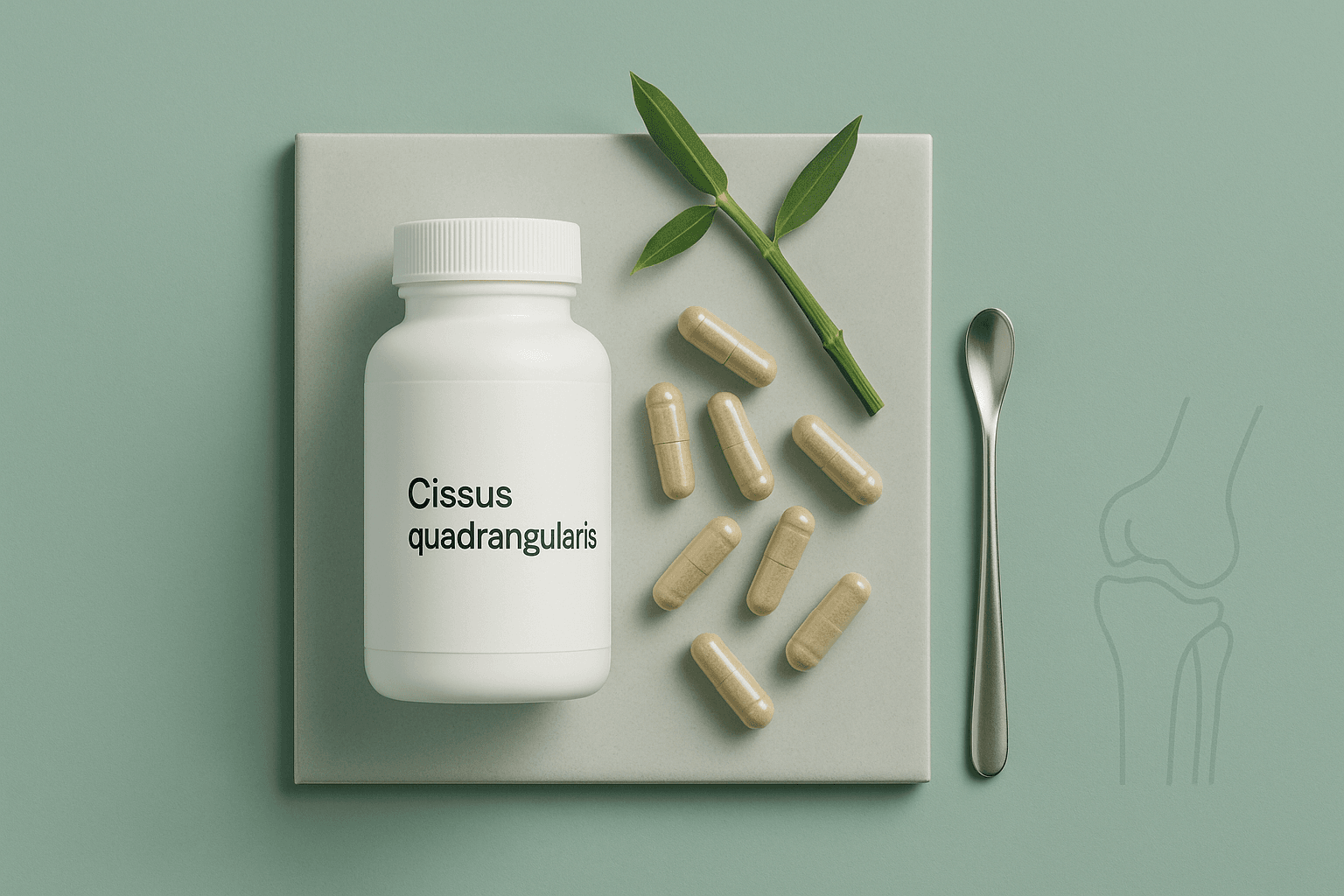
Stronger Joints, Quicker Bounce-Back: Understanding Cissus Quadrangularis
Cissus quadrangularis is a succulent vine used in traditional systems (Ayurveda/Siddha) to support bone healing and musculoskeletal comfort. Modern extracts concentrate polyphenols (quercetin, kaempferol), triterpenoids, phytosterols, and unique ketosteroids thought to influence bone-building cells (osteoblasts) and connective-tissue repair. Beyond joints and bones, standardized cissus has also been studied in programs for appetite control and metabolic health.
Why supplement instead of relying on diet? Cissus’ bioactive compounds don’t occur in meaningful amounts in common foods, and traditional decoctions are highly variable. Standardized capsules (often labeled by extract ratio, e.g., 10:1, or by a branded name such as CQR-300) provide predictable dosing that lines up with research protocols for joint comfort, fracture convalescence, and weight/metabolic programs.
How cissus likely helps—kept practical:
Connective-tissue calm: polyphenols and ketosteroids down-shift inflammatory enzymes (COX/LOX), which many users feel as easier movement and less “background ache” after activity.
Bone signaling: preclinical work shows promotion of osteoblast activity and collagen synthesis with a nudge to bone-formation pathways (e.g., ALP, BMP-2), aligning with its historical use in fracture care.
Metabolic nudge: extracts may temper appetite and improve post-meal handling via gut–brain signaling and AMPK-adjacent pathways—small but helpful adds when diet and steps are in place.
Wellness takeaway: If your aims are smoother joints, steadier training recovery, or structured weight/metabolic support, a standardized cissus extract can be a practical, time-boxed add-on to strength work, protein-forward meals, and regular walking.
Key Benefits
Joint comfort & activity recovery. In active adults, standardized cissus has reduced self-reported joint pain and improved function scores across 6–8 weeks—especially around knees, elbows, and shoulders.
Bone-healing support. Traditional use is backed by modern studies suggesting faster radiographic and clinical union when cissus is added to standard fracture care.
Metabolic assist (appetite/waist). Trials using branded extracts report modest reductions in weight, waist circumference, and triglycerides when paired with diet guidance.
Reality check: Expect steady, incremental gains—calmer joints by week 2–4, training feels smoother, and modest waist or triglyceride changes by 8–12 weeks. Cissus supports; it doesn’t replace rehab, protein, or clinician-guided fracture care.
Research Findings
Time to benefit: First changes often appear by 2–4 weeks (joint comfort); clearer gains in 8–12 weeks for body-composition and metabolic markers.
Joint pain in active adults: 8-week, randomized, double-blind, placebo-controlled trial in recreationally active adults (n≈50–70) using a standardized cissus extract (≈300–700 mg/day) reported significant reductions in composite joint-pain scores at rest and during activity, plus better functional ratings versus placebo.
Weight & metabolic markers (overweight adults): 6–10-week randomized studies (n≈75–120) with branded cissus (e.g., CQR-300, ~300 mg 2×/day)—with or without mild calorie restriction—showed modest weight loss (≈1–3 kg), waist reductions, and triglyceride improvements versus placebo or diet alone.
Fracture convalescence: Controlled clinical studies in long-bone fractures (n≈40–100) adding cissus extract to standard orthopedic care observed shorter time-to-union on imaging and earlier pain relief/weight-bearing milestones than controls; protocols typically spanned 6–8 weeks.
Tolerability across trials was favorable; mild GI upset, dry mouth, or headache were the most common complaints and tended to be dose-related.
Best Sources & Dosage
What to buy (and what to avoid)
Choose standardized extracts that declare an extract ratio (e.g., 10:1) or use a branded, clinically referenced ingredient (e.g., CQR-300), with mg per serving clearly stated and third-party testing (identity, potency, contaminants).
Avoid proprietary blends that hide the milligrams—you can’t match study-like dosing or titrate response without numbers.
Evidence-aligned adult ranges
Joint comfort & training recovery: 300–700 mg/day standardized extract, once daily or split BID, for 8–12 weeks, then reassess.
Metabolic/waist support: 300 mg twice daily with meals for 8–12 weeks, paired with a protein-forward, high-fiber meal pattern and post-meal walks.
Fracture convalescence (adjunct): 600–1200 mg/day in 2–3 divided doses for 6–8 weeks, only as an add-on to orthopedic care and adequate dietary protein (≥1.2 g/kg/day) plus vitamin D/calcium if indicated.
Timing & tips
Take with meals if you’re prone to GI sensitivity.
For joint goals, log morning stiffness, step count, and key lifts each week to see signal over noise.
For metabolic goals, measure waist at the navel, morning weight (weekly average), and triglycerides at baseline and ~12 weeks.
Stack smartly: strength training 2–3×/week, 10–15 min walks after meals, sleep regularity, and adequate hydration.
Safety, interactions & who should avoid it
Generally well tolerated; occasional GI upset, dry mouth, headache, or insomnia (rare) may occur—lower the dose or shift earlier in the day if sensitive.
Glucose & BP: small improvements are reported; if you take glucose-lowering or antihypertensive meds, monitor to avoid over-correction.
Surgery/injury: coordinate with your clinician and physical therapist in fracture or post-op settings—cissus is adjunctive, not a substitute for standard care.
Pregnancy/lactation: insufficient safety data—avoid unless advised by your clinician.
Allergy: discontinue if rash or itching develops.
Label literacy—fast checks
- Clear statement of plant part (aerial parts/stem), extract ratio or brand, and mg per serving.
- Realistic capsule count to reach ~300–600 mg/day without excessive pill burden.
- Batch COA or third-party testing available.
Dosage Quick-Reference
Joint comfort (active adults): 300–700 mg/day standardized cissus • 8–12 weeks • Outcome: activity-related joint pain ↓, function ↑.
Metabolic/waist support: 300 mg BID with meals • 8–12 weeks • Outcome: weight & waist ↓ (modest); triglycerides ↓.
Fracture convalescence (adjunct): 600–1200 mg/day, divided • 6–8 weeks • Outcome: time-to-union ↓; early mobility markers ↑ (with standard care).
Safety note: monitor if on glucose- or BP-lowering meds; cissus is supportive, not a replacement for rehab or medical care.