Calmer Evenings, Clearer Facts: Understanding Chrysin
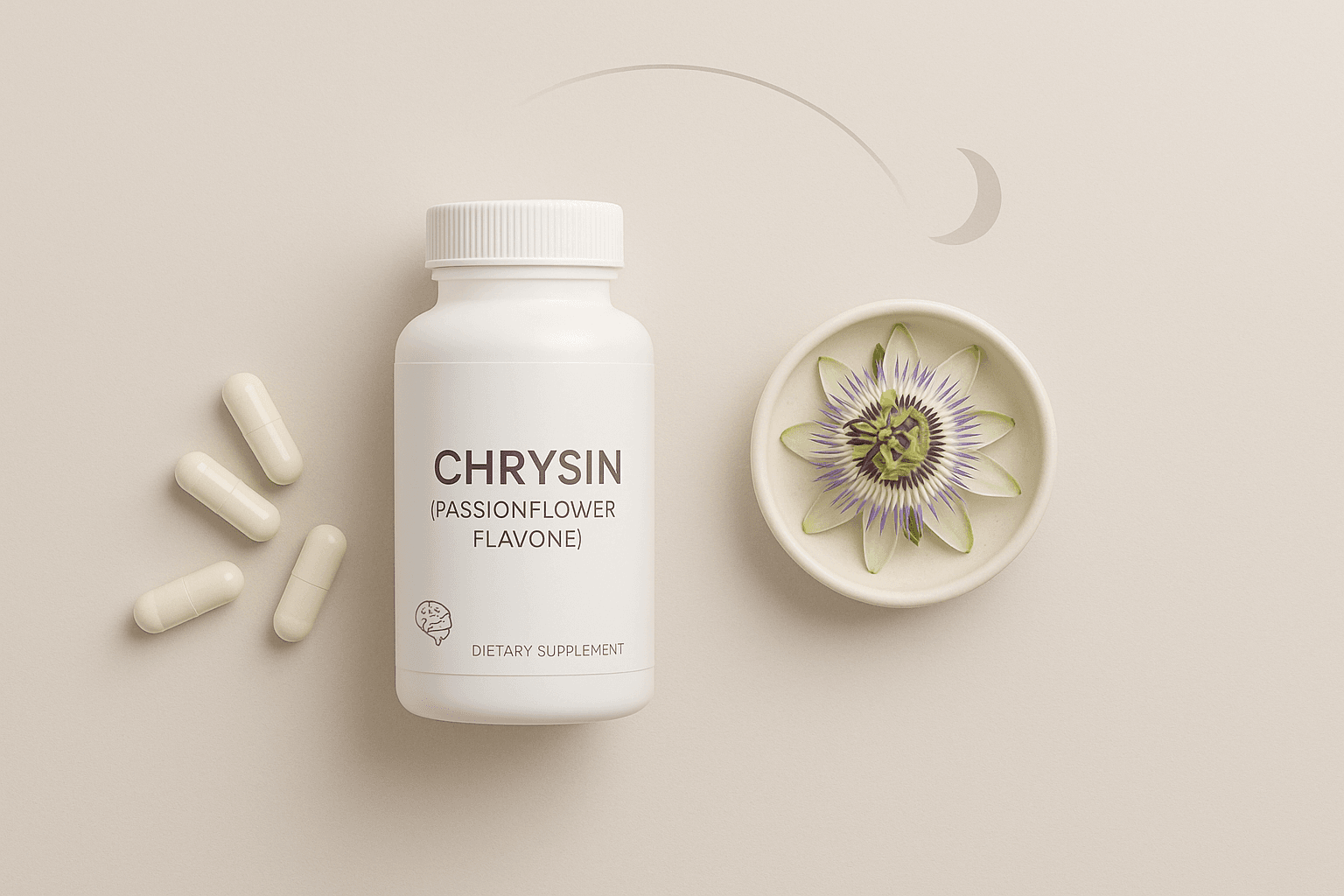
Chrysin (5,7-dihydroxyflavone) is a plant flavone naturally found in passionflower (Passiflora spp.), honey, and propolis. In wellness circles it’s used for gentle sleep/calm support and is often marketed for “aromatase inhibition” (the enzyme that converts testosterone to estrogen). Here’s the straight talk: chrysin shows GABA-A receptor affinity and aromatase inhibition in vitro, but oral bioavailability in humans is low, so the hormone claim has not translated into reliable human outcomes. Where it fits best is as a mild, evening-friendly flavonoid—especially when paired with sleep hygiene—while keeping expectations realistic.
How it may help—kept practical:
GABA-A nudging may ease pre-sleep arousal and take the edge off situational anxiety (most human data are from passionflower extracts that contain chrysin among other flavones)
Antioxidant/anti-inflammatory signaling (NRF2/COX) supports general cellular calm and stress recovery.
Aromatase inhibition is mechanistically plausible but clinically unproven at typical oral doses due to poor absorption.
Why supplement? Diet and tea provide variable, milligram-scale chrysin. Standardized capsules give predictable mg per dose and are easier to time (evening/late afternoon), though benefits remain on the subtle side. Some products add bioavailability enhancers (e.g., piperine or liposomal carriers); these may raise blood levels but can also increase drug–nutrient interaction risk.
Wellness takeaway: If your goals are smoother wind-down, gentle calm, and a science-honest view on hormones, chrysin can be a light, evening-first add-on—best used with sleep basics and clear limits on the testosterone narrative.
Key Benefits
Sleep support (gentle). Evening chrysin—especially in passionflower-forward formulas—can help ease sleep onset and improve perceived sleep quality when paired with a steady routine.
Daytime calm (mild). As a GABA-friendly flavone, chrysin may take the edge off situational anxiety without the “hangover” feel of heavy sedatives.
Hormone claim—reality check. Despite lab data, human evidence does not confirm meaningful aromatase inhibition or testosterone boosts at standard oral doses.
Reality check: Expect subtle, steady effects on calm/sleep; don’t expect testosterone changes. If hormone support is your aim, focus on sleep, training, protein, micronutrition, and clinician-guided labs.
Research Findings
Time to benefit: First changes often show within 1–2 weeks for sleep/calm, with clearer trends by 4–8 weeks when dosing is consistent.
Sleep/Anxiety (passionflower extracts): Multiple small randomized trials using Passiflora incarnata (containing chrysin and related flavones) over 2–4 weeks found improved sleep quality and reduced anxiety scores versus placebo or comparators. These data support the category, but isolate chrysin-only trials remain limited.
Pharmacokinetics (isolated chrysin): Human PK studies show low oral bioavailability from standard capsules; co-administration with piperine or lipid carriers raises exposure but may also raise drug-interaction potential. Net clinical benefit at higher exposure still needs confirmation.
Hormonal endpoints: In available human data, no consistent increases in testosterone or meaningful estradiol changes have been demonstrated with oral chrysin at commonly marketed doses. Consider the aromatase claim unproven for practical purposes.
Tolerability in studies and real-world use is generally good; mild GI upset or headache are the most common complaints.
Best Sources & Dosage
What to buy (and what to avoid)
Choose chrysin with clear mg per capsule (e.g., 250–500 mg) and third-party testing.
If selecting passionflower extracts for a broader calm/sleep effect, look for standardized products and transparent flavonoid content.
Bioavailability enhancers (e.g., piperine, liposomes) can raise levels; use if you’re not on narrow-therapeutic-window meds.
Evidence-aligned adult ranges
Sleep support (evening-first): 250–500 mg chrysin 30–60 minutes before bed for 4–8 weeks, then reassess.
Daytime calm (situational): 250 mg once in late afternoon, optionally plus 250–500 mg pre-bed as above.
Passionflower approach: follow label (often 250–500 mg extract once or twice daily); expect the effect from the whole matrix, not chrysin alone.
Timing & tips
Anchor the largest dose at night; avoid very late dosing if you notice morning grogginess.
Pair with a wind-down routine (screens down, dim lights, cool room) and morning light exposure.
If you trial a piperine-enhanced product, keep your med list handy and start conservatively.
Safety, interactions & who should avoid it
Generally well tolerated; occasional GI upset, headache, or drowsiness may occur.
Medications: theoretical interactions via CYP and P-gp (especially with piperine co-formulations). Use caution with anticoagulants, antiplatelets, benzodiazepines, sedating antihistamines, or narrow-window drugs—speak with your clinician.
Allergy: bee-product sensitivities (if using propolis-sourced blends) and Asteraceae cross-reactivity (if using passionflower) are possible—trial carefully.
Pregnancy/lactation: avoid due to limited safety data.
Hormone goals: do not rely on chrysin for testosterone management; get labs and address sleep, nutrition, and training first.
Label literacy—fast checks
- Clear “Chrysin” mg per serving; for blends, ensure per-dose transparency.
- If enhanced with piperine, the mg should be listed; consider med interactions.
- Third-party testing or a COA available on request.
Dosage Quick-Reference
Sleep support: 250–500 mg chrysin 30–60 min pre-bed • 4–8 weeks • Outcome: sleep onset ↓, perceived sleep quality ↑ (gentle).
Daytime calm: 250 mg late afternoon ± 250–500 mg pre-bed • 2–4 weeks • Outcome: situational anxiety ↓ (mild).
Hormone claim: Not supported at oral doses • Ongoing • Outcome: testosterone →; focus on sleep/training/nutrition instead.
Safety note: caution with CYP/P-gp-affected medications, benzodiazepines/sedatives, and piperine-enhanced formulas.