1. Understanding Beetroot Extract – What It Is and How It Works
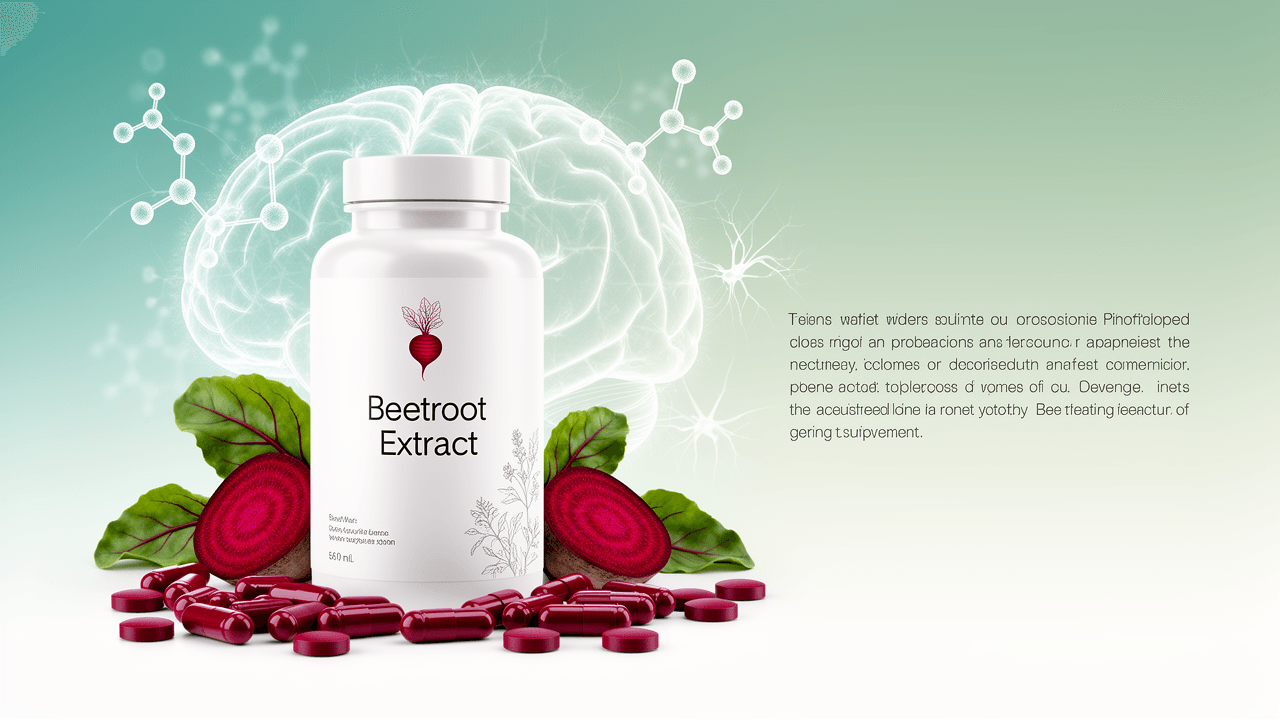
Beetroot extract is a concentrated form of Beta vulgaris (red beet) typically standardized for dietary nitrate and/or betalain pigments (such as betanin). It is used as a dietary supplement for cardiovascular health, exercise performance, and increasingly for cognitive support.
Key Active Compounds
- Inorganic nitrate (NO₃⁻): Converted in the body to nitric oxide (NO), a signaling molecule that relaxes blood vessels and improves blood flow.
- Betalains (e.g., betanin): Pigments with antioxidant and anti-inflammatory properties.
- Polyphenols and flavonoids: Additional antioxidant compounds.
- Minerals and vitamins: Small amounts of potassium, folate, vitamin C, and others.
How Beetroot Extract Works in the Body
Nitrate–Nitrite–Nitric Oxide Pathway
- Dietary nitrate from beetroot is absorbed in the gut and circulates in the blood.
- About 25% is taken up by the salivary glands and concentrated in saliva.
- Oral bacteria reduce nitrate (NO₃⁻) to nitrite (NO₂⁻).
- In the acidic stomach and in tissues with low oxygen, nitrite is further reduced to nitric oxide (NO).
- NO causes vasodilation (widening of blood vessels), improves blood flow, and can enhance oxygen delivery to muscles and the brain.
Antioxidant and Anti-inflammatory Effects
- Betalains and polyphenols help neutralize reactive oxygen species (ROS) and may reduce markers of inflammation.
- This may support vascular health, protect endothelial function, and reduce exercise-induced oxidative stress.
Mitochondrial Efficiency and Energy Metabolism
- Some studies show nitrate can improve mitochondrial efficiency, reducing the oxygen cost of exercise.
- This may translate to improved endurance and reduced perceived exertion.
Cerebral Blood Flow and Nootropic Potential
- Nitric oxide–mediated vasodilation is not limited to peripheral vessels; it also affects cerebral blood flow.
- Increased blood flow to specific brain regions (notably the frontal lobes) has been observed after beetroot juice or extract intake, which may support attention, executive function, and reaction time, particularly in older adults or under conditions of cognitive fatigue.
2. Key Benefits of Beetroot Extract
2.1 Improved Blood Pressure and Vascular Health
Beetroot-derived nitrate can lower blood pressure by enhancing nitric oxide production and relaxing blood vessels. Benefits are most consistent in people with elevated blood pressure or endothelial dysfunction.
2.2 Enhanced Exercise Performance and Endurance
Beetroot extract can:
- Reduce the oxygen cost of submaximal exercise
- Improve time-to-exhaustion and time-trial performance in some endurance athletes
- Support better muscle oxygenation during high-intensity efforts
Effects are more pronounced in recreationally active or moderately trained individuals than in elite athletes.
2.3 Cognitive Support and Nootropic Effects
By improving cerebral blood flow, beetroot extract may:
- Enhance reaction time and attention, especially under fatigue
- Support executive function and working memory in older adults
- Potentially protect against age-related vascular changes that affect cognition
The nootropic evidence is emerging and more robust in older adults than in young, healthy subjects.
2.4 Antioxidant and Anti-inflammatory Support
Beetroot’s betalains and polyphenols can:
- Decrease markers of oxidative stress after strenuous exercise
- Modestly reduce inflammatory markers in some populations
- Support overall vascular function by protecting the endothelium
3. Research Findings
3.1 Blood Pressure and Cardiovascular Health
Study 1 – Acute BP reduction in hypertensive adults
- Design: Randomized, double-blind, placebo-controlled crossover trial
- Participants: 68 adults with hypertension (mean age ~64 years)
- Intervention: 250 mL/day nitrate-rich beetroot juice (~6.4 mmol nitrate) vs nitrate-depleted placebo for 4 weeks
- Results:
- Systolic BP decreased by ~7.7 mmHg and diastolic BP by ~2.4 mmHg compared to placebo.
- Improvements in endothelial function were also observed.
- Implication: Regular beetroot intake can produce clinically meaningful BP reductions in hypertensive individuals.
Study 2 – Single dose in healthy volunteers
- Design: Randomized crossover
- Participants: 14 healthy volunteers
- Intervention: 500 mL beetroot juice (~5.5–6.2 mmol nitrate) vs water
- Duration: Single dose, monitored for 24 hours
- Results:
- Peak BP reduction of ~10 mmHg systolic at 2–3 hours post-ingestion.
- Effects persisted (less strongly) up to 24 hours.
- Implication: Even a single nitrate-rich beetroot dose can acutely lower BP.
3.2 Exercise Performance and Endurance
Study 3 – Cycling time-to-exhaustion
- Design: Double-blind, crossover trial
- Participants: 8 recreationally active men
- Intervention: 500 mL/day beetroot juice (~6.2 mmol nitrate) vs nitrate-depleted placebo for 6 days
- Exercise Test: Cycling at 70–80% VO₂max to exhaustion
- Results:
- Time-to-exhaustion increased by 15–16% with beetroot.
- Oxygen cost of submaximal exercise decreased by ~5%.
- Implication: Beetroot nitrate can improve endurance and reduce energy cost of exercise in moderately trained individuals.
Study 4 – Time-trial performance in trained cyclists
- Design: Randomized, double-blind, crossover
- Participants: 9 trained male cyclists
- Intervention: 500 mL beetroot juice (~6.2 mmol nitrate) 2.5 hours before a 4-km and 16.1-km time trial
- Results:
- 4-km time trial improved by ~2.8%.
- 16.1-km time trial improved by ~2.7%.
- Implication: Acute beetroot nitrate can produce modest but meaningful performance gains in trained athletes, particularly in events lasting a few to several tens of minutes.
Study 5 – Mixed results in elite athletes
- Several trials in elite endurance athletes (e.g., VO₂max > 70 ml/kg/min) show smaller or no performance benefits, suggesting a ceiling effect where highly adapted athletes gain less from nitrate supplementation.
3.3 Cognitive Function and Cerebral Blood Flow
Study 6 – Older adults and brain perfusion
- Design: Randomized, crossover pilot study
- Participants: 14 older adults (mean age ~74 years)
- Intervention: High-nitrate diet including 500 mL beetroot juice vs low-nitrate control diet, each for 2 days
- Measurements: MRI to assess cerebral blood flow
- Results:
- Increased cerebral blood flow in the frontal lobes, particularly in regions involved in executive function.
- Implication: Beetroot-derived nitrate may support brain perfusion in older adults, with potential cognitive benefits.
Study 7 – Cognitive performance under fatigue
- Design: Randomized, double-blind, placebo-controlled crossover
- Participants: 24 healthy young adults
- Intervention: Nitrate-rich beetroot juice (~5.3–6.4 mmol nitrate) vs nitrate-depleted placebo
- Cognitive Tasks: Reaction time and executive function tasks, including under mentally fatiguing conditions
- Results:
- Improved reaction time and task performance, particularly under fatigue.
- Implication: Beetroot nitrate can acutely support cognitive performance when the brain is under higher demand.
Evidence for long-term cognitive protection (e.g., dementia risk) is still preliminary and based mostly on short-term or small-sample studies.
3.4 Inflammation, Oxidative Stress, and Recovery
Study 8 – Muscle soreness and recovery
- Design: Randomized, double-blind, crossover
- Participants: 12 recreationally active men
- Intervention: Beetroot juice (2 × 250 mL/day, ~12.9 mmol nitrate total) vs placebo for 48 hours after intense eccentric exercise
- Results:
- Reduced muscle soreness and faster recovery of muscle function compared with placebo.
- Implication: Beetroot’s antioxidant and vasodilatory properties may aid post-exercise recovery.
Study 9 – Oxidative stress markers
- Various small trials show beetroot intake can reduce biomarkers like malondialdehyde (MDA) and increase total antioxidant capacity after strenuous exercise or in people with cardiovascular risk factors.
4. Best Sources & Dosage – Forms, Dosing, Timing, Safety
4.1 Common Forms of Beetroot Supplements
Beetroot Extract Capsules/Tablets
- Often standardized for nitrate content (e.g., 2–5% nitrate) or for betalains.
- Convenient for consistent dosing; less variability than whole food.
Beetroot Juice (Liquid)
- Typically provides 4–8 mmol nitrate per 250–500 mL, depending on product and processing.
- Used frequently in exercise and blood pressure studies.
Beetroot Powder
- Can be mixed with water or smoothies.
- Nitrate content can be variable; some products list standardized nitrate per serving.
Functional Foods / Shots
- Concentrated beetroot “shots” or mixed vegetable-nitrate shots designed for performance or blood pressure.
4.2 Evidence-Based Dosage Ranges
Because most research uses beetroot juice, doses are often reported as millimoles (mmol) of nitrate:
- Common effective range: 4–12 mmol nitrate/day
- Roughly equivalent to:
- ~250–500 mL beetroot juice, or
- ~500 mg–1 g standardized nitrate (if using nitrate-specific supplements)
For beetroot extract capsules/powders, follow standardized nitrate content if provided.
4.2.1 For Blood Pressure and Vascular Health
- Typical research dose:
- 4–8 mmol nitrate/day (e.g., ~250–500 mL beetroot juice) for 2–4 weeks or longer.
- Practical supplement range:
- Standardized beetroot extract providing 300–600 mg nitrate/day, or
- 500–1,500 mg beetroot extract (non-standardized) once or twice daily, if equivalent to juice nitrate levels (check label or manufacturer data).
- Timing:
- Once daily, preferably 2–3 hours before the time of day when BP is highest, or split into morning and early evening doses.
4.2.2 For Exercise Performance
- Acute pre-exercise strategy:
- 6–12 mmol nitrate (commonly ~500 mL beetroot juice or a concentrated shot) taken 2–3 hours before exercise.
- Chronic strategy (loading):
- 4–8 mmol nitrate/day for 3–7 days leading up to an event, with the last dose 2–3 hours pre-competition.
- Capsule/powder equivalent:
- Enough beetroot extract to match 6–8 mmol nitrate (~370–500 mg nitrate) per pre-exercise dose.
4.2.3 For Cognitive Support / Nootropic Use
Evidence is less standardized, but based on cerebral blood flow and cognitive studies:
- Acute use (before demanding cognitive tasks):
- Dose similar to exercise protocols: 4–8 mmol nitrate (or equivalent extract) 2–3 hours before the task.
- Chronic use (older adults, vascular support):
- 4–8 mmol nitrate/day from beetroot juice or extract, taken once daily.
- Long-term safety at higher doses is less well studied; stick to the lower end of the effective range for daily, long-term use.
4.3 Practical Use Tips
- Do not use strong antibacterial mouthwash around the time of dosing:
- Antibacterial mouthwashes can kill oral bacteria needed for nitrate → nitrite conversion, reducing or abolishing the BP and performance effects.
- Take on a relatively empty stomach for faster absorption, especially for pre-exercise or acute cognitive use (1–2 hours after a light meal is usually fine).
- Monitor blood pressure if you have hypertension or are on BP medications; adjust with your clinician as needed.
4.4 Safety, Side Effects, and Drug Interactions
4.4.1 Common, Generally Mild Side Effects
- Beeturia: Red or pink urine and sometimes red stool; harmless but can be alarming if unexpected.
- GI discomfort: Nausea, bloating, or loose stools in some individuals, especially at higher doses or with juice.
- Headache or lightheadedness: Usually from lowered blood pressure or vasodilation, more common in those prone to hypotension.
4.4.2 Nitrate, Nitrite, and Cancer Concerns
Public concern often centers on nitrates/nitrites and cancer risk. Important distinctions:
- The increased cancer risk is mainly associated with processed meats, which contain nitrite plus heme iron and are cooked at high temperatures, forming nitrosamines.
- Vegetable-derived nitrate (like beetroot) comes with vitamin C, polyphenols, and antioxidants that inhibit nitrosamine formation.
- Epidemiological data generally show that higher vegetable nitrate intake is associated with lower cardiovascular risk and not clearly linked to increased cancer risk at typical dietary levels.
For most people, beetroot-derived nitrate at studied doses appears safe, though long-term, very high-dose data are limited.
4.4.3 Drug Interactions and Special Cautions
Antihypertensive Medications (e.g., ACE inhibitors, ARBs, beta-blockers, diuretics, calcium channel blockers)
- Beetroot can additively lower blood pressure.
- Risk: Dizziness, lightheadedness, or symptomatic hypotension.
- Recommendation: Monitor BP; consult your clinician before combining, especially if your BP is already well-controlled or low.
Nitrates and Nitric Oxide Donors (e.g., nitroglycerin, isosorbide dinitrate)
- Theoretical risk of excessive vasodilation and hypotension.
- Recommendation: Use cautiously and under medical supervision.
PDE5 Inhibitors (e.g., sildenafil, tadalafil for erectile dysfunction)
- Both PDE5 inhibitors and nitrate-rich supplements increase nitric oxide signaling and vasodilation.
- Combining high-dose beetroot with PDE5 inhibitors may increase hypotension risk in sensitive individuals.
- Recommendation: Start with low doses; avoid stacking high-dose beetroot with PDE5 inhibitors without medical guidance.
Anticoagulants / Antiplatelet Drugs (e.g., warfarin, clopidogrel, aspirin)
- Beetroot has mild antiplatelet and vasodilatory effects, but not typically strong enough to cause issues alone.
- No strong evidence of clinically significant interaction at normal doses, but caution is reasonable in those with bleeding disorders or on multiple blood thinners.
Proton Pump Inhibitors (PPIs) and Antacids
- Very high stomach pH may theoretically reduce conversion of nitrite to NO, potentially blunting some benefits.
- Clinical significance is uncertain; effects may still occur via peripheral pathways.
Antibacterial Mouthwash
- As noted, can block nitrate-to-nitrite conversion, reducing beetroot’s BP and performance benefits.
4.4.4 Medical Conditions Requiring Caution
- Hypotension or Labile Blood Pressure:
- Beetroot can further lower BP; start low and monitor.
- Kidney Disease (especially advanced CKD):
- Beetroot contains potassium and nitrate; electrolyte and fluid balance issues may be relevant.
- Use under medical supervision.
- History of Kidney Stones (especially oxalate stones):
- Beets are relatively high in oxalates.
- People prone to calcium oxalate stones may need to limit high-oxalate foods; discuss with a nephrologist or dietitian.
- Pregnancy and Breastfeeding:
- Normal dietary beet consumption is considered safe.
- High-dose nitrate supplements have limited pregnancy-specific data; use food-based doses and consult an OB/GYN before high-dose supplementation.
- Methemoglobinemia risk (very rare):
- Extremely high nitrate intake can theoretically increase methemoglobin levels, especially in infants.
- Adult supplement doses used in studies are far below levels typically associated with this issue.
5. Who Should and Shouldn’t Use Beetroot Extract
5.1 Who May Benefit Most
Adults with Mildly Elevated Blood Pressure or Endothelial Dysfunction
- Beetroot extract can be a supportive strategy alongside lifestyle changes and prescribed therapy.
- Particularly helpful for those with prehypertension or stage 1 hypertension, after medical consultation.
Recreational and Competitive Endurance Athletes
- Runners, cyclists, rowers, and team-sport athletes doing repeated high-intensity efforts.
- May experience improved time-trial performance, reduced oxygen cost, and better tolerance to high-intensity work.
Older Adults Concerned About Vascular and Cognitive Health
- Those with age-related declines in blood flow and endothelial function.
- Beetroot may support cerebral perfusion and executive function, especially when combined with exercise and a generally heart-healthy diet.
Individuals Undergoing High Physical or Cognitive Stress
- People in demanding jobs, students facing exams, or shift workers may benefit from acute dosing before periods of intense cognitive or physical demand.
5.2 Who Should Be Cautious or Avoid It
People with Very Low Blood Pressure or Orthostatic Hypotension
- Additional vasodilation from beetroot can worsen symptoms (dizziness, fainting).
- Use only with medical guidance, if at all.
Individuals on Multiple Blood Pressure–Lowering Drugs or Nitrate Medications
- Risk of excessive hypotension; dosage and timing should be supervised by a clinician.
Those with Advanced Kidney Disease or on Dialysis
- Potential issues with potassium, fluid balance, and nitrate handling.
- Use only if approved by a nephrologist.
People with a History of Recurrent Calcium Oxalate Kidney Stones
- Beets are high in oxalates; high intake may not be advisable.
- Occasional moderate use may be acceptable, but discuss with a healthcare provider.
Infants and Very Young Children
- High-nitrate foods are generally limited in infants due to methemoglobinemia risk.
- Beetroot supplements are not recommended for infants or toddlers.
Pregnant or Breastfeeding Women at High Supplement Doses
- Normal dietary beet consumption is fine.
- High-dose concentrated beetroot nitrate supplements should be used cautiously and only with OB/GYN approval.
6. Summary
- Beetroot extract is rich in dietary nitrate, betalains, and antioxidants that support nitric oxide production, vascular health, and exercise performance.
- Evidence from randomized controlled trials shows consistent blood pressure–lowering effects and modest improvements in endurance performance, especially in recreationally active individuals.
- Emerging research suggests benefits for cerebral blood flow and cognitive performance, particularly in older adults and under conditions of fatigue, though more long-term data are needed.
- Typical effective doses provide 4–8 mmol nitrate/day, often equivalent to 250–500 mL beetroot juice or standardized extract providing ~300–600 mg nitrate, with acute dosing 2–3 hours before exercise or demanding cognitive tasks.
- Side effects are usually mild (beeturia, GI upset), but beetroot can lower blood pressure and may interact with antihypertensive drugs, nitrates, and PDE5 inhibitors.
- It may be particularly useful for people with mildly elevated BP, endurance athletes, and older adults, while those with hypotension, advanced kidney disease, recurrent kidney stones, or complex medication regimens should use it only under medical supervision.
As with any supplement, beetroot extract should complement—not replace—core strategies such as a balanced diet, regular physical activity, adequate sleep, and appropriate medical care.