
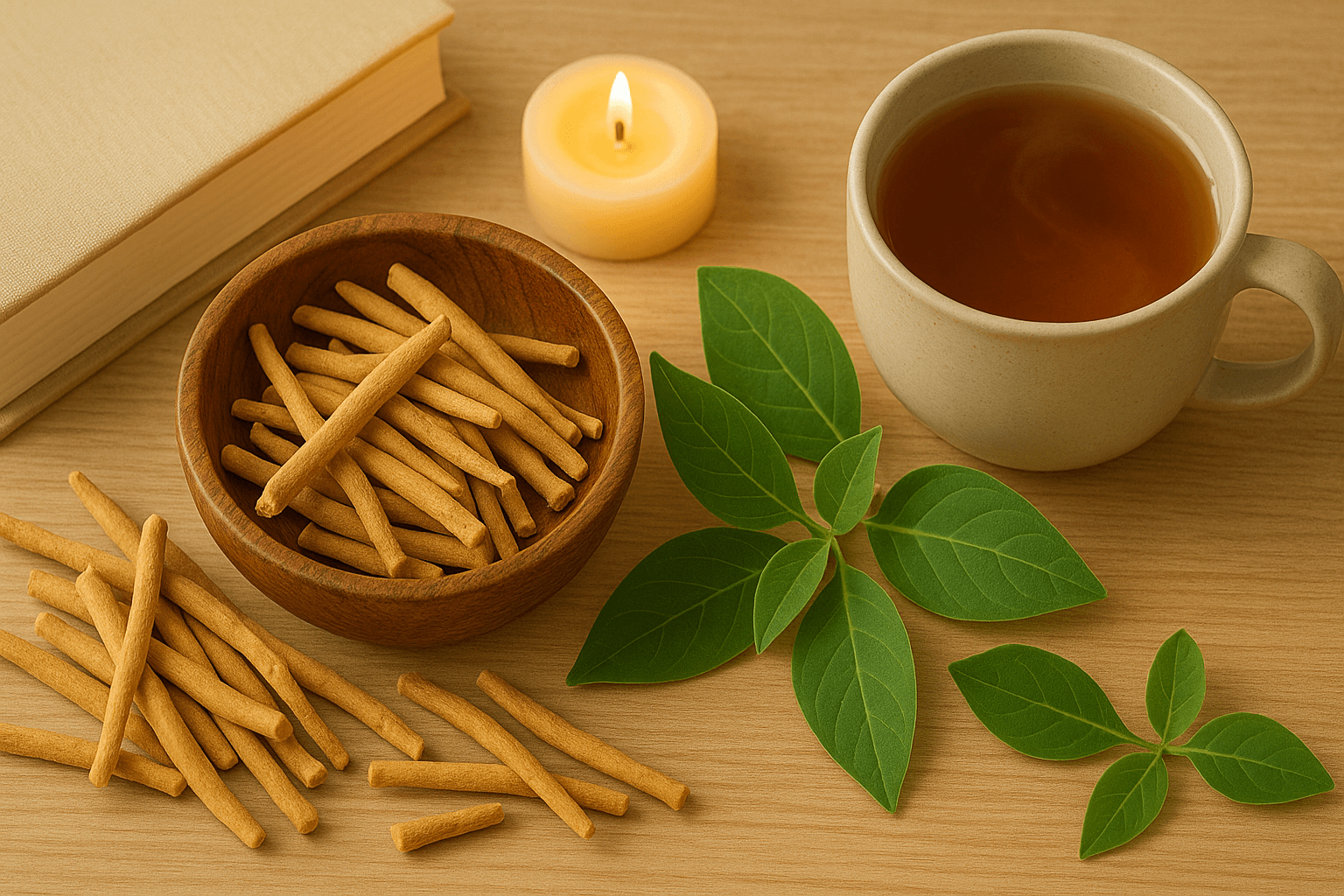
Understanding Ashwagandha
Ashwagandha (Withania somnifera) is an evergreen shrub native to India and parts of Africa, long valued in Ayurvedic medicine for its stress-balancing and rejuvenating properties. Traditionally classified as a rasayana—a restorative tonic—it was used to promote vitality, longevity, and resilience against stress.
The most studied compounds in ashwagandha are withanolides, a class of naturally occurring steroidal lactones that include withaferin A and various alkaloids. These compounds interact with multiple biochemical systems in the body. Mechanistically, ashwagandha appears to modulate the hypothalamic-pituitary-adrenal (HPA) axis, which regulates cortisol and the body’s stress response. By tempering overactivity in this system, it may help maintain a balanced stress reaction.
Preclinical evidence suggests that certain withanolides may also enhance GABAergic signaling, potentially contributing to a calming effect and improved sleep quality. Ashwagandha’s profile includes anti-inflammatory and antioxidant properties, which may protect cells from oxidative stress. Neuroprotective pathways involving brain-derived neurotrophic factor (BDNF) and mitochondrial support have also been proposed.
Additionally, ashwagandha appears to influence hormone regulation, particularly supporting testosterone levels in men and aiding physical performance. Because withanolides are not produced in the human body and are rarely encountered in the diet, supplementation is the main way to obtain them.
Key Benefits
Stress & Cortisol Reduction – May help lower cortisol and perceived stress levels by regulating HPA-axis activity, promoting greater emotional resilience and calm.
Sleep Enhancement – Research suggests it can improve sleep onset, quality, and duration, likely through GABAergic pathways and reduced nighttime cortisol levels.
Hormonal & Athletic Support – Evidence indicates potential increases in testosterone, muscle strength, endurance, and recovery, especially in physically active men.
Research Findings
8-week randomized controlled trial (n=130 randomized, 98 completed): Participants receiving 125–250 mg twice daily of standardized root-leaf extract experienced significant reductions in anxiety scores, serum cortisol, C-reactive protein, pulse rate, and blood pressure, alongside increases in beneficial markers like DHEA-S and hemoglobin.
Systematic reviews and meta-analyses: Across multiple trials (250–500 mg/day for 4–13 weeks), ashwagandha supplementation was associated with lower morning cortisol and improved scores on the Perceived Stress Scale in high-stress individuals.
Sleep-focused clinical studies: Among 400 adults, doses of ≥600 mg/day for at least 8 weeks improved sleep quality, reduced sleep latency (time to fall asleep), and enhanced morning alertness. Effects were most notable in participants with insomnia.
Athletic performance studies: Both recreational and elite athletes saw improvements of 6–14% in VO₂max, muscle strength, and recovery when taking 330–1,000 mg/day of root extract for 4–12 weeks.
Testosterone studies: In healthy men, 8–12 weeks of supplementation resulted in 15–20% higher testosterone levels, with similar increases observed in infertile men.
Cognition trials: Improvements in psychomotor speed, memory, and attention have been observed in healthy adults and in those with mild cognitive impairment, typically using 300–600 mg twice daily for 8 weeks.
Pharmacokinetic findings: A single 400 mg dose in healthy adults was well tolerated, with peak plasma levels reached within 15–85 minutes.
Best Sources & Dosage
Most Bioavailable Forms:
Standardized root extract (≥2.5% withanolides), available as capsules or tablets.
Root-only products are more common in research, though some supplements use root-and-leaf blends.
Typical Dosage Ranges (Healthy Adults):
Stress & mood: 250–500 mg/day, often in two divided doses for 4–13 weeks.
Sleep support: ≥600 mg/day for at least 8 weeks.
Athletic/hormonal performance: 330–1,000 mg/day, sometimes split into morning and evening doses.
Clinical research often uses 500 mg/day of standardized root extract over 60 days for stress and anxiety reduction.
Timing & Administration:
Can be taken with or without food; taking with food may reduce mild gastrointestinal discomfort.
Split dosing can optimize both daytime stress resilience and nighttime sleep quality.
Consistency matters—effects may appear within 2 weeks, but optimal results are usually seen after 6–12 weeks.
Safety Notes:
Generally well tolerated for up to 3 months in healthy adults.
Mild side effects may include digestive upset, headache, drowsiness, or mild sedation.
Rare cases of liver injury have been reported, often in individuals with pre-existing conditions.
Avoid use during pregnancy, breastfeeding, in hormone-sensitive cancers, and before surgery.
Caution is advised for those with autoimmune diseases or thyroid disorders—consult a healthcare provider first.