
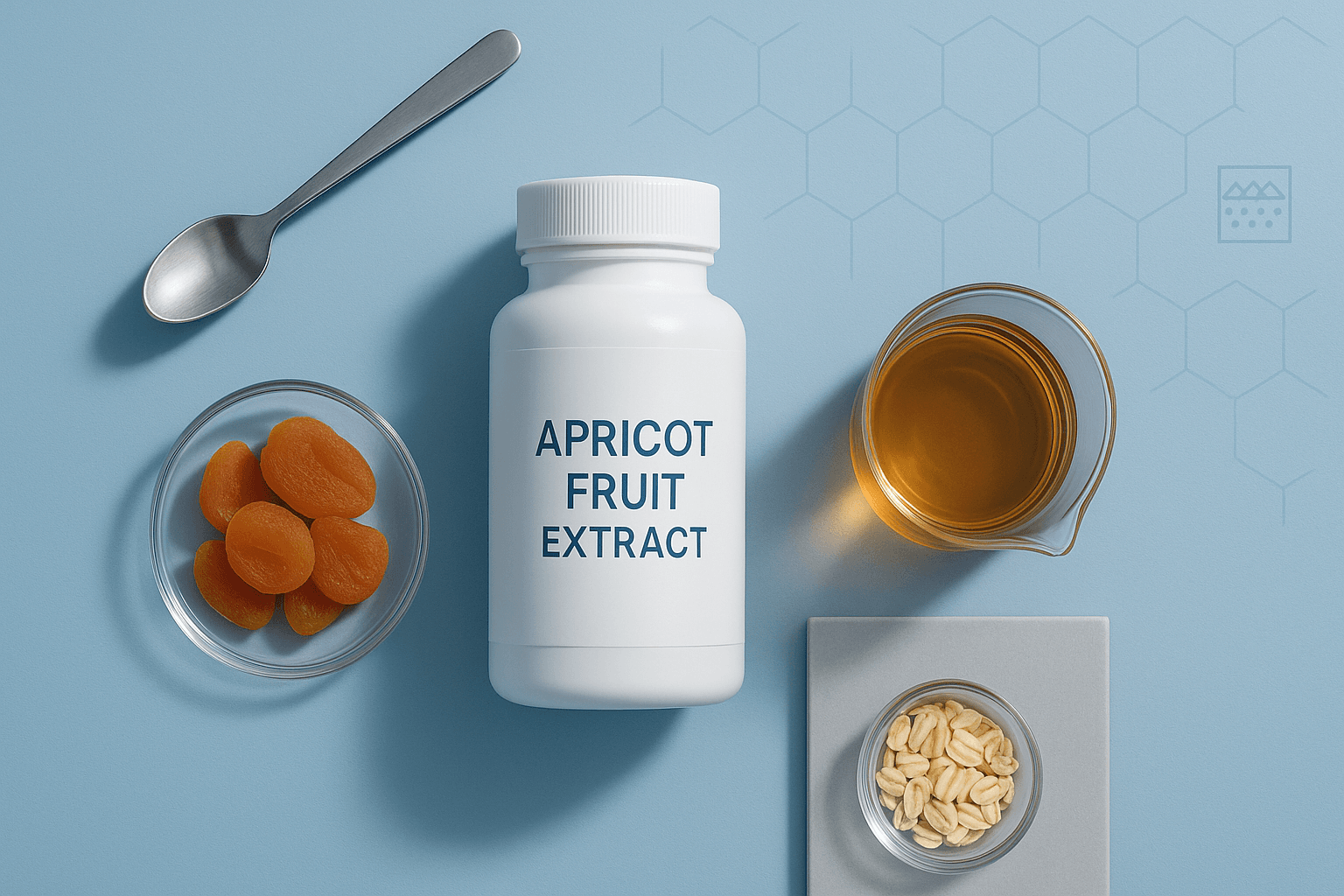
Understanding Apricot Extract
Apricot extract can mean two very different things—(1) extracts from the fruit (flesh/peel) that concentrate carotenoids and polyphenols, or (2) extracts from the kernel (seed) inside the stone. These are not interchangeable. Fruit-derived extracts are used for antioxidant and wellness purposes and appear in ingestible supplements and beverages. Kernel-derived products, by contrast, may contain amygdalin (sometimes marketed as “vitamin B17” or laetrile), a cyanogenic compound that can release cyanide—posing a serious poisoning risk if eaten. U.S. and international health agencies have warned against ingesting apricot kernels or amygdalin/laetrile products, and there’s no reliable evidence they treat disease. For this article we focus on fruit extract (ingestible) and apricot kernel oil (topical only), and we explicitly advise against ingesting kernel extracts.
From a nutrition lens, apricot fruit delivers carotenoids (β-carotene), chlorogenic acid, quercetin glycosides, and other polyphenols. Extracts concentrate these compounds to support antioxidant defenses and help moderate post-meal glycemic swings when used strategically with meals (often as part of a mixed dried-fruit strategy). Apricot kernel oil, used topically, is a lightweight emollient rich in oleic and linoleic acids that can support the skin barrier; it’s common in moisturizers and face oils. Evidence for ingestible fruit extracts is modest but growing; for skin benefits, most data are from cosmetic practice and moisturizer studies rather than apricot-specific randomized trials.
Important safety divider: Ingest fruit extract; use kernel oil only on skin. Do not ingest kernel extract or amygdalin/laetrile due to cyanide risk and lack of proven benefit.
Key Benefits
Post-meal glycemic support. Substituting part of a high-GI starch with dried apricot lowered post-prandial glucose in an acute randomized crossover trial—suggesting apricot polyphenols and fibers can help flatten meal spikes when used thoughtfully.
Antioxidant and skin-barrier support. Fruit polyphenols provide antioxidant activity, while topical apricot kernel oil (not for ingestion) is an emollient that helps soften skin and support barrier lipids (linoleic/oleic acids), a common goal in moisturizer routines.
Cardiometabolic adjunct (emerging). Small human studies suggest apricot components can nudge lipid patterns in favorable directions, though effects are modest and program-dependent; these should complement, not replace, diet, movement, and prescribed care.
Reality check: Claims that amygdalin/laetrile from apricot kernels treats cancer are unsupported; risks include cyanide poisoning. Choose fruit-based extracts for ingestion and reserve kernel oil for topical use only.
Research Findings
Acute glycemic response (healthy adults): Randomized, multiple-crossover feeding trial (n=10) replacing half the carbohydrate in a white-bread meal with dried fruit found dried apricot uniquely reduced post-prandial glycemia versus other fruits tested and control—an immediate, meal-level effect (single-visit design).
Lipid profile (bitter apricot kernels; caution): 6-week, interventional trial (n=34; 60 mg/kg/day bitter apricot kernels) reported shifts in LDL subfractions (LDL3–7 reduction), with mixed effects on standard lipids. Note: this involved kernels containing cyanogenic glycosides; despite reported changes, ingestion of kernels is not recommended due to cyanide risk and lack of disease-outcome data.
Guideline context and safety (kernel ingestion): Systematic review of laetrile/amygdalin for cancer found no reliable benefit and highlighted serious cyanide toxicity, especially with oral products—reinforcing that kernel-derived amygdalin is unsafe for ingestion.
Best Sources & Dosage
What to buy (and avoid)
Apricot fruit extract (ingestible): Look for products stating fruit source (flesh/peel), standardized to polyphenols or carotenoids; these align with antioxidant and meal-support goals.
Apricot kernel oil (topical only): Labeled Prunus armeniaca (apricot) kernel oil; use as a moisturizer/occlusive in skin care—not as a dietary supplement.
Avoid for ingestion: anything labeled apricot kernel extract, amygdalin, or laetrile (“vitamin B17”). These can liberate cyanide and are not evidence-based therapies.
Evidence-aligned ranges (adults)
Glycemic support at meals (fruit extract or dried fruit strategy): Use meal substitution logic from the acute trial—replace a portion of fast-absorbing starch with dried apricot (e.g., ~40–60 g dried apricots) or pair a fruit-polyphenol extract with your highest-GI meal. Track post-meal readings (capillary or CGM) for your response. Effects are acute and meal-specific; sustained fasting changes require broader diet/lifestyle.
Antioxidant wellness (fruit extract): Typical polyphenol-standardized extracts are used around 250–500 mg/day (manufacturer guidance); treat as an adjunct to a plant-forward diet. (Direct apricot-extract RCTs are limited; dose is convention-based across fruit-polyphenol products.)
Skin hydration (topical kernel oil): 2–5 drops, 1–2×/day, massaged into damp skin or layered over a humectant. Choose cold-pressed, cosmetic-grade oils and patch test if sensitive. (Evidence base is cosmetic and mechanistic rather than apricot-specific RCTs.)
Timing & practical tips
For glycemic support, pair fruit extract or dried apricot with the meal—especially higher-starch meals—to help flatten the glucose curve.
Combine with fiber and protein at meals and a 10–15-minute walk post-meal to amplify effects.
For skin, apply oil after water-based serums to lock in hydration.
Safety, interactions & who should avoid it
Ingestible fruit extract: Generally well tolerated; occasional GI upset if dosed on an empty stomach.
Kernel ingestion warning: Do not ingest apricot kernels, kernel extracts, amygdalin, or laetrile—risk of cyanide poisoning; no proven therapeutic benefit. Seek medical care if exposure occurs (symptoms can include headache, dizziness, confusion, shortness of breath).
Medications & conditions: If you manage diabetes, monitor glucose when changing meal composition (dried fruit/extracts may affect post-meal readings). For dermatologic conditions, patch test oils and consult your clinician if you have acne-prone or highly reactive skin.
Label literacy
- Confirm the part used (“fruit” vs “kernel”) and standardization (polyphenol/carotenoid % for fruit extracts).
- For skin oils, look for INCI: Prunus armeniaca (Apricot) Kernel Oil, cold-pressed, and third-party purity testing.
Dosage Quick-Reference
Post-meal glycemic support (fruit approach): Replace ~½ the starch in one meal with dried apricot (≈40–60 g) or pair a fruit-polyphenol extract • Single meal use • Outcome: post-prandial glucose ↓ (acute).
Antioxidant wellness (fruit extract): 250–500 mg/day standardized fruit extract • 4–8 weeks then reassess • Outcome: antioxidant intake ↑ (adjunct).
Skin hydration (topical only): 2–5 drops apricot kernel oil on damp skin 1–2×/day • Ongoing • Outcome: softness/barrier comfort ↑.
Safety note: Do not ingest apricot kernels/amygdalin/laetrile; zero proven benefit, cyanide risk.